Recover Data from Corrupted Hard Drive
Corrupted Hard Drive Recovery Overview
A corrupted hard drive can be frustrating, but there are ways to recover data from it. If the drive is still recognized by the computer, you can try running a disk check or a file system check to see if it can repair the corruption. If the drive is not recognized, you may need to use a data recovery software to scan the drive and recover any recoverable files. In some cases, the drive may need to be sent to a professional data recovery service for more advanced recovery techniques.
- Invalid media type reading drive.
- Abort, Retry, Fail?
- The file system is displayed as "RAW".
- Windows may prompt you to format the drive by displaying the message "Disk not formatted. Do you want to format now?"
- File names contain "weird" characters.
- "Sector not found" messages.
How to recover files from the corrupted hard drive If your hard drive or external hard drive is damaged, you can still recover your data using the Qiling data recovery software. This software can help you recover data from a corrupted hard drive without losing any information. Additionally, you can also learn how to fix a corrupted hard drive without formatting it, allowing you to restore your data and get your device back up and running.
How to Recover Files from Corrupted Hard Drive in 3 Steps
Deep Data Recovery provides an easy-to-use interface for recovering files from damaged hard drives and external hard drives with minimal effort.
Deep Data Recovery
- Recover lost or deleted files, documents, photos, audio, music, and emails easily with effective recovery tools and techniques. Whether it's a deleted document, a lost photo, or a corrupted email, there are ways to retrieve them.
- Recover files from various storage devices including a formatted hard drive, emptied recycle bin, memory card, flash drive, digital camera, and camcorder.
- Data recovery support is available for various unexpected situations, including sudden deletion, formatting, hard drive corruption, virus attacks, and system crashes. This assistance aims to recover lost data and files, helping users regain access to important information and minimize downtime.
Note: If the system hard drive is corrupted, you can create a WinPE bootable CD/DVD of Deep Data Recovery to boot the computer and recover the corrupted hard drive.
Step 1. Select file types
Launch Deep Data Recovery, select file types, and click "Fast Scan" to initiate the recovery process.
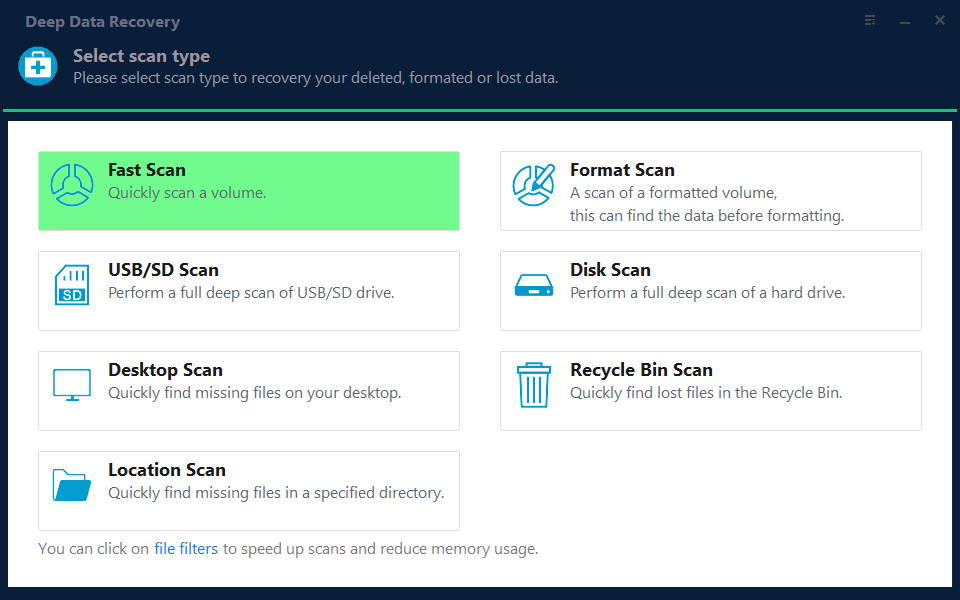
Note: You can choose different search modes based on where and why the data was lost.
Step 2. Scan the hard drive partition
Select the drive on your hard disk where you lost or deleted files, click "Scan", and let the software scan for all lost data and files on the selected drive.

Step 3. Check the results
When the scan is finished, you can apply the "Filter" feature or click the "Search files or folders" option to find the lost files on the hard drive.

Step 4. Restore lost hard drive data
Select the lost files you want to recover and click "Recover" to save them to another location.
If you're struggling with using data recovery software, consider reaching out to data recovery specialists for assistance. They can provide guidance and support to help you successfully recover your lost data.
Consult with Qiling data recovery experts for a one-on-one manual recovery service. After a FREE diagnosis, we can offer various services, including one-on-one manual recovery.
- To fix errors and restore data from various storage devices, including HDDs, SSDs, external hard drives, and USB flash drives, you can use specialized software like Deep Data Recovery, Qiling file recovery software, or professional data recovery tools. These tools can help recover data from damaged or corrupted storage devices, as well as restore data from all RAID levels, including RAID 0, RAID 1, RAID 5, and RAID 6.
- If a partition cannot be restored using data recovery software, it may be due to the partition being corrupted or deleted. In such cases, you can try using a partition recovery tool like Qiling Partition Recovery.
- To fix disks that cannot be read or accessed due to bad sectors, you can try running a disk check using the built-in tool in your operating system. For Windows, this is called the Check Disk (chkdsk) utility, while for macOS, it's called Disk Utility.
- Fix disks that become GPT protected partitions
- Wipe data, unformat hard drive, Install/uninstall software or driver, etc.
How to Fix Corrupted Hard Disk Drive Without Formatting (4 Ways)
After restoring lost files from a corrupted hard disk drive, you may be wondering what to do with the drive itself. Instead of simply giving up on it, there are a few options to consider. Here are some tips to try and repair the corrupted hard drive.
Tip 1. Use a Free Partition Management tool to Repair Corrupted Hard Drive
To fix and repair corrupted hard drives, you can use Qiling's free partition manager, which automatically checks and repairs file system and bad sectors with ease. This software provides simple solutions for partition management, allowing you to create, resize/move, clone, merge, and format partitions with just a few clicks.
Step 1. Right-click the target partition that has a problem.
Step 2. Choose "Advanced" > "Check File System".
Step 3. In the Check File System window, select the "Fix the error on the disk" option.
Step 4. Click "Proceed" to check errors on your partition.
Tip 2. Fix Corrupted Hard Drive Using CMD
To run the CHKDSK command and repair a corrupted hard disk drive, follow these steps: Check if the hard disk drive has bad sectors or internal errors. If it does, run the CHKDSK command on your PC to fix the corrupted hard disk drive. You can do this by going to the Command Prompt as an administrator, typing 'chkdsk' followed by the drive letter (e.g.
- Press Win + X, select "Command Prompt (Admin)".
- Click "Yes" to launch Command Prompt as Administrator.
- Type chkdsk and hit "Enter" to check errors in the corrupted hard drive.
- Type chkdsk C: /f /r/x You can try running the built-in Windows utility CHKDSK to scan and repair the corrupted drive. To do this, open Command Prompt as an administrator, type `chkdsk c: /f`, and press Enter. Replace "c" with the actual drive letter that needs to be checked.
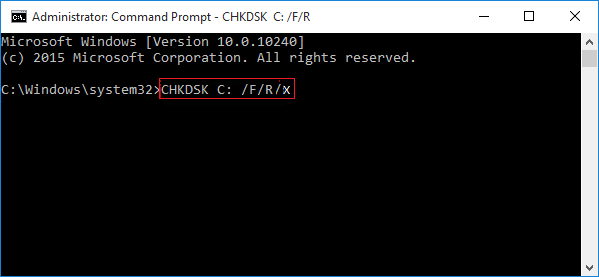
If the target drive is a boot disk, the system will prompt you to run the command before the next boot. Type "yes" and restart the computer to allow the command to run before the operating system loads, enabling full access to the disk and repair of corrupted data.
Tip 3. Run a Disk Check to Fix Corrupted Hard Disk
- Open This PC or Computer, right-click the hard drive, and select "Properties".
- Click "Tools" and click "Check".
- Select "Check local disk" and click "Start".
- Shut down all running and open programs, then select the option to let the system check for updates upon the next boot.
- After this, restart the PC.
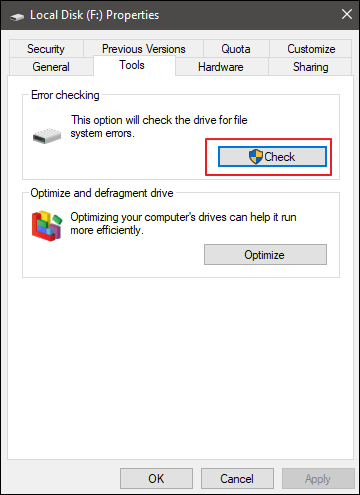
If your drive has bad sectors or clusters, don't worry. The CHKDSK command will fix this issue.
Tip 4. Repair Corrupted System Drive from Control Panel
- Press Win + X, select "Control Panel".
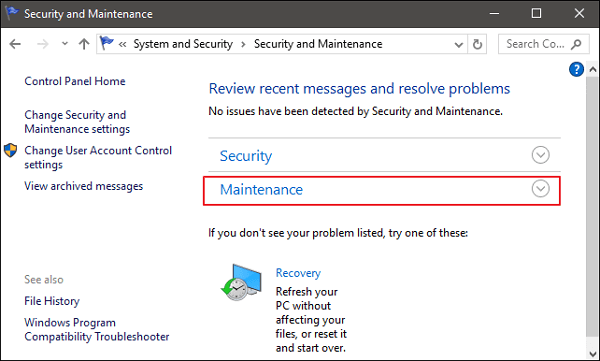
- Click "System and Security" > tab "Action Center" > expand "Maintenance" and click "Run Scan".
- Click "Restart".
It's Easy to Make Corrupted Hard Drive Recovery
After following these steps, you can successfully recover data from a corrupted hard drive and fix the corrupted hard disk issue, allowing you to reuse the hard disk drive to store and save data again. If you experience a similar problem with your corrupted hard drive, external hard drive, or USB storage devices, don't worry, just follow this article to get your problem fixed without losing any data.
Related Articles
- How Long Does It Take | 1 TB Data Recovery
- Top 10 Best Hard Drive Repair Software
- Lost Bitlocker Recovery Key? Here's How to Get It Back Easily
- Top 6 Best Excel Repair Tools in 2022
- How to Format SD Card for GoPro Hero 4/5 Sesssion
Don't know how to format SD card for GoPro hero 5 or hero 4 session? This article walks you through the whole process for how to format SD card for GoPro Hero 5 Black, Hero5 Session, Hero4 Sesson and Hero Session. - How to Format USB Drive to FAT32 in Windows 10/7
If you don't know how to format a USB to fat32 in Windows 10/7 then you need to follow this article. You will find a specific reason for this action and step by step guide in here.
Products
Articles & Tutorials
- Data Recovery
- Data Backup
- File Recovery
- File Backup
- System Backup and Restore
- Disk and Partition Clone
- Technical articles
- Mobile articles
- Disk Master Help
- Windows Data Recovery Tutorials
- Windows Secure Delete Tutorials
- Windows Partition Management Tutorials
- Windows File Backup and Restore Tutorials
- Windows System Backup and Restore Tutorials
- Windows Disk Backup and Restore Tutorials
- Windows Clone Tutorials