Lost Bitlocker Recovery Key? Here's How to Get It Back Easily
Everything About My BitLocker Recovery Key
BitLocker is the built-in Windows encryption technology that protects data from unauthorized access by encrypting a drive and requiring one or more factors of authentication before unlocking it. This means that when you password protect or encrypt a drive, folder, or file, BitLocker is the tool that helps keep your data safe.
Windows 11/10/8/7 requires a BitLocker recovery key when it detects a possible unauthorized attempt to access the data, which is a 48-digit numerical password that was safely backed up during the encryption process.
Where to Find My Lost BitLocker Password/Recovery Key
If you have a computer with BitLocker encryption and can't remember the recovery key, you can try to recover it from various places depending on the activation choice made when BitLocker was enabled.
- 1. Check Your Microsoft Account
- 2. Run as Administrator
- 3. Check the USB Drive or Printout
- 4. Try Possible Recovery Keys
- 5. Perform a BitLocker Recovery
1. Check Your Microsoft Account
To find your recovery key, sign in to your Microsoft account on another device. If you have a modern device that supports automatic device encryption, the recovery key is likely stored in your Microsoft account.
If the device was set up or BitLocker protection was activated by another user, the recovery key may be stored in that user's Microsoft account.
2. Run as Administrator
If you're running BitLocker encryption as an administrator or your device is connected to a domain, you can either run as an administrator yourself or ask a system administrator to provide your recovery key.
Also read: Unlock a Folder Without Password
3. Check the USB Drive or Printout
If you saved your recovery key on a USB flash drive or printed it when BitLocker was activated, you can check your USB drive or printout to find the key.
To access your encrypted PC, plug the USB flash drive into the computer and follow the on-screen instructions. If the key is saved as a text file on the flash drive, you can read it on a different computer.
4. Attempt Access with Your Usual Passwords
If you can't remember the password, you can try to access the BitLocker drive with the usual password, but if that doesn't work, you may need to reset the password and access the data through other means, such as a recovery key. Many users use simple passwords that are easy to remember, but not secure, so it's recommended to create strong, unique passwords to protect sensitive data.
If you're trying to access a BitLocker encrypted drive, you can try inputting previously used passwords to see if you can unlock it. If you're lucky, you might get it right and gain access. If you're not sure, you can try using password recovery tools or seeking professional help.
Also read: How to Disable Bitlocker in Windows 10
5. Perform a BitLocker Recovery
BitLocker recovery is a process that restores access to a BitLocker-protected drive if normal unlocking is not possible, typically when the recovery key or password is forgotten or unavailable. This can occur under certain conditions, such as when the recovery key or password is not accessible due to a forgotten password or key, or when the drive is not recognized by the system. In these cases, running BitLocker recovery can help regain access to the drive's contents.
- You can supply the recovery password.
- A domain administrator can obtain the recovery password.
- A data recovery agent can use their credentials to unlock the drive, allowing them to access the encrypted data.
To force a recovery for the local computer
- Click the Start button
- To run the Command Prompt as an administrator, type "cmd" in the Start Search box, and then click "Run as administrator".
- At the command prompt, type the following command and then press Enter:
manage-bde-forcerecovery
To force recovery for a remote computer
- To open the Command Prompt as an administrator, go to the Start screen, type "cmd.exe", and then click "Run as administrator".
- At the command prompt, type the following command and then press Enter:
manage-bde-ComputerName-forcerecovery
Bonus Tips - Recover Data from Encrypted Bitlocker Drive
Data recovery tools like Deep Data Recovery can extract data from encrypted BitLocker containers, but first, you need to unlock the container. This allows the tool to access files and restore data from the encrypted drive.
To recover/export BitLocker-protected data and files with Deep Data Recovery, follow these steps:
Step 1. Select file types and click "Fast Scan" to start
Launch Deep Data Recovery. Select file types and click "Fast Scan" to start the recovery process.
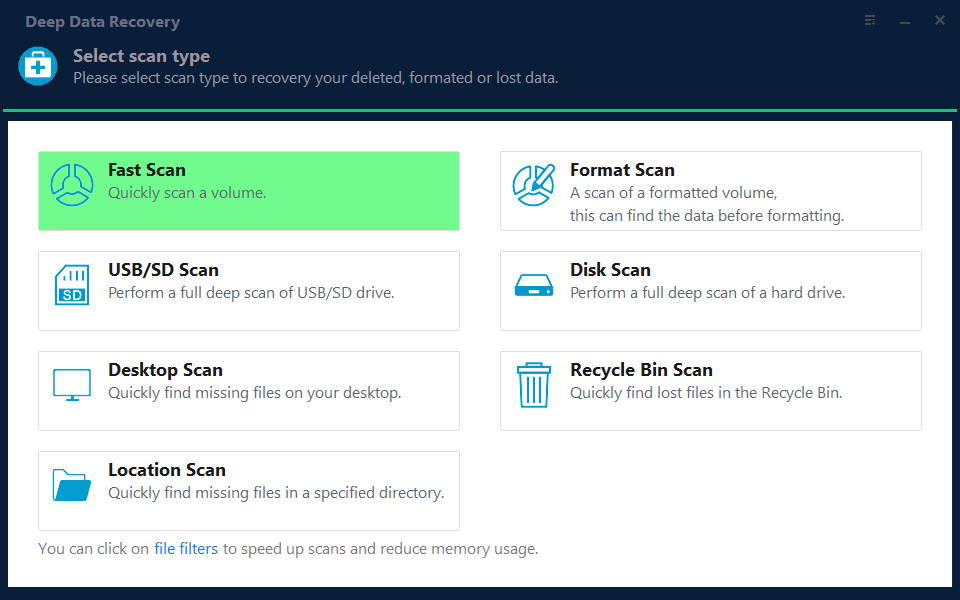
Note: You can choose different search modes based on where and why the data was lost.
Step 2. Choose the encrypted drive to scan
The BitLocker encrypted drive is displayed in the next window.
When you click on the encrypted partition, a pop-up window will appear asking for the password to unlock it. Enter the password and click "Scan" to start searching for lost files.
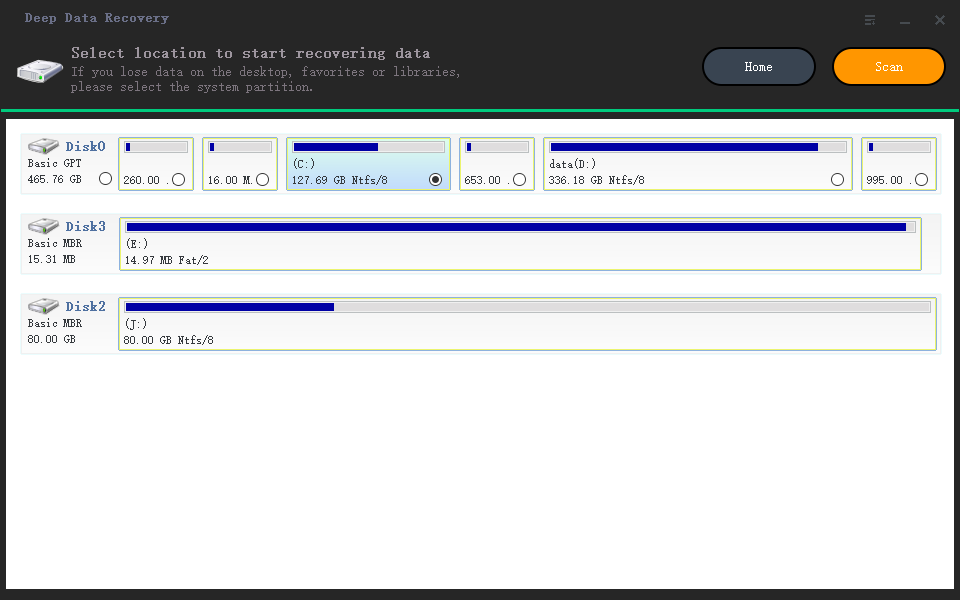
Note: If you forget the key, you can use "Try Automatically Decrypt," which may help you decrypt the drive, but it may not work. If it fails, this program can't scan the drive.
Step 3. Select and preview scanned files
The software initiates a quick scan for deleted files and an advanced scan for more lost files. Upon completion, you can apply the "Filter" feature or click "Search files or folders" to quickly locate the lost files.
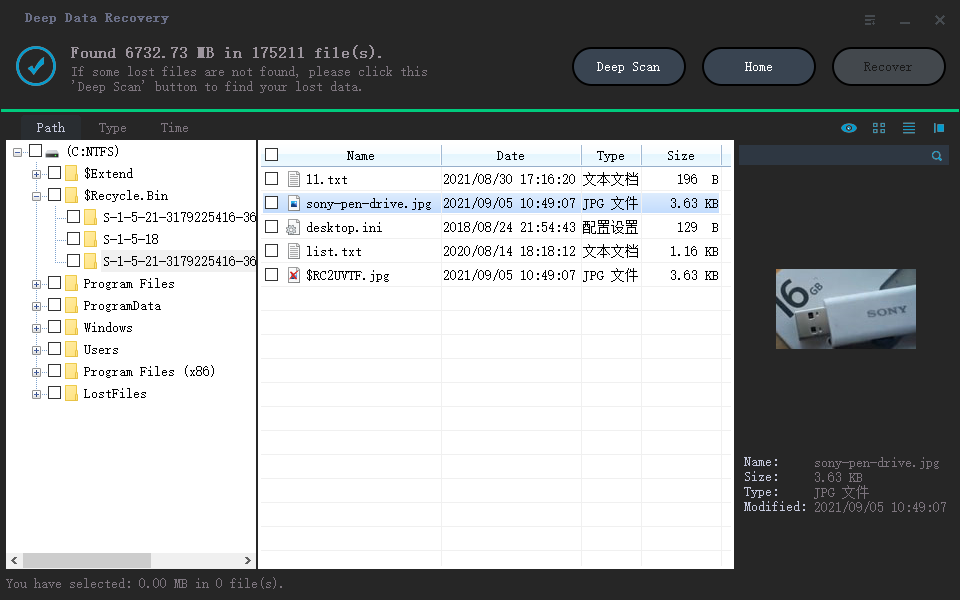
Step 4. Recover lost files from BitLocker encrypted hard drive
After previewing the file, click the "Recover" button to restore deleted or lost files from a BitLocker encrypted partition on Windows.
Conclusion
It's a good idea to password-protect sensitive data on your devices, but make sure you have a copy of the password in a safe place or use a password you won't forget to avoid issues if you forget or lose the recovery password. You can also back up your password with a password keeper.
Related Articles
- Free Download JPEG Recovery Software to Recover Your Photos
- How to Recover Files from USB Flash Drive with or Without Software
- How to Recover Deleted Files from CD, CD-RW, DVD & DVD-RW
- Free PDF Recovery: Recover Deleted, Unsaved, and Corrupted PDF File
- How to Show Hidden Images in Word and How to Unhide a Word
If images are not showing in Word 2007, 2013, or 2016, you can try to show hidden pictures or text by checking the “Show/Hide” button in the Home tab, or by pressing Ctrl+Shift+8. For more detailed instructions, you can refer to the full guide on this page. - How to Fix a Slow WD External Hard Drive Without Losing Data
If you're facing a slow WD external hard drive that takes a long time to open files or boot the operating system, there are solutions to help. However, if you lose important data during the process, consider using Deep Data Recovery Free for assistance.
Products
Articles & Tutorials
- Data Recovery
- Data Backup
- File Recovery
- File Backup
- System Backup and Restore
- Disk and Partition Clone
- Technical articles
- Mobile articles
- Disk Master Help
- Windows Data Recovery Tutorials
- Windows Secure Delete Tutorials
- Windows Partition Management Tutorials
- Windows File Backup and Restore Tutorials
- Windows System Backup and Restore Tutorials
- Windows Disk Backup and Restore Tutorials
- Windows Clone Tutorials