How to Recover Data from External Hard Drive (4 Ways Available)
The most effective way to recover data from an external hard drive is to use data recovery software, with Deep Data Recovery being the top choice among users due to its effectiveness in safely and quickly restoring data.
An external hard drive, also known as an external hard disk, is a large storage device that allows both Windows and Mac users to transfer files, save big data, and create backups of important personal data items. Like other storage devices, it's vulnerable to data loss due to various reasons.
If you're struggling to recover data from an external hard drive, there are reliable solutions available. Depending on the circumstances, you can try one of four methods: using a data recovery software, sending the drive to a professional data recovery service, taking it to a local electronics repair shop, or using a DIY data recovery kit.
To restore files from your external hard drive, follow these steps:
PAGE CONTENT:
- External Hard Drive Recovery Overview
- How to Restore Data from External Hard Drive
- Bonus Tip: How to Protect External Hard Drive Data & Avoid Data Loss
Recuva is a free data recovery software that can recover deleted files, photos, videos, and other data from various devices on Windows computers, including hard drives, USB flash drives, SD cards, cameras, media players, and even drones. It can also recover data from formatted, corrupted, or damaged storage devices, and supports recovery of multiple file types, including documents, images, audio, and video files. With its user-friendly interface and advanced algorithms, Recuva makes it easy to scan and recover lost data, making it a reliable and efficient solution for data recovery needs.
If you're a Mac user, you may also be interested in learning how to recover data from an external hard drive on your Mac. This can be a useful skill to have, especially if you've accidentally deleted important files or if your external hard drive has failed.
External Hard Drive Recovery Overview
To find the right external hard disk recovery solution, it's essential to understand what causes file loss on your device. Learning about the common reasons for file loss, such as physical damage, software issues, or human error, will help you make an informed decision when selecting a recovery tool. By understanding the root cause of the file loss, you can choose a solution that is tailored to your specific needs and increase the chances of successful data recovery.
1. What causes data loss on external hard drive
2. When you lose data on an external hard drive, try to remain calm and follow these steps: 1) Check if the drive is still recognized by your computer, 2) Run a disk check and scan for errors, 3) Attempt to recover data using data recovery software, 4) If the above steps fail, consider sending the drive to a professional data recovery service, and 5) Take steps to prevent data loss in the future, such as regularly backing up your data and using a reliable external hard drive.
What Causes Data Loss on an External Hard Drive
Data loss on an external hard drive can occur due to various reasons, including physical damage, software corruption, electrical surges, human error, and hardware failure. These issues can arise from everyday activities, such as accidentally deleting files, dropping the drive, or experiencing power outages.
- Accidental file deletion or formatting
- Critical file system structures loss or corruption
- Unexpected system shutdown or application failure
- Partition structures are damaged or lost
- Damage due to a power failure or surge
- Virus attack or other unknown reasons
What to Do When You Lost External Hard Drive Files
If you've lost your data due to a hardware failure, accidental deletion, or another reason, don't worry. Two quick tips can help you recover files from your external hard drive right now.
#1. Stop using the external hard drive immediately
Important
Stop using an external hard drive that has lost data on it, as new data may overwrite the lost files, making them unrecoverable.
#2. Turn to reliable data recovery solution for help
When you lose files on an external hard drive or other storage devices, using professional data recovery software is often the best solution.
To recover lost files from an external hard disk, start by identifying the type of file system used on the disk, such as NTFS, HFS+, or exFAT. Next, download and install a data recovery software that supports the identified file system, such as Deep Data Recovery or Disk Drill.
How to Restore Data from External Hard Drive
Here are 4 reliable methods to recover external hard drive data in different situations:
To recover data from an external hard drive, scan the drive with data recovery software, such as Deep Data Recovery, and follow the on-screen instructions to restore your files. This method is often the easiest and most effective way to recover data, especially if the drive is damaged or corrupted. The software will scan the drive and recover any recoverable files, even if they were deleted or lost due to hardware failure.
#2. Recover Lost External Hard Drive Partition and Data
#3. Show Hidden Files on External Hard Drive
To recover virus hidden files on an external hard disk using CMD commands, first, connect the external hard disk to your computer. Then, open Command Prompt as an administrator. Navigate to the drive letter of the external hard disk using the `cd` command, for example, `cd D:`.
The most effective file recovery solution is Method 1, followed by Method 2 for lost partition recovery, Method 3 for hiding files, and Method 4 for virus deleted or hidden files.
Method 1. Recover External Hard Drive Data with Data Recovery Software
This software can scan and recover data from external hard drives that have been deleted, formatted, are in RAW file system, or have experienced an OS crash, power failure, partition loss, or hidden files, among other errors.
When you lose files on an external hard drive, the simplest way to recover data is to use the best data recovery software for Windows, such as Deep Data Recovery.
This software supports restoring data from an external hard drive that has been lost due to various reasons, including accidental formatting, data deletion, virus attacks, and more, on devices from brands like Buffalo, WD, Seagate, Toshiba, Samsung, Lacie, Silicon, ADATA, and others.
Follow the 3-To recover data from your external hard drive, first, unplug the drive from your computer and inspect it for any physical damage. If it's still intact, connect it to a different computer to rule out any issues with the original machine.
Step 1. Download and Install for Deep Data Recovery Software
To install the software, click the download button to obtain the installation package, then run it on your computer and follow the prompts by clicking "Fast Scan" to proceed.
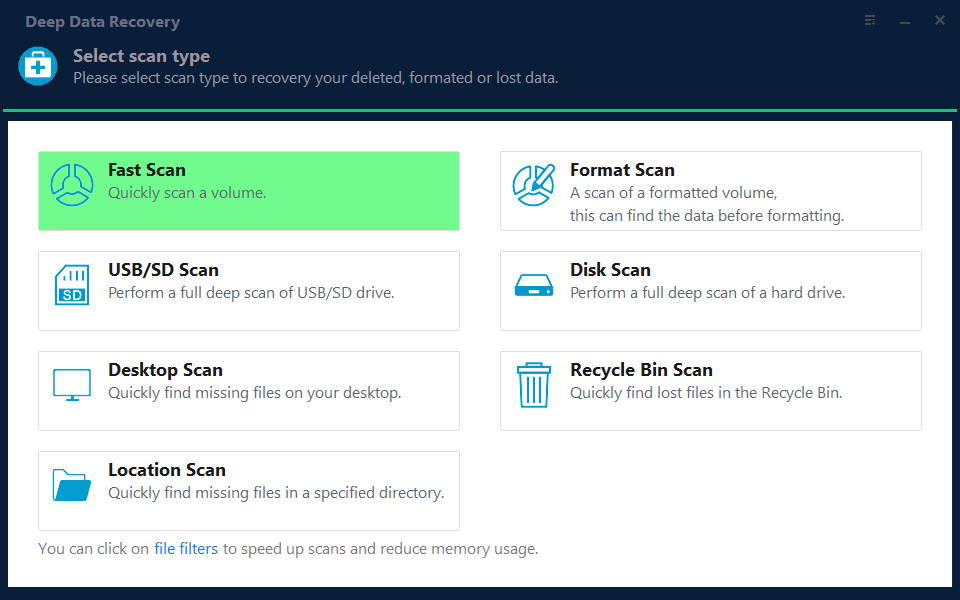
Note: You can choose different search modes based on where and why the data was lost.
Step 2. Choose the external hard drive and click "Scan".

The software scans the selected drive for lost data, displaying the results as it scans. During the scan, you can filter the results to quickly locate specific file types, such as pictures, documents, or videos.
Step 3. Preview and recover data
- Double-clicking a file will allow you to preview its content.
- Choose the file(s) and click Recover.
- To avoid overwriting the original files, it's recommended to save the recovered files to a different drive, such as a USB drive or an external hard drive, instead of saving them back to the original drive. This will ensure that the recovered files are preserved and can be safely transferred to the original drive if needed.

Method 2. Recover Lost External Hard Drive Partition and Data
Recover lost external hard drive volume and data from unallocated space with this solution, which applies to recovering lost data.
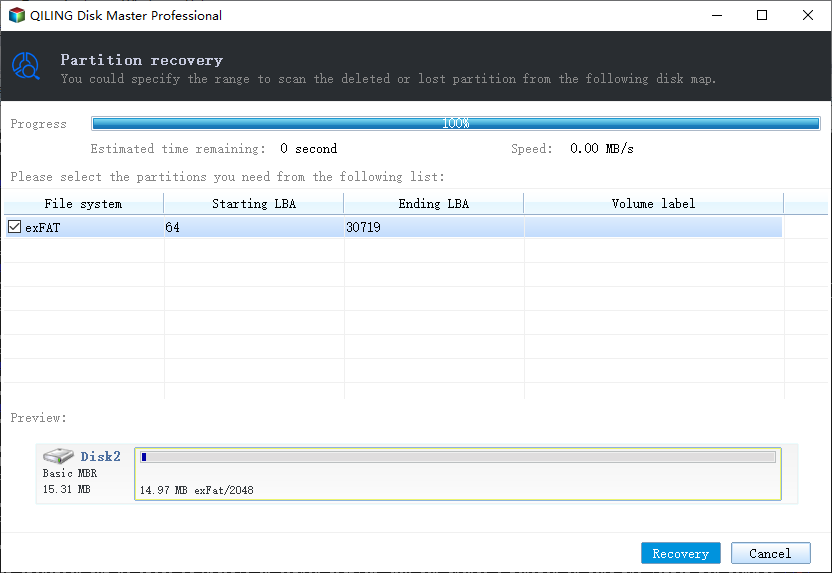
If you mistakenly deleted the partition on your external hard drive, or the external hard disk displays as unallocated in Disk Management for unknown reasons, you can try to recover the lost partition by using a third-party partition recovery software such as Qiling Partition Recovery. These tools can scan your external hard drive and recover the lost partition, allowing you to access your data again.

You'll need to recover a lost partition from unallocated space and scan an external hard drive to recover files, which can be done using a third-party partition recovery software.
Here are the steps to recover partition and data on the external hard drive using Qiling Partition Recovery:
Connect the device - To recover a lost partition on an external hard drive, USB, or SD card, it's recommended to connect the device to your PC in advance. This allows you to scan the device for any recoverable data before attempting any recovery operations.
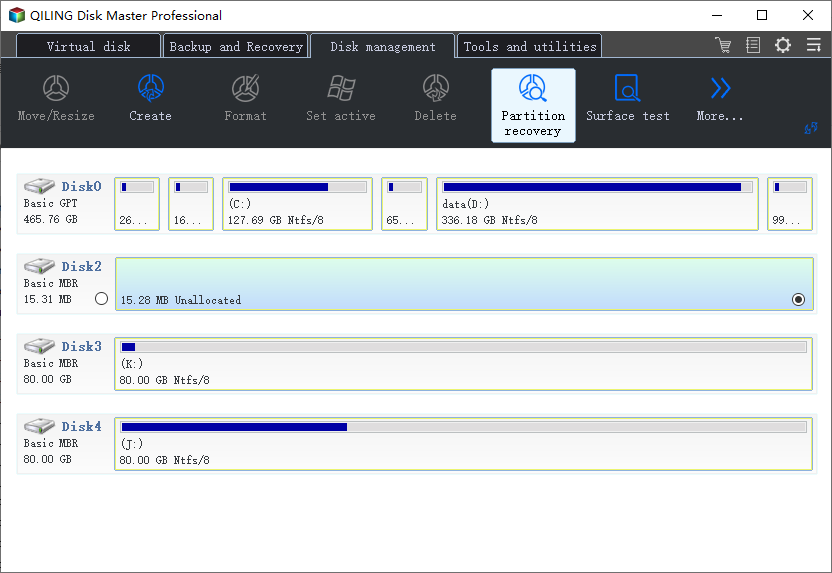
Step 1: Run Qiling Disk Master on your PC.
Select the device - To recover lost partitions from an external hard drive, USB drive, or SD card, go to the "Disk management" page and click on "Partition recovery" to proceed.
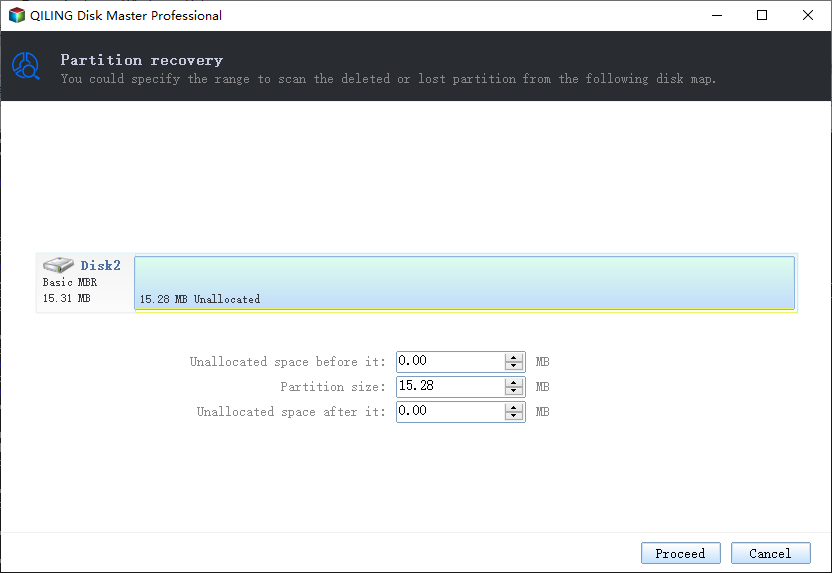
Step 2: Click "Proceed" to scann the partition.
Let the program scan the selected device and find the lost partition(s).
Step 3: Preview and restore lost partition(s).
To fix the "Lost" partition, mark it as "Good" recoverability, then click "Recovery" to restore it.
Method 3. Show Hidden Files on External Hard Disk
You can recover files that were hidden on an external hard disk by using data recovery software. This software can scan the external hard disk and recover any files that were previously hidden or deleted, including files that were hidden in folders or on the root of the disk.
To unhide items on your device, follow these steps: check if the item is hidden by looking for a hidden icon or a checkbox next to it, then click on the item to unhide it. If the item is not visible, check the settings or preferences of your device to see if there's an option to unhide hidden items. If you're still unable to find the item, try searching for it using the device's search function.
Step 1. In Windows 10/8/7, press Windows + E to bring up the Windows Explorer.
Step 2. Go to the Folder Options or File Explorer Options window, click "View".
Step 3. Under the Hidden files and folders section, click "Show hidden files, folders, and drives option".
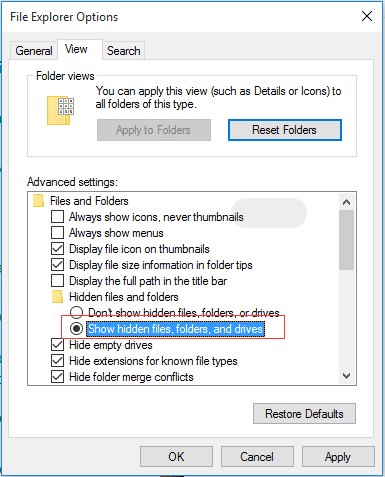
Step 4. Then click "Apply", then click "OK".
The files that were previously deleted will reappear on the external hard drive. They will be visible and accessible again.
Method 4. Recover Files from External Hard Drive Using CMD
To restore lost files removed or hidden by a virus on an external hard disk, you can use CMD commands.
If your storage devices have been affected by a virus or malware, they may delete or hide files. To recover files from an external hard drive using CMD, be cautious as incorrect command lines can cause serious problems.
Warning
Running chkdsk may fix file system errors, but it can also lead to total data loss. To avoid this, perform data recovery beforehand and then proceed with the CMD method. This approach ensures that any recoverable data is saved before attempting to fix the file system issues.
You can use CMD commands as shown below to restore external hard drive data now:
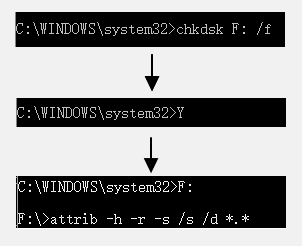
Step 1. Press "Win + R" keys and type: cmd, hit "Enter" to open the Command Prompt window.
Step 2. Right-click "Command Prompt" and choose "Run as administrator".
Step 3. Type the following command lines and hit Enter each time:
To run the Check Disk utility on an external hard drive, open Command Prompt and type `chkdsk F: /f`, replacing "F" with the drive letter of the external hard drive, such as "E" or "H". This command will scan the drive for errors and attempt to fix them.
Y
F
F:\>attrib -h -r -s /s /d *.*
Step 4. Wait for the operation to complete and type exit to close the window.
After restarting your computer and reconnecting the external hard drive, you should be able to view and access all data on the drive. If the command prompt is not working, you can try using Deep data recovery software for assistance.
If your external hard disk contains other issues, you may be interested in using a data recovery software to help recover your files. This software can scan the disk and recover any files that are still accessible, even if the disk is no longer functioning properly.
- External Hard Disk Not Recognized After Unplugging
- Repair Corrupted External Hard Drive
- External Hard Drive Not Working/Responding/Showing Up
Bonus Tip: How to Protect External Hard Drive Data & Avoid Data Loss
After trying the solutions in this guide, you can view and use your external hard drive data again. To protect your external hard drive data and prevent further data loss, make sure to regularly back up your data, use a reliable and high-quality external hard drive, and avoid exposing it to extreme temperatures, physical shocks, or magnetic fields. Additionally, update your operating system and external hard drive drivers to ensure compatibility and stability.
#1. Format External Hard Drive to Usable Again
Before saving restored files back to your device, make sure your external hard drive is formatted and ready for use again. This ensures the data is safe and secure. Take your time and prioritize the formatting process to avoid any potential issues.
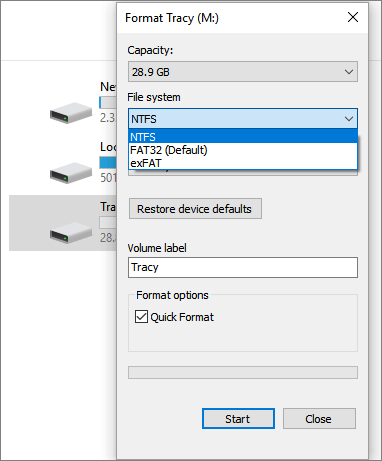
Step 1. Connect the external hard drive to PC and open File Explorer.
Step 2. Right-click the external hard drive and select the "Format" option.
Step 3. On the format window, select the NTFS option and tick "Quick Format". Click "Start".
To summarize, you should save your files back to your external hard drive after the process is complete.
#2. Create an Extra Backup of External Hard Drive Data
It's a good idea to create an extra backup of your external hard drive files by saving them to another location, such as a Cloud drive. To back up an external hard disk, consider using free backup software like Qiling Backup, which is a popular choice.
With a backup, you can easily create an image file of your storage device's content and quickly recover it whenever needed, providing a double guarantee for the safety of your critical data.
#3. Run Antivirus Software and Scan All Your Devices Regularly
If you have antivirus software installed on your computer, it's recommended to run it to scan all your devices, which will protect your device and data from viruses and malware infections.
To Sum Up
This page explains what an external hard drive is, the common causes of file loss errors on external hard drives, and provides 4 reliable solutions to help recover data from external hard drives with ease.
3 tips to help protect disk files safely, and turn to Deep Data Recovery for help if lost files on your devices.
You're considering purchasing a data recovery software to recover lost data from your computer. This is a wise decision, as it will enable you to quickly retrieve your lost data and minimize potential losses.
FAQs About External Hard Drive Recovery
Qiling hard drive data recovery software can help recover 99% deleted and lost data from an external hard disk, making common data loss scenarios relatively easy to handle. However, some people may still have concerns that this article does not address, such as specific data recovery challenges.
1. How much does it cost to recover data from an external hard drive?
The cost of recovering data from a damaged external hard drive can range from $500 to $1000, depending on the extent of the damage. However, if the drive is not physically damaged but has a logical error, DIY data recovery software like Deep Data Recovery can be used, which is a more affordable option.
The cost of hard drive recovery can vary depending on the type of data recovery service needed, the extent of the damage, and the expertise of the recovery company. Generally, the cost can range from a few hundred to several thousand dollars.
2. How can I recover data from external hard drive not recognized?
Connect your external hard drive to another computer to rule out a USB port issue. If it works, the problem is with the original computer's USB port. If it doesn't work, check the external hard drive's connection in Disk Management and use Deep Data Recovery to recover data.
3. Can you retrieve data from a dead external hard drive?
You can easily recover data from a dead external hard drive using Qiling bootable data recovery software. This software allows you to create a bootable USB, CD/DVD disc that enables you to boot your computer normally, making it possible to perform full data recovery in just three steps.
To recover data from a dead hard drive, start by powering it down and connecting it to a computer using a USB cable. Use a data recovery software such as Deep Data Recovery to scan the drive and identify recoverable files.
Related Articles
- How to Remove/Delete Directory in Linux
- Windows Cannot Find GPEDIT.MSC on Windows 11/10, Fixed Now!
- Red Dead Redemption 2 Lost Save Game, How to Recover?
- League of Legends Replays & Highlights, Where to Find and How to Recover
- How to Recover Data from Dynamic Disk
Recovering data from a dynamic disk is a straightforward process with Deep Data Recovery. Simply target the desired file types and location, then scan the dynamic drive. Once the scan is complete, you can preview and restore deleted files, making it easy to retrieve your data. - How to Recover Data from exFAT SD Card on Mac/Windows
To recover data from an exFAT SD card, download Qiling exFAT SD card recovery software for Mac or Windows, then scan the card to restore deleted or formatted files.
Products
Articles & Tutorials
- Data Recovery
- Data Backup
- File Recovery
- File Backup
- System Backup and Restore
- Disk and Partition Clone
- Technical articles
- Mobile articles
- Disk Master Help
- Windows Data Recovery Tutorials
- Windows Secure Delete Tutorials
- Windows Partition Management Tutorials
- Windows File Backup and Restore Tutorials
- Windows System Backup and Restore Tutorials
- Windows Disk Backup and Restore Tutorials
- Windows Clone Tutorials