External Hard Drive Not Recognized After Unplugging [Solved]
Solution: Reformat the corrupted external hard drive
If Disk Management fails to fix the external hard drive not recognized after accidental unplugging on Windows, the last resort is to reformat the corrupted external hard drive, which will erase all data, so use Qiling hard drive recovery software to retrieve files.
Fixes - External Hard Drive Not Recognized After Unplugging
If you've unplugged an external hard drive from your Windows computer and now it's no longer recognized or detected, or if Windows still reads the drive but asks you to format it before using it, don't worry - there's help available.
| Workable Solutions | Step-by-step Troubleshooting |
|---|---|
| 1. Make HDD temporarily show up |
|
| 2. Recover data from external HDD | Connect the external hard disk to your PC and let Windows recognize the disk and assign it a drive letter...Full steps |
| 3. Permanently fix the problem | You can make changes in the Registry to make your external hard drive appear properly...Full steps |
When you abruptly pull an external hard drive out of your computer without safely ejecting it, you may encounter unexpected problems. This can cause the external hard drive to become unreadable, unrecognized, or inaccessible. However, you can find solutions to these issues on this page, which provide detailed troubleshooting steps to resolve the problems and also offer a data recovery solution to export data from an external hard drive that you cannot access after unplugging.
How to Make the External HDD Temporarily Show Up
If your removable hard disk is not being detected by Windows, you can try using the following methods as a temporary emergency fix to extract important data. However, these methods are not 100% effective for Windows to recognize the drive again the next time you unplug and plug it back in. You can use them to access your data, but they may not resolve the issue permanently.
Method 1. Assign a Drive Letter to the Drive
To troubleshoot the issue, first check if the drive is visible in the Disk Management or Device Manager.
- To access Disk Management, press the Windows key + R, type diskmgmt.msc in the Run box, and press Enter.
- To access the Device Manager, press the Windows and R keys simultaneously, type devmgmt.msc in the Run box, and press Enter.
If the external hard drive is there, you are lucky. All you have to do to make it appear on your computer is follow the steps below.
Step 1. In the Disk Management, right-click the external hard drive, which should be displayed as "unallocated," and select "Change Drive Letter and Paths" from the menu.
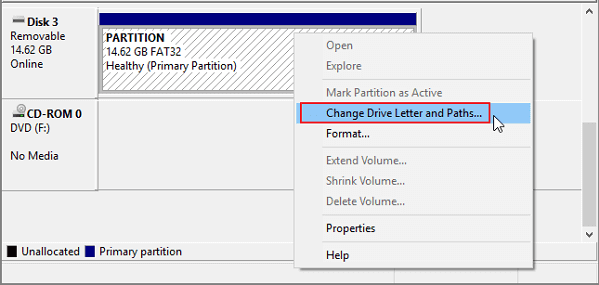
Step 2. Specify a drive letter that has not been used for the current drive, such as E, F, G, etc., and click OK to save the change. This will assign the selected drive letter to the current drive.
Method 2. Update or Reinstall Drivers
Step 1. Open Device Manager and expand Universal Serial USB controllers.
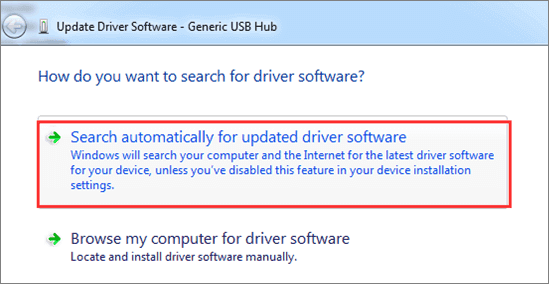
Step 2. To update the driver software for an external drive, locate the drive, right-click on it, and select the option to Update Driver Software from the context menu.
Step 3. Select "Search automatically for updated driver software" and Windows will help you install the latest drivers automatically.
How to Recover Data from the External Hard Drive
As soon as the hard drive appears on your computer, download Qiling hard drive recovery software to export data from the hard drive to a safe location.
Since the hard drive may have developed bad sectors or other hardware issues after being accidentally unplugged, it's recommended to do data recovery instead of data backup at this point. Qiling data recovery software can restore data from various storage devices, including an SD card, memory card, SSD, USB flash drive, camcorder, and hard drive.
Download this external hard drive recovery software to restore your lost data.
Step 1. Select file types and click "Fast Scan" to start
- Download and install Qiling Data Recovery on your PC or laptop.
- Connect the external hard drive to your computer.
- Launch Deep Data Recovery software, select file types, and click "Fast Scan" to initiate the recovery process.
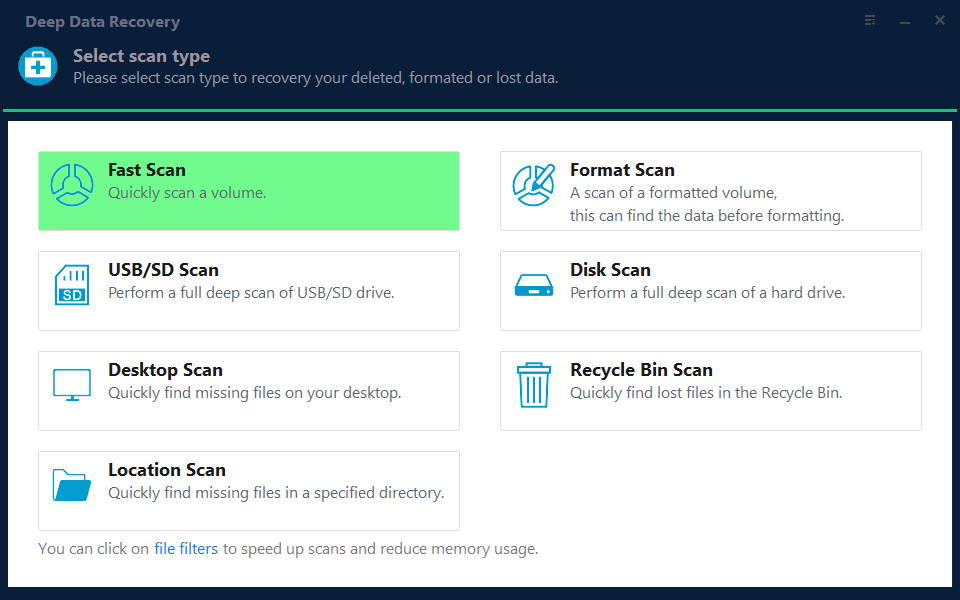
Note: You can choose different search modes based on where and why the data was lost.
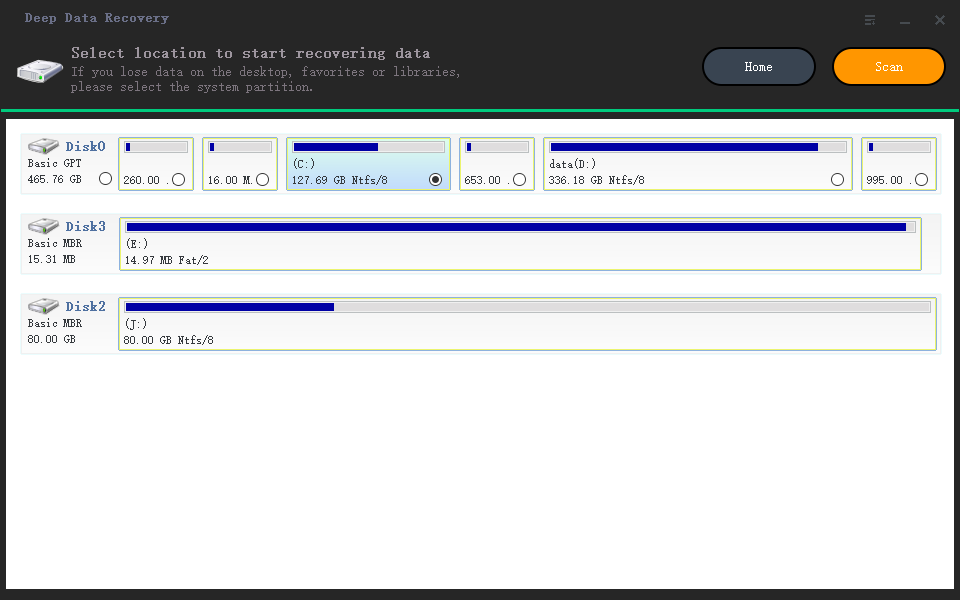
Step 2. Choose and scan the external hard drive
- To recover data from an external drive, choose the drive from the External drives list and then click on "Scan for lost data".
Step 3. Check the scan results
- Qiling data recovery software scans the selected drive for all data, including deleted, corrupted, and existing data, immediately.
- You can use the Filter feature to quickly locate files of a specific type, such as Pictures, Word, Excel, PDF, videos, emails, and more.
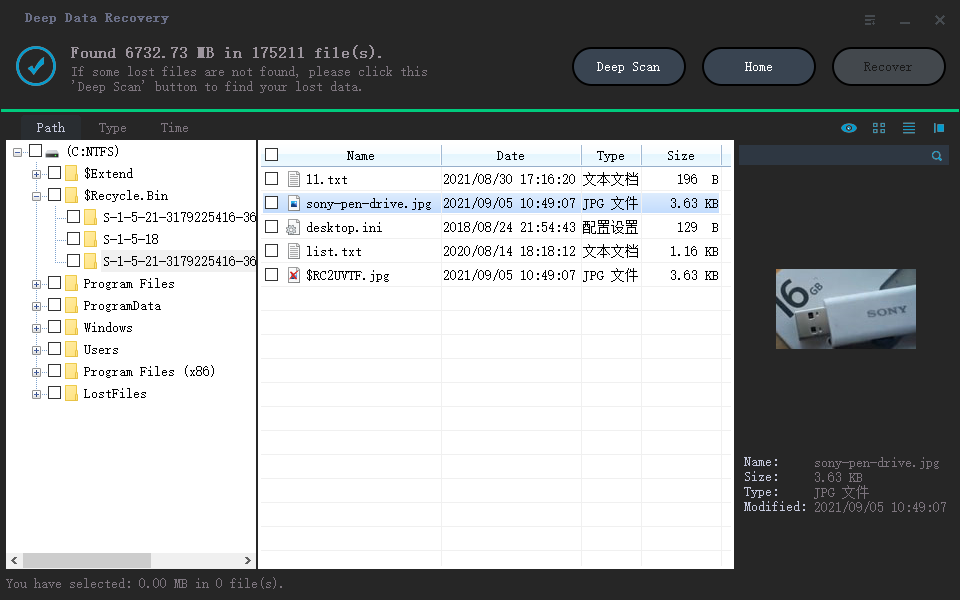
Step 4. Preview and recover data
- Double-clicking a file from the scanned results to preview.
- Choose the files you want and click "Recover".
- To prevent overwriting the original files, save the recovered files to a different drive, such as an external hard drive or a USB drive, instead of the original one where the files were stored. This ensures that the recovered files are safely stored and can be accessed later.
Permanently Fix the HDD Not Recognized Error After Unplugging
Making changes to the Registry can help make your external hard drive appear properly on your computer and permanently solve the non-detection problem after unplugging due to improper removal.
Step 1. Hit Windows + R keys, type regedt32, and click OK.
Step 2. Back up your registry by going to File > Export.
Step 3. In the left-hand sidebar, go to: HKEY_LOCAL_MACHINE\SYSTEM\CurrentControlSet\Control\Class\{4D36E967-E325-11CE-BFC1-08002BE10318}.
Step 4. If you see any "UpperFilters" or "LowerFilters" entries on the right side, delete them.
People Also Ask
1. How to fix the external hard drive not recognized after unplugging on Mac?
Failing to properly eject an external hard drive from a Mac before unplugging it can lead to hard drive corruption, causing the storage device to not be recognized when plugged in again. To resolve this issue, try switching the connection cable or using a different USB port, and reboot your Mac multiple times. This may resolve the problem and allow the external hard drive to be recognized by your Mac.
2. Why is my external hard drive not detected?
Most cases of an external hard drive not being detected by Windows result from human error, malware infection, or software/hardware corruption, and can often be resolved by verifying the drive's presence in Disk Management.
3. Is it bad to unplug the hard drive without ejecting it?
While some people may not have experienced issues after abruptly unplugging a connected hard drive, USB flash drive, or SD card, it's only a matter of time before problems arise. The more frequently you do this, the more likely your drive will become corrupted and damaged, making it essential to properly eject devices before disconnecting them.
4. How do I format my hard drive that doesn't show up?
To format a hard drive that is not showing up, you should first locate the drive in Windows Disk Management, which can be accessed by pressing the Windows key + R, typing "diskmgmt.msc," and pressing Enter.
- In Windows 10. go to This PC - Manage - Disk Management
- In Windows 7, go to My Computer, click on Manage, and select Disk Management.
To format a hard drive partition, right-click on the partition and select Format from the context menu. Then, follow the format wizard to complete the formatting process.
Related Articles
- How to Fix 'the device is not ready' on USB Flash Drive/HDD
- Unhide USB Files Using Windows, CMD, or Software
- Fixed: Seagate external hard drive not showing up in Windows 10/11
- Best Prosoft Data Rescue Alternative - Free Download
Prosoft Data Rescue is a great tool to recover lost or deleted data on computer. This article introduces you a Prosoft Data Rescue alternative software tool. - How to Recover Accidentally Deleted Folder on Mac
Where are the recently deleted folders on Mac and how to do deleted folder recovery? Here is the step-by-step guide for how to recover deleted folder on Mac.
Products
Articles & Tutorials
- Data Recovery
- Data Backup
- File Recovery
- File Backup
- System Backup and Restore
- Disk and Partition Clone
- Technical articles
- Mobile articles
- Disk Master Help
- Windows Data Recovery Tutorials
- Windows Secure Delete Tutorials
- Windows Partition Management Tutorials
- Windows File Backup and Restore Tutorials
- Windows System Backup and Restore Tutorials
- Windows Disk Backup and Restore Tutorials
- Windows Clone Tutorials