The Best SSD Data Recovery Software for SSD Data/File Recovery
How to Recover Data from SSD
With the growing popularity of Solid State Drives (SSDs), users are increasingly turning to them over traditional Hard Disk Drives (HDDs). However, data loss on SSDs can occur due to accidental deletion, formatting, virus attacks, operating system failures, or file system failures. Fortunately, data recovery on SSDs is possible using Qiling data recovery software, which can help restore lost data. Additionally, if a partition is deleted on an SSD, an online tutorial is available to guide users on how to restore the missing partition(s).
What Is Solid State Drive ( SSD Overview)
A Solid State Drive (SSD) uses solid-state electronic memory chips, such as DDR RAM or Flash Memory, to read and write data, offering benefits like extended battery life, reduced weight, and increased read performance, ultimately replacing traditional hard disk drives with high-speed circuitry.
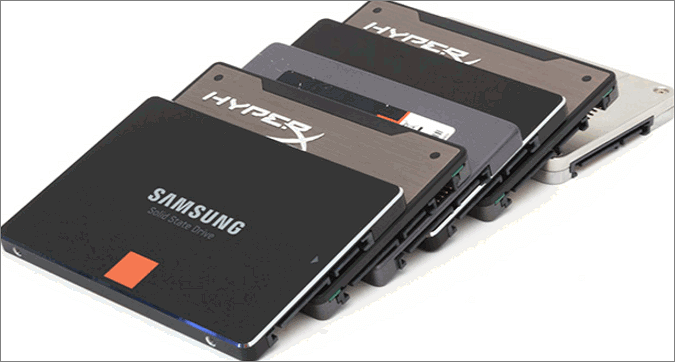
Solid State Drives (SSDs) have become incredibly popular due to several compelling reasons. They offer faster data access and transfer speeds compared to traditional hard disk drives (HDDs), making them ideal for applications that require quick loading and execution, such as gaming and video editing. Additionally, SSDs are more durable and resistant to physical shock, temperature fluctuations, and other environmental factors, making them a great choice for mobile devices and ruggedized systems.
- An SSD (solid-state drive) drive provides faster access time than a traditional hard disk drive (HDD) does, as it stores data on interconnected flash memory chips rather than on spinning disks and mechanical heads.
- The SSD (solid-state drive) access time is independent of the read/write head synchronizing with a data sector on a rotating disk, as SSDs store data in flash memory chips without mechanical components.
- The SSD provides greater physical resilience to physical vibration, shock, and extreme temperature fluctuations, making it more durable than a hard drive. Additionally, SSDs are immune to strong magnetic fields, which could potentially damage a hard drive.
Why You Need to Perform SSD Data Recovery
With all the advantages of SSD technology, it's likely to eventually replace hard drives and make its mainstream debut in high-end notebooks. However, as its popularity grows, so do the risks of data loss, making it essential to know the major reasons behind data loss with SSD drives. These include various issues that can arise, making it crucial to be aware of them to avoid data loss troubles.
- Careless deletion or formatting
- Virus attacks or infection
- Partition loss on SSD drive
- System failure
- SSD drive damage
- ...
What Is the Best SSD Recovery Software for Data Recovery
Even if you take precautions to avoid data loss, problems can still arise. Fortunately, third-party SSD drive recovery software is available to help. Deep Data Recovery is highly recommended for this task, as it has powerful data recovery capacity and can recover lost files from SSD drives in all complicated data loss situations.
This software enables users to undelete files from an SSD drive, unformat SSD drives, and perform SSD drive RAW recovery, among other features. With its user-friendly interface, it allows both technical and non-technical users to complete SSD data recovery and rescue their files in simple steps, without requiring any professional knowledge or technical skills.
To recover data from SSD using Qiling SSD data recovery software, follow these steps.
Step 1. Select file types and click "USB/SD Scan" to start
Launch Deep Data Recovery, select the file types you want to recover, and click "USB/SD Scan" to begin the recovery process.
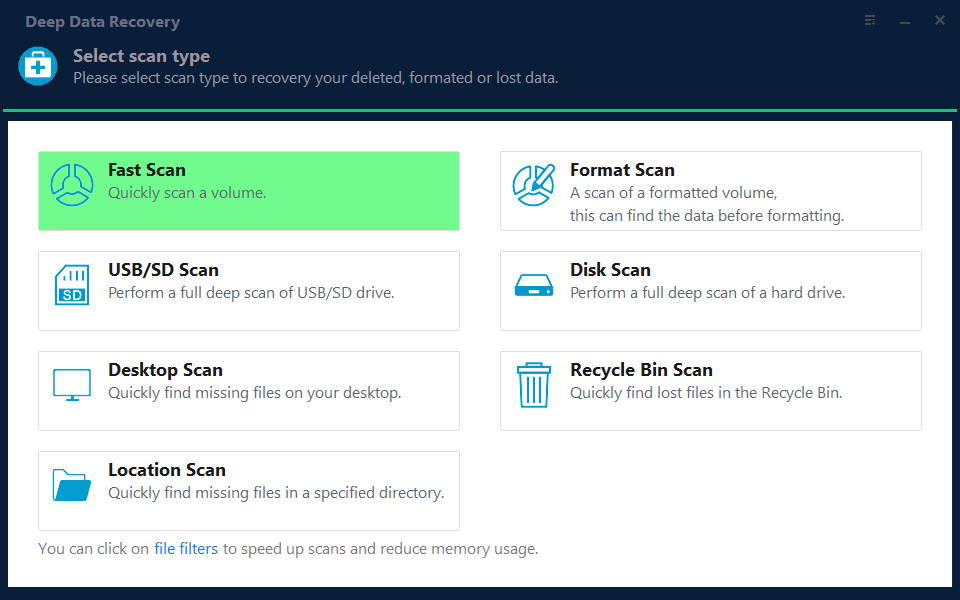
Note: You can choose different search modes based on where and why the data was lost.
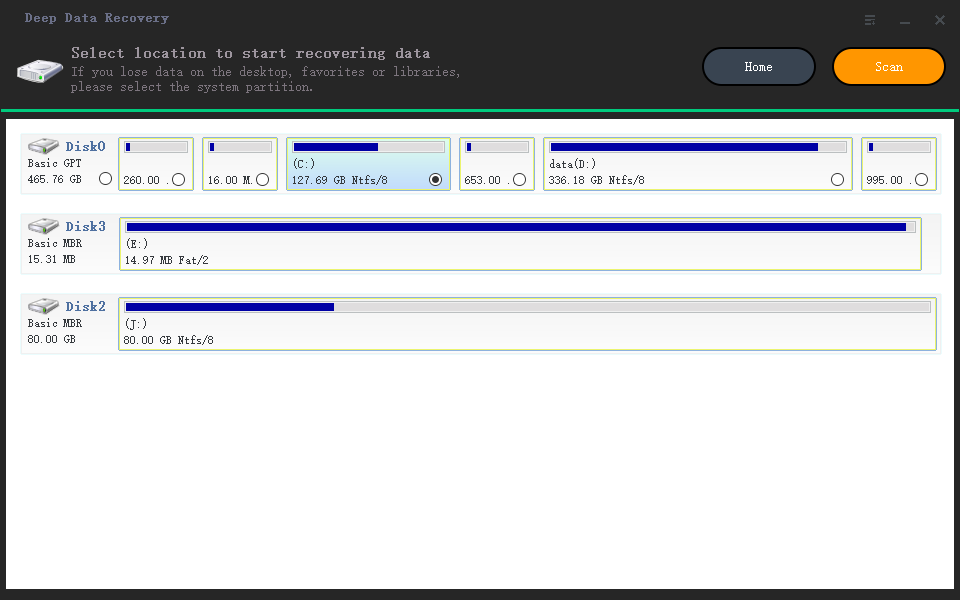
Step 2. Scan the SSD
To recover lost data from an SSD, select the drive where the data was lost and click the "Scan" button. This will initiate the scanning process, allowing you to locate and recover your lost files.
Step 3. View the results
After scanning is complete, use the "Filter" and "Search" features to locate lost SSD data by checking the "Deleted Files" and "Other Lost Files" folders.
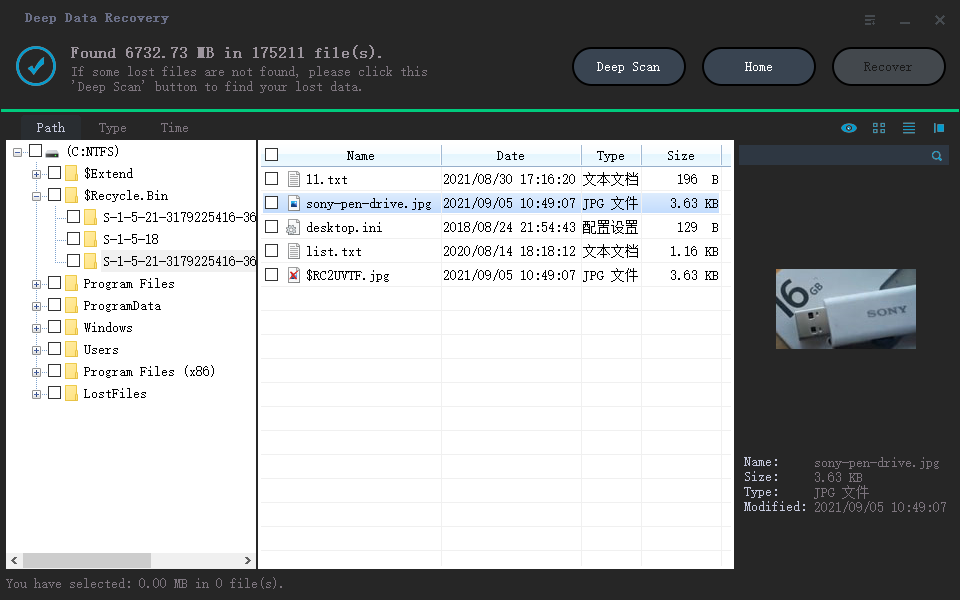
Step 4. Recover SSD files
To recover lost SSD files, select the desired data and click the "Recover" button to retrieve them.
- Important
- This procedure is only effective for recovering deleted files on an SSD where the TRIM function is disabled. If you've previously deleted files and your SSD's TRIM is enabled, the chances of successful data recovery are low. You might consider disabling TRIM if you believe it's necessary.
Highlighted Features of Qiling SSD Recovery Software
For professionals, there are specialized software tools available that can recover permanently deleted and formatted files from solid-state drives (SSDs). These tools utilize advanced algorithms and techniques to scan the SSD and retrieve lost data, even in cases where the files have been completely erased or the drive has been reformatted.
| Features | Details |
|---|---|
| Recover Formatted SSD Drive Data |
Deep Data Recovery can recover files from a formatted or reformatted Solid State Drive. |
| Recover Deleted Data from SSD |
Important files get accidentally deleted from SSD disks. With this software, you can easily retrieve lost data files from SSD disks. |
| Recover Files from Corrupted SSD |
The application can access files from a corrupted SSD and recover them with ease, scanning all affected files and folders to restore them to a healthy state within a few simple steps. |
| Support GPT and MBR Partition Recovery |
This software can restore lost multimedia items from both GPT and MBR partitions of an SSD, and also scan unallocated partitions. |
Tips to Protect Your Files from Further SSD Data Loss Disasters
If you've already retrieved your lost or deleted files from your SSD, it's essential to take steps to prevent future data loss. To do this, make sure to regularly back up your data to an external drive or cloud storage service. This will ensure that your files are safe and can be easily recovered if something goes wrong.
- Back up important data to another drive or external storage device to prevent loss in case of a system crash or hardware failure.
- Download and install antivirus software to protect your SSD from malware and viruses.
- When you find data loss trouble has occurred to your SSD drive, stop using it immediately to prevent further data loss and potential damage. This is because SSDs are more prone to data corruption and loss when they are still being used, especially if the issue is related to a faulty controller or firmware.
- If you're experiencing issues with your SSD drive, such as data loss or corruption, you can use a recovery software like Deep Data Recovery to help recover your data. This software is specifically designed to handle the unique challenges of SSD drives and can help you recover lost files and folders.
Conclusion
Losing crucial data from an SSD drive is a huge disaster, but with the right guide, you can protect and rescue your files. By following the SSD data recovery guide, you can recover permanently deleted, formatted, and corrupted data from your SSD drive in Windows OS using Qiling SSD data recovery software. This software is specifically designed to help you recover your valuable data.
FAQs About SSD Data Recovery
Here are a few frequently asked questions about how to recover files from SSDs. If you have any of these issues, you can find the methods to fix them here.
Can SSD data be recovered?
The recoverability of SSD data is a complex issue. Due to SSD TRIM technology, deleted files or folders on an SSD drive are nearly impossible to recover using data recovery software.
If you accidentally format a partition or delete files on an SSD with TRIM disabled, you can still recover your data using a dedicated SSD data recovery application.
How can I recover data from a failed SSD?
Generally, it's hard to identify if the SSD is dead or failed, but there are a few indicators to detect whether your SSD is approaching its read/write cycle limit or is experiencing physical issues. These include an SSD that is consistently slow, produces error beeps or lights, or shows up as "unknown" or "uninitialized" in the BIOS or UEFI settings. Additionally, if the SSD is not recognized by the operating system, or if it's producing unusual noises or vibrations, it may be a sign that the SSD has failed or is failing.
- Bad blocks on an SSD can cause issues such as data loss, file corruption, and system crashes when saving, reading, or moving files, potentially leading to failure.
- File system repair but physical defect software shows no damage
- A computer crashing while booting up can be a sign that the Solid-State Drive (SSD) is failing. This is often due to wear and tear on the drive, which can cause it to lose data or become increasingly unreliable over time.
- SSD uses read-only mode
When your SSD fails, you can recover data from it by connecting it to a computer and running Deep Data Recovery, which allows you to access the SSD and recover its data.
How do you fix a failed SSD?
To fix a failed SSD, first check for physical damage or degraded flash units, and replace the SSD if necessary. If the issue is due to logic errors, such as bad blocks, software failures, or malware, you can try using software tools like disk checking and repair utilities, or updating the SSD's firmware to resolve the problem. Additionally, you can try using a data recovery tool to recover any important data from the failed SSD, and then replace it with a new one. If none of these options work, it may be necessary to replace the SSD completely.
- Format the SSD, but first recover files from it
- Power cycling the SSD
- Idling in the boot menu
- Updating SSD firmware
- Updating drivers
How much does SSD data recovery cost?
Data recovery for a fully encrypted SSD can cost around $700 with vendor assistance, but without it, the cost can rise to $3,500, according to data recovery company Gillware.
You can recover data from an SSD for only $69.95 using Qiling SSD data recovery software, which can also restore lost files from other devices such as hard drives (HDD & SSD), USB flash drives, SD cards, pen drives, and external hard drives.
External SSDs need the same caution about writes and TRIM; review the external SSD recovery steps before attempting repeated scans.
Related Articles
- Recover Deleted Word Documents Windows 10/11 in 4 Ways [2022 Update]
- Restore Deleted Downloads Folder and Data in Windows 10/8/7
- Download Nikon Photo Recovery Software
- Ext4 File Recovery: How to Recover Deleted Files from Ext4 Linux
- Tears of the Kingdom Corrupted Data | PC and Switch Fixes
If you're experiencing Tears of the Kingdom corrupted data issue on PC or Nintendo Switch, you can use Deep Data Recovery to find lost game files. To troubleshoot the issue on Switch, check the game's save data, update the game to the latest version, and try deleting and reinstalling the game. - 5 Ways to Troubleshoot Video Not Working on Zoom
Having issues with Zoom Meetings' video? Here are 5 Ways to Troubleshoot Video Not Working on Zoom for crystal-clear videos and uninterrupted meetings. Besides, download Qiling video repair software to repair corrupted Zoom recordings as soon as possible.
Products
Articles & Tutorials
- Data Recovery
- Data Backup
- File Recovery
- File Backup
- System Backup and Restore
- Disk and Partition Clone
- Technical articles
- Mobile articles
- Disk Master Help
- Windows Data Recovery Tutorials
- Windows Secure Delete Tutorials
- Windows Partition Management Tutorials
- Windows File Backup and Restore Tutorials
- Windows System Backup and Restore Tutorials
- Windows Disk Backup and Restore Tutorials
- Windows Clone Tutorials