What Is M.2 SSD? Definition and Types
PAGE CONTENT:
What Is M.2 SSD
M.2 SSD M.2 SSDs are a type of solid-state drive (SSD) that differ from traditional 2.5-inch SSDs in their size and design. They are typically 22 millimeters wide and 80 millimeters long, resembling a small piece of gum.
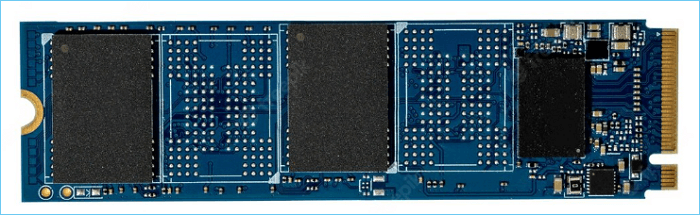
The M.2 SSD is a type of solid-state drive that can replace the mSATA interface. The new generation of this drive uses a SATA or NVMe interface, offering faster reading speeds and larger capacities, making it widely used in laptops and desktops. Its high recognition and adoption rate are a result of its improved performance and compatibility with modern systems.
SATA vs SSD: Which One to Choose
Choosing between a SATA Hard Drive and an SSD can be a tough decision. Should you opt for the traditional SATA Hard Drive or upgrade to a faster and more efficient SSD? The decision ultimately depends on your specific needs and preferences. If you're looking for a detailed comparison, you may want to read an article that weighs the pros and cons of each option, and make an informed decision for your particular case.

Types of M.2 SSD
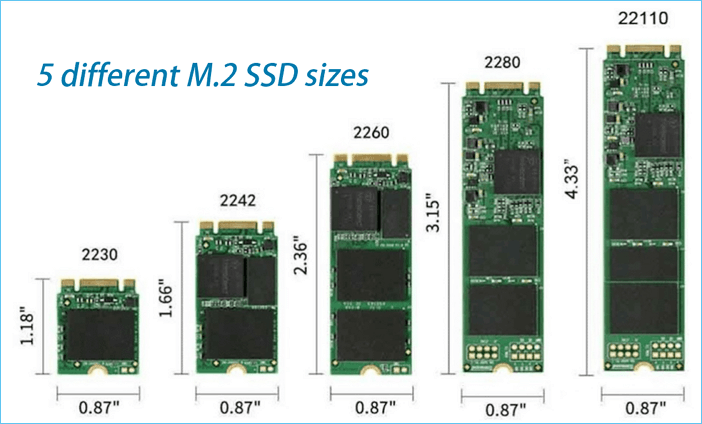
Most M.2 SSDs are in the form of "22 x 80mm", but there are other sizes, which can be identified by the four or five-digit number in their name or on their PCB, with the first two numbers representing the width and the rest the length (example: M.2 Type-2280).
Common sizes of M.2 SSD are below:
M.2 Type-2230 (22 x 30mm)
M.2 Type-2242 (22 x 42mm)
M.2 Type-2260 (22 x 60mm )
M.2 Type-2280 (22 x 80mm)
M.2 Type-22110 (22 x 110mm)
Pros & Cons of M.2 SSD
The M.2 SSD offers several advantages, including high performance, low latency, and compact size. Its different types, such as SATA and NVMe M.2 SSDs, cater to different needs and budgets.
M.2 SSDs offer a compact design and rapid data access, making them a desirable upgrade for laptops and desktops.
M.2 SSDs are smaller and more commonly used in thin gaming laptops, taking up less space. They have a maximum transmission speed of 6Gbps, but NVMe protocol M.2 SSDs can reach speeds of up to 3.5GB/s, which is six times faster than traditional SATA SSDs.
But M.2 SSD also has its shortcomings.
M.2 SSDs are more expensive than HDDs and NVMe M.2 SSDs are also pricier than SATA SSDs.
Another disadvantage of NVMe SSDs with M.2 interfaces is their small size and high performance, which can lead to overheating. Most NVMe M.2 SSDs do not have heat dissipation vests, and their heat generation is rapid, while heat dissipation is slow, resulting in higher temperatures that can further impact SSD performance.
Related Articles
- A Mini USB - Things You Need to Know
- New Windows 11 Known Issues Keep Coming | How to Fix Known Issues in Windows 11
- Microsoft Plans to Phase Out HDD in Favor of SSD (News)
- What Is DAS(Direct Attached Storage)?A Beginner Guide for DAS
- 5 Ways to Fix the 'Device Doesn't Support Miracast' Error in Windows 11
The Miracast Error in Windows 11 is often caused by compatibility or driver issues on the PC, requiring it to meet specific parameters to support this casting technology. - [5 Ways] How to Fix DISM Error 87 Option Is Unknown Windows 11/10/7
Getting DISM error 87 'the option is unknown' when running DISM commands? Learn the 5 main causes (incorrect commands, wrong privileges, etc.) and follow 5 proven plans to fix it on Windows 11/10/7 safely.
Products
Articles & Tutorials
- Data Recovery
- Data Backup
- File Recovery
- File Backup
- System Backup and Restore
- Disk and Partition Clone
- Technical articles
- Mobile articles
- Disk Master Help
- Windows Data Recovery Tutorials
- Windows Secure Delete Tutorials
- Windows Partition Management Tutorials
- Windows File Backup and Restore Tutorials
- Windows System Backup and Restore Tutorials
- Windows Disk Backup and Restore Tutorials
- Windows Clone Tutorials