New Windows 11 Known Issues Keep Coming | How to Fix Known Issues in Windows 11
Since June 24th, 2022, the announcement of Windows 11 has been a hot topic among Windows users, Insiders, and professional IT sites, with discussions centered around its new design, features, system requirements, and how to download and install it, as well as addressing known issues and bugs.
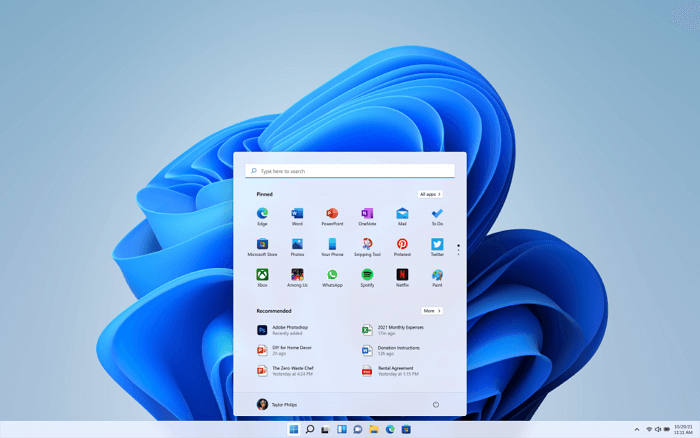
Microsoft released Windows 11 build 22000.65 on July 8th, 2022, which fixes some known issues in the operating system. Unlike the first build, 20222.51, which was plagued by bugs and errors, this new build addresses some of the problems. As an Insider build, it still has some known issues, but they are not major and most have fixes available.
List of Noticeable Known Issues in Windows 11:
- This PC Can't Run Windows 11
- Start - Unable to Enter Text
- Taskbar - Green Flash Appears
- File Explorer - Shows Old Windows 10 Layout or Won't Appear, Crashes
- Settings - Won't Launch, Green Flash Appears
- Search - Not Work or Search Panel Not Open
- Widgets - Appear Empty, Display in the Wrong Size on External Monitor
- Store - Not Function, Rate, and Reviews Not Available for Some Apps
- Windows Security - Not Supported for Insiders, Unexpectedly Turned Off
In addition to the previously mentioned issues, many bugs are also being experienced while running Windows 11 Insider Build on the computer, with most of them being minor and tolerable.
How to Fix Windows 11 Known Issues and Bugs (3 Fixes)
Microsoft is addressing known issues in the new Windows 11 build, which could cause problems on computers with the current version.
Here are three fixes for common issues and bugs in Windows 11:
- Rollback from Windows 11 to Windows 10 - Stay with a Stable OS
- Send Feedback to Microsoft - Help Developers to Fix Bugs and Issues in New Builds
- Fix Known Issues in Windows 11 - Manage and Get Rid of Issues on Your Own
#1. Rollback from Windows 11 to Windows 10
Windows 11 offers a 10-day rollback feature, allowing users to revert to the previous OS if they're not satisfied with the new one.
If you need to roll back, follow the steps below:
Step 1. Go to Settings, click System and Recovery.
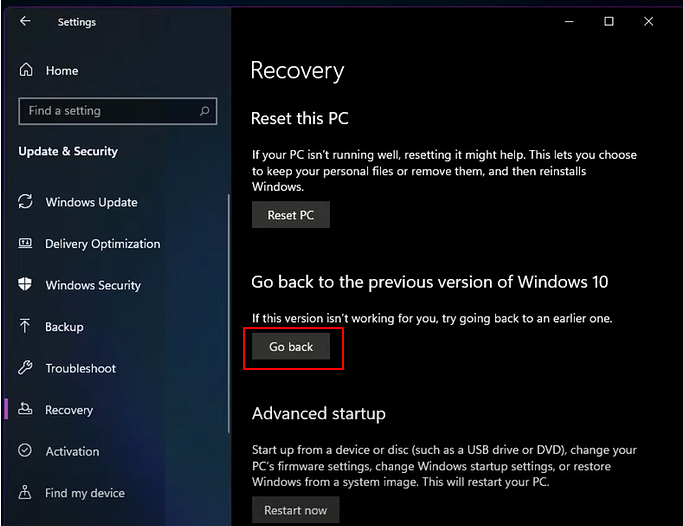
Step 2. Click Go back next to the Previous version of Windows.
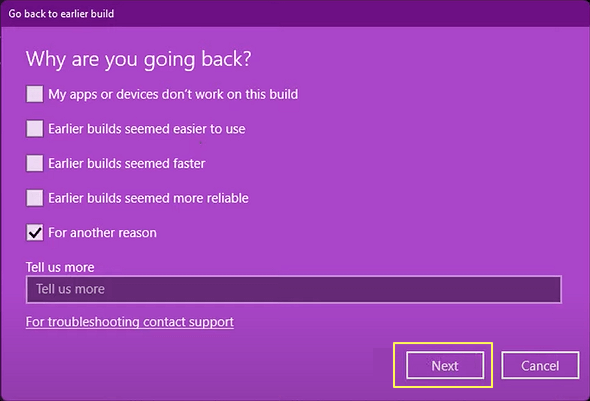
Step 3. Check the reasons why you want to uninstall when prompted.
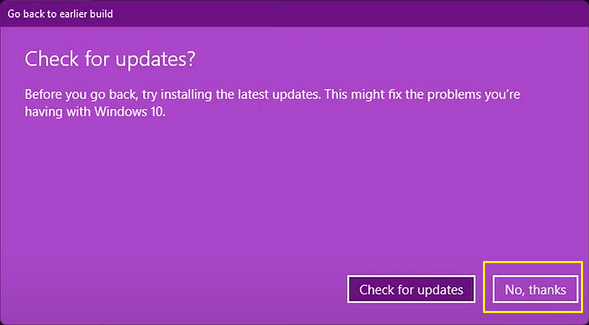
Step 4. Click No, thanks when asked to check for updates instead of rolling back.
Step 5. When a "What you need to know" window appears, click Next to proceed.
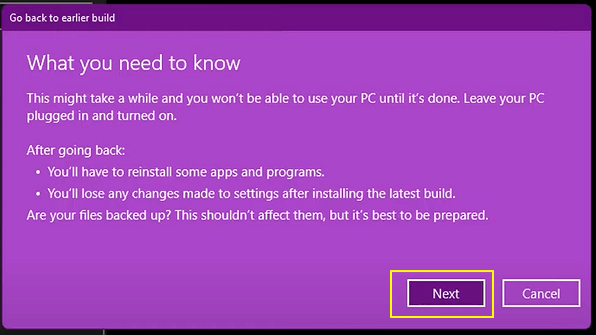
Step 6. Click Next again when it warns you to remember your password from Windows 10. (Keep your password remembered.)
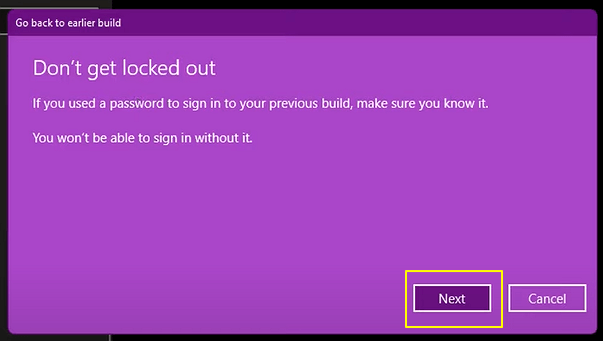
Step 7. Click Go back to an earlier build.
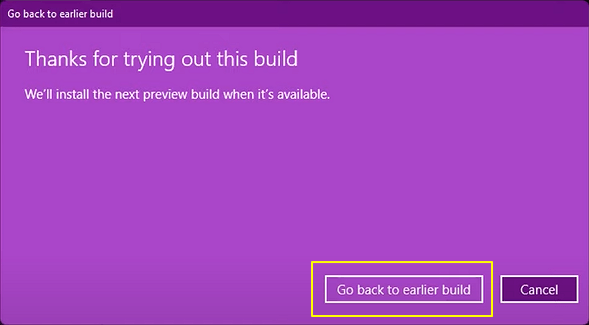
The system will now restart and go through a restoration process that should take a few minutes, after which you'll be back on Windows 10.
#2. Send Feedback to Microsoft via Insider Channel
Microsoft allows Windows users to report feedback on their computers, whether running Windows 11 or Windows 10, as long as their OS is still supported.
If the bugs or issues are big or one of the major issues on the current OS, you may help to get the issue resolved by doing so:
Step 1. Go to the Feedback Center on your computer.
Press Windows + F to open it.
Step 2. To add new feedback, click on the "Feedback" option on the left-hand pane, then select "Add new feedback" from the dropdown menu under the "All feedback" section.
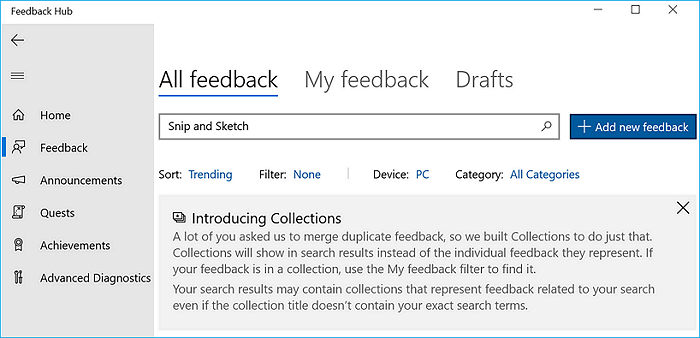
Step 3. Enter your feedback by typing a summarize and details, and click Next to continue.
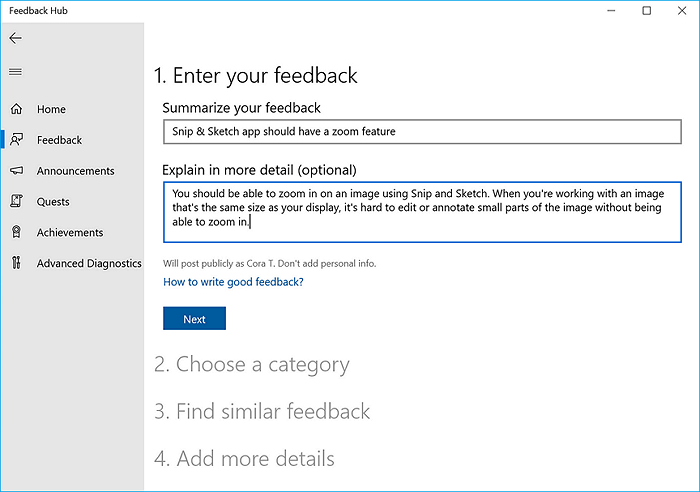
Step 4. Choose a category and click Next.
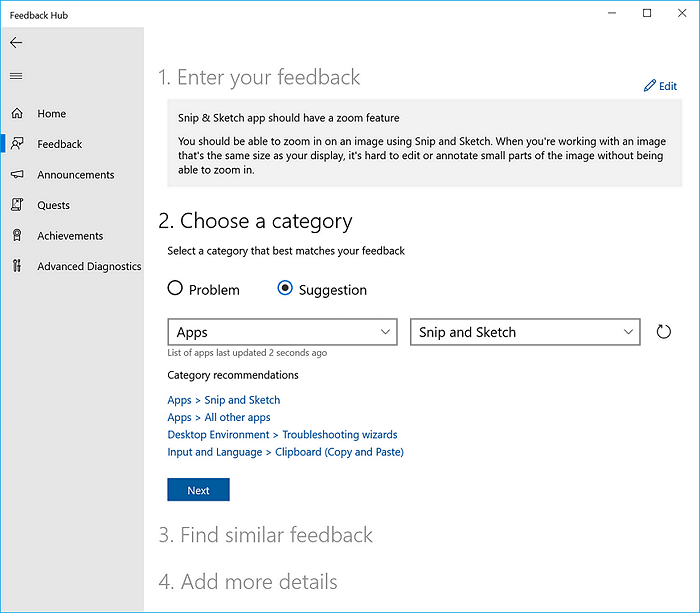
Step 5. Find similar feedback, the feedback system will list similar feedback to you.
Please select one of the existing issues or create a new one by selecting "New Feedback" and then "Next step".
Step 6. Then add more details to your current issue in the fourth position.
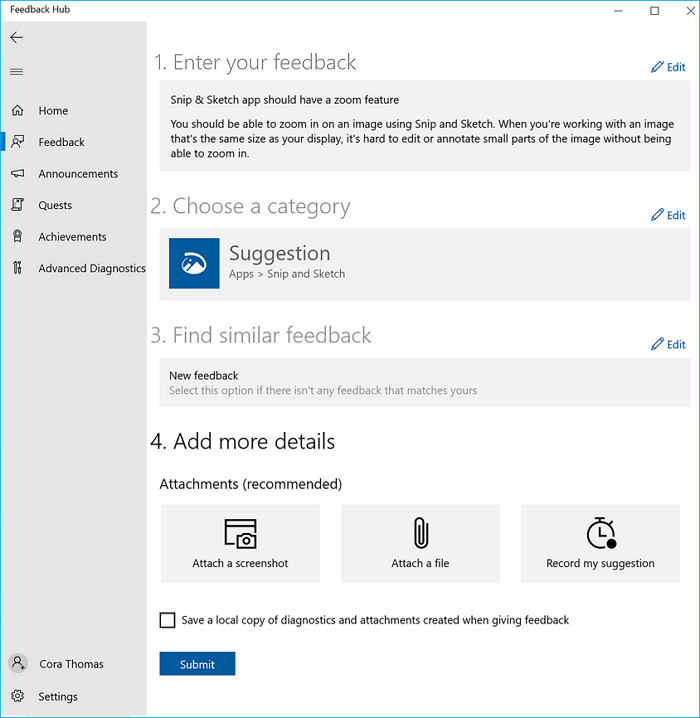
The help page for sending feedback to Microsoft can be accessed by clicking on the link provided, which will provide a more detailed guide on how to send feedback.
#3. Manually Fix Known Issues in Windows 11
Microsoft is currently focused on fixing bugs and known issues in its new builds, and as a result, several major issues are currently affecting Windows 11 Insider users. If you're experiencing one or two of these issues, you can try following the provided fixes to resolve them.
- This PC Can't Run Windows 11
This PC can't run Windows 11 is an error that occurs when Windows 10 users run the PC Health Check utility to test if their computers meet the minimum system requirements for Windows 11.
The issue of "This PC can't run Windows 11" is related to hardware and software limitations, specifically TPM 2.0 and Secure Boot requirements. Fortunately, most of these issues are solvable, and a full guide to resolving them can be found on the page "This PC can't run Windows 11".
- Start - Unable to Enter Text
If you're unable to enter text while using Search from Start or the Taskbar, try restarting your computer. This should resolve the issue.
Step 1. Press Windows + R keys.
Step 2. When the Run dialog pops up, close it.
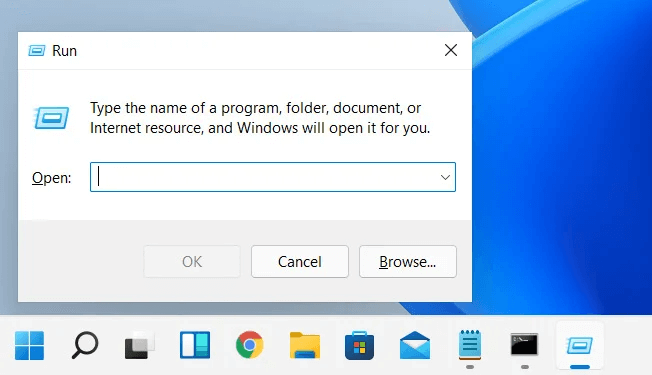
Step 3. Retry to see if you can enter text in Start or Taskbar.
- Taskbar - Green Flash Appears
Mostly, when Taskbar flashes green or flickers, it indicates there might be a new update available in the background. Here is a list of things that you can try:
- 1. Update display driver
- 2. Uninstall problematic apps
- 3. Use file system checker
- 4. Check if the flashing taskbar appears in safe mode
- File Explorer - Shows Old Windows 10 Layout or Won't Appear, Crashes
File Explorer shows in old Windows 10 layout:
1. Open File Explorer and click View, select Options.
2. Click View and uncheck Launch folder windows in a separate process, click Apply.
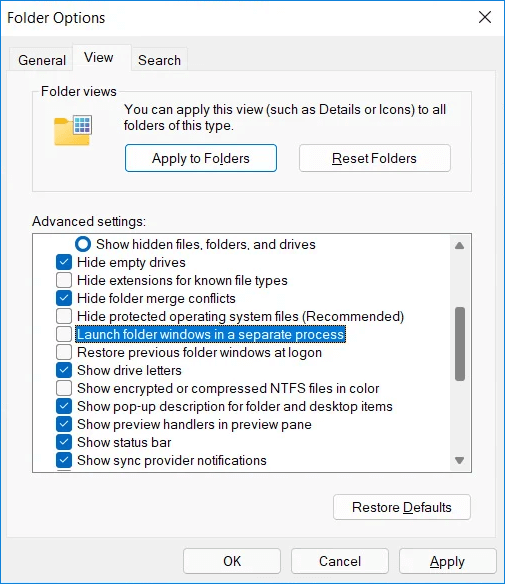
File Explorer Won't Appear or Crashes:
1. Open File Explorer, go to View > Options.
2. Uncheck Open folders in a separate process.
You can try the proven fixes in Windows 10 that may also work in Windows 11 by referring to File Explorer on Open in Windows 10 for more fixes.
- Settings - Won't Launch, Green Flash Appears
1. Try to open Settings:
- Click Start and select Settings
- Click Start > Search, type settings, select from the search list
- Right-click Start and select Settings
- Press Windows + R keys, type ms-settings, click OK
- Open PowerShell and type start ms-settings and hit Enter
2. Run System File Checker: open PowerShell and type sfc /scannow, hit Enter.
3. Download and run Windows Update troubleshooter
4. To reinstall the Settings app, open PowerShell and type the command "Get-AppXPackage | foreach {Add-AppxPackage -DisableDevelopmentMode -Register "$($_.InstallLocation) \AppXManifest.xml"}" and press Enter. This will reinstall the Settings app.
- Search - Not Work or Search Panel Not Open
1. Restart the computer
2. To resolve Windows search and indexing issues, go to Settings > Update and Security > Troubleshoot > Search and Indexing, and click "run the troubleshooter".
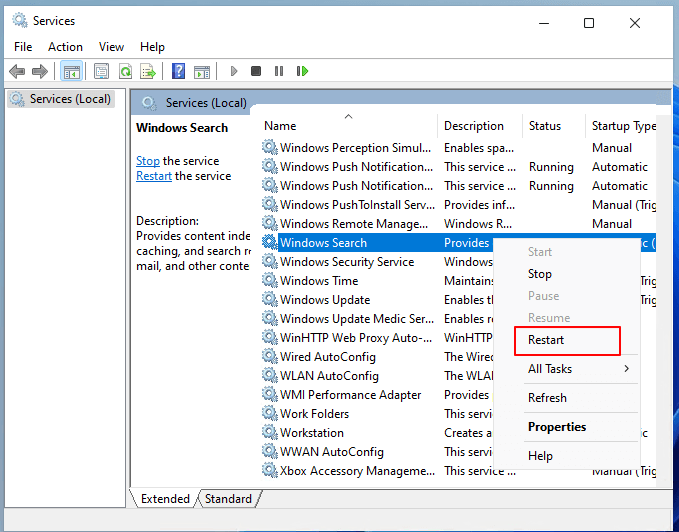
3. To restart the Search service, open the Run dialog by pressing Windows + R, type "services.msc" and click OK. Then, scroll down to locate "Windows Search" in the list of services, right-click on it, and select either "Start" or "Restart" to initiate the restart process.
- Widgets - Appear Empty, Display in the Wrong Size on External Monitor
- 1. Sign out and sign in back again
- 2. Press Windows + W to bring out Widgets
- 3. Personalize Widgets, re-arrange, resize, and customize the content.
- Store - Not Function, Rate, and Reviews Not Available for Some Apps
- 1. To reset the Microsoft Store, go to Start, then click on Settings. From there, navigate to Apps, followed by Microsoft Store.
- 2. Clear Store Cache: Open Search > search wsreset.exe > close the window.
- 3. To resolve the issue, go to the Microsoft Store, click on "Account", and then select "Sign Out". After that, relaunch the Store and sign in with your account again.
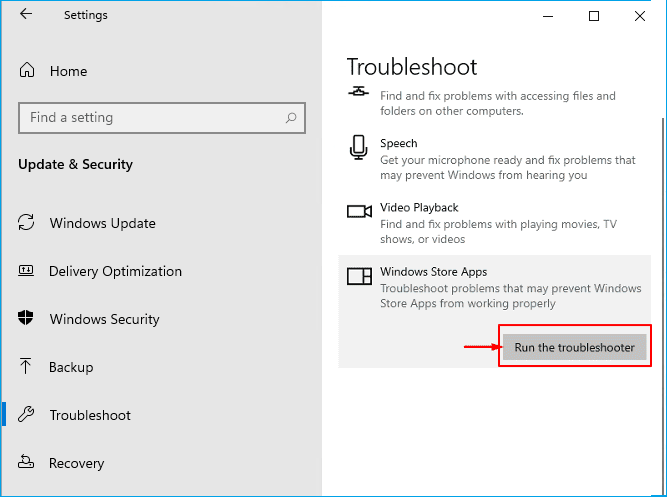
- 4. To resolve Windows Store Apps issues, go to Settings > Update and Security > Troubleshoot, select Windows Store Apps, and click Run the troubleshooter. This will launch the Windows Troubleshooter, which will scan for and attempt to fix any problems with the Windows Store Apps.
- Windows Security says "Standard hardware security not supported" for Insiders, Unexpectedly Turned Off
It means that your device doesn't support memory integrity and core isolation, and it also may have the following limit:
- TPM 2.0 not supported
- Secure boot not enabled
- DEP
- UEFI MAT not enabled
You have two options to resolve the issue: either report the error to Microsoft or consider rolling back to a stable version of Windows, such as Windows 10.
Windows 11 Known Issues Are Fixable, Keep Notified
This page highlights some major known issues and bugs that are apparent on Windows 11 Insider builds, regardless of whether you're on the latest or first build. Fortunately, these issues are fixable.
If you're experiencing the same known issues on your computer, try the suggested fixes. If the issues persist, consider reporting them to Microsoft or searching for solutions within the Insider Program.
Bonus Tips on Optimizing Windows 11 Performance
We recommend a reliable disk management tool, Qiling Partition Master, to optimize your computer performance with Windows 11, in addition to helping you resolve known issues.
See what you can do with this tool:
Related Articles
- How to Map a Network Drive in Windows 11? Your Complete Guide Is Here
- 0xC1900101 Error in Windows Update, Cannot Install Windows 11 [FIXED]
- Reset This PC Not Working on Windows 11 (4 Fixes)
- How to Use Device Encryption on Windows 11
- How to Factory Reset Lenovo Laptop Without Password [with 4 Practical Ways]
Factory resetting a Lenovo laptop without a password can be done in four practical ways, but be aware that this process will completely eliminate all files and folders, returning the PC to its original configuration. - How to Factory Reset Nintendo Switch | Detailed Steps with Video
If you want to factory reset your Nintendo Switch, it's a relatively simple process that requires following a few steps.
Products
Articles & Tutorials
- Data Recovery
- Data Backup
- File Recovery
- File Backup
- System Backup and Restore
- Disk and Partition Clone
- Technical articles
- Mobile articles
- Disk Master Help
- Windows Data Recovery Tutorials
- Windows Secure Delete Tutorials
- Windows Partition Management Tutorials
- Windows File Backup and Restore Tutorials
- Windows System Backup and Restore Tutorials
- Windows Disk Backup and Restore Tutorials
- Windows Clone Tutorials