All You Need to Know About Patch Cable
In networking, patch cables are used to connect devices such as computers, routers, switches, and telephones. They are distinct from Ethernet cables, despite some people considering them interchangeable.
Patch cables and Ethernet cables are often confused with each other, but they serve different purposes. Patch cables, on the other hand, are used to connect devices within a local area network (LAN) and are typically shorter in length, usually ranging from 1 to 50 feet. They come in different types, such as coaxial, fiber optic, and Cat5e, and are used for various applications, including audio and video connections.
What Is a Patch Cable?
A patch cable is used to connect devices on a network, such as computers and routers, as well as non-network devices like microphones and headphones, for transmission of audio, video, and telephone signals.
A patch cable is distinct from regular cables due to its flexibility and slim design. It can be made from various cable types, including UTP, STP, coaxial, or fiber cables. Patch cables are ideal for establishing short-distance connections between devices, facilitating faster communication and data transmission.
The cable transmits signals using a shielded core wire, with a wire mesh surrounding the core to enable ground loop connections and electrical grounding. It has connectors at both ends to plug in the power cord and successfully transmit signals.
Types of Patch Cables and Their Uses
Patch cables come in different forms, including the following:
- FC Patch Cable
- LC Patch Cord
- SC Patch Cord
- ST Patch Cable
- Copper Patch Cable
- MT-RJ Fiber Optic Patch Cord
1. FC Patch Cable
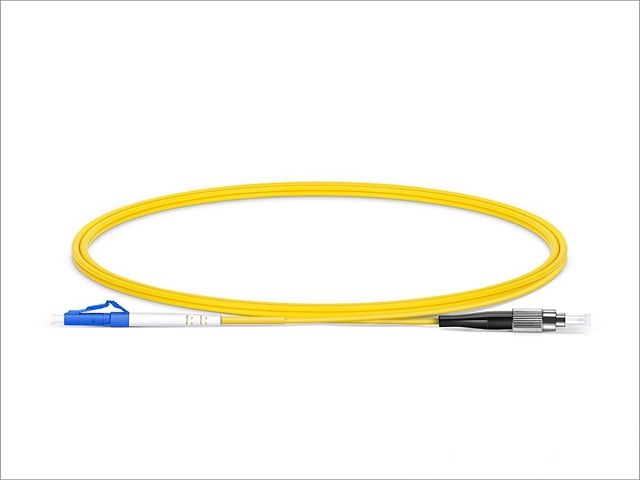
The FC patch cable features a high-precision connector with anti-rotation keys to prevent damage to the fiber, making it suitable for environments that require high communication links.
2. LC Patch Cord
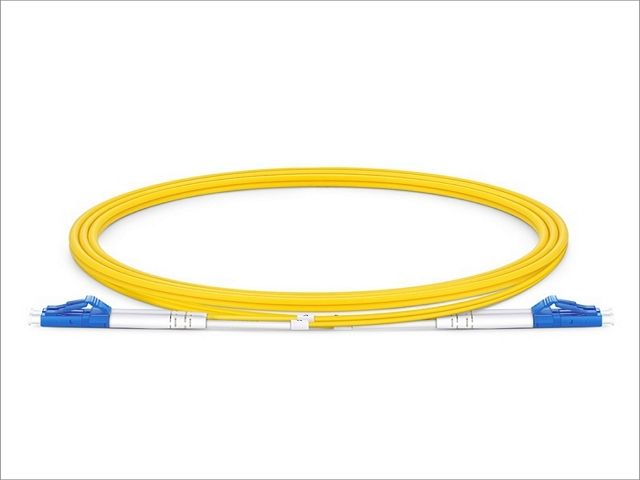
The LC patch cable is a small-sized connector used in single-mode applications, replacing SC connectors, and is often used with pluggable transceivers.
3. SC Patch Cord
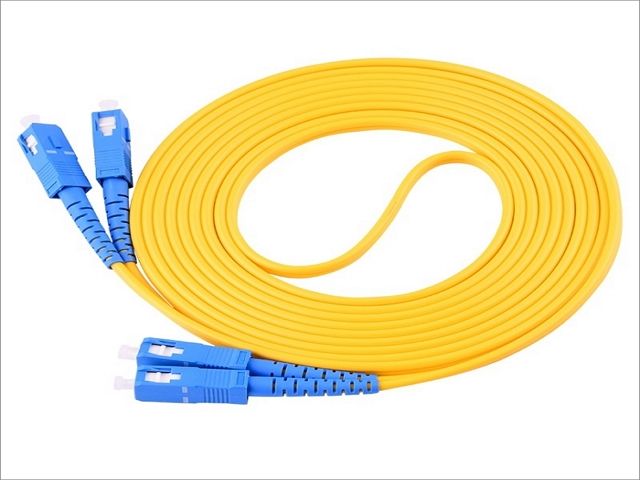
The SC patch cord protects the fiber from damage due to its thick outer body, making it efficient and cost-effective, primarily used in fiber optic networks.
4. ST Patch Cable
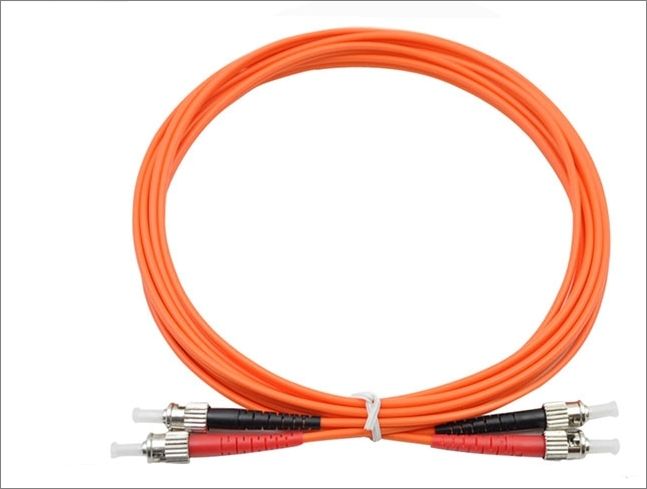
This patch cable has a spring-loaded ferrule that is attached to the end of a fiber optic cable to prevent damage and ensure a secure connection. It's commonly used during field and indoor LAN activities, supporting voice, data, and video services.
5. Copper Patch Cable
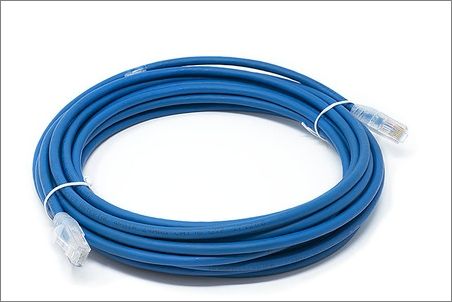
This cable is widely used due to its strength, thermal expansion, and corrosion resistance, making it suitable for most networking activities, particularly in setting up local area networks.
6. MT-RJ Fiber Optic Patch Cord
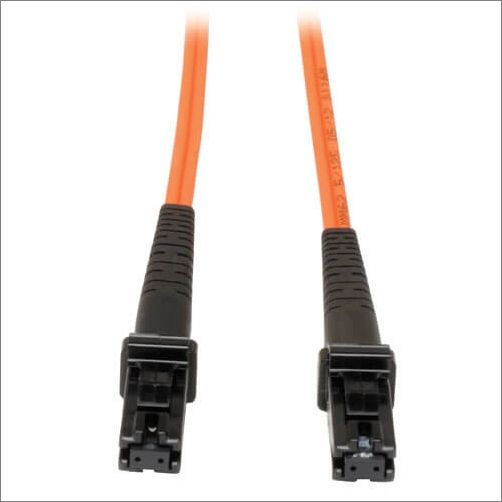
The MT-RJ fiber optic patch cords are categorized into pinned and unpinned types, which are used to transmit data on a network.
Patch Cable vs. Ethernet Cable: What Is the Difference?
Ethernet cables aren't the same as patch cables. A patch cable has connectors at both ends, while an Ethernet cable typically only has a connector at one end, the other end being a bare wire or a connector that's meant to be connected to a device. This is because Ethernet cables are designed to connect a device to a network, whereas patch cables are used to connect two devices together.
| Patch Cable | Ethernet Cable |
|---|---|
| 8P8C connectors, also known as modular connectors, are used for connecting switches or routers in a patch panel over short distances. They are commonly used in data centers and computer networks. | -Mainly used for long-distance device connections |
| -Is shorter than an Ethernet cable | -It's longer than a patch cable and covers long distances |
| -Has connectors at both ends | The cable does not necessarily need to have connectors at both ends, as it can be directly connected to a device. |
| -Has a stranded structure to enhance its flexibility | -Is not stranded since it's used for long distances |
| -Prone to signal loss (attenuation) | -Is not prone to signal loss |
| Fiber optic patch cords come in various types, including FC, LC, SC, ST, copper, and MT-RJ, each serving different purposes and applications. | CAT5, CAT5e, and CAT6 are categories of Ethernet cables, which differ in their bandwidth and performance. They are used for networking and data transmission. |
Final Words
Patch cables are distinguished by their connectors on both ends and are used for short-distance connections on a network, connecting devices such as network hubs, switches, routers, computers, and telephone devices, and come in different types.
- FC patch cables
- LC patch cords
- SC patch cords
- ST patch cables
- Copper patch cables, and
- MT-RJ fiber optic patch cords
FAQs
Below are some of the commonly asked questions about patch cables.
1. What Is a Standard Patch Cable?
A standard patch cable is used to connect devices on a network, such as computers, hubs, switches, or routers, and is typically used for in-office connections.
2. Are All Patch Cables the Same?
Patch cables come in various types, including FC, LC, SC, ST, copper, and MT-RJ, each with its own size, usability, and cable structure, catering to different needs and applications.
3. When Should I Use a Patch Cable?
A patch cable can be used to connect various networking equipment, like network hubs, switches, routers, and computers, to each other, mainly for short-distance connections.
4. Can I Use Patch Cable as an Ethernet Cable?
You can use a patch cable as an Ethernet cable in a pinch, but keep in mind they're meant for short-distance connections.
Related Articles
- What Is the Windows Task Manager? [Everything You Should Know]
- What Is File Compression and How Does File Compression Work
- EFS (Encrypting File System): Good Helper to Protect Confidential Data
- What Is DAS(Direct Attached Storage)?A Beginner Guide for DAS
- How to Remove Active Flag From Partition [Efficient Solution]
If you're looking to remove the active flag from a partition on your PC, you can do so by using the built-in Disk Management tool in Windows. To access this tool, press the Windows key + R to open the Run dialog, type “diskmgmt.msc,” and press Enter. - How to Remove Bing from Chrome
If you keep having Bing hijack your browser and want to remove Bing from Chrome, read this article. Learn all the methods to remove bing from Chrome, such as removing Bing from a search engine, uninstalling suspicious extensions, etc.
Products
Articles & Tutorials
- Data Recovery
- Data Backup
- File Recovery
- File Backup
- System Backup and Restore
- Disk and Partition Clone
- Technical articles
- Mobile articles
- Disk Master Help
- Windows Data Recovery Tutorials
- Windows Secure Delete Tutorials
- Windows Partition Management Tutorials
- Windows File Backup and Restore Tutorials
- Windows System Backup and Restore Tutorials
- Windows Disk Backup and Restore Tutorials
- Windows Clone Tutorials