Transfer Firefox Passwords to New Computer
| Workable Solutions | Step-by-step Troubleshooting |
|---|---|
| Method 1.Export Firefox Passwords by Qiling Key Finder | Step 1: Click "Internet & Network" under Password; Step 2: Check Browser Accounts...Full steps |
| Method 2.Export Logins and Password from Firefox | Step 1: Click on the three dots menu button to open the menu panel on the Firefox browser...Full steps |
If you're concerned about exporting your saved Firefox passwords, the process is straightforward. This post covers the steps to export all your saved passwords and migrate your Firefox browser profile, making it easy to transfer your data to your new PC.
How Do I Transfer My Firefox Passwords to New Computer?
Exporting saved passwords from Firefox is often necessary when switching to a new computer or browser. To do this, follow these steps: Open Firefox, go to the "Options" or "Preferences" menu (depending on your operating system), click on "Security," and then select "Saved Logins."
Users typically have three main reasons to export passwords from the Firefox browser:
People want to import their saved passwords from one browser to another, or to a new system, so they can access their saved login credentials without having to manually enter them again.
Some people prefer to store their passwords locally within the browser, rather than syncing them to the cloud. This approach allows them to maintain control over their password storage and avoid potential security risks associated with cloud-based password management.
Many people rely heavily on their browsers, which can lead to forgotten passwords. Exporting passwords as text on the local PC can be helpful in such cases, allowing users to easily refer to them even if they lose access to their browser.
The process of exporting passwords in Firefox is straightforward and doesn't require complex steps. The browser has an in-built feature that allows users to export all saved passwords and saved logins directly from the Firefox browser.
Exporting Firefox passwords to a new system can be done through two effective methods. Firstly, you can use the built-in Firefox feature to export your passwords to a CSV file. To do this, go to the Firefox menu, select Options, then Passwords, and click on the "Import and Export" button. From there, you can choose to export your passwords to a CSV file, which can then be easily imported into the new system. Alternatively, you can use a third-party add-on, such as LastPass or 1Password, to securely export your Firefox passwords to the new system.
Method 1. Export Firefox Passwords by Qiling Key Finder
You can easily export Firefox passwords with the help of third-party software like Qiling Key Finder, which can show all saved passwords on your Firefox browser without complicated steps.
To save internet and network passwords as PDF, launch the software, select the Internet and Network Password section, choose the browser, and click Save to save files as PDF, then transfer the PDF to a new system using an online data transfer solution or external hard drive.
Step 1. Click "Internet & Network" under Password.
Step 2. To check browser accounts and passwords, you can check the accounts and passwords associated with Chrome, Edge, Firefox, and Internet Explorer.
"Copy" - Click it, then directly paste.
"Save" - Save as a PDF file.
"Print" - Connect Printer to print.
Qiling Key Finder is an advanced and reliable tool that offers unique features, including restoring Windows and Windows server product keys, retrieving license keys for various online products, and even recovering keys when the system or hard disk crashes. It can find product serial keys for over 1000+ products and smartly reveals browser accounts and store passwords for popular web browsers like Mozilla Firefox, Google Chrome, Edge, and Internet Explorer.
Features:
- Find Registry Key for Windows and Applications.
- Password for Browsers, WLAN, and Wi-Fi
- Discover Windows Credentials not available anywhere else
- To search for passwords in an external hard drive where Windows was installed, you can use the Windows Search feature. First, connect the external hard drive to your computer and make sure it's properly recognized by Windows.
- Save or Print Keys
The Qiling Key Finder tool supports Windows 11, 10, 8.1, 7, and other server versions, making it a reliable option for finding keys on any Windows system.
If your application is not discoverable through the standard key list, you can also request keys for it from the OEM.
Method 2. Export Logins and Password from Firefox
Mozilla Firefox allows you to export logins and passwords to a .csv file starting from version 79.
To export your data securely, first, go to your account settings and select the data you want to export. Then, choose a secure export format like CSV or JSON. Next, select a secure location to save the file, such as an external hard drive or a cloud storage service that you control.
To export usernames and passwords, follow the given steps
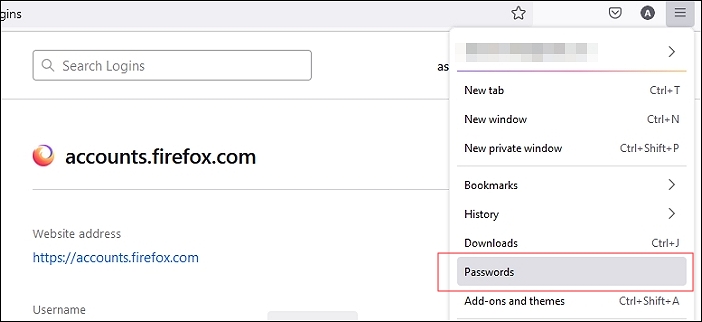
Step 1:To access the Firefox about:logins page, click on the three dots menu button to open the menu panel, then select Passwords, which will open the page in a new tab.
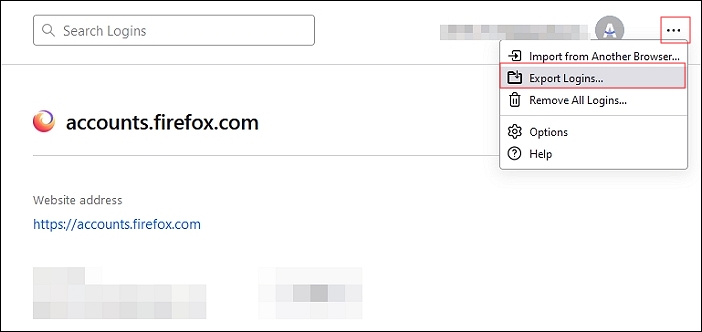
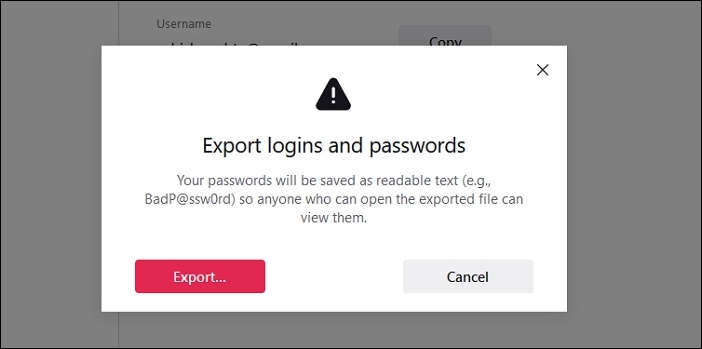
Step 2: To export your saved logins, click the three dots on your browser, then select "Export Logins". A dialogue box will appear, warning that passwords are saved as readable text. Click the "Export" button to proceed.
Note:Here, you may be asked to enter your Primary password if enabled, or maybe the operating system authentication may be required when retrieving the saved passwords, allowing you to securely access your previously saved login credentials.
Step 3:You can choose the file name and location where the exported data will be saved.
Step 4:To transfer your saved Firefox passwords to your new computer, first, locate the saved file, which is a CSV file, and copy it. Then, you can import the CSV file into another browser, allowing you to access your saved passwords on your new computer.
Conclusion
If you need to transfer Firefox passwords or have forgotten your Firefox account and password, you can use the methods outlined above to recover them efficiently.
If you need a quick solution for your passwords, we recommend using a third-party tool like Qiling Key Finder to recover your Firefox passwords swiftly with method 1.
To recover and transfer Firefox passwords to a new computer, you can use the Firefox password management feature. This allows you to export your saved passwords to a file, which can then be imported on the new computer. This method is useful if you are technically sound and want to recover and transfer your passwords manually.
Related Articles
- How to Find Wifi Password on iPhone [Detailed Guide]
- How to Find or Recover Microsoft Office 2010 Product Key Already Installed
- Zoom Product Key Finder Free Download, Find Missing Zoom Product Key
- Here Is Your Ultimate Guide of Windows Password Recovery
- Forgot Microsoft Account Password? Here's What to Do
Forgot Microsoft account password? Recover it with 3 methods: use Qiling Key Finder, reset via verification email, or recover through the Microsoft account recovery form. Step-by-step guide. - I Forgot My Dropbox ID and Password | What Should I Do?
Dropbox allows you to store and share files online. Here is a complete guide to regaining control of your account quickly. Click here to find out more.
Products
Articles & Tutorials
- Data Recovery
- Data Backup
- File Recovery
- File Backup
- System Backup and Restore
- Disk and Partition Clone
- Technical articles
- Mobile articles
- Disk Master Help
- Windows Data Recovery Tutorials
- Windows Secure Delete Tutorials
- Windows Partition Management Tutorials
- Windows File Backup and Restore Tutorials
- Windows System Backup and Restore Tutorials
- Windows Disk Backup and Restore Tutorials
- Windows Clone Tutorials