Use CHKDSK to Fix the Selected Volume Corruption Problem in Windows 10
Error: The Volume You Have Selected to Shrink May Be Corrupted
When trying to shrink a partition in Disk Management, you might get an error saying "The volume you have selected to shrink may be corrupted. Use Chkdsk to fix the corruption problem, and then try to shrink the volume again." This error prevents you from shrinking the partition unless you run Chkdsk to fix the corruption issue.
Why does this issue occur?
When Windows reports that the partition you selected may be corrupted, it's actually indicating that there are file system errors on the partition, which could be due to DBR, $MFT, or FAT corruption.
How to solve the problem?
When you need to shrink a partition in Windows, you have two potential solutions to consider. One of them is likely to be effective in helping you achieve your goal successfully.
2 Solutions to the Volume You Have Selected to Shrink May Be Corrupted in Windows 10/8/7
To fix file system errors and shrink a partition in Windows 10/8/7, you can run Chkdsk, a Windows utility that checks and repairs disk errors, or try an alternative method that skips the problem.
Method 1. Use Chkdsk to Fix the Corruption Problem
You can run CHKDSK in Windows 10 in multiple ways, but using the installation disc is unnecessary and complicated. Instead, you can run Chkdsk from Command Prompt, which is a simpler and more straightforward method. Chkdsk is commonly used to fix a corrupted micro SD card, USB flash drive, and other storage devices.
Step 1. Press the "Windows" key and type cmd.
Step 2. Right-click "Command Prompt" and choose "Run as administrator".
Step 3. Enter the following command: chkdsk e: /f /r /x
- To repair a partition on a Windows system, you'll need to use the built-in Disk Management tool. Open the Disk Management tool by searching for it in the Start menu, or by typing "diskmgmt.
- chkdsk /f is running to fix any found errors;
- The command `chkdsk /r` is currently running to scan the drive for bad sectors and attempt to recover any readable information from them. This process can take some time to complete, depending on the size of the drive and the number of bad sectors found.
- The /x option is used with the chkdsk command to force the volume to be dismounted before the utility begins scanning. This allows the system to safely dismount the volume and prevent any potential data loss or corruption during the scanning process.
Step 4. If system file corruption is suspected, running the System File Checker tool after Chdksk can help repair missing or corrupted system files.
sfc /scannow
To fix the corruption issue, you can run the built-in Check Disk utility in Windows, which is usually found in the Command Prompt. You can type the command "chkdsk /f" and press Enter to run it.
If you're not a fan of the command line, you can use the Qiling CleanGenius tool as an alternative. This one-click tool allows you to fix file system errors on your hard drive with ease.
Step 1. Download Qiling CleanGenius on your computer for free.
Step 2. To run the software, click on it, and then select "Optimization" from the left panel. From there, choose "File Showing" to proceed.
Step 3.To resolve a file system error on a drive, go to the "Choose drive" option, select the drive with the error, and then check the box next to "Check and fix file system error". Finally, click the "Execute" button.
Step 4. Once the Qiling CleanGenius has completed the repair process, click on the "here" link to view the results.
Method 2. Shrink Partition in Windows 10/8/7 Using Alternative Way
The "The volume you have selected may be corrupted. Use Chkdsk to fix the corruption problem, and then shrink the volume again" error can be resolved using Chkdsk and System File Checker in most cases. However, if Chkdsk shows no violations, alternative methods in Disk Management can be used to help shrink a partition.
The reliable partition tool - Qiling Partition Master offers more features than Disk Management. With it, you can use Chkdsk to fix corruption issues without using Command Prompt, and resize partitions by extending or shrinking without encountering errors. For a detailed guide, refer to the article on how to shrink a Windows 10 partition.
How to Recover Data Deleted by Chkdsk
Using Chkdsk to fix corruption issues on a partition typically won't result in data loss. However, if Chkdsk inadvertently removes important data during the repair process, you can recover the lost data using a hard drive recovery software like Deep Data Recovery.
Key Features of Deep Data Recovery:
- Recover accidental deleted files and data in simple steps.
- Retrieve lost data from various storage devices, including disk space, external hard drives, USB flash drives, and more.
- The system should allow users to preview all recoverable files before actually recovering them, providing a detailed view of the files' contents, names, and sizes, as well as the option to filter or sort the files based on specific criteria. This feature would enable users to assess the recoverability of their data and make informed decisions about which files to recover, thereby minimizing the risk of unnecessary data recovery operations.
- 100% safe and secure, works well on both Windows and Mac computers.
If you have lost data due to any reason, you can recover it with the help of Deep Data Recovery software.
Note: To ensure a high chance of recovering lost data, install Qiling data recovery software on a separate disk, not the one where the files were originally stored.
Step 1. Launch Deep Data Recovery on your Windows computer, choose the file types you want to recover, and click "Fast Scan" to start the recovery process.
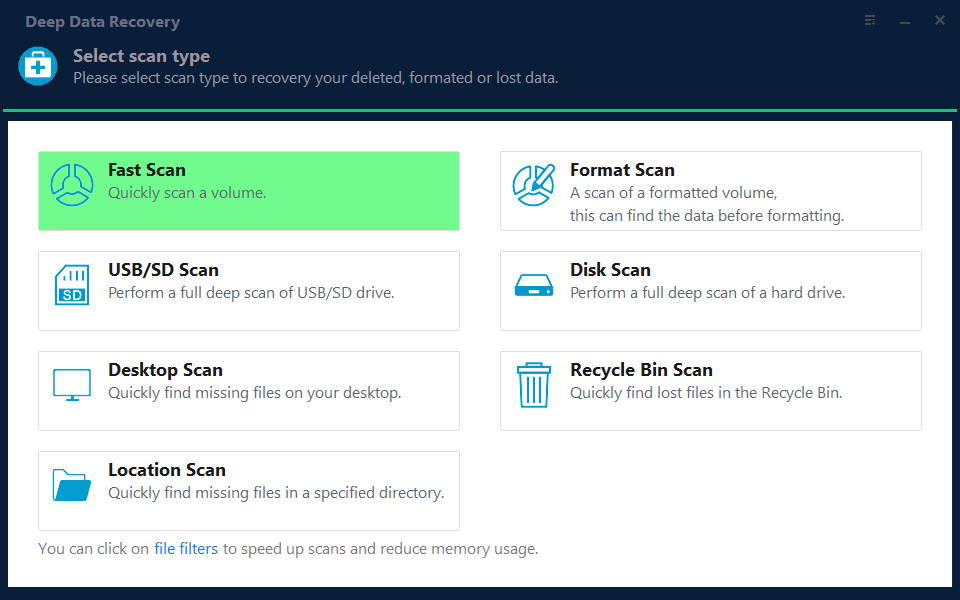
Note: You can choose different search modes based on where and why the data was lost.
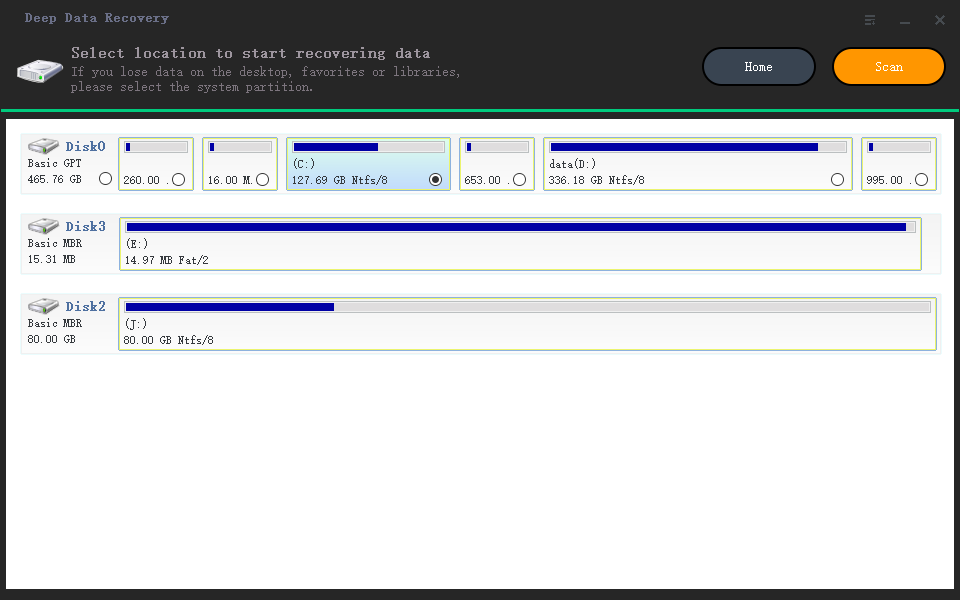
Step 2. Select the disk partition or storage location where you lost data and click "Scan" to start the scanning process.
Step 3. The recovery software will start scanning the disk to find all lost and deleted files. Once the scan is complete, you can filter the results by selecting "Filter" and then "Type" to specify the types of lost files you want to recover.
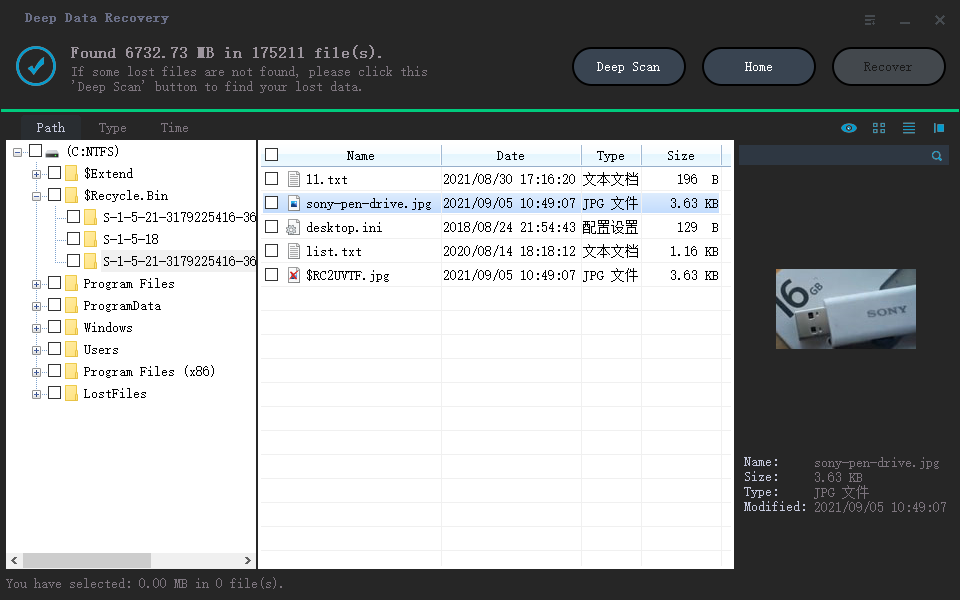
Step 4.You can preview and restore lost Windows files by double-clicking to view the scanned files, then selecting the target data and clicking the "Recover" button to save them to a safe spot, such as another location on the PC or an external storage device.
The Bottom Line
The error message saying the volume you have selected to shrink may be corrupted can often be resolved by running Chkdsk. If Chkdsk doesn't work, you can still successfully shrink your partition using an alternative method.
Related Articles
- How to Solve Hard Disk Error 303 and 305
- More Windows Troubleshooting: Fix Freezing After an Update
- [8 Fixes] How to Fix Windows 10 File Sharing Not Working After Update 1803/1809/1903
- Fix Windows 10 Doesn't Recognize or Detect Second Hard Drive Error
- What Is Immutable Backup? [All You Need to Know]
Immutable backup creates tamper-proof data copies that cannot be modified or deleted. Learn how immutable backups protect against ransomware and ensure data integrity for your business. - QILING Fast Cache Tutorials
Read this guide to learn QILING Fast Cache Tutorials with clear steps, practical tips, and safer troubleshooting methods.
Products
Articles & Tutorials
- Data Recovery
- Data Backup
- File Recovery
- File Backup
- System Backup and Restore
- Disk and Partition Clone
- Technical articles
- Mobile articles
- Disk Master Help
- Windows Data Recovery Tutorials
- Windows Secure Delete Tutorials
- Windows Partition Management Tutorials
- Windows File Backup and Restore Tutorials
- Windows System Backup and Restore Tutorials
- Windows Disk Backup and Restore Tutorials
- Windows Clone Tutorials