What Does FPS Mean in Games and How to Increase FPS?
If you're experiencing issues while playing games, such as seeing no effect from shooting in GTA5 or the game skipping during gameplay despite a better GPU for improved FPS, it's likely that your system is struggling to maintain a smooth gaming experience. This could be due to a range of factors, and if you're wondering what FPS means in games or how to increase it, we've got you covered. We'll provide answers to your questions, helping you to troubleshoot and potentially improve your gaming experience.
What Does FPS Mean in Games
FPS, or Frames Per Second, is a measure of how many frames a computer can process in one second. This rate varies from user to user, but is influenced by factors such as the computer's CPU, graphics card, storage, and the specific program being used.
A higher FPS (frames per second) results in smoother and more responsive game playback. When FPS is high, games become more optimized and feel more fluid, making keyboard and console commands more responsive. Programs like Fraps can measure and display the FPS of a running game, helping users understand the impact of FPS on their gaming experience.
To check FPS on Windows without using third-party tools like Fraps, you can consider your CPU's refresh rate and the graphics performance. The standard range of FPS in games is typically between 30 to 240 FPS. A better CPU refresh rate can result in better FPS, making it a simple way to monitor your gaming performance without needing additional software.
If you enjoy shooting, racing, or action-packed games, maintaining a high FPS (frames per second) will give you a competitive edge in gameplay.
How to Check FPS in Games on Windows 11/10
Windows has introduced an inbuilt FPS counter for Windows 11 and 10, which can be accessed through the Xbox Game Bar, provided it's updated to the latest version.
To check FPS in games on Windows 11/10, follow these steps: Press the Windows key + G to open the Xbox Game Bar, then click on the "Capture" button to start recording your gameplay. Press the Windows key + G again to open the Xbox Game Bar and click on the "Gameplay" button, then click on the "FPS" button to view your current FPS.
Step 1: Go to the Microsoft Store, click on "Check For Updates" and update the Xbox Game Bar to its latest version.
Step 2: To open the Performance Overlay from the Game Bar, simply press the Windows key and the G key at the same time. This will open the overlay, allowing you to view performance metrics and other game-related information.
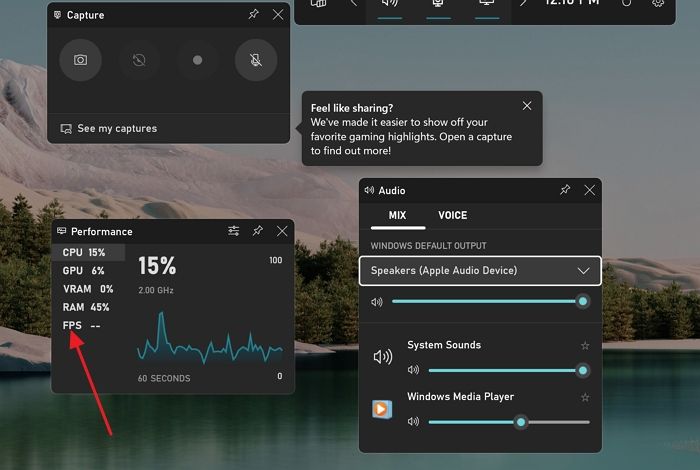
Step 3: In the RAM Usage section, an FPS tab appears, allowing you to check the Frames Per Second of the game you're playing or have opened in the background, displaying the current FPS and the mean FPS over the past minute.
However, if the Performance Overlay does not open in the Game Bar, follow the steps below:
Step 1: To access the Xbox Game Bar, go to the Game Bar and click on the Overlay Menu next to it.
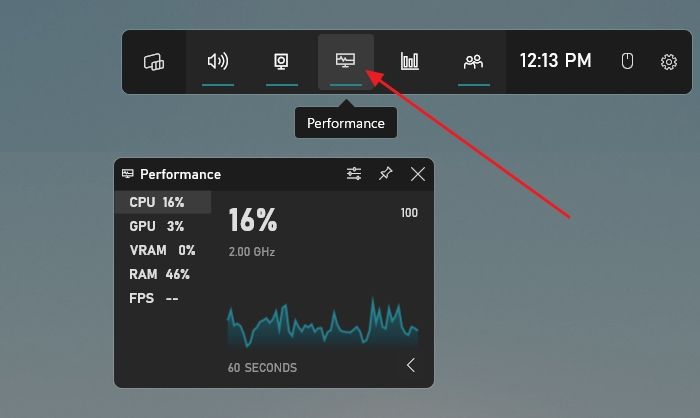
Step 2: To add a shortcut to the Performance app to your favorites, go to Performance, then click the Star icon. This will list it in your favorites.
Step 3: To check the performance of your computer, go to the Game Bar and click on the Performance icon that looks like a monitor. This will give you a quick glance at how well your computer is performing, including CPU, GPU, and memory usage.
The overlay will now appear when you press Win+ G keys, and you won't see the FPS status if games are not open or running in the background.
In the Game Bar, the FPS info remains blank or a message appears saying "Launch a Game to get FPS info" and the status shows 0 FPS.
How to Increase FPS in Games
A good First-Person Shooter (FPS) experience is heavily dependent on the frame rate, and many users struggle with low FPS. Fortunately, there are various methods to boost FPS and get the most out of your device's capabilities. By using these hacks, you can increase the frame rate in games and enjoy a smoother gaming experience.
Method 1:Update your Graphics Card Driver.
When your graphics card driver is not updated to the latest version, it can impact your frame rate (FPS).
To update the Graphics Card Drive, download it directly from the OEM, either through their software or their website, instead of downloading it from Windows. This is usually the best and most reliable way to get the correct and up-to-date drivers for your specific graphics card.
Method 2: Close Unnecessary Applications
To free up resources on your PC, it's a good idea to close all the apps that are currently running in the background. Instead of closing each app individually, you can use the Task Manager to quickly shut down all running apps at once. This will help improve your PC's performance and efficiency.
Follow the steps given below to Close Unnecessary apps:
Step 1: To open the Task Manager, press the Ctrl + Shift + Esc keys simultaneously on your keyboard. This will instantly bring up the Task Manager window, where you can view and manage running processes, applications, and system resources.
Step 2: Select the programs you should close and right-click on them.
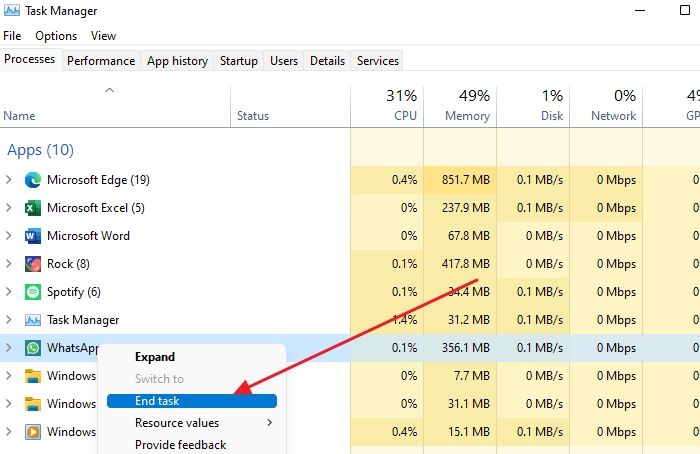
Step 3: The End Task button appears. Now, select more programs that you want to close. Click on the End Task button.
Method 3: Modify Visual Effects Settings
Disabling visual effects on your PC can help increase FPS by freeing up resources for the game to use, allowing for a smoother gaming experience.
Follow the steps given below to do so:
Step 1: Open Windows Settings (Win + I)
Step 2: Click on System, and then Navigate to Advanced system settings
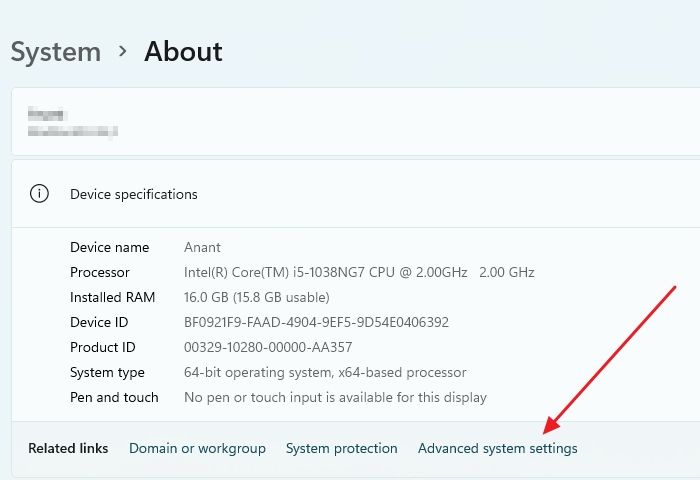
Step 3: In the System Properties tab, click on the Settings button under Performance.
Step 4: To optimize performance for the best results, switch to the Visual Effects tab and click on the "Adjust for the Best Performance" radio button.
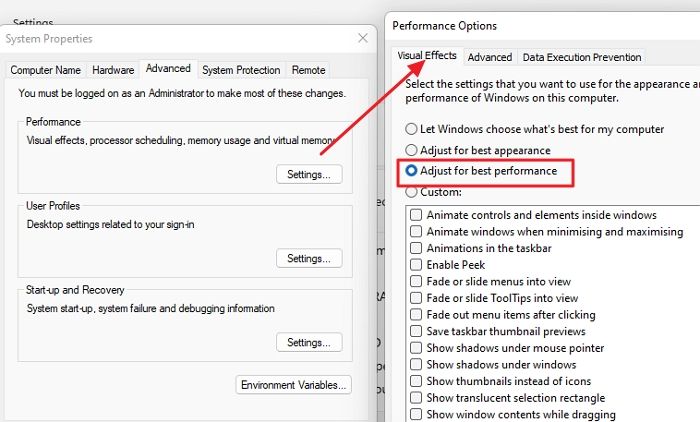
Step 5: Now, press the OK button or Enter key.
Method 5: Stop Screen Recording
When recording gameplay for a vlog or other purposes, it's essential to close the screen recording software, such as Bandicam or Fraps, before playing games. These programs can negatively impact the game's frame rate (FPS), causing a less-than-smooth gaming experience. Closing the software before gameplay ensures that your gaming experience remains unaffected, allowing you to enjoy your games without any performance issues.
Method 6: Adjust Graphics Settings of the Game
To improve the game's performance, configure the graphic settings to the lowest available, which will reduce the gaming quality but increase the FPS on your computer by freeing up some resources. This adjustment will help enhance the gaming experience by ensuring a smoother and more responsive gameplay.
Method 7: Lower the Resolution of the Game and Run it in Fullscreen Mode
To improve the game's performance, play the game entirely and then lower the graphics resolution to a lower frame rate, starting with a resolution of 800x500 pixels. This can help increase the game's FPS.
Method 8: Configure your PC in High Performance
The Power Options can be configured to High Performance, which can increase FPS after a reboot.
If you're playing games on a laptop, it's recommended to keep it on power to avoid performance changes caused by the OS based on power settings.
What is A Good FPS for Gaming
60 FPS is the best option for gaming, especially for users with lower-performing hardware, as it provides a smooth and enjoyable gaming experience.
The FPS in games can vary greatly depending on the user's hardware setup, with high-resolution monitors and PCs requiring optimized configurations to run smoothly. Even with high-capacity hardware, a user may only be able to achieve 60 FPS if their setup is not ideal, making it a personal and hardware-dependent experience.
60 FPS is the ideal frame rate for a standard PC gaming experience, and exceeding 144 FPS in any scenario provides a robust game playback.
How to Fix Screen Tearing at High FPS
The ideal FPS for users depends on their needs, hardware, and capabilities, with many able to achieve high frames per second on their computers, but often at the cost of other performance.
Screen tearing can occur when playing games or watching videos at high frame rates, as the monitor struggles to keep up with the rapid frame fetching. This can lead to a synchronization issue between the GPU and system, resulting in a distorted image with visible tears, particularly noticeable at high frame rates.
When the GPU's frame rate and the screen's display rate aren't proportional, issues can arise. For example, if your GPU processes images quickly, but your monitor can't keep up, you might see half or blurred images. This isn't a cause for concern, but Vertical Sync (Vsync) can help resolve the issue, ensuring that the GPU and monitor are synchronized.
Vsync is a feature that fixes screen issues by synchronizing the GPU's frame delivery rate with the monitor's processing rate, ensuring a smooth and stable visual experience.
Most GPUs support Vsync, which can be enabled or disabled to prevent screen tearing.
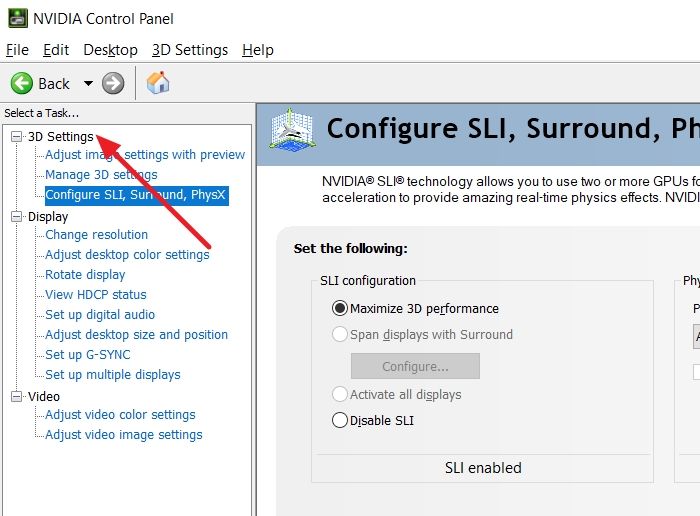
To activate Vsync on NVIDIA, follow these steps: First, go to the NVIDIA Control Panel and click on the "3D Settings" tab. Then, click on the "Adjust image settings with preview" button and select the "Vertical Sync" option from the dropdown menu.
Step 1: To launch the NVIDIA Control Panel, right-click on the desktop and select the option from the menu, or search for it in the Start menu and select it from the search results.
Step 2: 3D Settings in the NVIDIA Control Panel should be selected, then Manage 3D Settings.
Step 3: Toggle on the Vertical Sync issue; further, you can also turn it off if required.
Summary
If you're wondering what FPS means in games and how to increase it, you can check frames per second on Windows 11/10 by accessing the Xbox Performance Overlay. To boost FPS, several methods can help, including using a GPU and disabling screen tearing by enabling VSync.
Related Articles
- Fixed: CPU Isn't Supported | CPU Isn't Compatible with Windows 10/8.1/8
- Download Windows 10 21H2/21H1/20H2/2004/1909/1903 ISO and Fix Fail to Install Error
- Real Fixes: This app can't run on your PC in Windows 10
- Disk Cleanup Not Working Windows 10/8/7? Here Are the Free and Easy Fixes!
- How to Read and Find Lost WiFi Password (PC/Mac/iOS/Android)
You can read and find the lost WiFi password without any technical knowledge, as long as you can access the router or at least one device connected to the network. - Recover Deleted DCIM Folder from Android
Here is the best DCIM folder recovery solution to recover deleted DCIM folder from Android phone, be it from the internal storage or memory card (SD card, xD card, microSD card, CF card). Try it to retrieve images, videos, and other files from your Android devices, cameras or Smartphones with ease.
Products
Articles & Tutorials
- Data Recovery
- Data Backup
- File Recovery
- File Backup
- System Backup and Restore
- Disk and Partition Clone
- Technical articles
- Mobile articles
- Disk Master Help
- Windows Data Recovery Tutorials
- Windows Secure Delete Tutorials
- Windows Partition Management Tutorials
- Windows File Backup and Restore Tutorials
- Windows System Backup and Restore Tutorials
- Windows Disk Backup and Restore Tutorials
- Windows Clone Tutorials