Fixed: CPU Isn't Supported | CPU Isn't Compatible with Windows 10/8.1/8
If you're receiving the "Your PC's CPU isn't compatible with Windows 10/8.1/8" error, don't worry! You can solve the "CPU isn't supported" or "CPU isn't compatible" error under Windows 10/8.1/8 or even Windows 7 on your own. To fix this issue and update to a new Windows system, follow this guide and find effective and free methods to resolve the problem with ease.
- Fix 1. Solve CPU isn't supported in Windows 10
- Method 1. Run Microsoft Compatibility Appraiser to fix CPU not supported/compatible with Windows 10 error
- Method 2. Set NX Bit (No Execute Bit) in BIOS to fix CPU isn't supported nx issue
- Fix 2. Fix CPU isn't compatible in Windows 8.1/8
- Extra Tip: Solve CPU sin't compatible/supported in Windows 10/8.1/8
- Tip 1. Extend/free space for system partition, clean up junk files, check and fix system/file system errors
- Tip 2. Revert to previous system when CPU not supported or CPU compatible bug pops up
Note: To prevent unexpected data loss, please back up important data and files beforehand.
CPU isn't supported on Windows 10/8.1/8, how to fix it?
Sometimes, problems may just happen to you without any signs or signals. Here are some common CPU issues that you may meet while updating Windows 8/8.1/10 or installing new system, such as CPU not compatible with Windows, CPU not supported, or CPU not recognized, and so on. If you are having similar problems, you can try to check your CPU compatibility with Windows, update your BIOS, or reinstall your Windows system to solve the issue.
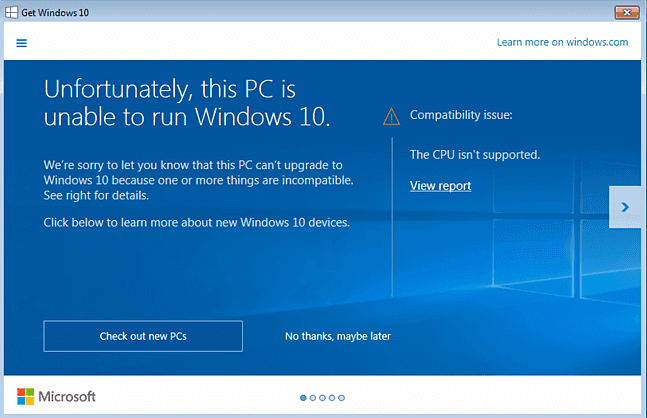
- You can't upgrade to Windows 10 on your i7-4790k CPU as it's not supported by Microsoft. However, you can still install Windows 10 on your PC, but you'll need to perform a clean install instead of an in-place upgrade. To do this, you'll need to create a bootable USB drive with the Windows 10 installation media and then follow the installation process. This provides you a fresh installation of Windows 10 on your PC, but you'll need to reinstall any applications and drivers you had on your previous version of Windows.
- You tried to install Windows 8, but got an error message saying your PC's CPU isn't compatible with Windows 8.
- You were trying to update to Windows 10 from Windows 7, but got an error message saying the CPU isn't supported. Is that correct?
- "I've installed Windows 8 for a couple of months and recently an error message kept telling me that 'Your PC's CPU isn't compatible with Windows 8. But I'm using Windows 8 now. What can I do with this problem?"
Many Windows users face the error message "Your PC's CPU isn't compatible with Windows 8/8.1/10" or "CPU isn't supported" when trying to update or install new Windows systems. While some professional users may have already found solutions, many ordinary users still struggle with this issue. Fortunately, there are solutions available to fix these problems, and they can be found by searching for relative solutions for your specific computer.
Fix 1. Solve CPU isn't supported with Windows 10 error
Firstly, please make sure that your PC can meet the below-listed requirements:
1. The PC runs the latest operating system, either Windows 7 SP1 or Windows 8.1. If it's not, the first step is to update to the new version.
2. Gain 1GHz or faster processor or SoC;
3. To ensure proper system performance, it's recommended to have at least 1GB of RAM for a 32-bit system or 2GB for a 64-bit system.
4. Leave at least 16GB of free space on the hard disk for 32-bit systems or 20GB for 64-bit systems.
5. The system requires a DirectX 9 or later graphics card with a WDDM 1.0 driver.
6. Display: 1024*600.
To fix the "CPU not supported/compatible" error with Windows Patch, you can run the Microsoft Compatibility Appraiser. This tool checks your system for compatibility issues and provides a report of any problems found, along with recommendations for resolving them. By running the appraiser, you can identify and address any potential issues that may be causing the CPU compatibility error, allowing you to successfully apply the Windows Patch.
1. To check if the Windows patch is installed, open the Control Panel and navigate to Windows Update. Click on "View update history" and look for the Windows patch in the list of installed updates.
For Windows 8/8.1, the patch is KB2976978;
For Windows 7, the patch is KB2952664;
If your system doesn't have the patch, download and install it first by clicking the download links for KB2976978 and KB2952664.
2. Open CMD by following:
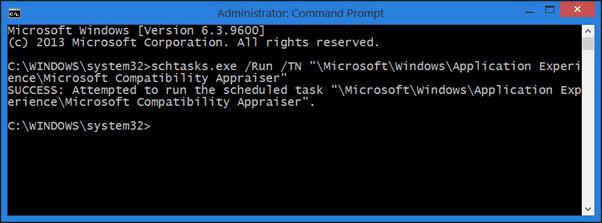
To open the Command Prompt, press the Windows key + R, type "CMD", and click OK, or search for "Command Prompt" and select "Run as Administrator".
To run the Microsoft Compatibility Appraiser, type the command `schtasks.exe /Run /TN "\Microsoft\Windows\Application Experience\Microsoft Compatibility Appraiser"` and press Enter.
To resolve the "CPU isn't supported nx" issue by setting the NX Bit (No Execute Bit) in BIOS, follow these steps: Boot into your computer's BIOS settings. Look for the "Advanced" or "Security" tab, depending on your BIOS version. Locate the "NX Bit" or "No Execute" option and enable it.
1. Restart your PC and boot to the BIOS. In the Advanced Configuration menu, find the NX setting.
2. Enable Execute Disable Memory Protection, Execute Disable Bit, Enhanced Virus Protection, and No Execute Memory Protect.
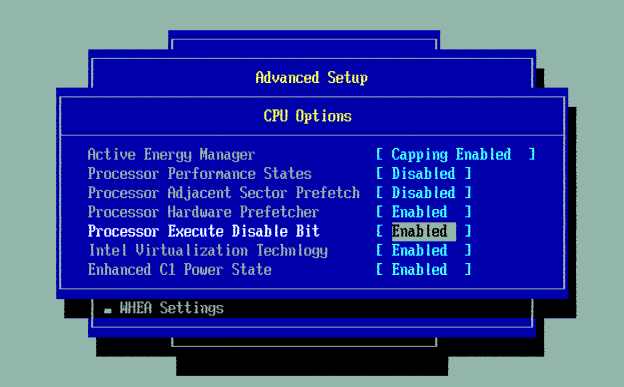
3. Save all changes that you've made and then exit BIOS.
Fix 2. Solve 'Your PC's CPU isn't compatible with Windows 8' error
To resolve the error, enable NX or XD features in the BIOS settings according to the manufacturer's guidelines. This typically involves navigating to the BIOS settings and enabling the feature, which may be labeled as NX, XD, or something similar. Once enabled, save the changes and exit the BIOS settings.
- No Execute Memory Protect
- Execute Disabled Memory Protection
- EDB (Execute Disabled Bit)
- EVP (Enhanced Virus Protection)
To solve the "Your PC's CPU isn't compatible with Windows 8" error, follow the steps similar to Method 2 in Fix 1. This will help resolve the issue.
If your computer's BIOS doesn't have an option for NX (XD, EDB, EVP) support, you should contact the manufacturer to update the BIOS.
Extra Tips to solve CPU not compatible issues with Windows 10/8.1/8
To resolve system update errors or CPU compatibility issues, you can try the recommended methods, and also consider other effective tips to help you quite a bit.
Extend the system partition to free up space, clean up unnecessary files, and check for and fix any system or file system errors to optimize system performance and stability.
Using a professional partition manager software like Qiling Partition Master can be very helpful in solving inner errors in the Windows system, avoiding CPU compatible issues under Windows 10/8/7, and extending free space for the system partition to resolve Windows installation issues or slow boot problems with a few clicks.
If your CPU doesn't support the new system or you encounter a CPU compatible bug, revert to the previous system to avoid any potential issues or complications. This will ensure that your system remains stable and functional, even if the new system doesn't work properly with your CPU.
When trying to update or install Windows, if it warns about CPU incompatibility, you can try reverting to a previous system using a system backup image. It's recommended to create backup images for important data and system before making any changes, and you can use Qiling Backup Free to do this securely and for free.
Related Articles
- Fixed: System Image Restore Failed, Windows Cannot Restore a System Image in Windows 10/8/7
- Fix: There Was a Problem Resetting your PC in Windows 10/8.1/8
- Fix 'Windows Can't Find A System Image on This Computer' Error
- How to Fix Windows 10 Stuck at Getting Files Ready for Installation
- Troubleshooting of a Failed Hard Drive to SSD Cloning
Cloning a hard drive to an SSD can be problematic, especially when dealing with failed hard drives containing bad sectors. If the cloning software encounters issues, it may terminate the process and display an error message. - What Is File Level Backup? Top 5 Best File Level Backup Software Free Download
This page helps you understand file-level backup, its popularity, and when it's needed, as well as provides 5 best file-level backup software to protect a large number of files immediately.
Products
Articles & Tutorials
- Data Recovery
- Data Backup
- File Recovery
- File Backup
- System Backup and Restore
- Disk and Partition Clone
- Technical articles
- Mobile articles
- Disk Master Help
- Windows Data Recovery Tutorials
- Windows Secure Delete Tutorials
- Windows Partition Management Tutorials
- Windows File Backup and Restore Tutorials
- Windows System Backup and Restore Tutorials
- Windows Disk Backup and Restore Tutorials
- Windows Clone Tutorials