What Is RTOS? Real-Time Operating System Explained
Specific tasks require specific operating systems, which operate within a certain protocol to achieve productivity and connectivity. These systems enable devices to communicate effectively with the main frame and humans, facilitating tasks of immense productivity.
Real-Time Operating Systems (RTOS) have gained popularity due to their ability to function without relying on a scheduled time frame, unlike many other operating systems. RTOS allows for real-time processing and decision-making, making it ideal for applications that require immediate responses, such as industrial control systems, medical devices, and autonomous vehicles. Its benefits include improved reliability, predictability, and efficiency, making it a sought-after solution for industries that demand precise and timely performance.
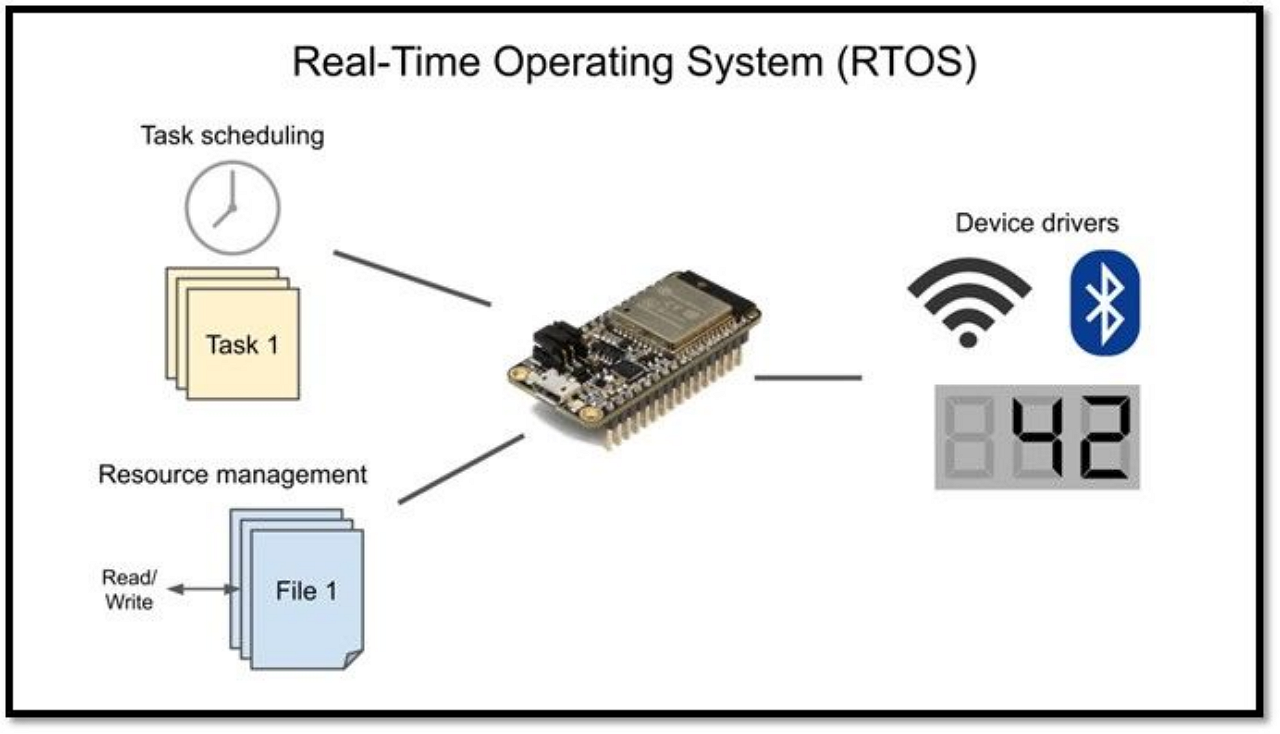
What is RTOS?
A real-A Real-Time Operating System (RTOS) is a software system that provides real-time computing capabilities in an embedded environment, enabling devices to control and synchronize with their surroundings or other devices.
The Real-Time Operating System (RTOS) is a specialized operating system designed for embedded systems, ensuring timely execution of tasks with strict time constraints.
Real-Time Operating Systems (RTOS) operate as scheduled tasks, firing up specific tasks at set times, rather than providing a full operating system experience. This approach ensures tasks are fully comprehended, protocol-bound, and kept to a minimum.
What Does RTOS Do?
The primary protocol prevents RTOS from doing anything out of the ordinary, so tasks committed by RTOS are usually coded or embedded in the system, working within defined principles that include interrupt handling, task scheduling, memory management, and communication protocols.
- Scheduled algorithms that allow it to control specific tasks;
- Scheduled algorithms that fire up at arranged times;
- The algorithms used in a Real-Time Operating System (RTOS) need to switch between different tasks that the system needs to perform, in order to ensure that all tasks are completed efficiently and on time.
- Managing tasks and priorities based on given instructions by the user/owner
- The priority level assigned to each task ensures that the Real-Time Operating System (RTOS) commits to it above other tasks, ensuring timely execution and minimizing delays. This priority level is a measure of the task's importance and urgency, guiding the RTOS to allocate resources and execute tasks accordingly.
- Defining a pre-To tackle important and prioritized tasks effectively, it's essential to adopt a responsive and attentive scheduling approach. This involves being mindful of your time and energy, and making adjustments as needed to ensure that you're focusing on the most critical tasks first.
RTOS offers a feasible solution for corporations, industries, and organizations due to its protocol-based operation and timely task execution, allowing users to schedule tasks efficiently without worrying about timing.
5 Benefits of RTOS
RTOS offers numerous benefits, making it a preferred choice for organizations and industries worldwide. Beyond its primary function of scheduling tasks, RTOS also saves time, making it an efficient solution. Its accommodating advantages include being a scheduled task maker, ensuring timely completion of tasks, and providing a time-saving solution, making it a valuable asset for businesses globally.
- The Real-Time Operating System (RTOS) makes task management easy and efficient by automating the process of switching between tasks, eliminating the need for manual micromanagement and ensuring critical processes are handled without user intervention.
- This approach minimizes downtime, as it consolidates all available sources into a single task embedded in the system. As a result, it ensures minimal downtime and enables the company/user to achieve maximum results with the least amount of downtime.
- The RTOS is available 24/7, providing continuous results and productivity around the clock, making it a reliable system that ensures outstanding performance every day.
- Real-Time Operating Systems (RTOS) offer high reliability as they are typically free from errors or mishaps, allowing organizations to operate without worrying about repeated fixes or downtime.
- RTOS is highly efficient and focused on task execution, ensuring timely completion of tasks without unnecessary overhead, making it ideal for applications where reliability and predictability are crucial.
Many organizations prioritize the use of AI-powered chatbots due to their ability to provide 24/7 customer support, improve user experience, and increase efficiency, making it a feasible solution for their needs.
Conclusion
RTOS is a crucial operating system for industries and companies that need to maintain efficiency while saving time, allowing them to continue working efficiently.
Related Articles
- What Is A Boot Device [Everything You Need to Know]
- Answers in 2022 | Does a Factory Reset Delete Everything?
- Backup vs. Replication: Which One to Choose
- Reviews on Paragon Backup & Recovery [All Information]
- Update Now! Windows 11 Encryption Bug Can Lead to Data Loss
Microsoft is urging users to update to the latest version of Windows 11 as soon as possible due to a critical issue that could result in the loss of user data. - Windows 11 Size: How Much Space Does Windows 11 Take Up?
How much space does Windows 11 take? A clean install uses about 27GB, while upgrades may use more. Learn how to free up disk space and recover lost files.
Products
Articles & Tutorials
- Data Recovery
- Data Backup
- File Recovery
- File Backup
- System Backup and Restore
- Disk and Partition Clone
- Technical articles
- Mobile articles
- Disk Master Help
- Windows Data Recovery Tutorials
- Windows Secure Delete Tutorials
- Windows Partition Management Tutorials
- Windows File Backup and Restore Tutorials
- Windows System Backup and Restore Tutorials
- Windows Disk Backup and Restore Tutorials
- Windows Clone Tutorials