What Is SMTP? Everything You Need to Know about Simple Mail Transfer Protocol
Emailing is a crucial part of online communication, and protocols are in place to ensure safe and secure transfer of emails, files, and content.
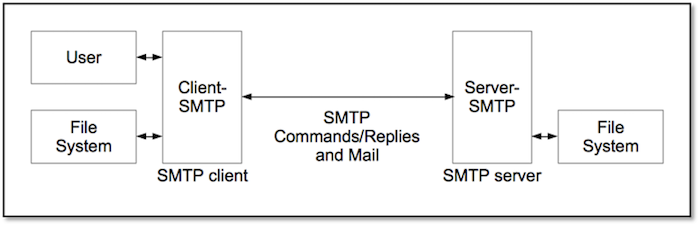
The Simple Mail Transfer Protocol (SMTP) is an emailing system that plays a crucial role in facilitating email communication. But have you ever wondered how it works? SMTP is a protocol that enables email clients to send and receive emails over the internet, allowing users to send and receive emails seamlessly. It works by breaking down emails into smaller packets, transmitting them to a mail server, which then forwards the email to the recipient's mail server, and finally delivers it to the recipient's email client. This process is essential for email communication, making SMTP an indispensable component of the internet infrastructure.
What is SMTP?
SMTP, or Simple Mail Transfer Protocol, has been the backbone of email delivery since the early days of the internet. Although it's still used today to send mail between servers, it's not well-suited for mobile devices like smartphones and tablets.
SMTP, or Simple Mail Transfer Protocol, is a standard protocol used for sending emails over the internet. It allows users to send emails to a mail server, which then forwards the email to the recipient's mail server, where it is delivered to the recipient's inbox.
- SMTP—a network protocol that allows the sending of electronic mail.
- It is used to send emails from one computer to another via a network.
- The SMTP protocol was designed in 1982 as part of the original specification for Internet email, specifically for use on TCP/IP networks.
- The name "SMTP" comes from its function of facilitating the transfer of email messages between mail servers.
- SMTPv2 is an extension of the earlier Simple Mail Transfer Protocol (SMTP) version 1, using port 25 by default, but other ports can also be used.
SMTP, or Simple Mail Transfer Protocol, is a mail delivery protocol that enables the sending and receiving of email messages between computers. It facilitates the transmission of email from one computer to another, and also regulates the delivery of email, ensuring that messages are properly routed and received. In essence, SMTP is a protocol that enables email communication between different systems, making it a crucial component of the email ecosystem.
Gmail and Outlook are email systems, not clients. Hence, it's one of the oldest yet one of the most reliable emailing systems still working today. Besides that, it works flawlessly with other and latest emailing systems like POP and IMAP. This makes it an ideal combination of security, speed, and delivery system for email clients like Gmail and Outlook.
How does SMTP Work?
SMTP, or Simple Mail Transfer Protocol, is a standard internet protocol that defines how email messages are transferred from one computer to another. It's not a language, but rather a set of rules that governs the sending and receiving of emails. As the most basic protocol used in sending emails, SMTP plays a crucial role in facilitating communication over the internet.
The Internet Protocol (IP) is a set of rules and guidelines that define how messages are transmitted via the internet and other networks. It requires four key things to work properly, including addressing, routing, packetization, and sequencing.
- The Mail/Message Transfer Agent (MTA) checks the recipient's email and uses DNS protocols to match it with the sender's information.
- TCP (Transmission Control Protocol) is a widely used protocol, often referred to as the HELO command.
The SMTP transfer process begins with an SMTP client (usually an email client) connecting to an SMTP server on port 25, optionally issuing a STARTTLS command for TLS encryption. The client then sends HELO, MAIL FROM, RCPT TO, and DATA commands to the server to initiate the email transfer.
The connection between these two devices can be closed by either disconnecting from port 25 or by issuing a QUIT command that terminates all data connections after the email is sent.
Defining SMPT Server
An SMTP server receives email messages from clients, forwards them to the delivery agent for processing, and provides a service for sending emails, relaying messages between mail servers.
An SMTP host is a computer connected to the internet that accepts incoming emails, stores them, and makes them available to other computers requesting a message. In contrast, an SMTP client is software that enables users to send emails through an SMTP server.
Why is SMPT Important?
SMTP (Simple Mail Transfer Protocol) is a protocol that defines how emails are formatted, addressed, and transferred between mail servers, making it easy for users to set up their own email servers without needing special knowledge.
The key guidelines of SMTP are:
- Messages must be sent in ASCII format
- Messages are limited to a maximum length of 65,535 bytes
- All lines must end with a carriage return and line feed sequence (CRLF)
The regulation ensures a smooth mailing process from client to server and vice versa, making it a key and important regulation.
Conclusion
Emailing today relies heavily on SMTP (Simple Mail Transfer Protocol) to function smoothly. This protocol is essential for any emailing service, as it enables the execution of commands that allow emails to be sent and received globally. By employing SMTP properly, emailing services can ensure thorough and efficient communication across the network.
Related Articles
- [Solved] What Happens If I Interrupt System Restore Windows 10?
- What is the Thinking Behind 32GB Windows Format Limit on FAT32?
- What Is A USB Memory Stick? Complete Information on Memory Stick
- How to Map a Network Drive in Windows 11? Your Complete Guide Is Here
- How to Fix 7 Days to Die Corrupted Save on PC (2024 New Guide)
Fix a corrupted 7 Days to Die save on PC. Learn how to locate save files, restore backups, and reduce the risk of losing progress. - 7 Days to Die File Disappeared? Find Causes & Solutions Here
Have you recently lost files on your 7 Days to Die game? In this article, we'll show you how to solve the 7 Days to Die save file disappeared issue. Read on to know the 5 fixes you can apply and have your game resume normally.
Products
Articles & Tutorials
- Data Recovery
- Data Backup
- File Recovery
- File Backup
- System Backup and Restore
- Disk and Partition Clone
- Technical articles
- Mobile articles
- Disk Master Help
- Windows Data Recovery Tutorials
- Windows Secure Delete Tutorials
- Windows Partition Management Tutorials
- Windows File Backup and Restore Tutorials
- Windows System Backup and Restore Tutorials
- Windows Disk Backup and Restore Tutorials
- Windows Clone Tutorials