[Solved] How to Set Automatic Backup to OneDrive in Windows 10/8.1/8/7/Vista/XP
To automatically back up data to OneDrive, you can follow detailed settings steps or consider using Qiling Backup, which allows users to customize the backup schedule.
Contents
- Part 1 What is OneDrive and How to Set Up Auto Backup to OneDrive
- Part 2: Automatic Backup to OneDrive with Qiling Backup
- FAQ about OneDrive
Part 1 What is OneDrive and How to set up auto backup to OneDrive
OneDrive is a Microsoft automatic backup for Windows 10, similar to IDrive, pCloud, iCloud, and Google Drive. It allows users to store and synchronize data across PC, mobile, and web platforms, offering 5GB of free storage space, with additional storage available for purchase.
Microsoft has introduced a new folder protection feature for OneDrive, allowing users to automatically sync their essential PC folders, such as documents, pictures, and desktop folders, to the cloud service for backup and conservation.
Warning:
1. Incremental is not available.
OneDrive doesn't support incremental backups, so when a file is modified, it's directly synced to the cloud without keeping previous versions.
2. Limited file location.
The backup folder will be moved to the OneDrive directory, leaving only a shortcut to the original folder, which will be synced across all Windows 10 PCs if used on multiple devices. This feature helps protect data from threats like hard disk damage, computer loss, or ransomware.
Step 1: Find OneDrive icon on the Deskbar.
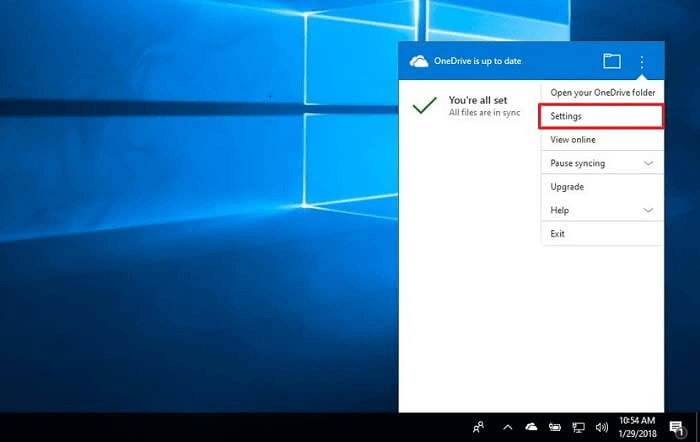
Step 2: Right-click the OneDrive icon, and choose Settings. Find Auto Save in the OneDrive settings of Windows 10
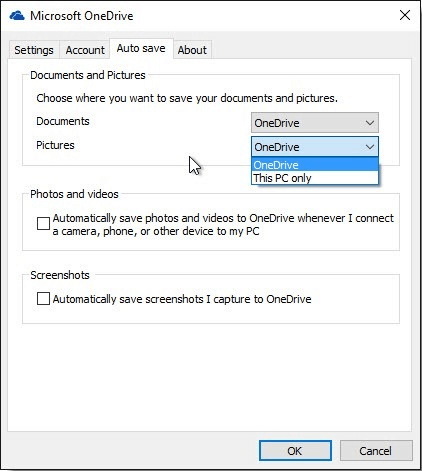
Unfortunately, local files in Outlook and OneNote cannot be backed up at this time, and syncing large amounts of data (over 20GB) is also not possible.
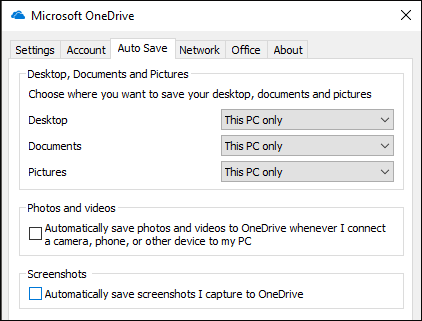
If you do not want to auto-To automatically save any folder, go to the Auto Save tab, select "This PC only" for the Documents and Pictures lists, and uncheck the other boxes.
Part 2: Automatic backup to OneDrive with Qiling Backup
Compared to OneDrive, Qiling offers five better ways to set automatic backup on Windows 10. Two of its functions stand out: incremental backup, which allows for more efficient storage, and the ability to choose the storage location, giving users more flexibility. Additionally, Qiling's compression, customization, and preview/view image features provide further advantages over OneDrive.
1. Incremental backup
A full backup of all data since the last backup, regardless of whether the previous backup was full, differential, or incremental, and is the fastest type as it doesn't re-backup files from earlier tasks.
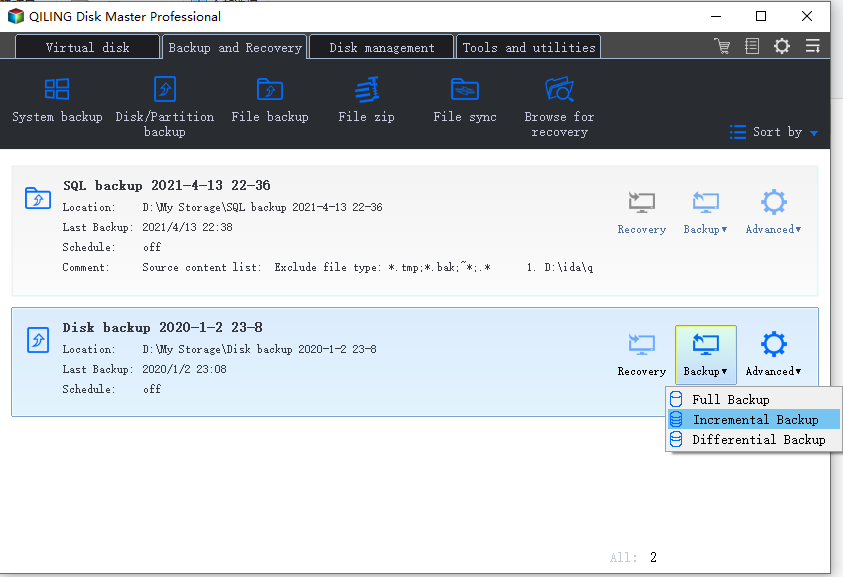
Due to OneDrive's limited capacity, users may need to decide which files to back up, leading to repeated full cloud storage issues. As a result, incremental backups become essential to manage and maintain the backed-up data effectively.
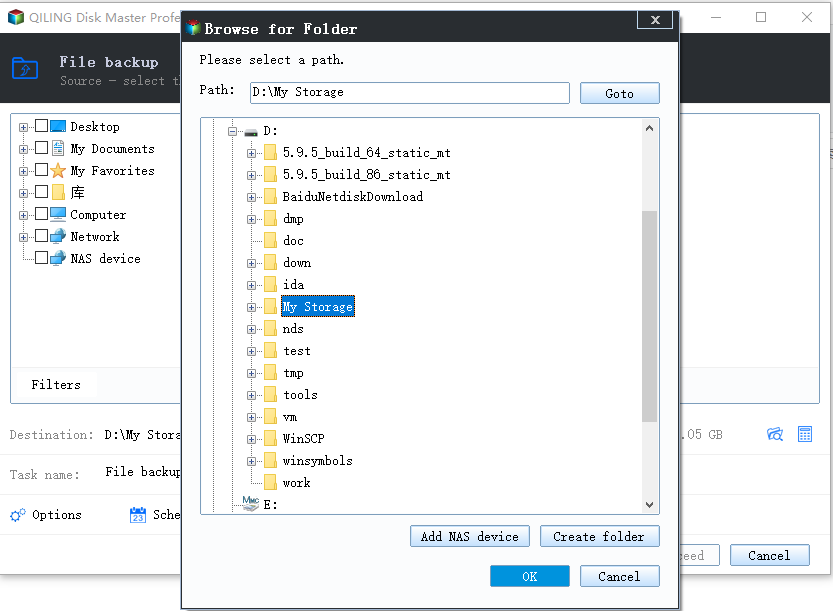
2. No limited by storage location.
Backing up files to OneDrive saves a mirror of documents in the OneDrive directory, but Qiling Backup offers more storage location options.
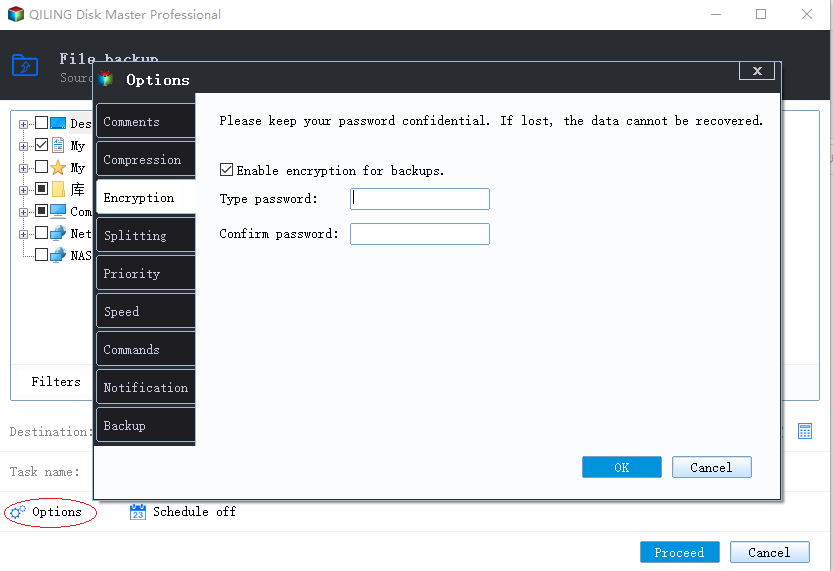
3. Backup compression to further save space.
Considering the capacity limitation of OneDrive or any storage device used, compressing files can help maximize pace saving, and the compression level can also be customized.
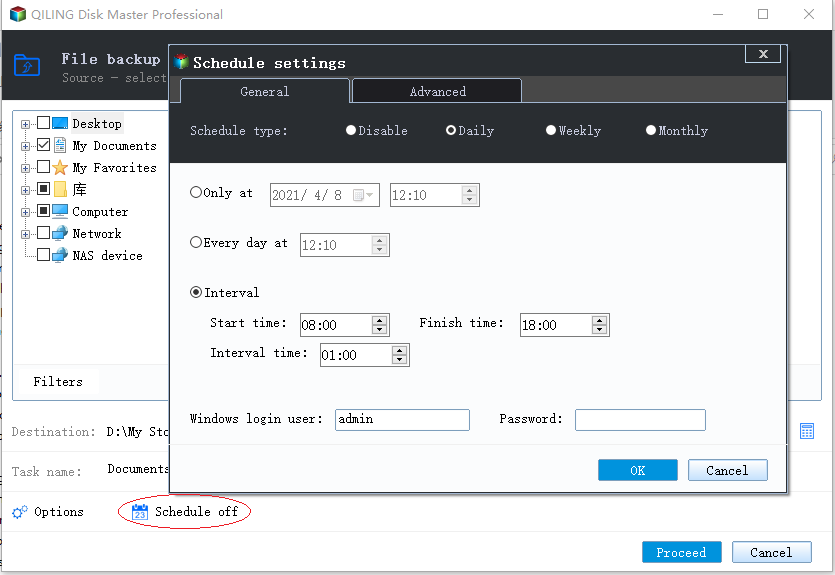
4. Customize backup plan
According to your needs, you can make a backup plan independently.
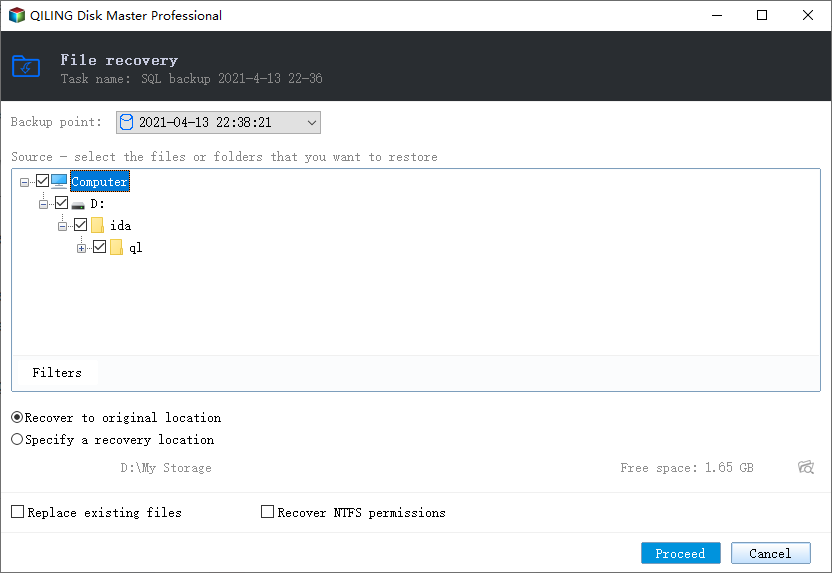
5. Preview and view images
You can view backed up images by going through the backup path, locate the images, right-click on them and choose to open or select other recovery options.
How to backup files/system/disk automatically
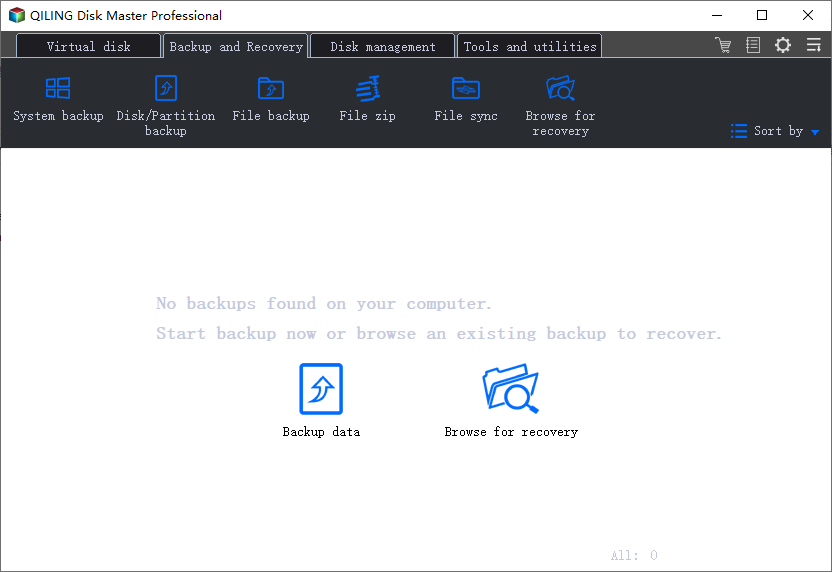
Step 1. Launch and run Qiling Backup on your computer. Click "File backup" on the main window.
Step 2. Choose the specific files that you want to backup to your cloud account - Google Drive/OneDrive or Dropbox.
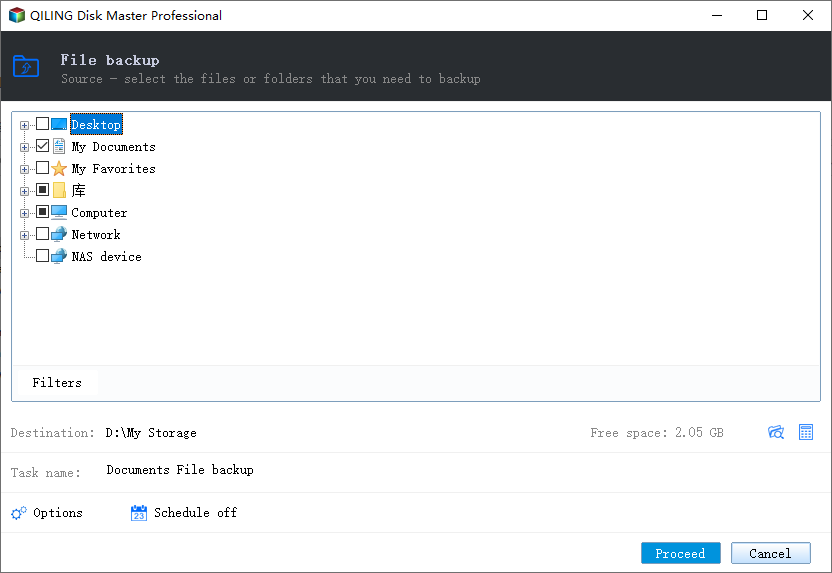
To proceed, click the browse icon in the destination column and select "Cloud Device" from the options. Then, click the "+" icon to access your cloud storage.
Step 3. Select your cloud storage service (Google Drive, OneDrive, or Dropbox) and sign in to allow Qiling Backup to access your account and save backup images.
Step 4. To let Qiling Backup access and save backup images of your files to Cloud drive, click "OK" and then click "Proceed" to start backing up your files now.
Once the process is complete, your videos will be saved to your cloud storage in a compressed format, taking up a small space.
FAQ
1. How to backup your computer to the cloud with OneDrive?
- Open up OneDrive settings and select the Auto Save tab.
- Click the Update folders buttons.
- You can select which folders you want to be backed up and where to store them. For example, you can choose to back up your Documents, Pictures, or Videos folder to an external hard drive, cloud storage, or another location.
- Click OK.
2. Are OneDrive files stored on my computer?
It depends on your OneDrive settings and computer version, you can check files in the local OneDrive folder or OneDrive storage in the cloud.
3. What happens if I delete files from OneDrive?
Deleting a file from OneDrive will also delete it from the local OneDrive folder, and vice versa. If you want to keep a local copy but remove it from OneDrive, you'll need to move it to a new folder outside of OneDrive.
4. How do I stop files being saved to OneDrive?
To access OneDrive settings, search for "OneDrive" in the Start menu, select it, and then click on "Settings". On the Settings tab, uncheck all the boxes under the "General" section. On the "Auto Save" tab, set the "Documents" and "Pictures" lists to save only to "This PC", and uncheck the other boxes.
Related Articles
- Best Disk Cloning Software for Windows 7
- How to Backup Files Before Formatting in Windows 10/8/7 PC and Laptop
- How to Back Up Network Shared Files Using Network Backup Software
- How to Clone Server Hard Drive on Windows Server 2019/2016/2012
- Top 6 Best Incremental Backup Software for Windows 10 [2021 Guide]
- Does Creating a Recovery Drive Delete Everything?
Does creating a recovery drive delete everything? Do you know the answer? If not, you have come to the right page. This article will tell you whether creating a recovery drive will delete everything.
Products
Articles & Tutorials
- Data Recovery
- Data Backup
- File Recovery
- File Backup
- System Backup and Restore
- Disk and Partition Clone
- Technical articles
- Mobile articles
- Disk Master Help
- Windows Data Recovery Tutorials
- Windows Secure Delete Tutorials
- Windows Partition Management Tutorials
- Windows File Backup and Restore Tutorials
- Windows System Backup and Restore Tutorials
- Windows Disk Backup and Restore Tutorials
- Windows Clone Tutorials