How to Backup Files Before Formatting in Windows 10/8/7 PC and Laptop
Formatting a disk, such as a hard drive or memory card, involves configuring it for initial use, which erases any existing files. It is recommended to back up files before formatting, and tools like Qiling disk master can assist with this process in a Windows computer or laptop.
7 Things You Must Consider Before Formatting
When a storage media experiences issues, such as unreadable or inaccessible data, people often opt for a quick disk formatting. This is particularly true for external hard drives and USB flash drives, which can be easily backed up and replaced. However, when it comes to formatting a Windows desktop or laptop storage, which is closely tied to the operating system and system programs, a more cautious approach is warranted. Before formatting, it's essential to take significant steps, including backing up data, which is also the case for external storage devices, but also considering the impact on the operating system and system programs, and taking other preparatory moves.
1. Take a full backup of everything you need
2. Copy your drivers of graphics, audio, etc.
3. Write down your browser account, password, and settings.
4. Copy your operating system if you don't want a reinstallation.
5. De-authorize or deactivate the software which works with a single license code on one PC.
6. Save your product key, especially for the purchased programs like Office, Adobe products, etc.
7. Save your operating system serial keys as you may need to reactivate them later.
What Should I Backup Before Formatting
To ensure essential files are backed up, a capable data backup and recovery program should be employed, regardless of the computer information being saved. For personal use, Qiling Backup is a suitable option with a concise interface, offering comprehensive backup features that cater to different requirements. These features include various mutually exclusive options that can meet specific needs, making it a reliable choice for Windows 10/8/7 and earlier Windows operating system versions.
1. For external hard drives, you can either backup the entire drive or its individual partitions.
2. For local drives, you got two options to take an effective backup.
- For non-You can backup files or drive partitions on system drives as you desire.
- For system C drive, you can choose to back up the operating system or the whole system drive with data and programs on it.
When it comes to backing up files, the choice of what to save is up to you. However, it's a good idea to use a user-friendly backup and recovery program like Qiling Backup to ensure a complete backup of your hard drive, external hard drive, programs, documents, videos, photos, emails, and other important data on your PC or laptop, especially before formatting Windows 10/8/7.
How to Backup Files Before Formatting in Windows 10/8/7 PC, Laptop or External Hard Drive
If you're still unsure about the details of backing up your data, consider clarifying a few things before initiating your first backup, especially if you're about to format your drive or partition. This will ensure you're prepared and can effectively protect your system, files, and emails.
Backup computer before formatting FAQs:
1. Where can I save the large computer backups?
The software allows you to choose a backup location as you want, including a physical hard drive, a removable hard disk, Network drive, NAS, or Cloud.
2. Should I backup the AppData folder?
The AppData folder holds application settings, files, and data specific to an application on a Windows PC. To resolve issues like freezing, crashing, or lagging, formatting the PC is often a solution, making it essential to back up the operating system and the AppData folder together, allowing for a smooth restoration without re-configuring settings.
Backup computer files before formatting user guide:
Step 1. Launch Qiling Backup software and then choose "File Backup", "Disk/partition Backup" or "System Backup" for different backup purpose.
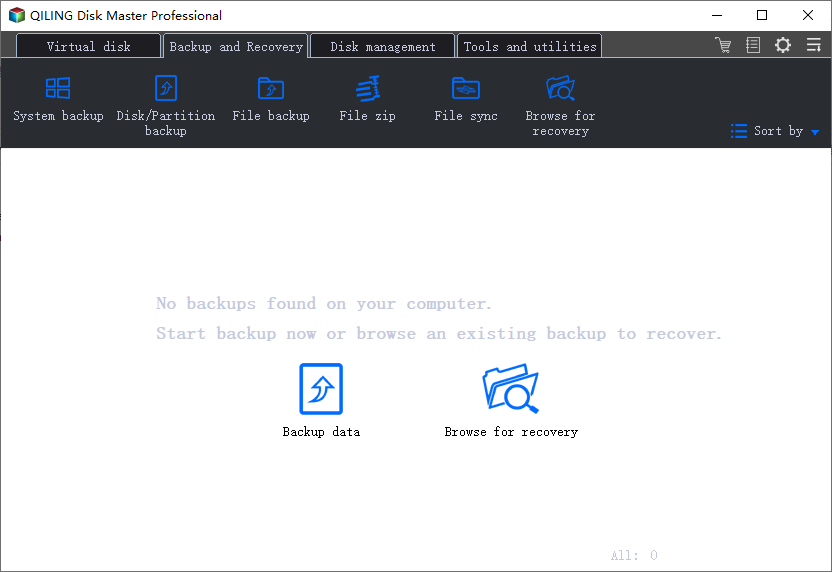
Step 2. To back up your system, you'll need to choose the specific components you want to protect, such as the system itself, disk partitions, files, or apps. Once you've selected what you want to back up, you'll need to choose a destination where the backup file will be stored. This could be an external hard drive, cloud storage, or another location on your computer.
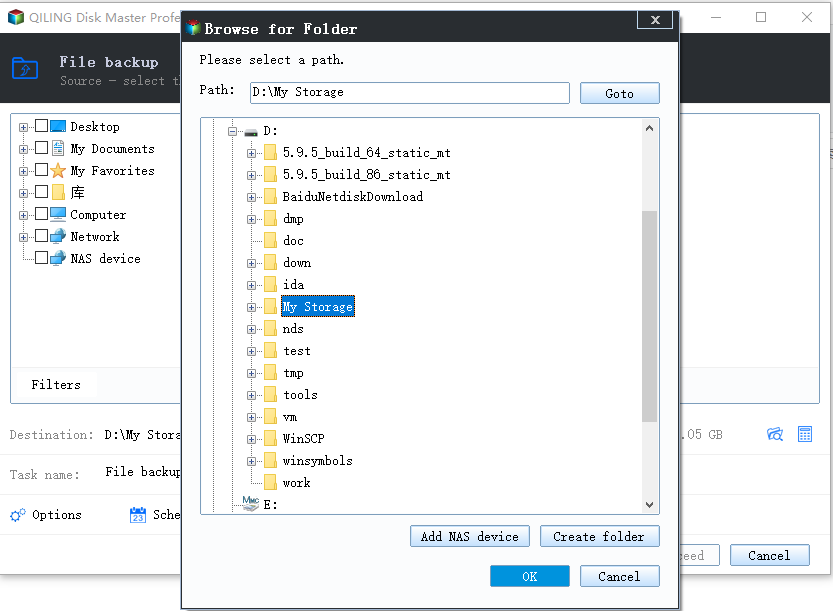
Step 3. Click "Proceed" to start the data backup process.
To format C drive in Windows after taking a backup, go to File Explorer, right-click on the C drive, and select 'Format'. In the Format window, choose the file system and allocation unit size, then select 'Quick format' or 'Full format' to erase the drive. Click 'OK' to format the drive, but note that this will erase all data on it, so make sure to have backed up all important files and data before proceeding.
Related Articles
- Download SanDisk Cloning Software to Migrate Data/OS (2021 Update)
- HP Backup and Recovery Manager Free Alternative
- How to Automatically Backup Files to An External Hard Drive in 3 Ways
- Upgrade Xbox One to Bigger Drive without Losing Game Files in 3 Steps
- Is It Possible to Backup RAID in a Safe and Easy Way
- How to Clone RAID Disk with RAID Cloning Software
- Windows 11 Upgrade - Download and Install Windows 11 Latest Build
You can stay updated with the latest Windows 11 by following the provided instructions, which include checking for updates and verifying the Windows 11 upgrading record.
Products
Articles & Tutorials
- Data Recovery
- Data Backup
- File Recovery
- File Backup
- System Backup and Restore
- Disk and Partition Clone
- Technical articles
- Mobile articles
- Disk Master Help
- Windows Data Recovery Tutorials
- Windows Secure Delete Tutorials
- Windows Partition Management Tutorials
- Windows File Backup and Restore Tutorials
- Windows System Backup and Restore Tutorials
- Windows Disk Backup and Restore Tutorials
- Windows Clone Tutorials