The Best Way to Backup Windows Server 2008 to NAS
For Windows Server 2008, you can use the built-in Windows Backup utility to automate backups to a network share (NAS) drive. You can configure the backup to use a portion of the HDD as the backup destination, and set it to run automatically. To do this, go to the "Backup" section in the Server Manager, select the "Configure Backup" option, and follow the prompts to set up the backup job. You can then specify the NAS drive as the backup destination and set the schedule for the backups. Alternatively, you can use the Windows Server Backup feature, which is a more advanced backup solution that allows you to back up and restore system state, files, and folders. You can configure it to run automatically and save the backups to the NAS drive.
You can back up Windows Server 2008 to a NAS drive, which is a convenient and secure option. To do this, you can use the built-in Windows Server Backup feature, which allows you to schedule backups to a local or network location, including a NAS drive. This feature provides a reliable and automated way to protect your server data, and can be configured to run at specific times or intervals to ensure that your backups are up-to-date.
Everything About Windows Server 2008 (Pros & Cons)
Windows Server 2008 is a server OS from Microsoft, released to manufacturing on February 4, 2008. While not marketed as a direct replacement for Windows Server 2003, it offers many new features and improvements. As with any Microsoft product, using Windows Server 2008 has its pros and cons.
Windows Server 2008 offers several advantages over previous versions, including improved performance, enhanced security features, and increased reliability. The operating system provides a more efficient and streamlined environment for businesses to operate in, with features such as improved network performance and better resource management.
- Improved scalability and performance
- Enhanced security features
- Better manageability and improved energy efficiency
Windows Server 2008 includes several new features, such as virtualization support, live migration of virtual machines, and increased automation, but also has some drawbacks.
- Windows Server 2008 and 2008 R2 support ended in 2020, similar to Windows 7.
- Users experience difficulty navigating the interface of Windows Server compared to earlier versions, finding it confusing.
Many businesses are likely to switch to Windows Server 2008 due to its numerous advantages over its predecessors.
Can't Backup to NAS with Windows Server Backup
Windows Server has a built-in backup tool called Windows Server Backup, which can create full and incremental backups of data, applications, and systems, and supports various backup media types, including tapes, disks, and solid-state drives, and offers bare-metal recovery.
Windows Server Backup requires significant storage space for the backup files it creates, and it cannot back up data to a NAS drive, resulting in a message when selecting a NAS drive as the destination.
Error - Windows Server Backup is unable to access the remote shared folder. The specified path is invalid.
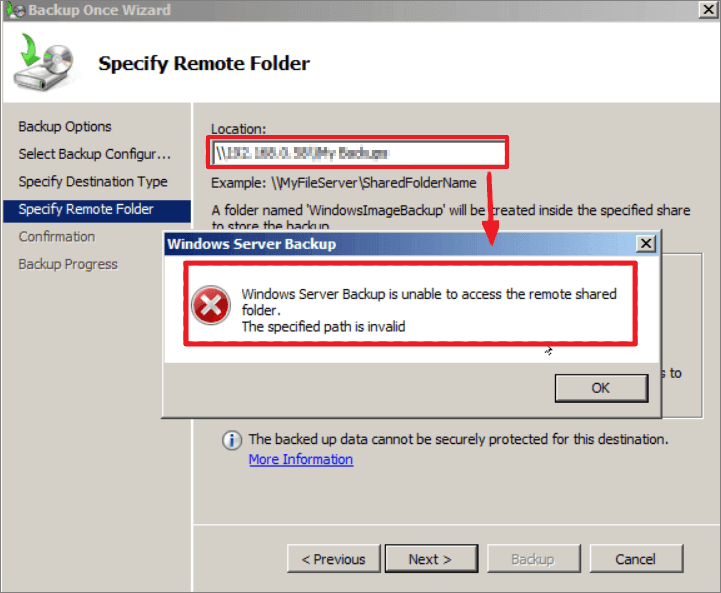
Windows Server Backup is best suited for organizations with large data volumes and sufficient storage capacity to accommodate backup files. However, for a Windows Server backup to NAS, you'll need server backup software.
The Best Way to Backup Windows Server 2008 to NAS
Qiling Backup Enterprise is a robust backup software designed for businesses, offering a range of data protection features. It allows users to back up data to cloud drives, NAS, or external storage devices, including support for Windows Server 2022/2019/SBS 2008. The software also offers efficient differential and incremental backups, saving time by only backing up new or changed files. Additionally, it enables the creation of system images without OS, allowing for the backup and restoration of Windows 11/10/8/7 in case of a system crash, providing businesses with peace of mind knowing their data is secure.
To back up Windows Server data to a NAS, download a Windows Server 2019/2016/2008 backup tool and follow the steps below.
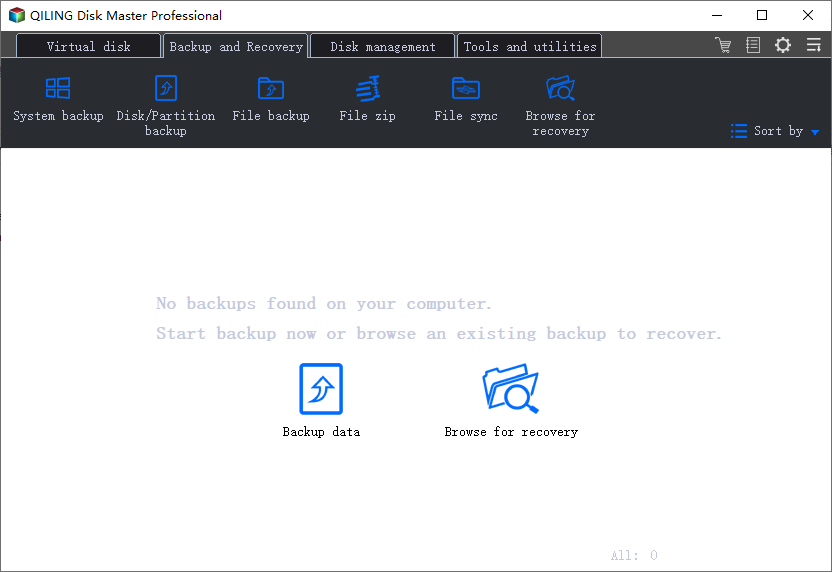
Step 1. To begin the backup process, click the File backup button.
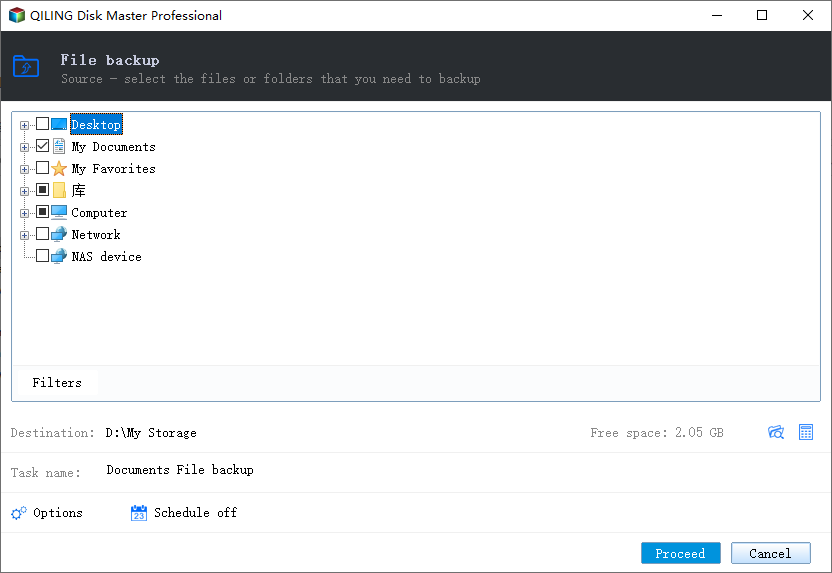
Step 2. The tree view on the screen displays both local and network files, allowing you to expand directories and select specific files to back up.
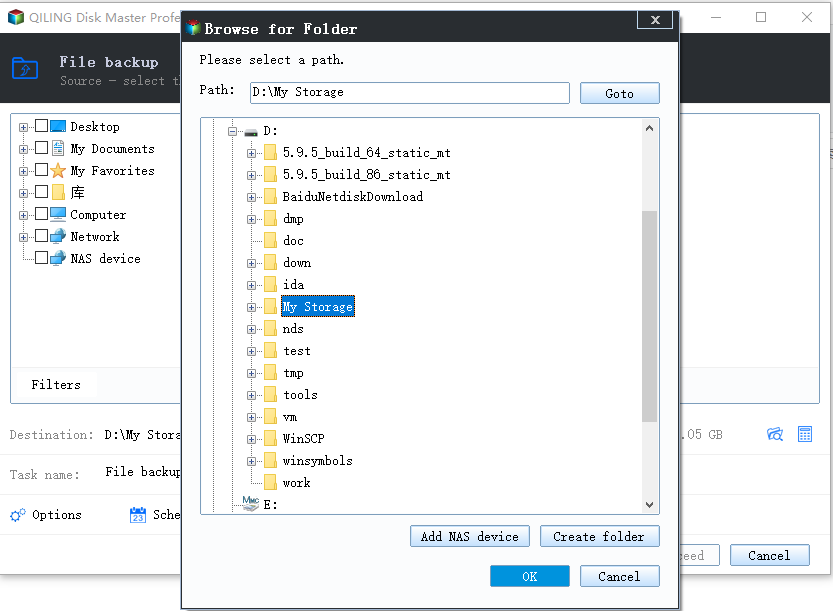
Step 3. The guidance on the screen is asking you to select a location to store the backup. You can choose a location such as an external hard drive, a cloud storage service like Google Drive or Dropbox, or a network drive.
Step 4. To set up a backup, ensure it's encrypted and schedule it by clicking on "Options" within "Backup Options".
You can customize various settings such as performance, encryption, and email notifications based on your preferences.
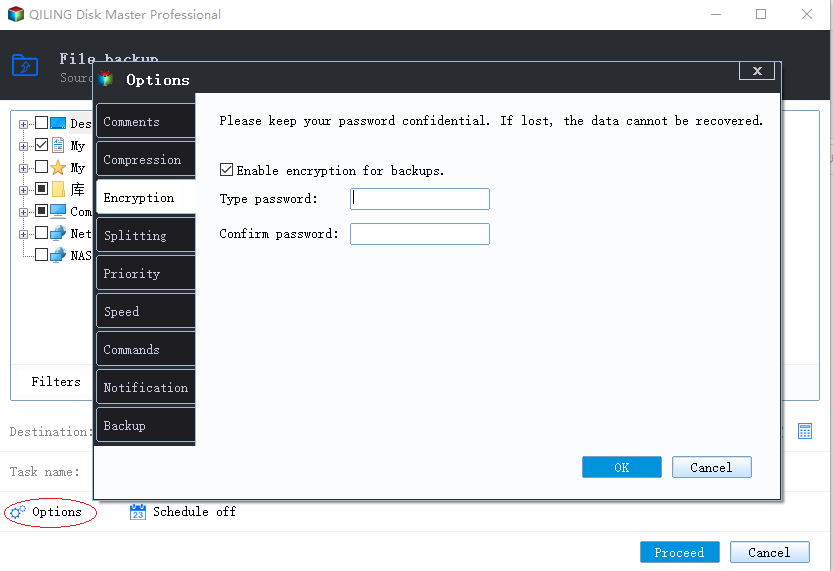
You can also choose to start the backup at a certain time in Backup Scheme by clicking Options, among other customizable options.
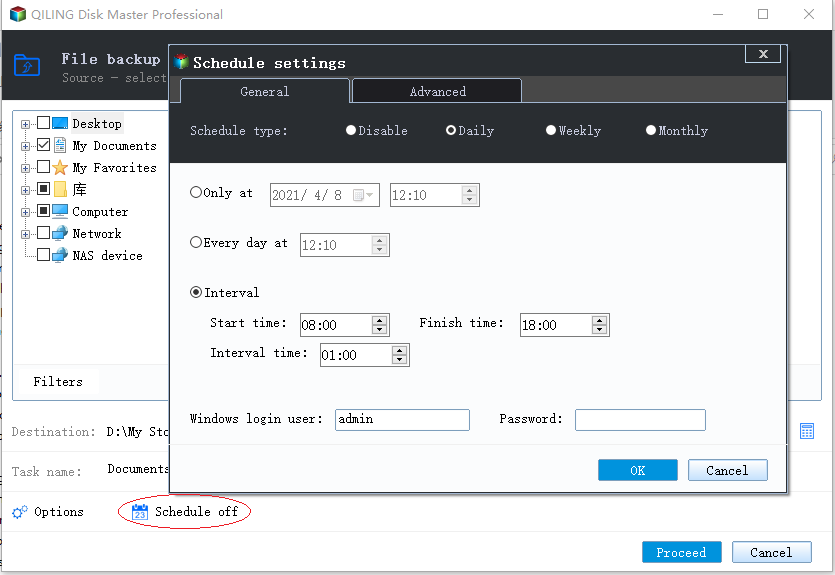
Step 5. You can store the backup file on your computer, in Qiling's cloud service, or on a network-attached storage device (NAS) for safekeeping.
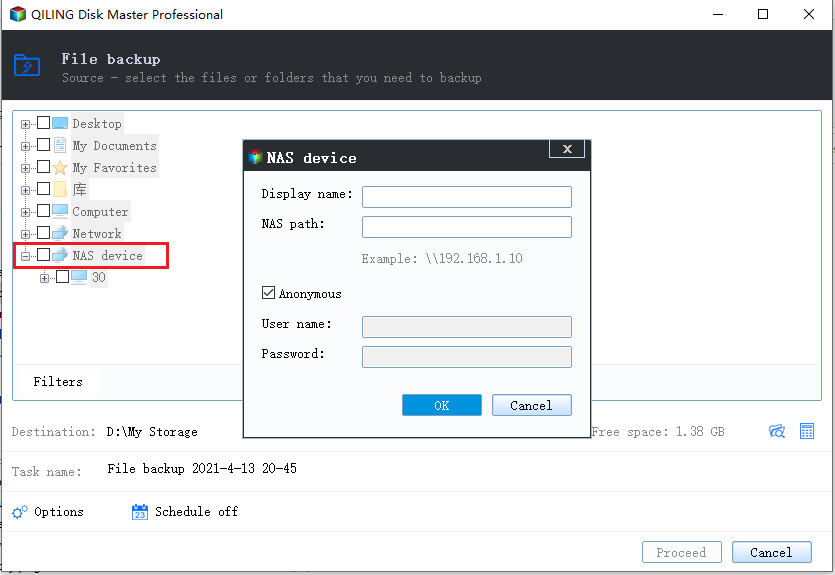
Step 6. Qiling Backup allows customers to store backup copies of their files either on a third-party cloud drive or on the company's own cloud storage.
To back up your data on a third-party cloud drive, select Local Drive and scroll down to add Cloud Device, then fill in your account information.
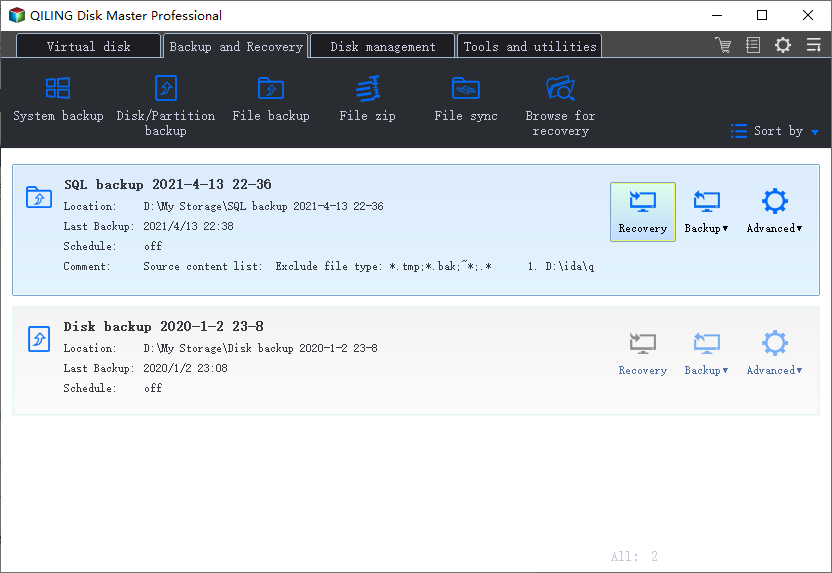
Step 7. Click on Proceed to start a backup. When the backup process is complete, the backup job will be displayed as a card on the left-hand side of the screen, and clicking on it will provide more information on how to manage the backup job.
Conclusion
Windows Server 2008 backup to NAS is a reliable way to protect data, ensuring it's safe and secure. This method also allows users to take advantage of Windows Server 2008's features and benefits. For any other issues, assistance is available.
Windows Server 2008 Backup to NAS FAQs
Some frequently asked questions might help you with Windows Server backup problems and errors.
1. How do I create a Windows image backup?
To create a system image.
- To access the Backup and Restore control panel, click the Start button on your computer, then select Control Panel from the menu. From the Control Panel window, click on System and Maintenance, followed by Backup and Restore.
- To create a system image, select the left pane and choose Create a system image. Follow the steps in the wizard.
2. How does the Windows Server backup work?
Windows Server Backup is a tool that allows users to back up and recover data in Windows Server environments, with the ability to back up the entire server, system, selected storage volumes, or specific files, as long as the data volume is under 2 terabytes.
3. Where is Windows Server backup stored?
Windows Server Backup stores backups at the path BackupStorageLocation > WindowsImageBackup > ComputerName.
4. Can you backup NAS data to Google Drive?
Yes, you can backup NAS to Google Drive:
- Click the Select backup contents option.
- Four data backup categories exist: File, Disk, OS, and Mail. Clicking on File allows you to access this category.
- Follow the on-screen instructions and choose Google Drive to store the backup.
Related Articles
- A Complete Guide to Windows Server Backup and Restore [2022 Update]
- Open Source Backup Software for Windows Server 2003(2022 New List)
- Convert Disk Image to Virtual Disk File (.vmdk or .vhd)
- SQL Server Full Backup Tutorial with Examples
- Windows 11/10 Easy Transfer | Migrate Files, Programs and Settings Easily
Qiling Disk Master is a Windows 11/10 easy transfer tool that simplifies the process of migrating files, programs, and settings from one Windows 11/10 device to another, making the process easy and fast. - Windows 11 File History: Create File Backups and System Backup Image
Read the article to learn everything about Windows 11 File History, and how to use File History to create backups of users files, folders, programs, documents, downloads and library. To create a Windows 11 system backup image, you need a Windows 11 File History alternative software.
Products
Articles & Tutorials
- Data Recovery
- Data Backup
- File Recovery
- File Backup
- System Backup and Restore
- Disk and Partition Clone
- Technical articles
- Mobile articles
- Disk Master Help
- Windows Data Recovery Tutorials
- Windows Secure Delete Tutorials
- Windows Partition Management Tutorials
- Windows File Backup and Restore Tutorials
- Windows System Backup and Restore Tutorials
- Windows Disk Backup and Restore Tutorials
- Windows Clone Tutorials