How to Clone Failing Hard Drive to External Hard Drive in Windows 10/8/7
PAGE CONTENT:
- Why do you need to clone a failing hard drive
- What do you need for cloning a failing hard drive
- How to clone failing hard drive to an external
- Steps to fix failed hard drive in Windows 10/8/7
If you're experiencing issues with cloning a failing hard drive in Windows 10, you can try the following solution. Typically, a hard drive is used to store and save data on laptops and desktop computers, and the Windows system is installed on the disk for booting purposes. However, if you're facing problems with cloning a failing hard drive, you can refer to the provided solution to resolve the issue.
Why do you need to clone a failing hard drive
After using a hard drive for 3-4 years, it may accumulate corrupted system files, bad sectors, and junk files, leading to various problems, including the hard drive failing.
A failing hard drive is typically unstable and may not work reliably for saving or transferring data to a Windows PC. It may constantly spin up and down, and in some cases, it may even fail to boot up or die suddenly. If the failing hard drive is the system disk, it can prevent the computer from booting up altogether.
To avoid severe data loss and computer booting problems, it's highly recommended to clone a failing hard drive as soon as possible when you experience a failing hard drive on your PC.
Notice:
If your failing disk contains a Windows system, you can refer to clone failing hard drive to a new HDD/SSD for help.
To clone and transfer your saved data from a failing hard drive to an external hard drive or a new hard drive, simply follow these guidelines. This process involves creating an exact copy of your data from the failing hard drive to the new storage device, ensuring that all your important files and information are preserved and ready to be transferred.
What do you need to clone a failing hard drive to external hard drive
To clone a failing hard drive, you'll need to prepare the new drive and the cloning software. First, ensure the new drive is empty and has sufficient space to hold the data from the failing drive.
Before starting to clone a failing hard drive, it's essential to prepare the necessary jobs, including backing up important data, ensuring the target drive has sufficient space, checking for any hardware issues, verifying the drive's compatibility with the cloning software, and possibly using a cloning software that supports failing drives.
- You can use an empty external hard drive or a hard drive with more space than your current failing hard drive.
- A powerful disk cloning software for copying and cloning failing hard drive data to an external HDD.
- It applies to all Windows systems - Windows 10/8.1/7/XP/Vista, etc.
To protect your data on a failing hard drive, we recommend using reliable and safe disk clone software, such as Qiling Disk Copy, to clone the entire hard drive or a specific partition to a new disk, skipping bad sectors.
How to clone failing hard drive to the external hard drive in Windows 10/8/7
A step-by-step guide is available for you
If the failing hard drive is a non-system disk, you can install the cloning software on your computer.
If your system disk is failing and you can't boot Windows, install Qiling Disk Copy on a new, healthy computer with the same Windows OS as your current disk, and create a bootable disk.
Get this powerful tool for cloning your failing hard drive with all data to an external hard drive or a new disk with just a few clicks. You can click the button below to access it.
Connect the external devices to your computer in advance.
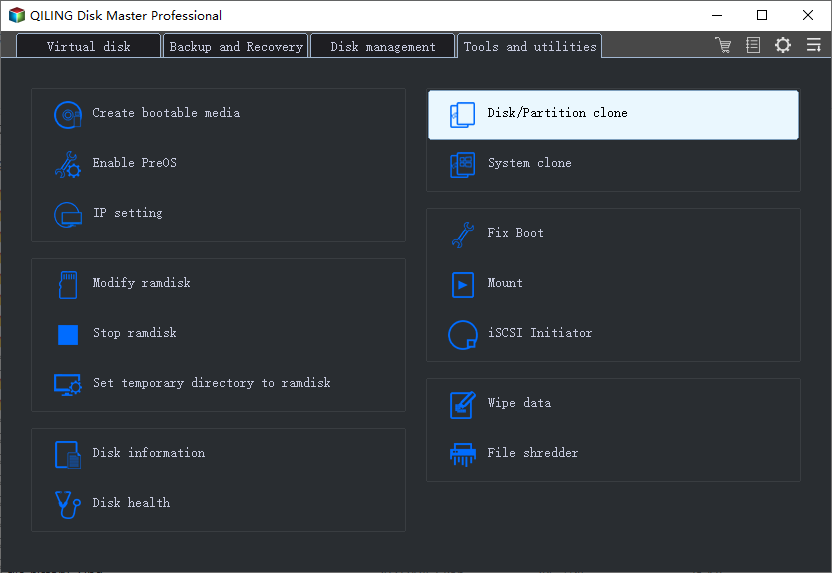
Step 1. Choose "Disk/Partition clone" in the tool page to start.
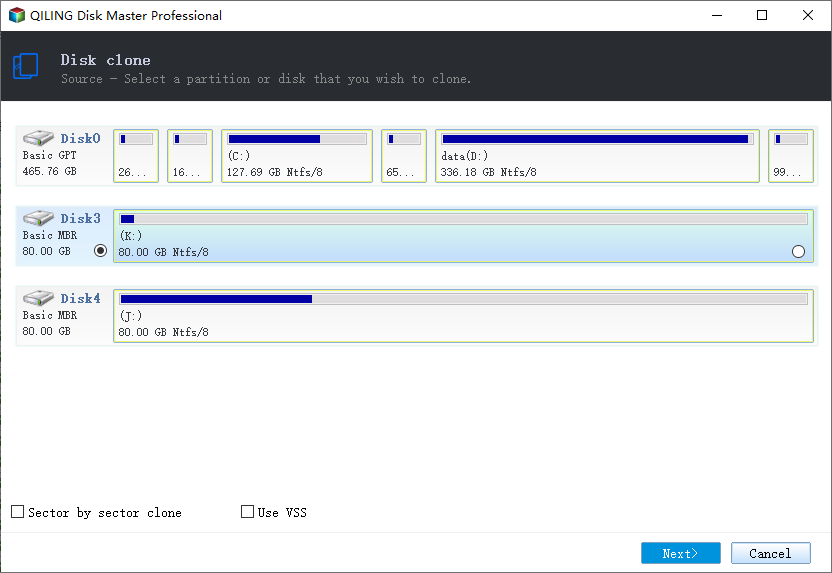
Step 2. Select a hard drive as the source disk. Click Next to continue.
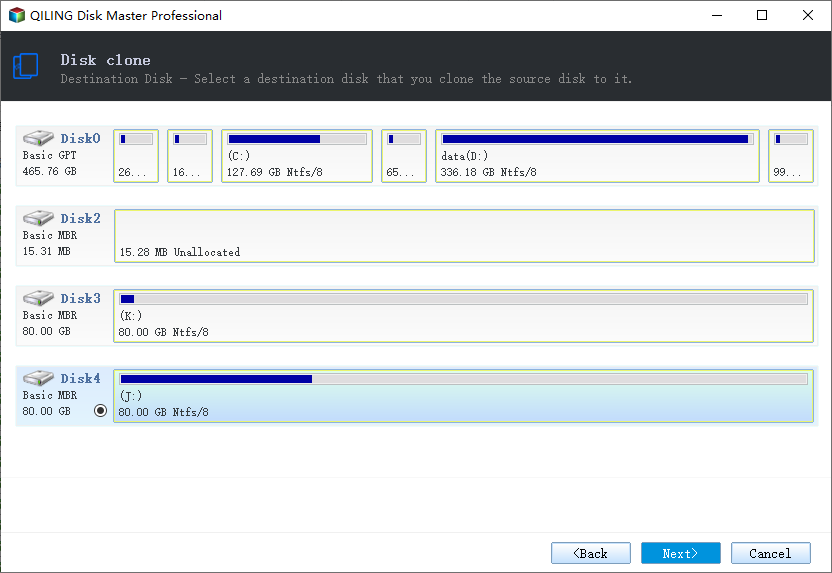
Step 3. Select the external hard drive as the destination disk and click Next to continue.
To successfully copy or clone a hard disk, the destination disk must be at least as large as the source disk, and ideally larger to accommodate any potential data expansion. This ensures that all data from the source disk can be accurately replicated on the destination disk, preserving the original disk's capacity and functionality.
Step 4: Check and edit the disk layout.
If your destination disk is an SSD drive, make sure to select the "Optimize for SSD" option if the target is indeed an SSD.
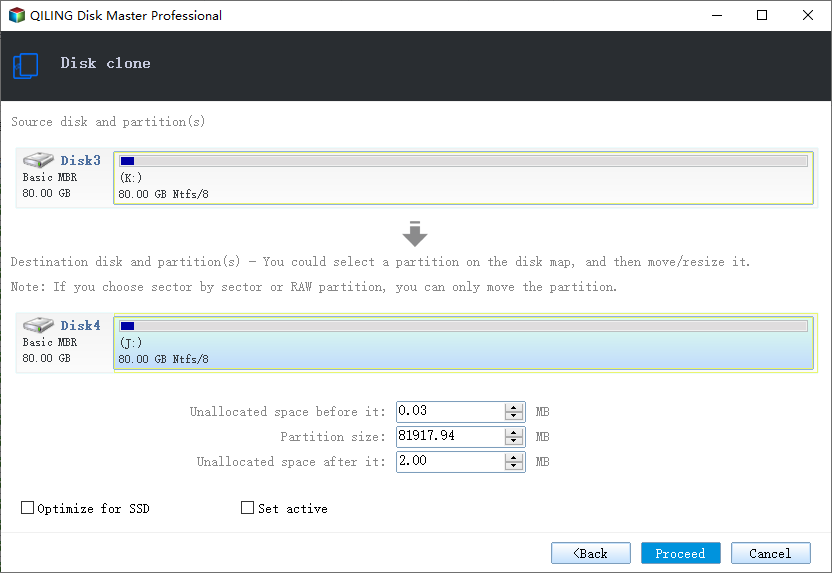
Step 5: Click "Proceed" to start the hard drive cloning process.
A warning message informs you that the data on the destination disk will be overwritten. If you don't have important data on the destination disk, click "OK" to proceed.
You've successfully transferred all saved data from your failing hard drive to a new external hard drive, and you can now access and continue using the cloned data on the new disk.
How to fix failed hard drive in Windows 10/8/7
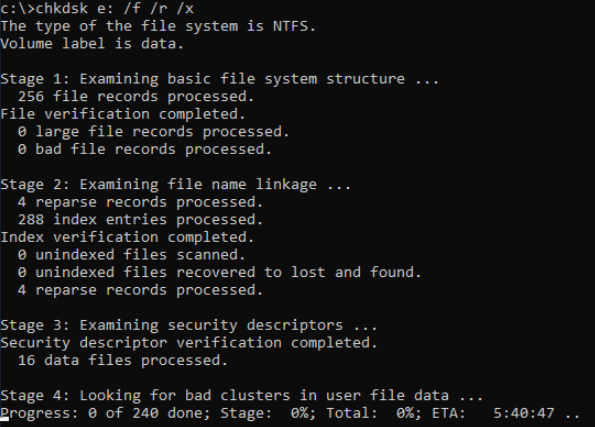
Before assuming your hard drive is corrupted or failed, check the basics: ensure the cables and power supply are functioning properly. Try connecting the hard drive to another computer to see if it can be detected. If it's still not working, run the built-in CHKDSK tool to diagnose and potentially fix any issues with your hard drive.
Step 1. Next to the Windows Start menu, in the "Search Windows" box, type cmd.
Step 2. On the search result, right-click on the Command Prompt and select Run as administrator.
Step 3. Type the command: chkdsk E: /f /r /x. Here you should replace E with your drive letter.
Conclusion
Hard drive corruption is a common issue, but you can protect your data by cloning a failing hard drive in Windows 10. After cloning, connect your external hard drive to your PC and use software like Qiling Disk Copy to ensure a successful backup. This way, you can safeguard your data even if your hard drive fails.
Related Articles
- How to Copy Hard Drive to New Computer
- Bad Sector Repair: How to Fix Bad Sectors on HDD in Windows 10/8/7
- Best Bad Sector Repair Solutions to Check and Remove Bad Sectors on Hard Disk
- How to Clone Hard Drive to USB External Drive
- [Solved] How to Move OS to Another Drive Without Reinstalling Windows and Applications
- Create Scheduled Backups Using Wbadmin Enable Backup
Learn how to configure scheduled backups with Wbadmin enable backup from command line. Workarounds to run daily, weekly or even less frequent scheduled backup to shared folder over NAS.
Products
Articles & Tutorials
- Data Recovery
- Data Backup
- File Recovery
- File Backup
- System Backup and Restore
- Disk and Partition Clone
- Technical articles
- Mobile articles
- Disk Master Help
- Windows Data Recovery Tutorials
- Windows Secure Delete Tutorials
- Windows Partition Management Tutorials
- Windows File Backup and Restore Tutorials
- Windows System Backup and Restore Tutorials
- Windows Disk Backup and Restore Tutorials
- Windows Clone Tutorials