External Backup Drive Disconnected During a Windows Backup
A backup interrupted by a USB or power disconnect should be treated as incomplete even if some image files appear on the destination. Do not rename or combine partial files by hand. Keep the source data unchanged while you confirm the destination drive is reliable.
Check the hardware connection first
If the USB drive reconnects but its existing image no longer opens, follow the backup-image verification steps after a disconnect before creating another image on that drive.
Step 1. Wait for the backup application to report its final state, then close it safely. Do not repeatedly unplug a drive that is still active.
Step 2. Reconnect the drive directly to another USB port, avoiding an unpowered hub. Check the cable and enclosure power adapter. If Windows repeatedly loses the drive or the drive reports read errors, stop using it as the only backup destination.
Step 3. In Disk Management, verify the model and capacity. A changed drive letter can make a saved task point to the wrong location, but do not format the drive merely because Windows prompts for it.
Inspect the incomplete backup
Open the backup task and compare its status and last-successful time with the disconnect event. An interrupted image is not a valid restore point unless the application explicitly lists it and a recovery test succeeds. Check the destination's free space and file-system health before rerunning.
If the drive is unstable, copy accessible pre-existing backup sets to another device only when the drive can be read safely, then replace it. A cable fix is not proof that a failing storage device is healthy.
Rerun and verify Qiling File backup
Step 1. Connect a stable destination, open Qiling Disk Master Pro, and find the original File backup task under Backup and Recovery. Check its source list and destination path.
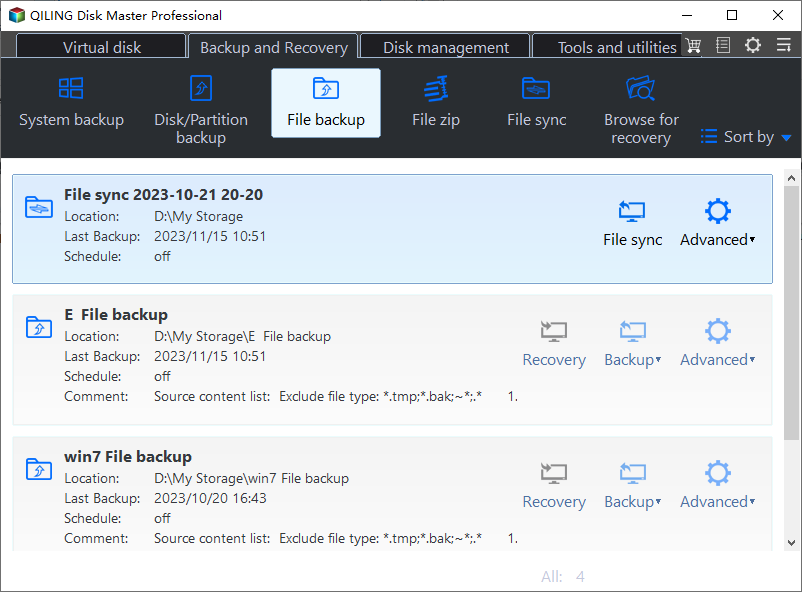
Step 2. If the destination path changed, edit the task or create a new one pointing to a verified folder. Do not assume an incomplete incremental chain can be resumed; start a fresh complete backup when the old chain's integrity is uncertain.
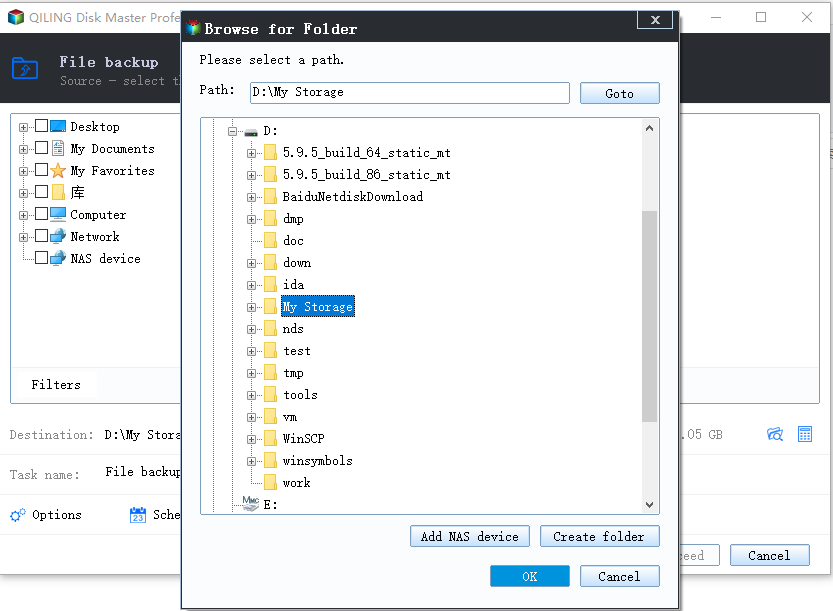
Step 3. Click Proceed for the new run, wait for the completed status, and check the newest backup point. Restore a sample file to a separate folder and open it.
Avoid repeated interruptions
Use a short, reliable cable and adequate enclosure power. For long jobs, keep a laptop on AC and avoid sleep while the drive is active. Keep an additional backup on a separate disk or NAS so one damaged destination does not become a single point of failure.
Related Articles
- Verify Backup Contents
A finished task still needs a restore test. - External Drive Access
Separate permission failures from disconnects.
Products
Articles & Tutorials
- Data Recovery
- Data Backup
- File Recovery
- File Backup
- System Backup and Restore
- Disk and Partition Clone
- Technical articles
- Mobile articles
- Disk Master Help
- Windows Data Recovery Tutorials
- Windows Secure Delete Tutorials
- Windows Partition Management Tutorials
- Windows File Backup and Restore Tutorials
- Windows System Backup and Restore Tutorials
- Windows Disk Backup and Restore Tutorials
- Windows Clone Tutorials