Full Guide: How to Backup Hard Drive to Google Drive in 2 Ways
Why Is It Necessary to Backup Hard Drive to Google Drive
Hard drives are cheaper than SSDs, but they have a fatal disadvantage: they are prone to damage, slow down over time, and eventually break. However, cloud backups like Google Drive have solved this problem, offering a convenient and reliable alternative for storing and accessing data.
Google Drive, a popular cloud storage service, allows users to backup their hard drives to the cloud, providing numerous benefits over other types of backup. This option is particularly appealing to users who store data on hard drives, as it offers a convenient and secure way to protect their information. By backing up to the cloud, users can enjoy advantages such as increased data security, ease of access, and scalability, making it an attractive choice for those looking to safeguard their digital assets.
- Moving data from a hard drive to Google Drive provides a safeguard against data loss in the event of a disk error or physical damage to the hard drive.
- Users can access their data from any endpoint on the internet from anywhere.
- Sharing files with a group or team is easy, allowing users to collaborate and access the same information.
- Google Drive can back up data from many hard drives.
How to Backup Hard Drive to Google Drive in 2 Ways
- Way 1:Third-party Google Drive Backup Software for Hard Drive Backup
- Way 2: Backup Hard Drive via Google Drive for Desktop
If you want to back up your hard drives to Google, you have two simple options: using Google Drive for Desktop or a third-party tool like Qiling Backup. However, these tools work differently - Google Drive syncs files and folders to Google servers, while Qiling Backup can do a full backup of the entire disk, saving you time and preserving the hard drive's files as an image that can be restored when needed.
I recommend using Qiling Backup as the best way to transfer data, given its simplicity and variety of options. You can continue reading the following contents to complete your transfer.
Way 1:Third-party Google Drive Backup Software for Hard Drive Backup
Qiling Backup is a free software that allows you to back up your files, system, and hard drives to a local or cloud destination, supporting cloud services like Google Drive, Dropbox, and OneDrive.
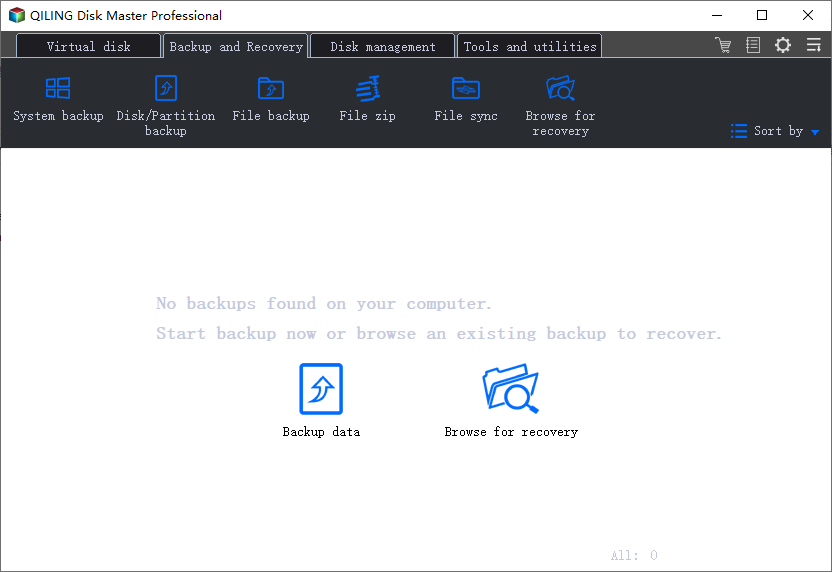
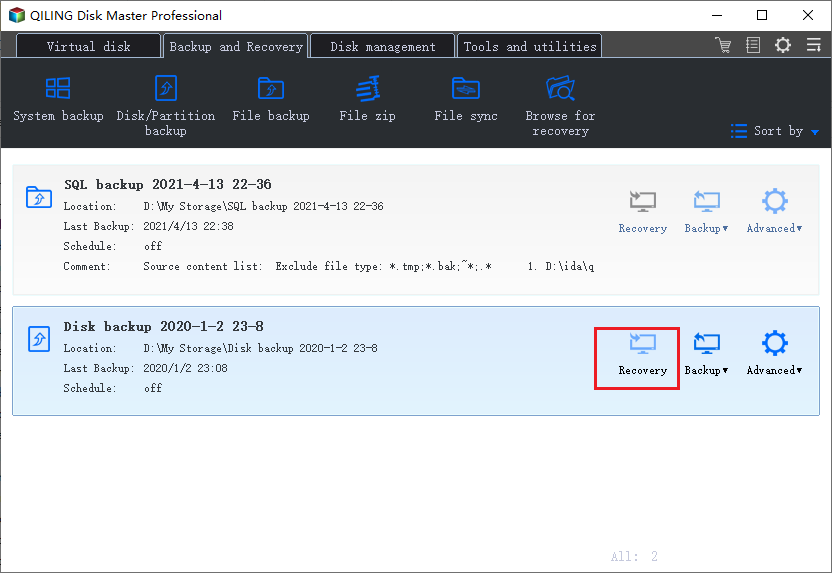
Step 1. Start with selecting the Disk backup button.
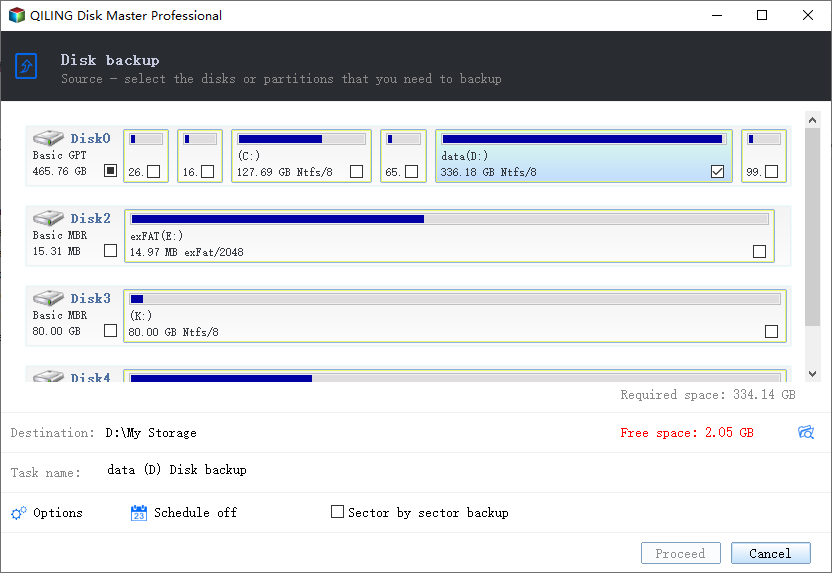
Step 2. It is available to back up a whole disk or a certain partition. Choose the one you need and click OK.
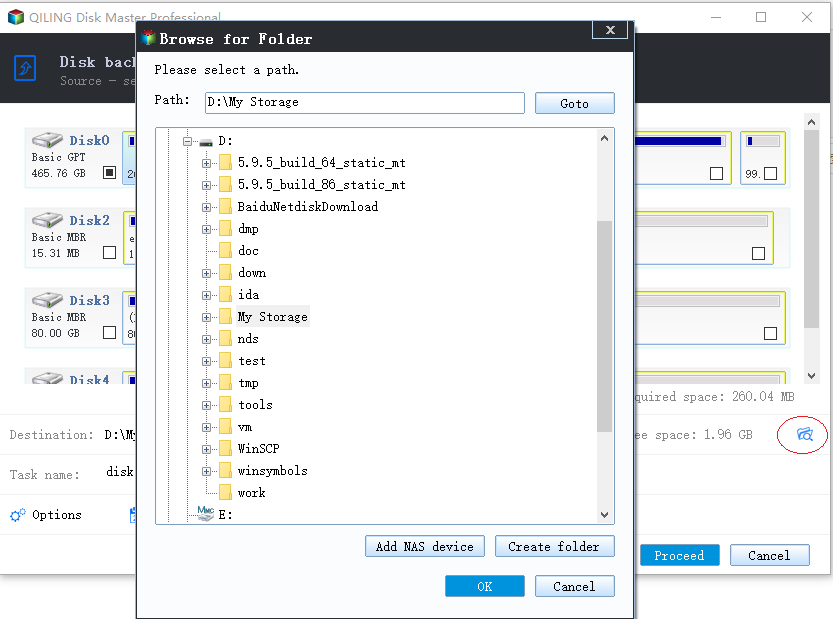
Step 3.Select the destination where you want to save the backup.
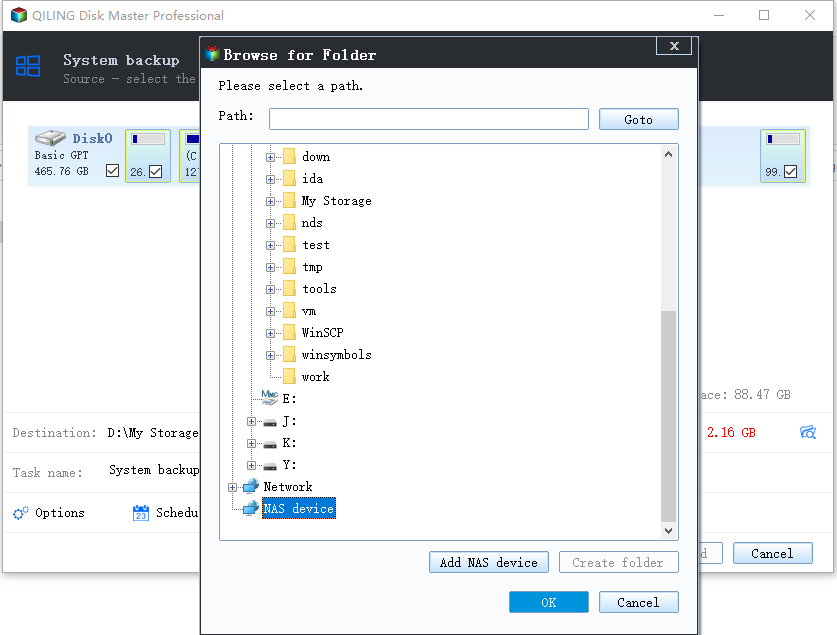
Step 4. For disk/partition backup, you can choose to save the backup to a local drive or to a Network-Attached Storage (NAS) device.
Step 5. After completing the backup process, your task will be displayed on the left side. You can manage your backup by clicking on any task, allowing you to recover it, create incremental backups, and more.
Besides the best backup way provided by a third-party tool, you can also rely on official backup tools provided by Google. Google provides a variety of backup tools such as Google Drive, Google Photos, and Google Backup and Sync.
Way 2: Backup Hard Drive via Google Drive for Desktop
Google Drive offers both a website and a desktop version, with the latter being more suitable for organizations. The desktop version, known as Drive for Desktop, allows for streaming of both Shared Drive and My Drive files from the cloud, freeing up disk space, reducing sync time, and facilitating file upload and download. To take advantage of these features and easily back up and sync files to Google Drive, you can download the desktop version and follow the necessary steps.
Step 1. Download and install Google Drive for desktop on your computer.
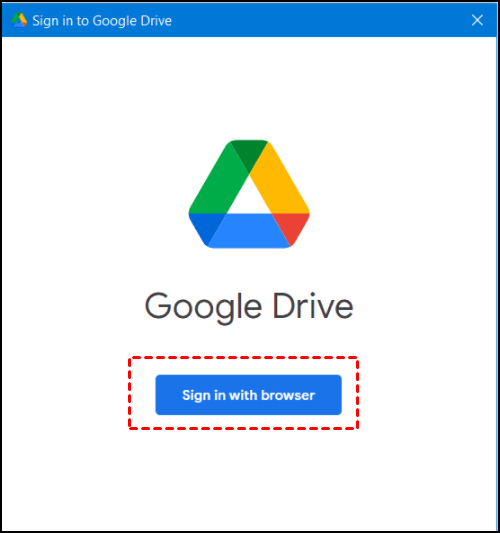
Step 2. Sign in to your Google Account.
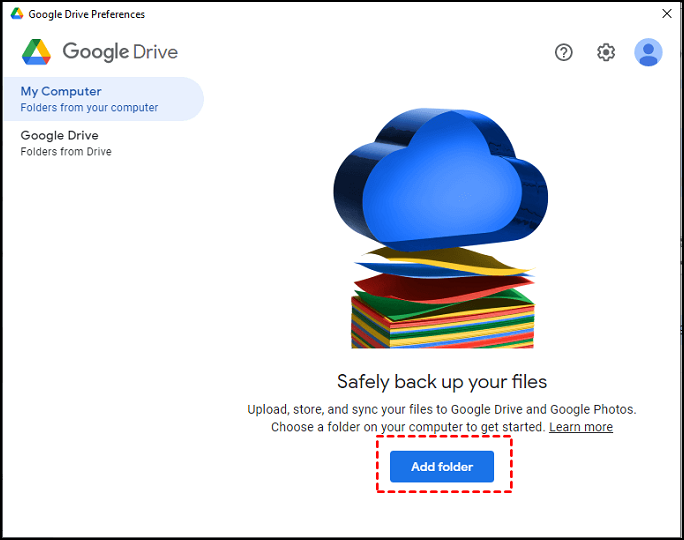
Step 3. To back up folders on your computer, click "Add folder" on the screen of My computer, select the folders you want to back up, and then confirm by clicking "Sync with Google Drive".
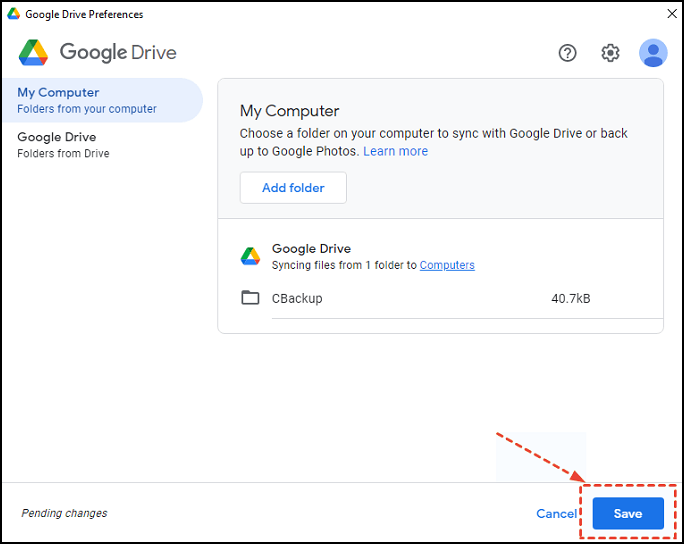
Step 4. Once you've saved your changes, the syncing process will start, and any further changes made to the document will be automatically synced.
Conclusion
Qiling Backup offers multiple backup paths to help back up data more efficiently, quickly, and safely, adhering to the 3 2 1 backup rule. This means you can transfer files from one platform to another, such as from Google Drive to Dropbox or OneDrive, ensuring that all your data is not kept on one platform. Download Qiling Backup to enjoy the benefits.
FAQs
1. What is the difference between Google Drive and Backup and Sync?
Both Backup and Sync and Drive for Desktop aim to provide a seamless sync solution, allowing users to access their files more conveniently. However, they serve slightly different purposes: Backup and Sync is primarily used to sync and store Drive locally on your computer, whereas Drive for Desktop streams all your content from the cloud, offering a more cloud-centric experience.
2. Where is Google Drive stored?
Files uploaded to Google Drive are stored on secure servers in data centers, and the data is encrypted during transfer from the user's computer, as well as while stored on Google Drive servers.
3. Why did Google remove Backup and Sync?
The new application is a unified sync client for business, educational, and personal users, replacing the need for Drive for Desktop, which will eventually be phased out.
Related Articles
- How to Clone Encrypted Hard Drive to SSD/HDD
- How to Clone GPT Disk to SSD in Windows Without Boot Failure
- Solved 2022: Windows 10 File History Not Working
- How to Create a Mirror Image of My Computer on Windows? Best Solutions
- How to Share Photos on Google Drive [Step-by-Step Guide]
If you want to share photos on Google Drive, you can do so securely and control who accesses them. To share photos, follow a step-by-step guide that allows you to keep the images under your control and only accessible to the intended person. - How to Transfer Spotify Playlist|Change Spotify Install Location - Qiling
This article will outlines the best practice for how to transfer songs from one spotify account to another. you can find the spotify installer - Qiling Disk Master to do the spotify playlist transfer, and catch other manual way to change spotify install location.
Products
Articles & Tutorials
- Data Recovery
- Data Backup
- File Recovery
- File Backup
- System Backup and Restore
- Disk and Partition Clone
- Technical articles
- Mobile articles
- Disk Master Help
- Windows Data Recovery Tutorials
- Windows Secure Delete Tutorials
- Windows Partition Management Tutorials
- Windows File Backup and Restore Tutorials
- Windows System Backup and Restore Tutorials
- Windows Disk Backup and Restore Tutorials
- Windows Clone Tutorials