How to Boot from SSD After Cloning
If your Samsung cloned SSD won't boot after migrating Windows OS to SSD using a reliable disk cloning software, don't worry. This guide will explain why the cloned SSD is unbootable and provide a solution to make it bootable again.
Follow this complete guide to make your computer boot up from your new SSD now:
| Detailed Guides | Step-by-step Troubleshooting |
|---|---|
| 1. Why won't my computer boot | The OS cloning process failed, cloned SSD not showing...Full steps |
| 2. How to boot from cloned SSD | Check SSD connection and if it has OS...Full steps |
| 3. What to do with old drive | Clean the old drive or use it as a data disk...Full steps |
Follow to see how to boot your computer from SSD after cloning now.
#Guide 1. Why Won't My Computer Boot From Cloned SSD
Cloning a drive does not make it bootable. To solve the problem, you need to determine the root cause of the issue, which may involve checking the boot order, disk configuration, or other settings. Once you identify the problem, you can take the necessary steps to resolve it.
To clone Windows OS or a whole disk to a new HDD/SSD, you'll need to perform additional steps beyond just copying, such as re-registering Windows components, updating boot configurations, and configuring the system to boot from the new drive.
- 1. Replace the old drive
- 2. Set new SSD as the boot drive in BIOS
- 3. Boot the computer from the new SSD
If your SSD is still unbootable after trying the previous suggestions, it might be due to several reasons. These include a faulty SSD, a corrupted operating system, or a problem with the computer's BIOS or UEFI settings.
- The OS cloning process failed
- The cloned SSD not showing in BIOS
- The cloned SSD not detected
- You accidentally cloned a wrong disk (data drive, not the OS) to an SSD (solid-state drive).
To make the SSD bootable, you'll need to clone the existing OS from the hard drive to the SSD, then install the SSD as the primary drive in the BIOS settings. This process may vary depending on your computer's make and model, so be sure to check the manufacturer's instructions for specific guidance. Additionally, you may need to update the UEFI firmware on the SSD to ensure it's compatible with your computer's hardware.
#Guide 2: Full Guide on How to Boot from SSD
To resolve the issue of making your SSD bootable again, please follow the tips listed below one by one. We'll guide you through the process to identify and fix the problem, ensuring your SSD is bootable with the right method.
After cloning a hard drive to an SSD, you can boot from the cloned SSD on Windows 10/8/7 by following these steps: Ensure the SSD is properly installed and recognized by your system. Restart your computer and enter the BIOS settings.
#1. Check SSD Connection - Install SSD to Computer Correctly
Toolkits: A SATA cable, a screwdriver
Step 1. If you are connecting the cloned SSD as an external USB drive, you may need to use a USB enclosure or a USB-to-SATA adapter to connect it to your computer. This will allow you to access the cloned SSD as an external drive.
If yes, unplug it and move to step 2.
Step 2. To install the cloned SSD, first, open the computer case. Then, connect the cloned SSD to your PC via a SATA cable and a power cable.
Step 3. Check if the SSD connection is secure. If not, reinsert and tighten the SSD connection cables.
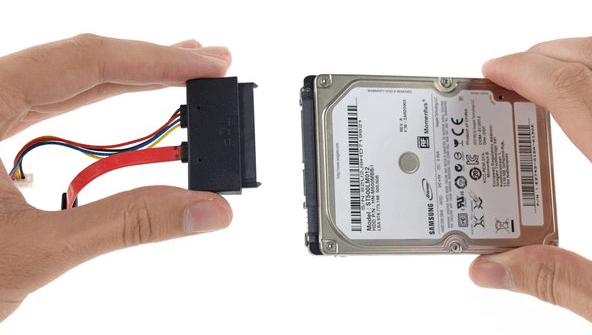
If you're unsure about installing a new disk, you can refer to the guide on how to install a new HDD/SSD by following the link provided.
#2. Check If Cloned SSD Contains OS - If Not, Reclone OS to SSD
After installing the SSD, restart your computer and you can check if the new SSD contains your cloned Windows OS. Here are the steps to check:
Step 1. Restart your computer from the original disk.
Step 2. Open Windows File Explorer and open the SSD drive.
Step 3. Look for the "Windows" folder on the SSD drive.
- If you find the drive in Disk Management, it means you have an operating system installed on the SSD and you can move to the next tip.
- If you're unable to boot from your SSD, it's likely because you haven't installed the operating system on it. If you've cloned your data drive to the SSD, you'll need to re-clone the OS to your SSD. This will resolve the issue and allow you to boot from your SSD.
Guide to Reclone OS to SSD
Toolkits: 1. Windows Disk Management; 2. Reliable System Clone Software - Qiling Backup
1. Delete Everything on Your SSD
- To delete a volume on your SSD, open Disk Management, locate the SSD volume, right-click on it, and select "Delete Volume".
- Repeat to delete all volumes on the SSD.
2. Initialize SSD to The Same Partition Style as Old Drive
Step 1. In Disk Management, right-click the old drive, select "Properties", and check its partition style.
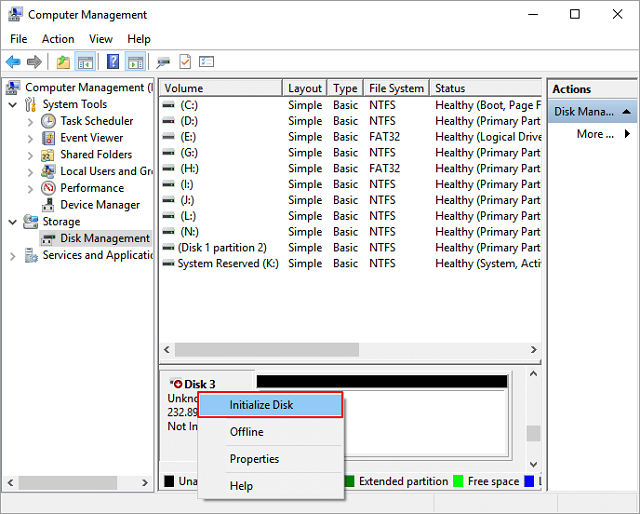
Step 2. Right-click the SSD and select "Initialize Disk", then set the same partition style - MBR or GPT - to the SSD.
3. Reclone Windows OS to SSD
To clone the OS to an SSD using professional Windows backup software like Qiling Backup, the OS migration operation can be fully executed for you.
Step by Step Guide to Clone Windows OS to SSD
Qiling Backup is a software that helps migrate a system from a hard disk drive (HDD) to a solid-state drive (SSD) with ease, speed, and stability.
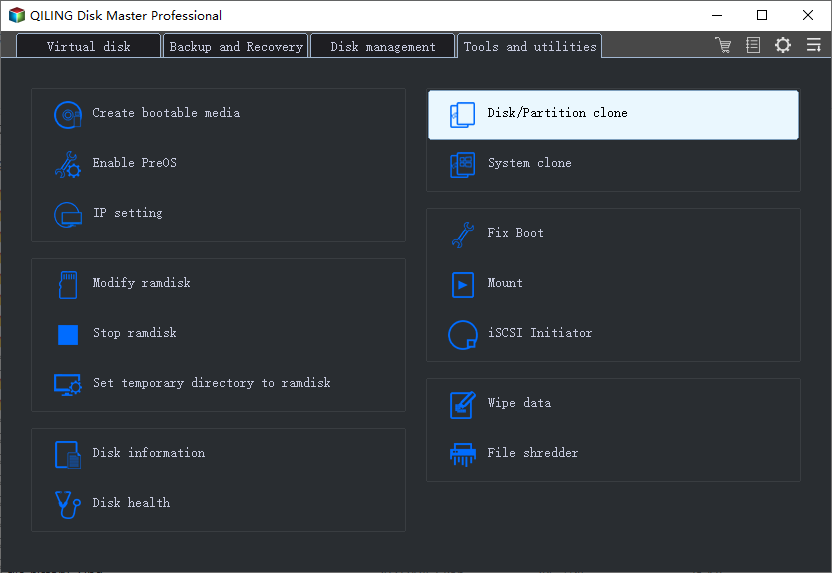
Step 1. On the main page, click on the "Tools and utilities" tab, where system clone and other utilities are located.
Step 2. Qiling Backup will automatically select the boot and system partition, choose the target disk and click "Next".
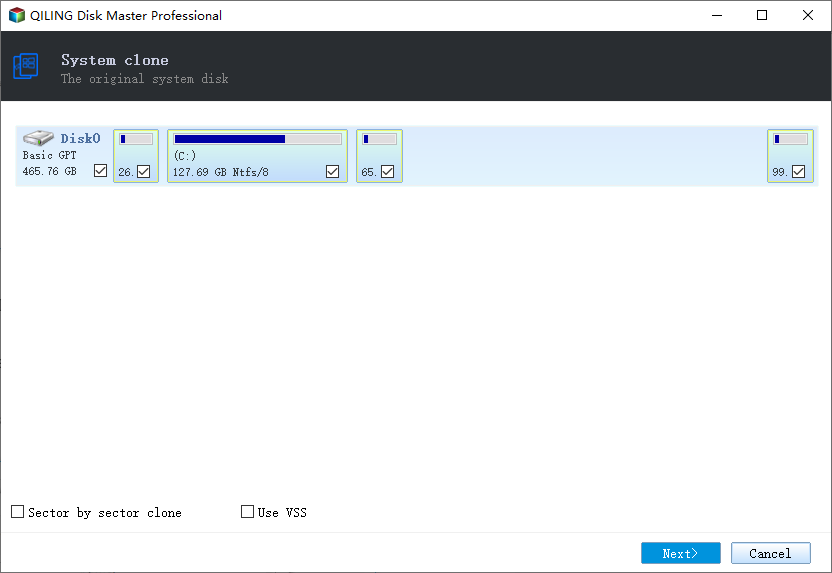
The system clone feature will completely erase all data and cannot convert between MBR and GPT disk partition styles, so ensure the source and target disks have the same partition style.
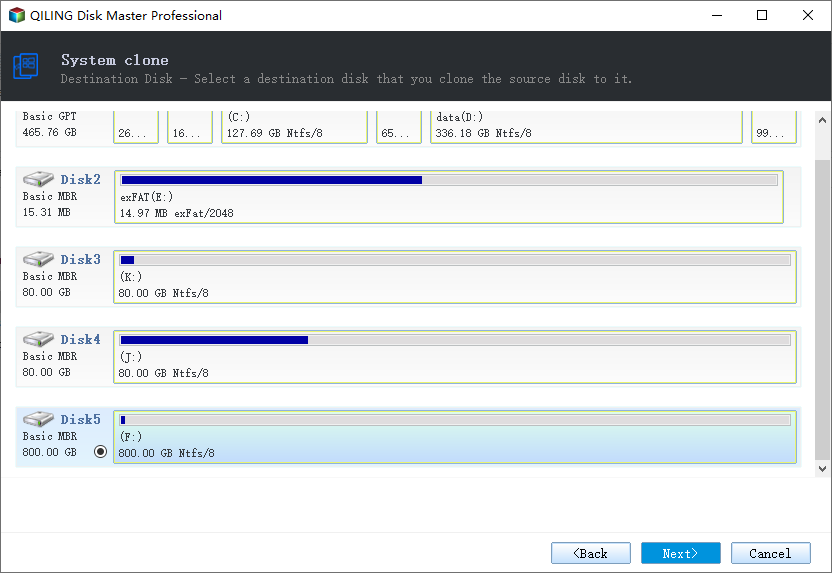
Step 3. If the target disk is a SSD, choose "optimize for SSD" in the advanced options.
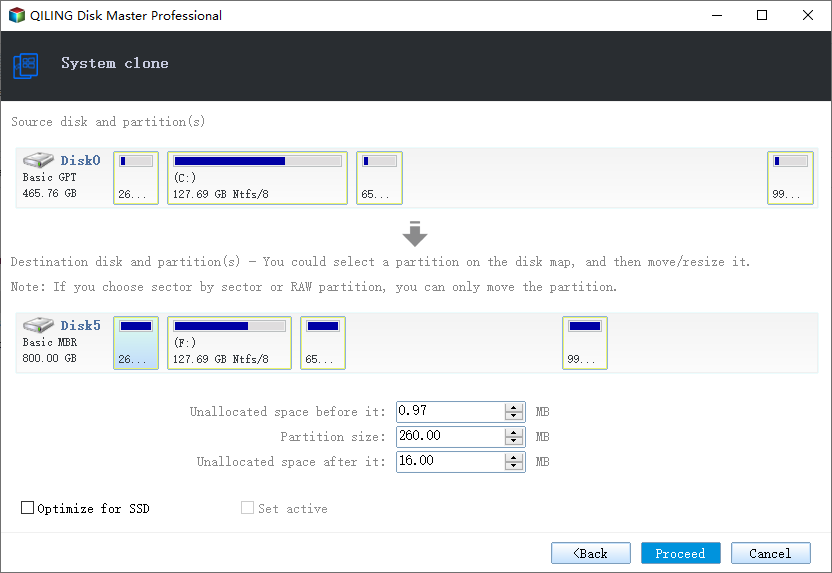
Step 4. Click "Proceed" to start cloning.
After cloning Windows OS to the new SSD, you can now move to the next tip to make SSD bootable on your computer.
#3. Boot from the Cloned SSD
To make a cloned SSD bootable on a Windows PC, you need to change the boot order in the BIOS. This can be done by following these simple steps below. By doing so, your computer will be able to boot Windows directly from the SSD.
Step 1. To access the BIOS settings, restart your PC and press the designated key (usually F2, F8, F11, or Del) as soon as the system boots up. This will take you to the BIOS environment, where you can make changes to the system's boot order, set the time and date, and configure other settings as needed.
Step 2. Go to the boot section, and set the cloned SSD as the boot drive in BIOS.
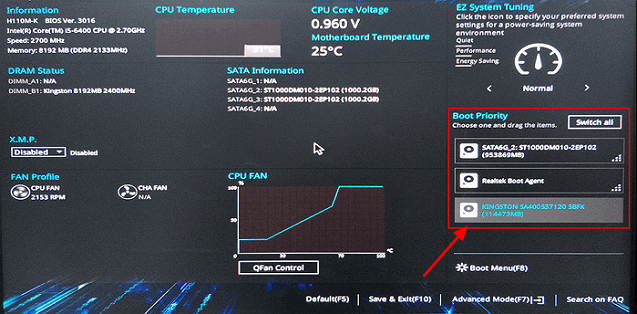
Step 3. Save the changes and restart the PC.
Now you should boot the computer from the SSD successfully.
#Guide 3. What to Do with My Old Drive after Cloning
After cloning your old hard drive to a new SSD, you can consider disposing of the old drive in a responsible manner. If the drive is still in good condition, you might want to wipe it clean of personal data using a disk wipe tool or physically destroy it. If the drive is no longer functional, you can recycle it or dispose of it in accordance with your local regulations.
#1. Think About How Will You Deal with the Old Disk
Basically, there are two options:
- 1. Clean the old drive and sell it online.
- 2. The old OS drive can be cloned and used as a data disk, allowing for the continued use of the original OS drive for its intended purpose. This approach preserves the original drive's functionality and avoids the need for a complete system rebuild.
To upgrade to a new disk, you'll need to either clone the old disk to the new one, which requires cleaning up the old disk, or wipe the old disk completely, erasing all data. In either case, you'll need to clean up the entire disk, which can be done using Qiling free partition manager software, allowing you to clear your whole old drive with ease.
#2. Wipe Data on Old Drive
Here are the simple steps to wipe everything from the old hard drive:
We've set two options for you to wipe data. Choose the one you need.
Option 1. Wipe Partition
- Choose "Wipe Data" button in the Tools and utilities page.
- In the new window, click the partition you want to erase data from, set the time for which you want to wipe your partition, then click "Proceed" to start the data erasure process.
- Check the message. Then click "OK".
Option 2. Wipe Disk
- Choose "Wipe Data" button in the Tools and utilities page.
- Select the HDD/SSD, set the number of times to wipe data, and click "Proceed".
- Check the message. Then click "OK".
#3. Make Use Of the Old Drive
To Sell the Drive: To sell an old disk, take it out of your PC, take photos, and add basic information about the drive online. Then, sell it online and send the drive to your buyer.
To Use the Drive as a Data Disk: To partition a hard drive, you'll need to create a new section or partition on the drive where you can store new files and data. This will allow you to keep your existing files and data separate from the new ones.
Sum Up: Clone and Set to Boot from SSD Correctly
The normal reasons why your computer won't boot from a cloned SSD include issues such as incorrect boot order, corrupted boot sector, or a faulty SSD, which can prevent the computer from recognizing the cloned SSD as a boot device.
- 1. The source disk can't boot as it's a data drive.
- 2. Set the wrong drive to boot from.
- 3. To use an external SSD, you simply connect it to a computer using a USB cable. This allows you to access the SSD's storage capacity and transfer files between the SSD and the computer.
- 4. There are some errors during the cloning process.
To make a cloned SSD bootable, it's essential to identify the cause of the issue first. Once the reason is clear, you can attempt to resolve it by trying the solutions outlined in Guide 2, which may involve configuring the UEFI settings, adjusting the boot order, or reinstalling the operating system.
1. Install SSD correctly to PC
2. The SSD can be initialized to either MBR (Master Boot Record) or GPT (GUID Partition Table) format, just like the source disk from which it was cloned. This step is necessary to ensure that the SSD is properly configured to boot the operating system.
3. Restart the cloning process
4. Set the correct drive (SSD) to boot in BIOS
To ensure the cloned SSD is bootable, use a reliable OS cloning software like Qiling Backup. Then, follow the steps to make the computer boot from the SSD after cloning.
Related Articles
- How to Create an Image Backup in Windows 10 [ 2022 Update]
- How to Backup A Hard Drive Windows 7 [Ultimate Guide for Windows 7 Users]
- Download Best SSD to SSD Cloning Software
- 2022 | Best SD Card Backup Software Worth Trying [Windows]
- 3 Ways to Transfer Files to Your Windows 11 New Computer
You have three powerful options to transfer files to your new Windows 11 computer. Let's explore which one is the best fit for you. - (100% Transfer) How to Transfer H&R Block to New Computer
Here we shows you how to transfer h&r block from one computer to another. No reinstall you need. Follow Qiling Disk Master to get the smooth program transfer.
Products
Articles & Tutorials
- Data Recovery
- Data Backup
- File Recovery
- File Backup
- System Backup and Restore
- Disk and Partition Clone
- Technical articles
- Mobile articles
- Disk Master Help
- Windows Data Recovery Tutorials
- Windows Secure Delete Tutorials
- Windows Partition Management Tutorials
- Windows File Backup and Restore Tutorials
- Windows System Backup and Restore Tutorials
- Windows Disk Backup and Restore Tutorials
- Windows Clone Tutorials