How to Backup A Hard Drive Windows 7 [Ultimate Guide for Windows 7 Users]
Microsoft has ended support for Windows 7, making it a more vulnerable target for malware and attacks, so it's essential to back up your hard drive to keep your data safe.
To backup your hard drive on Windows 7, you can use third-party software like Qiling Backup to create an image of your hard drive, or use the built-in Windows Backup tool to create a system image.
System images are a complete copy of your hard drive, including the operating system, applications, and all data, allowing for easy restoration in case of a system failure.
How to Backup Hard Drive on Windows 7 with Qiling Backup?
*Applies to Windows 7/8/10/11
While Windows has built-in backup utilities, we still recommend Qiling Backup as a better choice. This is because Qiling Backup offers a more comprehensive and user-friendly experience, allowing users to easily back up their important files and data. With Qiling Backup, users can rest assured that their valuable information is safely stored and can be easily restored in case of data loss or system failure. In contrast, the built-in Windows backup utilities may not provide the same level of convenience and security, making Qiling Backup a more reliable option for users who need to protect their digital assets.
Users want backup software that is easy to use and can handle large amounts of data with minimal effort, allowing them to quickly complete multiple tasks with the least amount of time spent. Qiling Backup meets these needs.
Qiling Backup is a tool that categorizes all computer data into four types: common files and folders, system files, disk or partition content, and Outlook emails. With its ease of use, you can create a specific type of backup or a full backup of your computer, regardless of your needs.
Windows' built-in backup software has limited scheduling options, but Qiling Backup offers more comprehensive backup choices that users appreciate.
Qiling Backup allows users to select between incremental and differential backups, and schedule backups on a daily, weekly, or monthly basis, providing greater flexibility and control over backup files.
- There are several completely free backup software options available, each offering rich backup features and options. These programs allow users to schedule backups, select specific files or folders to backup, and even recover data from previous backups.
- The software enables users to back up more content than what Windows built-in tools can handle, providing a more comprehensive and reliable backup solution for their data.
- Compatible with Windows 7 perfectly. Also works with Windows 8/10/11
- It supports users saving backup files to their cloud drives
To backup a hard drive on Windows 7, download Qiling Backup from the provided button, and then follow the guide to complete the process.
Step 1.To back up your disk using Open Qiling Backup, select "Disk Backup" on the home page.
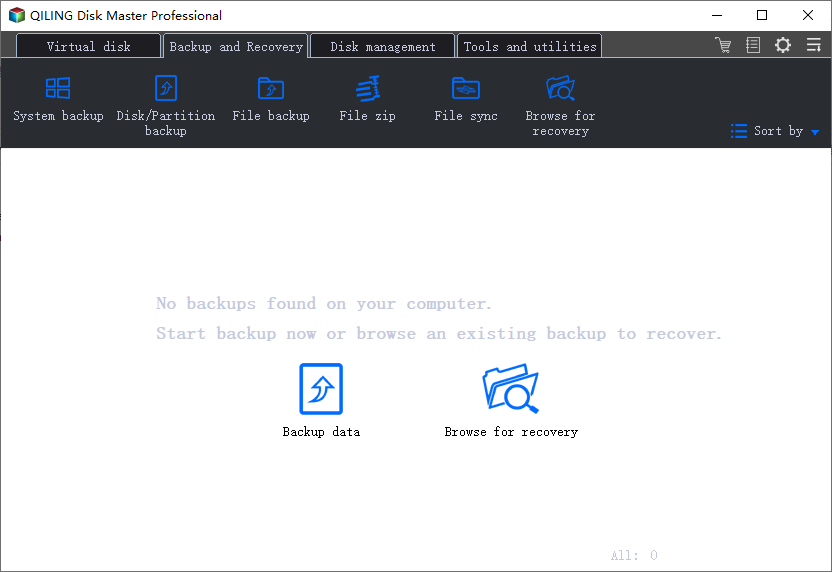
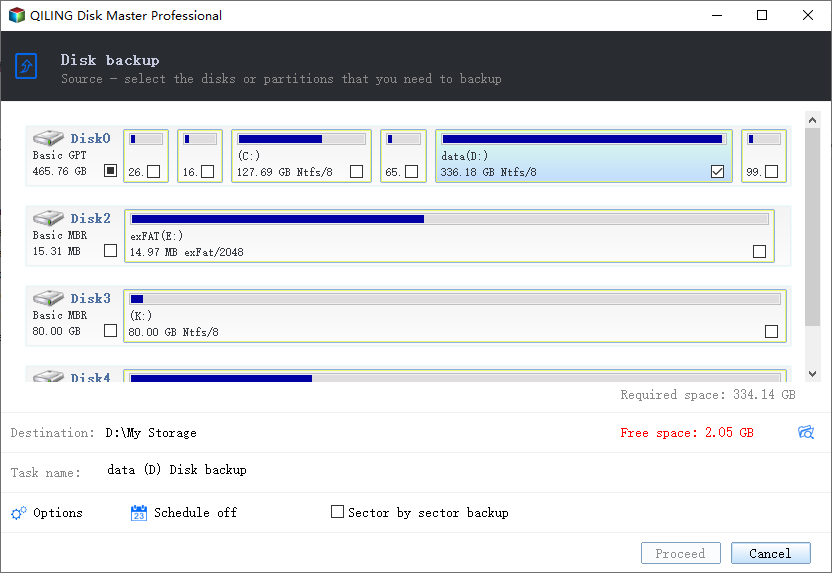
Step 2.Qiling Backup gives you the option to back up an entire disk or a specific partition, and you can proceed by clicking "OK".
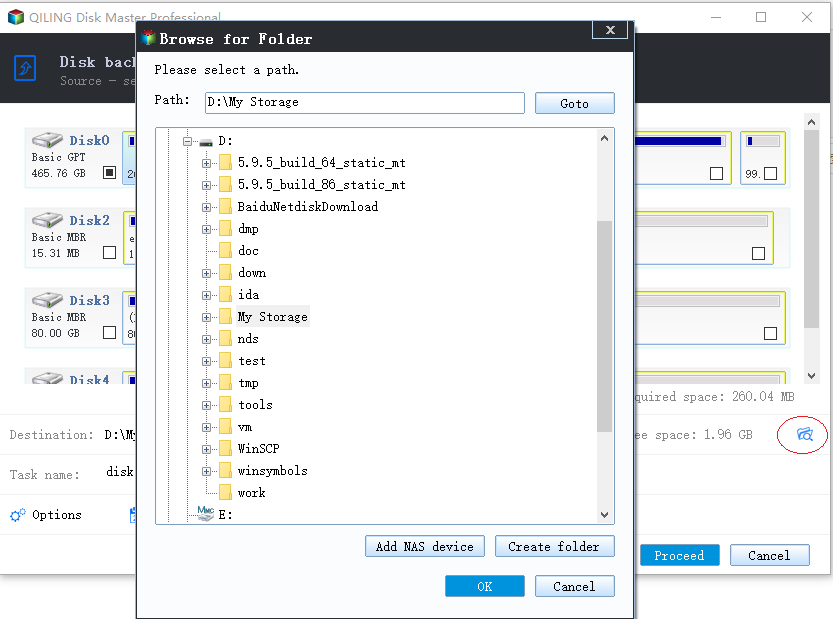
Step 3. Choose a destination to save the backup, such as a local drive or a network-attached storage (NAS) device.
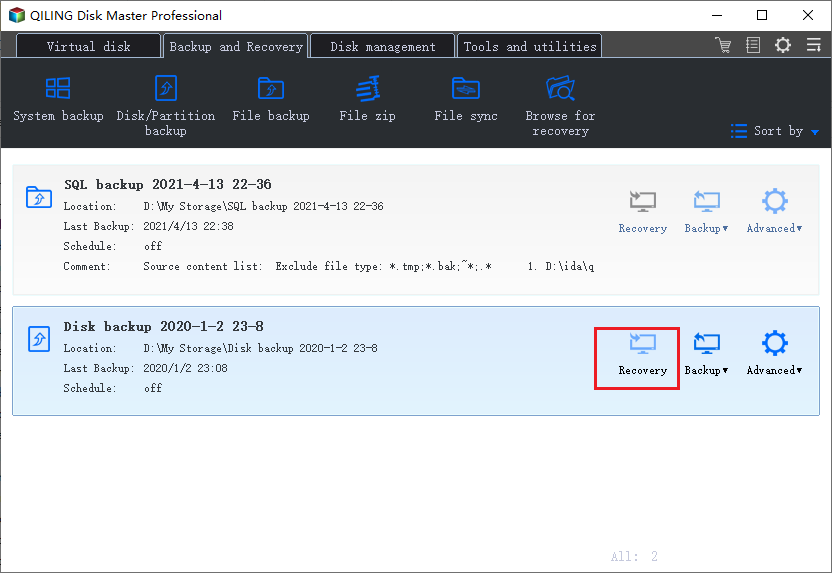
Step 4.After completing the backup process, click "Proceed". Then, you can click on any task to further manage your backup, such as recovering it, creating an incremental backup, etc.
How to Backup Hard Drive on Windows 7 with Backup and Restore?
*Applies to Windows 7/8/10/11
Backup and Restore is a built-In Windows 7, the built-in Backup and Restore tool can create system images and back up specific folders, providing a simple backup solution for those who don't need the flexibility of third-party tools. To backup the hard drive on Windows with Backup and Restore, you can follow a guide to see how it's done.
Step 1.To backup your hard drive, open the Computer on your desktop, right-click the hard drive you want to backup, and click Properties.
Step 2.A "Backup" option in the Tools tab allows users to back up files on the target drive by clicking "Back up now".
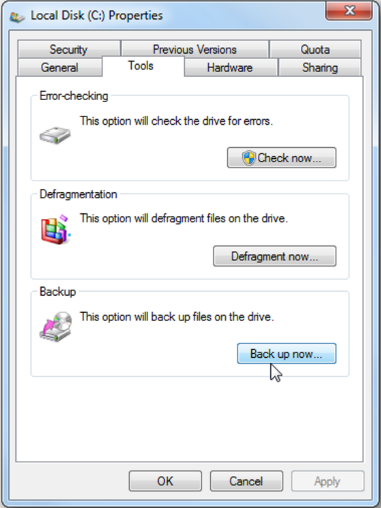
Step 3.After clicking the "Back up now" button, you will enter Windows 7 Backup and Restore, where you can then click "Set up backup" to begin the setup process.
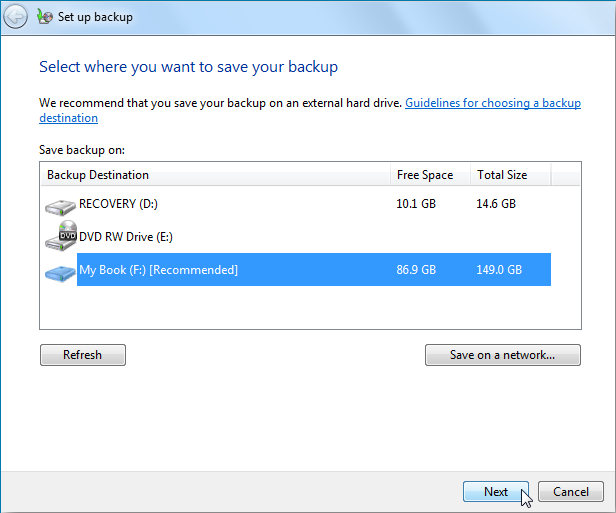
Step 4. Connect an external hard drive to your computer and continue the backup process using it as the backup location.
Step 5.Select the destination for your hard drive backup file, choosing your backup drive, and click "Next" to proceed.
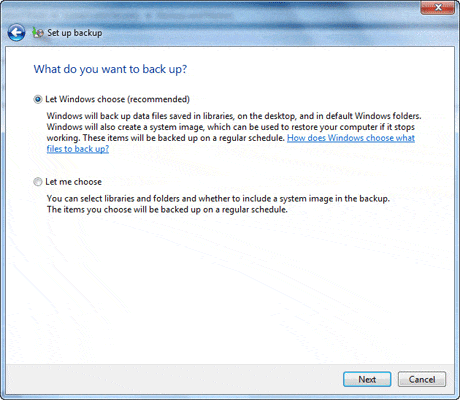
Step 6. In this step, you can choose to back up either the Windows recommended content or customized data.
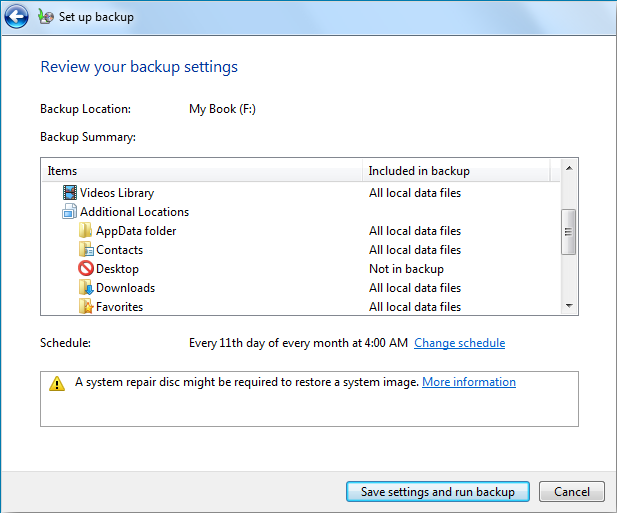
Step 7. Review your backup settings to ensure the entire hard drive is being backed up. Save these settings and initiate the backup process.
Backup OneDrive to External Hard Drive
To back up OneDrive content to an external hard drive, you can use the OneDrive sync client to download and sync your files to the external drive, or use a third-party backup software to automate the process. This will ensure that your files are safely stored on both OneDrive and the external drive, providing an additional layer of protection against data loss.
Tips for Keeping Your Backups Safe and Secure
To keep your backups safe and secure, it's essential to store them in a secure location, such as an external hard drive or a cloud storage service, and to protect them with strong passwords and encryption. You should also keep your backups offsite, such as in a fireproof safe or a secure online storage service, to ensure they are not damaged or lost in the event of a disaster. Additionally, consider implementing a backup rotation system, where you regularly update your backups to prevent data loss in case of a system failure.
- Store your backups in a safe place, such as an external hard drive or a cloud storage service, to protect them from physical damage or digital loss.
- To ensure you have multiple copies of your backups, you can store them on different devices or in various locations. For example, you can save backups on an external hard drive, a cloud storage service like Google Drive or Dropbox, and even on a USB drive.
- Test your backups regularly to make sure they're working properly.
To ensure that your hard drive backups are safe and secure, make sure to use a reliable backup software, store your backups in a secure location, such as an external hard drive or cloud storage, and test your backups regularly to ensure they are complete and accurate. This provides you peace of mind knowing that your important files and data are protected in case of a disaster or system failure.
FAQs
1. How do I backup my entire hard drive to my computer?
You can use Qiling Backup to create a system image of your hard drive, or opt for the built-in Windows Backup tool. Additionally, Qiling Backup allows you to back up a whole disk or partition, making it a versatile option even if the hard drive you want to back up is not a system drive.
2. How do I manually backup my hard drive?
To manually backup your hard drive, you can use the built-in Windows Backup tool or Qiling Backup, which allow you to create a system image of your hard drive or backup specific folders.
Copying and pasting files from a hard drive to a backup file is an option, but it's only suitable for small amounts of data and doesn't work for system hard drives.
Related Articles
- How to Backup BitLocker Encrypted Drive in Windows 2022
- Windows File Backup - 4 Efficient Ways for You to Protect Data
- How to Backup A Folder in Windows 7 | Step-by-Step Guide
- How to Create an Image Backup in Windows 10 [ 2022 Update]
- How to Reinstall Windows 10 without Losing Files
To keep data safe during Windows installation or upgrade, use the Windows backup system or Qiling Disk Master PCTrans software to take a backup of apps and files, allowing for quick restoration of applications without re-downloading and re-activating them. - How to Repair Windows 7 Without CD in 3 Possible Ways
If you're having trouble with Windows 7, there are ways to repair it without a CD. This article presents three methods to help you fix Windows 7, and you can choose the one that best suits your needs.
Products
Articles & Tutorials
- Data Recovery
- Data Backup
- File Recovery
- File Backup
- System Backup and Restore
- Disk and Partition Clone
- Technical articles
- Mobile articles
- Disk Master Help
- Windows Data Recovery Tutorials
- Windows Secure Delete Tutorials
- Windows Partition Management Tutorials
- Windows File Backup and Restore Tutorials
- Windows System Backup and Restore Tutorials
- Windows Disk Backup and Restore Tutorials
- Windows Clone Tutorials