HP Laptop Slow Startup Fixes for HP Laptop Taking Forever to Restart
Executing Startup Delay HP Laptop
"Since the latest Windows 10 update, my HP Pavilion takes too long time to start. It keeps me waiting for about 6 minutes, during which the screen first goes blank, then the laptop screen turns black, at last, it loads Windows successfully so I can enter the password and log in. After the successful boot, the laptop seems to be working fine. Why is my HP laptop taking so long to startup? What can I do to fix the HP laptop slow startup issue, any suggestions?"
Here are five methods to fix an HP desktop/laptop taking forever to restart problem:
| Workable Solutions | Step-by-step Troubleshooting |
|---|---|
| Fix 1. Disable fast startup | When you start your laptop, a bunch of programs will automatically start running in the background...Full steps |
| Fix 2. Clean up the boot drive | Cleaning disk will speed up your HP laptop. Use Qiling CleanGenius to run the system and large file cleanup...Full steps |
| Fix 3. Upgrade HDD to SSD | It's probably the most effective way to speed up an old HP laptop particularly by upgrading HDD to SSD...Full steps |
| Fix 4. Upgrade RAM | For HP laptop-compatible RAM (memory) upgrades, Crucial 8GB Kit or Kingston Technology 4GB is a great...Full steps |
| Fix 5. Disable Windows 10 update | If your HP laptop is very old, you may consider turning off automatic Windows 10 updates to avoid...Full steps |
First, finish the three-step examination before proceeding with the five methods.
1. If your computer is experiencing slow boot times for the first time, try restarting it a few times to see if it resolves the issue. This can sometimes resolve the problem on its own. If the issue persists, you can then proceed with troubleshooting.
2. Run antivirus software to check for viruses and malware, and remove any suspicious software on your HP computer.
3. Your computer is running an older version of Windows, and you're wondering if it's compatible with the latest Windows 10 update. It's recommended to check the list of compatible HP models, such as Envy, Pavilion, and Spectre, before updating to ensure a smooth experience.
- Tip
- If you're experiencing slow boot times on your HP computer after a Windows 10 update, check the linked page for solutions specific to this issue. If the problem persists and isn't related to the update, try troubleshooting with the following five methods: .
You can conduct a free trademark search by querying millions of active records across various databases, including the USPTO, Europe, Australia, and Canada, to get instant results.
5 Easy and Effective Ways to Fix HP Laptop Slow Startup
If your HP laptop is taking an unusually long time to boot up, even up to 6 minutes, you're not alone. Many users have reported the same issue, and it's time to resolve it. Your HP laptop can be sped up to get it back to its usual performance.
Fix 1. Disable Fast Startup
Fast Startup, enabled by default in Windows 10, is intended to reduce startup time by pre-loading boot information before shutdown, but it has been causing issues for many users.
Step 1. To access Power and Sleep settings, type "power option" in the search box from the Start menu, then click on "Power & Sleep settings".
Step 2. Click "Choose what the power buttons do".
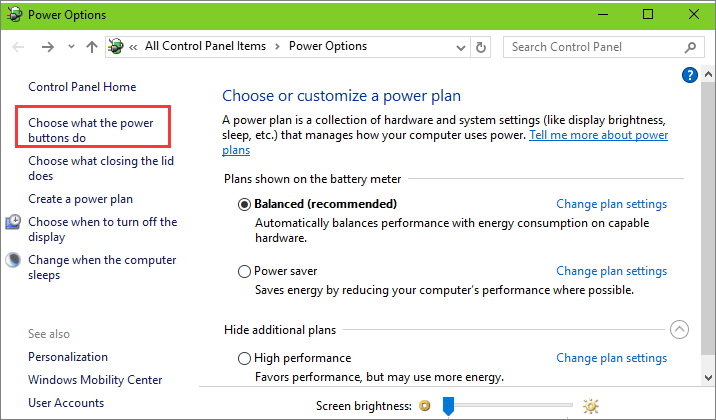
Step 3. Click "Change settings that are currently unavailable".
Step 4. Untick Turn on fast startup (recommended). Then click "Save Changes".
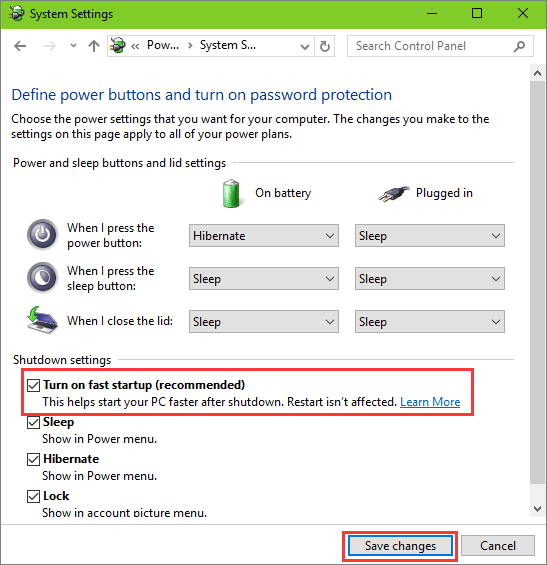
Step 5. If your HP computer boots quickly, then the issue is likely with the operating system or a specific program. However, if it takes a long time to boot, then the problem could be with the hardware.
Fix 2. Clean Up the Boot Drive
To speed up your system, download and install Qiling cleanup software and run it regularly, ideally twice a week, to remove useless data. This will clean up junk files, application cache data, system junk files, outdated system restore points, and temporary files from the boot drive (i.e. the system C drive), freeing up space and improving performance.
Step 1. Download and install Qiling Partition Master Suite.
Step 2. To clean up your PC, install Qiling CleanGinus through PC Cleaner, then click "Cleanup" and initiate the scanning process by clicking "Scan". This will help restore your PC to its optimal condition.
Step 3. The software scans the entire computer to identify large, unnecessary files and system junk, allowing you to select them and click "Clean" to initiate the cleanup process.
Step 4.When the scan is complete, click "Done" to finish cleaning system junk files. This will finalize the cleaning process and remove any unnecessary files from your system.
Fix 3. Upgrade HDD to SSD
If you're tired of waiting too long to boot up Windows on your HP laptop, consider investing in a Solid State Drive (SSD), which runs much faster than a Hard Disk Drive. To make the switch without reinstalling Windows, use a reliable Windows partition manager like Qiling Partition Master to migrate your existing HDD to the new SSD, effectively boosting your laptop's startup speed.
Qiling Partition Master offers a range of one-stop disk partition features, including resizing or moving partitions to address low disk space issues, cloning disks, merging partitions, creating, deleting, or formatting partitions, wiping data, and converting disks or partitions, such as converting FAT32 to NTFS.
Fix 4. Upgrade RAM
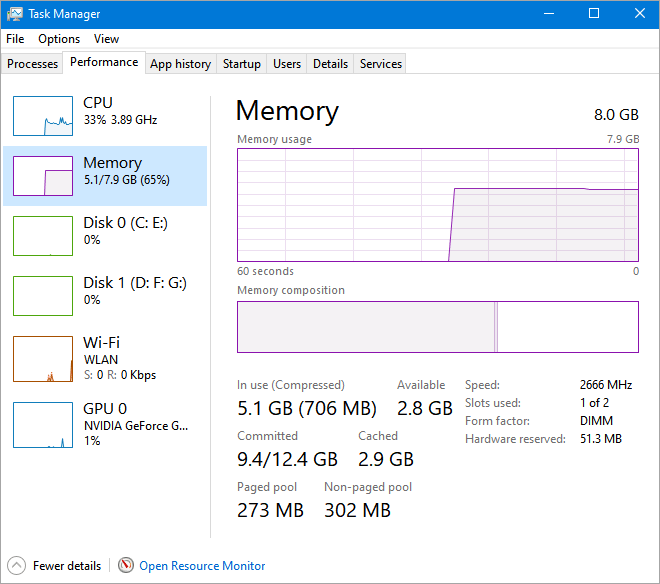
RAM (Random Access Memory) is a type of memory storage that enables laptops to run multiple applications smoothly. When an HP laptop has insufficient RAM, it can't handle a large number of applications, leading to slow performance. Adding RAM can significantly boost a computer's speed, especially for users who engage in resource-intensive activities like gaming or video/photo editing. This upgrade can help improve the overall performance of an HP laptop, making it more efficient and responsive.
To check the condition of your RAM, go to Task Manager, click on "Performance" and then select "Memory".
Method 5. Disable Windows 10 Update
Even after trying recommended solutions, Windows 10 updates can still cause problems. A permanent close to automatic updates may be necessary, and disabling Windows 10 updates can be a viable option.
Step 1. Press the "Windows + R" keys together to open the Run dialog box.
Step 2. Type services.msc and press "Enter".
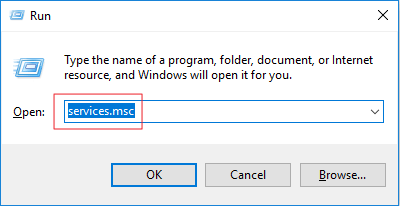
Step 3. Scroll down to Windows Update, and double-click it.
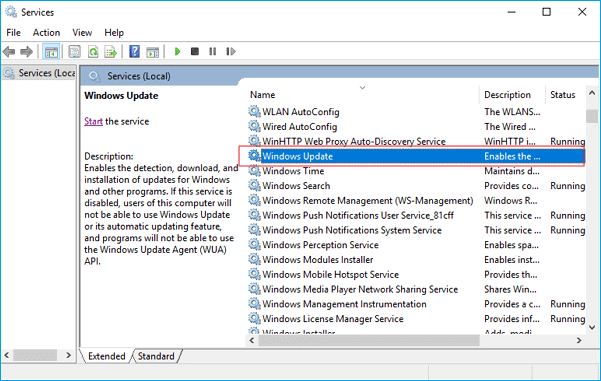
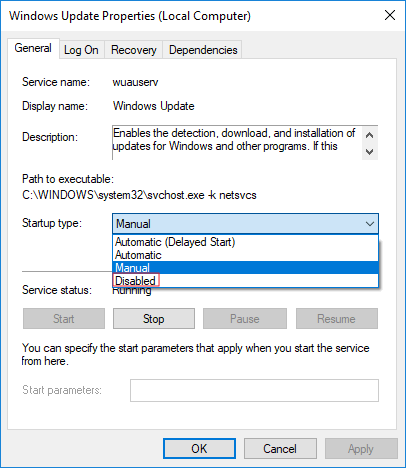
Step 4. To disable the Windows Search service, follow these steps: In the Services window, find the "Windows Search" service and select it. In the Startup type dropdown menu, select "Disabled". Then click "Apply" and "OK" to save the settings.
Final Verdict
We hope the seven approaches in this article can help you solve the HP laptop slow startup problem in Windows 10. Additionally, other tips to solve the HP laptop taking a long time to boot include.
- Avoiding opening too many tasks at the same time
- Try to avoid using your laptop on your lap or in bed, as this can cause overheating and damage to the computer. Instead, use a laptop stand or a cooling pad to elevate the laptop and improve airflow around it.
- Get a cooling pad for your laptop
- To avoid running large third-party photo, video, or game software, you can consider using lightweight alternatives or built-in features on your device. For example, you can use the built-in camera app or video editor instead of downloading a third-party app.
If you encounter any issues or challenges that you're unable to resolve on your own, you can reach out to our technical support team for assistance via live chat or email.
FAQs About HP Laptop Slow Startup
The following are the top four questions related to HP laptop slow startup Windows 10. If you also have any of these problems, you can find the methods here.
Why is my HP laptop startup slow?
Your HP laptop taking a long time to startup could be due to various reasons. Some possible causes include outdated drivers, a full hard drive, or a malfunctioning hard drive. Additionally, a slow startup could be attributed to a large number of programs running in the background, or a corrupted registry.
- Hardware issues can include insufficient RAM, failing hard drives, outdated CPUs, and limited storage capacity, among other problems.
- Software issues can arise from various sources, including malware or adware attacks, Windows registry errors, and third-party applications that excessively demand system resources, among other problems.
- Improper usage behaviors include opening too many startup programs at once, which can cause system slowdowns and crashes, and also using software or hardware in ways that are not intended or recommended by the manufacturer, such as using a computer in a hot and humid environment or using a laptop on a soft surface like a bed or couch. This can lead to overheating, damage to the hardware, and other issues.
- Your computer has accumulated a significant amount of unnecessary system files, unused applications, and other types of files and programs that are taking up space and potentially slowing it down.
How can I speed up my HP laptop startup?
If your HP laptop is taking too long to start, you can try some quick fixes to speed up the startup process. You can try running a virus scan to remove any malware that may be slowing down your laptop, or run a disk cleanup to remove temporary files and free up space.
- Restart your HP laptop
- Run antivirus software to remove virus or malware
- Uninstall unused apps
- Limit startup tasks and programs
- Run disk cleanup
- Upgrade HDD to SSD
- Increase the Capacity of RAM
Why does my laptop startup so slowly?
Your Windows 10 computer takes too long to startup likely due to too many programs running in the background. To speed up your laptop's startup, consider removing or disabling any unnecessary TSRs (Terminate and Stay Resident) and startup programs that automatically launch each time your computer boots. This should help reduce the time it takes for your computer to start up.
How do I fix a slow HP laptop?
To resolve HP laptop slow startup issues on Windows 10 or Windows 7, try the following simple methods. Firstly, disable any unnecessary startup programs to free up resources.
- Scan for viruses & malware
- Disable/delay startup apps
- Clean up the boot drive
- Defrag the hard drive
- Upgrade HDD to SSD
- Disable Windows 10 update
Related Articles
- Upgrade Hard Disk to Fix 100% Disk Usage Error in Windows 10 & More Tips
- How to Free Up Space on SSD in Windows 10/8/7
- Disk Cleanup Not Working Windows 10/8/7? Here Are the Free and Easy Fixes!
- How to Fix PS4 Cannot Access System Storage Error Code CE-34335-8
- Top 10 Fixes to The System Cannot Find the File Specified
Meet the error message "The system cannot find the file specifed" in Windows 11/10/8/7? This article collects its causes and 10 effective solutions to help you fix it. - 2 Easy Ways to Transfer Disk Image to a New Hard Drive
Are you in need of transferring disk image to a new hard drive? The best free hard drive image software offers you two efficient solutions. Read this article patiently to find out.
Products
Articles & Tutorials
- Data Recovery
- Data Backup
- File Recovery
- File Backup
- System Backup and Restore
- Disk and Partition Clone
- Technical articles
- Mobile articles
- Disk Master Help
- Windows Data Recovery Tutorials
- Windows Secure Delete Tutorials
- Windows Partition Management Tutorials
- Windows File Backup and Restore Tutorials
- Windows System Backup and Restore Tutorials
- Windows Disk Backup and Restore Tutorials
- Windows Clone Tutorials