A Quick Answer: Is Cloud Backup Safe
| Workable Solutions | Step-by-step Troubleshooting |
|---|---|
| 1. Is It Safe to Use Cloud Backup | Before we answer whether cloud backup is safe for you or not, it's vital to get a definitive meaning...Full steps |
| 2. Choosing a Cloud Backup Service | A cloud backup service helps you conveniently store your files and information in the cloud. Cloud...Full steps |
| 3. Cloud Backup with Easy Software | Choosing an appropriate cloud data backup is never easy, especially if you wish to find a versatile...Full steps |
| 4. Ensuring Cloud Data Security | Some of the tips to apply and ensure data safety in the cloud include the following...Full steps |
The cloud backup has been a trending topic in recent years, with many people worldwide shifting to keeping data backups on this platform. It's a common belief that storing data in the cloud offers high-level safety and protection.
Many people still have doubts about the safety of their data in the cloud, but we've crafted this article to put their minds at ease. By understanding the security measures in place, individuals can quickly determine whether cloud backup is a safe option for their sensitive information.
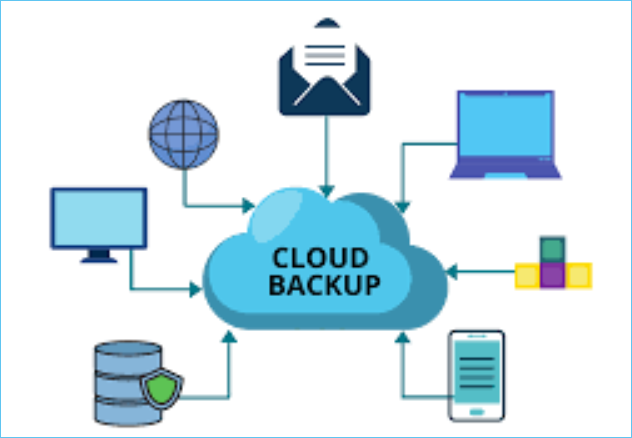
Is It Safe to Use Cloud Backup
Cloud backup is a safe and secure way to store data from your hard drive on off-site servers, allowing for easy recovery in case of damage or loss, and freeing up local storage space.
Cloud backup is a straightforward service where a third-party provider hosts the storage system and charges customers based on their usage, allowing users to securely store and access their data from anywhere.
- The storage capacity used
- The storage bandwidth, and
- The number of users accessing the storage system from a given organization can be measured by counting the total number of unique users who have accessed the system from that organization within a specified time frame, such as a day, week, or month. This metric is useful for understanding the scale of usage and planning for storage capacity and resources accordingly.
A cloud backup service can help prevent data loss by allowing you to restore data from the cloud if it becomes corrupted or lost in local storage. This service can be customized to fit your organization's specific needs and preferences.
Cloud backup is considered more secure than local storage due to its high encryption and the fact that data is stored in multiple data centers worldwide, making it difficult for unauthorized access and offering data security, scalability, reliability, and cost-saving benefits.
Cloud backup and local backup have their own advantages and disadvantages. Cloud backup offers convenience, scalability, and accessibility, but may be vulnerable to internet connectivity issues and data breaches. Local backup provides physical control and security, but can be space-consuming and may be lost or damaged if not stored properly. Using both cloud and local backup can provide a comprehensive backup solution, offering the benefits of both and minimizing the risks associated with each. This approach can ensure that data is safely stored both online and offline, providing peace of mind for individuals and businesses.
The debate between cloud backup and local backup has been ongoing for a while. If you're struggling to decide which option is best for you, we're here to help.
Things to Consider When Choosing a Cloud Backup Service
A cloud backup service allows you to store your files and information in the cloud, providing a convenient and secure way to access and protect your data. To choose the right cloud backup service, you'll need to consider various factors, including the provider's offerings and your specific needs.
1. The data backup frequency
Cloud services allow you to schedule backups on a daily, weekly, or monthly basis, so you can choose a frequency that matches your needs. When selecting a cloud service provider, ensure they offer the desired backup frequency.
2. Storage space and service scalability
The provider should offer a sufficient amount of storage space, such as 1-10 GB, to comfortably accommodate the number of files you want to store in the cloud, and also be scalable to add more users or computer systems.
3. Security of the off-site servers
When choosing a cloud backup service, prioritizing the security of your data is crucial. With the rise of cybercrime, it's essential to select a provider that can effectively combat cyber threats and protect your data from malicious attacks. Look for a service that demonstrates a strong commitment to data safety and security, ensuring your information remains secure even in the face of potential cyber incidents.
4. The pricing strategy
A cloud backup service can be charged on a monthly subscription or annual plan basis, with pricing varying based on the expected number of users. When selecting a service, ensure it fits within your budget and offers value for money, making it a worthwhile investment.
5. The availability of after-sales support
A good cloud backup service should have reliable after-sales customer support, with readily available contact information such as email, phone numbers, or social media handles, to ensure timely assistance in case of emergencies.
Make Cloud Backup with Easy-to-Use Software
Choosing a cloud data backup tool can be challenging, especially when looking for a versatile one. However, there is a software that combines cloud backup with other useful functions. Qiling Backup is an efficient tool that not only offers cloud backup but also allows users to customize different kinds of backup settings, making it a great option for those seeking a comprehensive backup solution.
This backup software stands out for its convenience and security, offering powerful features to create backups of the disk, partition, OS, and files. It allows users to save backups to local drives, the cloud, NAS, and a specified network location, making it a reliable option for protecting important data.
Qiling Backup
- 250GB of free cloud backup storage is offered, allowing for seamless backup of the OS, disks, partitions, and other devices without any downtime.
- A system that allows for easy backup management, enhanced efficiency, and secure password protection for backups, with the ability to store backups across multiple paths.
- The backup process can be enhanced with features such as scheduled backups, differential and incremental backups, enabling the image reverse strategy, and encrypted backups. This allows for more efficient and secure data storage and recovery.
To learn how to use Qiling Backup, you can follow the steps below, which will guide you through the process of mastering this software.
Step 1. When using Qiling Backup for the first time, select the "File backup" option on the "Backup and recovery" page to back up your files.
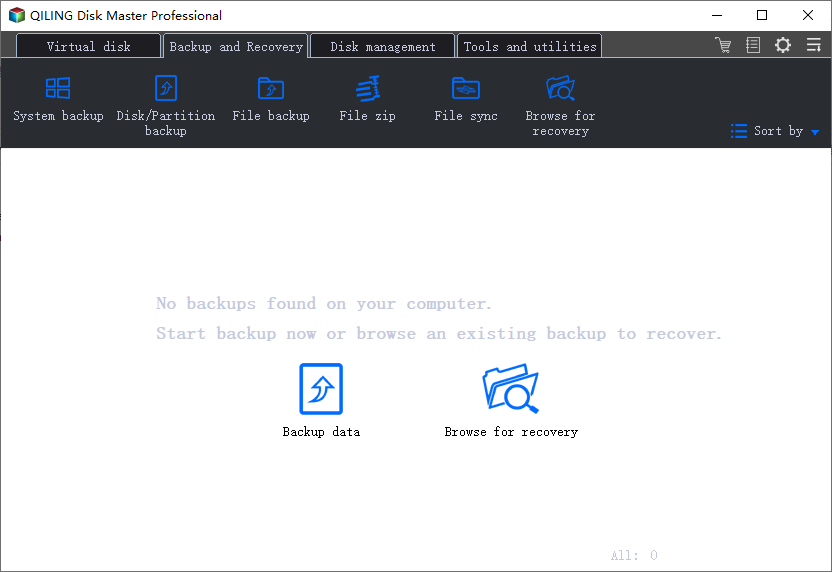
Step 2. When backing up files and folders on your computer, you can select pictures, videos, documents, and all other types of files to include in the backup.
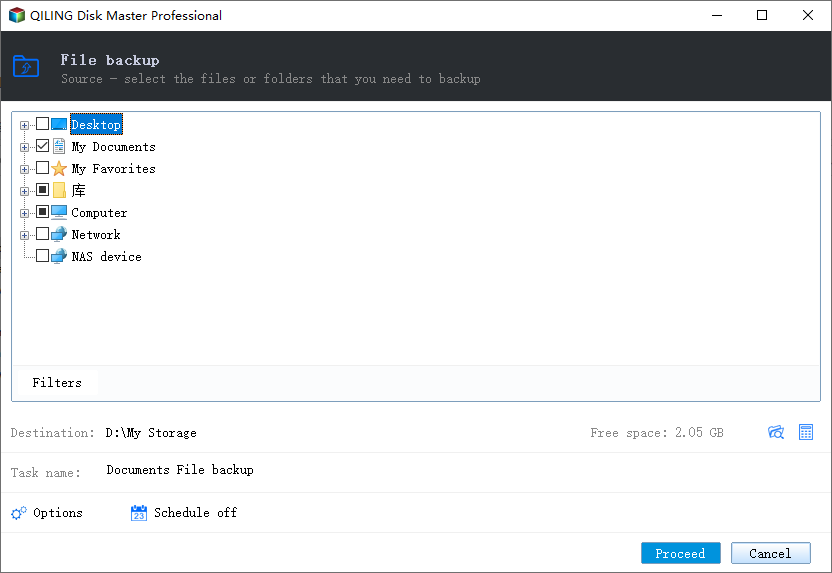
Step 3. To back up files, folders, or directories, follow the paths to locate them, then select them all.
Step 4.To select a backup location, you can choose a local drive on your computer, an external hard drive, or a cloud storage service like Google Drive, Dropbox, or OneDrive. Make sure the location you choose has enough free space to store the backup file.
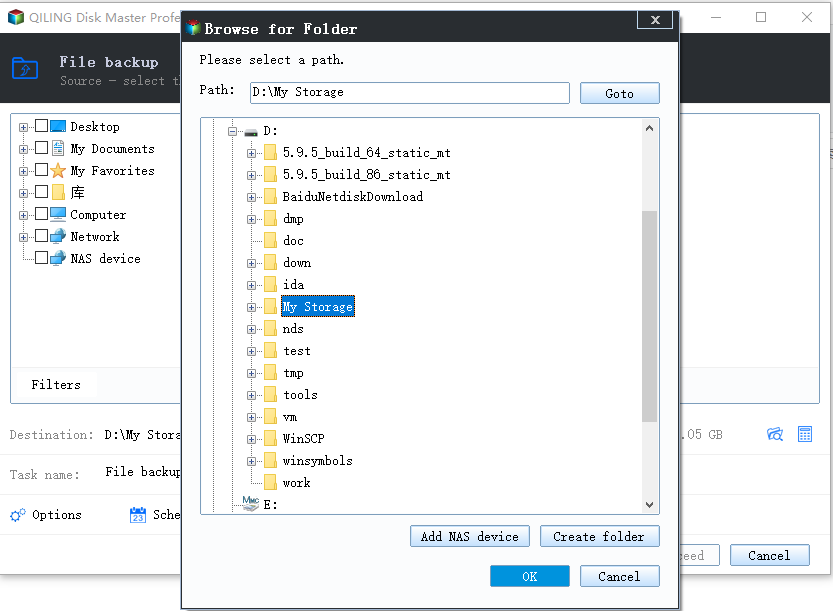
Step 5.Qiling Backup allows users to save backup files to various devices, including local hard drives, external USB drives, SD cards, network drives, NAS drives, and Qiling cloud drives. We recommend storing backups on cloud drives for their greater accessibility, flexibility, and safety.
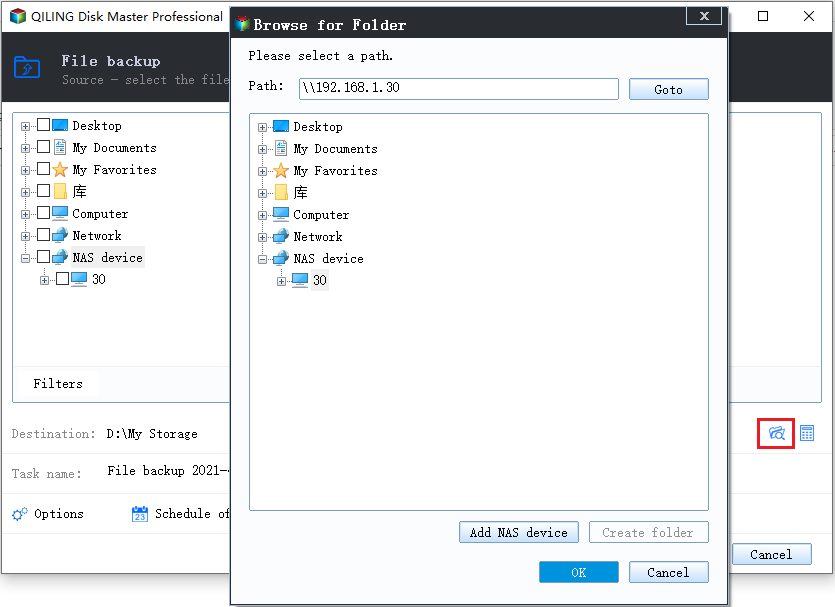
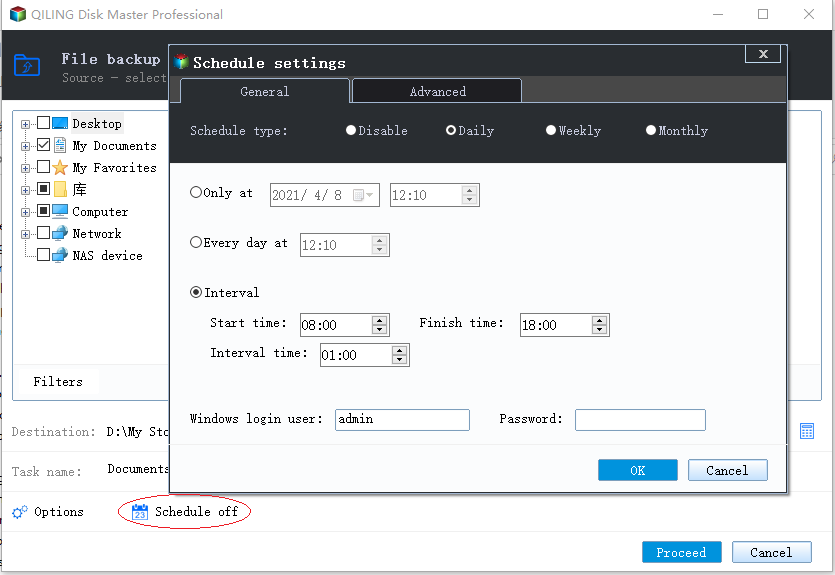
Step 6. If you want a smart and automatic backup schedule for your next file backup task, go to the "Options" setting. There, you can encrypt confidential files, compress the backup image size, or set a custom backup schedule to tell the software when to start the next backup.
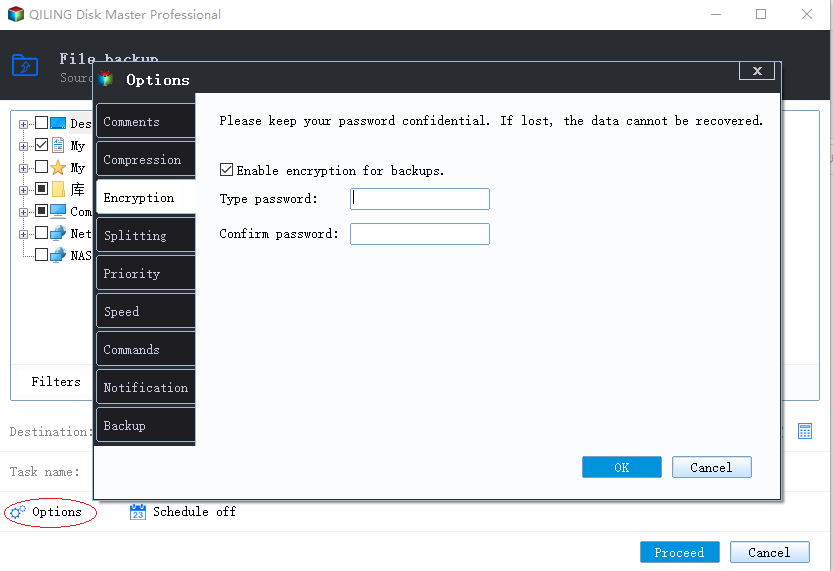
Customize an advanced and automatic backup task here:
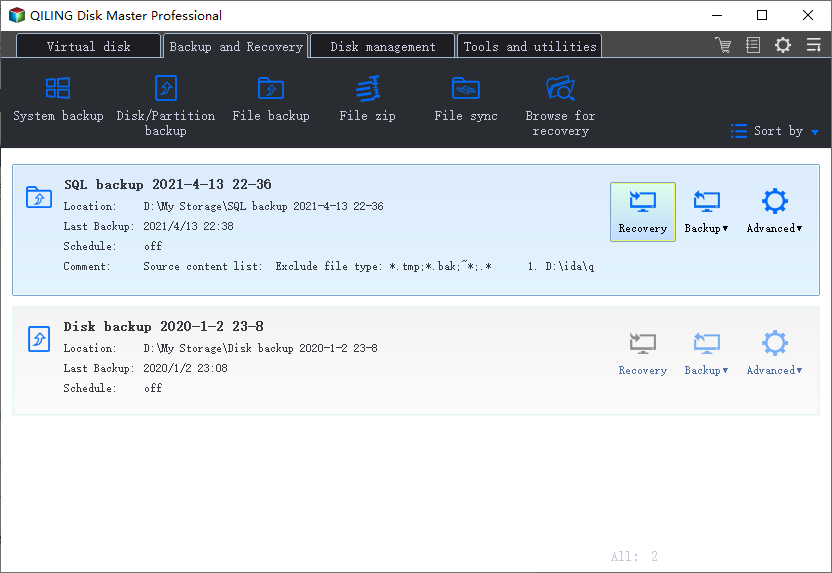
Step 7. Click "Proceed" to start the file backup process, and your completed backup files will be displayed in the left area in a card style.
Tips for Ensuring the Data Is Safe in the Cloud
Here are the tips to apply and ensure data safety in the cloud:
1. Turning on two-factor authentication
To access your cloud storage account with two-factor authentication, you'll need to provide your password and a one-time verification code. If you haven't already, make sure two-factor authentication is enabled on your account.
2. Disconnecting devices when not in use
Leaving your phone or computer logged into your cloud account is a significant security lapse, as someone could easily access your cloud data if they come into contact with your device. It's essential to log out of your cloud storage account when not in active use to prevent unauthorized access.
3. Safeguarding your encryption key
Protecting your encryption key is crucial to securing your account. Make sure to never lose it, and store it in a safe and secure location where unauthorized access is unlikely, such as a password manager or a secure online storage service. This will help prevent attackers from gaining access to your account.
4. Tracking shared files
Cloud storage can make it easy to share files with loved ones, but it's essential to regularly review shared files and revoke access for those who no longer need it to maintain data security.
Conclusion
Cloud backup is a safe way to store data, limiting damage and illegal access by attackers. Before choosing a cloud service provider, assess them to ensure they meet your needs.
Qiling Backup is a highly recommended cloud backup service that offers a free version with up to 250GB of free cloud backup, making it easy to download and install on your computer.
Related Articles
- Guideline: Backup Specific Folders to OneDrive on Windows 10/11
- Fix Windows Error Code 0x0 0x0 in Four Ways
- How to Copy/Move Recovery Partition to USB or Another Hard drive [2 Ways]
- Bootable USB Drive Not Showing Up or Recognized in Windows 11/10/8/7
- Bootrec Fixboot Element Not Found in Windows 7, 8, 10- Fixed
Windows start problem has not been solved and the bootrec fixboot element not found error has arisen. You must be very upset. Click on this article and learn to fix it. - Centralized Backup Software - Backup All Computers on Network
Any enterprise backup software can create centralized backup for all computers within LAN simultaneously? Here is an example along with brief tutorial.
Products
Articles & Tutorials
- Data Recovery
- Data Backup
- File Recovery
- File Backup
- System Backup and Restore
- Disk and Partition Clone
- Technical articles
- Mobile articles
- Disk Master Help
- Windows Data Recovery Tutorials
- Windows Secure Delete Tutorials
- Windows Partition Management Tutorials
- Windows File Backup and Restore Tutorials
- Windows System Backup and Restore Tutorials
- Windows Disk Backup and Restore Tutorials
- Windows Clone Tutorials