M.2 vs SATA: What Is the Difference and How to Install
When it comes to solid state drives (SSDs), there are various terms to be aware of, including M.2 and SATA, which are two of the most popular options. If you're in the market for an SSD, you've likely encountered these terms, but like any technology, SSDs have their own unique vocabulary, making it essential to understand the terminology to make an informed purchase.
For the average consumer, understanding the differences between computer components can be overwhelming, especially when it comes to internal parts. One common source of confusion is distinguishing between M.2 and SATA storage options, but you don't have to worry anymore.
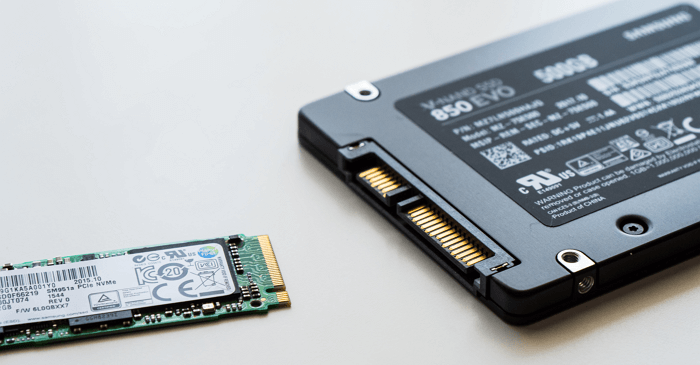
The debate between M.2 SSD and SATA SSD has been ongoing, and it's essential to understand the differences between the two to determine which one is best suited for your PC. By comparing their performance, compatibility, and other factors, you can make an informed decision that meets your specific needs.
PAGE CONTENT:
- What Is M.2 and SATA SSD
- Is M.2 Better than SATA? M.2 VS SATA What Is The Difference
- Can I Use M.2 Together with SATA SSD? Here Is the How-To
What Is M.2 and SATA SSD
Compared to traditional hard disk drives, solid state drives (SSDs) have several advantages, including smaller size, faster read-write speeds, and reduced noise. These benefits make SSDs a popular choice among computer users, who often opt for them over traditional hard drives. In fact, one of the most effective ways to breathe new life into an old computer is to replace its aging hard drive with a modern SSD, significantly boosting its performance.
The selection of a suitable SSD model can be overwhelming due to the various types of interfaces available, which significantly impact performance. To simplify the process, it's essential to understand the definitions of m.2 SSD and SATA SSD, as these two types have distinct characteristics that affect their performance.
What is an M.2 SSD?
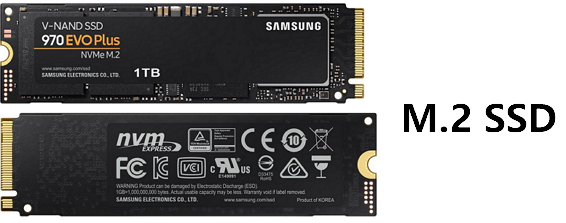
An M.2 SSD is a type of solid state drive (SSD) used in internally attached storage expansion cards, designed for high-performance storage in thin devices like tablets and Ultrabooks, but also commonly used in desktops, and is smaller than other SSDs like mSATA.
M.2 SSDs are an updated generation of mSATA technology with enhanced features. They are only available as SSDs due to their small size, and support various interfaces like PCI Express and SATA.
What is SATA SSD?
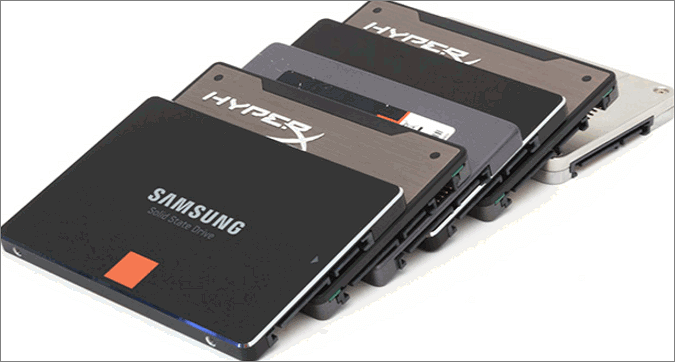
A SATA SSD is a solid state drive that uses the Serial Advanced Technology Attachment (SATA) interface, which relies on the Advanced Host Controller Interface (AHCI) protocol. This makes it a versatile and popular solution, suitable for installation on both desktop computers and most laptops.
SATA SSDs come in 2.5-SATA SSDs are flat and rectangular in shape, similar to laptop hard drives, and provide 3 to 4 times the bandwidth of a computer using a hard drive.
Is M.2 Better than SATA? M.2 VS SATA What Is The Difference
Choosing the right SSD can be overwhelming, but comparing m.2 SSDs and SATA SSDs can help. Below, we've covered all the key factors to consider, making it easier for you to make a rational decision before buying.
Capacity:
M.2 SSDs are available in various capacities, but smaller ones like 32GB and 64GB are mostly used in embedded applications or for caching, whereas PC builders typically look for capacities like 120GB, 240GB, 480GB, 1TB, or 2TB. SATA SSDs, on the other hand, are available in capacities ranging from 120GB to 4TB.
Interface:
M.2 SD is a solid state drive with a M.2 interface, also known as NGFF, designed for Ultrabooks to replace mSATA. It has two types: M-key (Socket 3) and B-key (Socket 2), with M-key supporting PCI-E 3.0X2 and SATA bus standards, and potentially NVMe or AHCI protocols.
SATA SSDs have a SATA interface, which has three versions, with SATA Revision 3.0 being the most popular, published in 2009 by SATA-IQ. The SATA interface primarily uses the Advanced Host Controller Interface (AHCI) protocol.
Speed Of Reading:
An M.2 2280 SSD can reach a reading speed of up to 3500 MB/s, while a SATA interface M.2 2280 SSD can reach a reading speed of up to 550 MB/s.
Speed of Writing:
M.2 SSDs can write data at speeds of up to 2700 MB/s, while SATA SSDs can write data at speeds of up to 520 MB/s.
Pricing:
The prices of SATA SSD and M.2 SSD can vary by manufacturer, but on average, a 500GB SATA SSD costs around $60, a 1TB SATA SSD costs around $140, and a 2TB SATA SSD costs around $250. In comparison, a 500GB M.2 SSD costs around $70, a 1TB M.2 SSD costs around $220, and a 2TB M.2 SSD costs around $400.
Ultimately, the decision between the two devices comes down to your individual needs, compatibility, and budget. Consider factors such as screen size, processor speed, storage capacity, camera quality, battery life, and operating system to make an informed decision that best suits your requirements.
- If you're looking for a more affordable option, a 2.5-inch SATA SSD drive can be a good choice, but keep in mind that it may not offer the highest performance, it's still suitable for general use.
- M.2 SATA SSDs are a cost-effective option, but they're more suitable for small computers and laptops where a 2.5-inch drive isn't feasible.
- If you own a modern computer, consider upgrading to an M.2 PCIe SSD as they're not too pricey and offer significantly better performance.
- M.2 PCIe SSD is recommended for professionals who need fast access to files and applications, making it ideal for those in fields such as video editing, graphic design, and software development.
- If you prioritize capacity over performance, SATA SSDs are a viable option for you to consider.
Can I Use M.2 Together with SATA SSD? Here Is the How-To
You can use M.2 and SATA SSDs together, but your desktop computer must have a slot for M.2 SSD.
First, install M.2 and SATA SSD
Here is the step-by-step guide for installing M.2 and SATA SSD:
Step 1: Remove the mounted screw located across from the SATA SSD or M.2 slot.
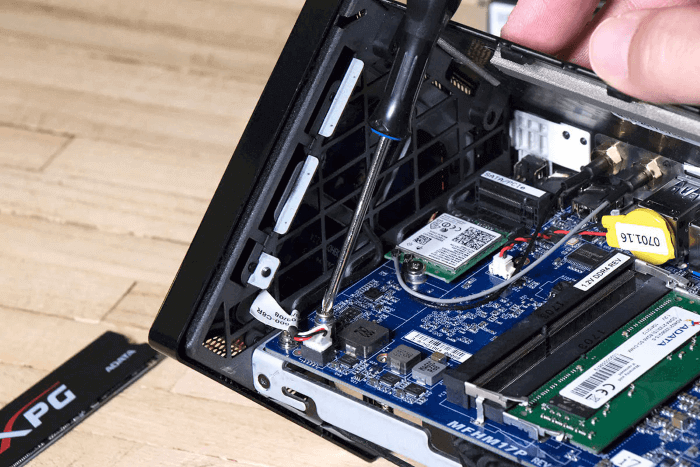
Step 2: To install the M.2 SSD or SATA SSD, insert it into the slot carefully, taking note of the notch. Gently push the SSD into the slot, making sure it is securely seated.
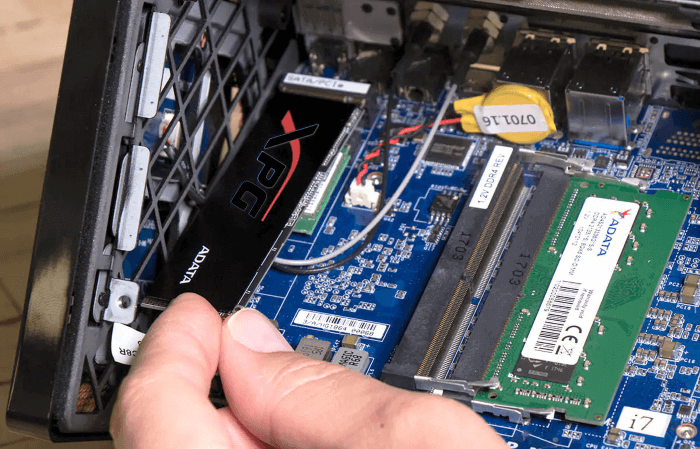
Step 3: Secure the SSD with the help of a mounting screw
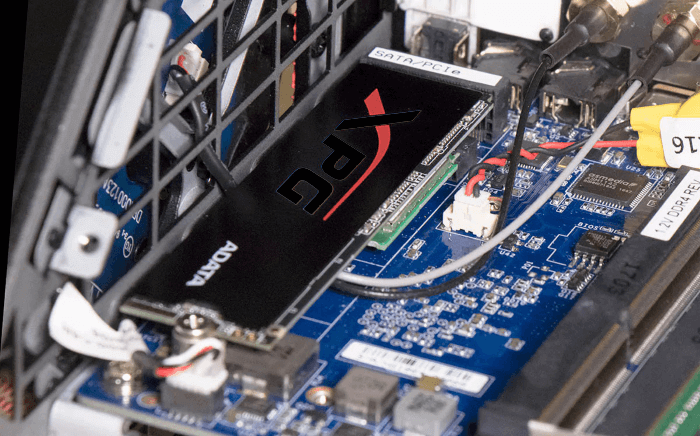
Second, set up M.2 and SATA SSD
Setting up M.2 and SATA SSDs can be challenging, but you can easily initialize them with Qiling Partition Master, a disk management tool that allows you to initialize an HDD or SSD in just a few clicks. This tool offers various features that make it the best choice for managing your computer's components, making it a great solution for those with little or no knowledge about the computer's components.
Step 1. Open Qiling Partition Master. Connect the hard drive or SSD to PC.
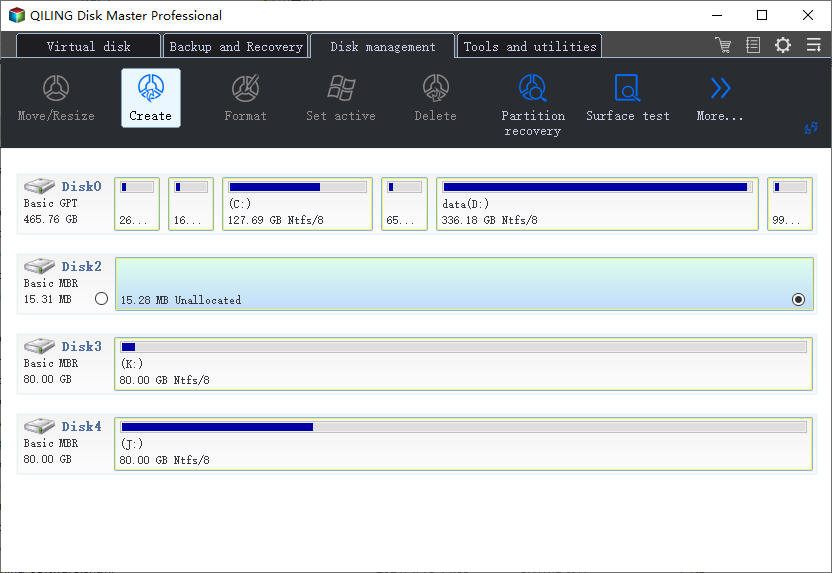
Step 2. Select the target HDD or SSD in the "Disk management" page and click "Create" or "Initialize to GPT" accordingly.
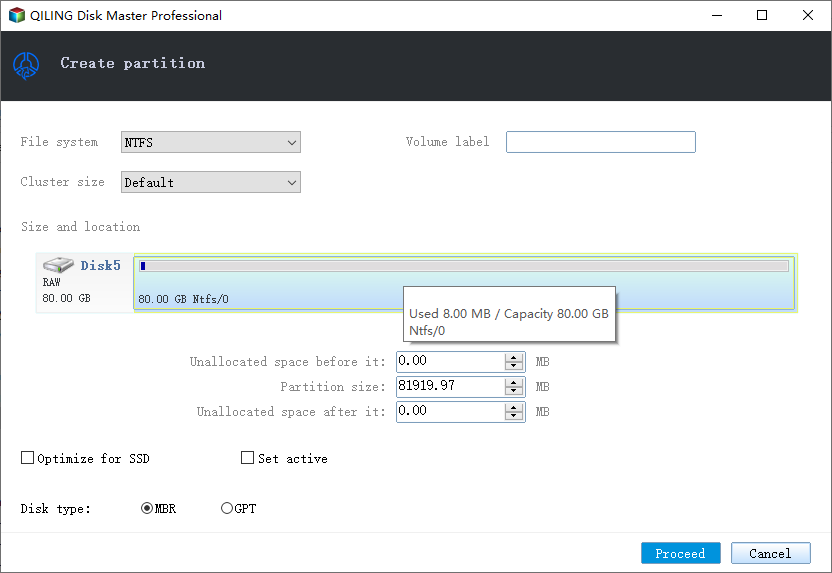
Step 3. Tick "MBR" or "GPT" for disk type accordingly. Click "Proceed".
Conclusion
The key difference between M.2 SSD and SATA SSD lies in their capabilities, with M.2 SSD supporting both storage and non-storage functions, setting it apart from SATA SSD.
SATA and IDE are two different interfaces used for data storage devices. While IDE is more of a form factor, SATA is a bus interface. This means that IDE is a specific physical connection type, whereas SATA is a standard for data transfer between devices.
When choosing the best SSD for your needs, consider using an M.2 PCIe SSD for a gaming PC, while a SATA SSD is more suitable for a Windows 10 setup.
However, on the basis of your requirements, you can select the best drive for your device.
Related Articles
- How to Move/Transfer Windows 11/10 to New Hard Drive (HDD/SSD) | 2022 Full Guide
- Get Qiling Partition Master Key (v6.0) in 2022 | No Cracking
- Reformat PS4 Hard Drive for PC in Windows 10/8/7
- How Do I Use DiskPart to Delete All Partitions in Windows? Your 2022 Guide Is Here
- Clone Hard Drive to Larger Drive Without Reinstalling Windows and Programs
- How to Factory Restore Lenovo ThinkCentre? (4 Ways Included)
You may want to factory restore Lenovo ThinkCentre for different reasons. This article shows you 4 ways to restore Lenovo ThinkCentre to factory settings in Windows.
Products
Articles & Tutorials
- Data Recovery
- Data Backup
- File Recovery
- File Backup
- System Backup and Restore
- Disk and Partition Clone
- Technical articles
- Mobile articles
- Disk Master Help
- Windows Data Recovery Tutorials
- Windows Secure Delete Tutorials
- Windows Partition Management Tutorials
- Windows File Backup and Restore Tutorials
- Windows System Backup and Restore Tutorials
- Windows Disk Backup and Restore Tutorials
- Windows Clone Tutorials