How to Remove SD Card Notification in Samsung S7/S7 Edge
Samsung Galaxy S7 SD Card Notification Won't Go Away
"Every time I restart Galaxy S7, I see a repeating SD card notification in the pull-down menu. I can clear the notification instantly. However, it comes back again right after you open a file, launch an app, or even unmount the card! The SD card notification just won't go away. Do you have the same issue? How can I permanently remove the SD card notification error?"
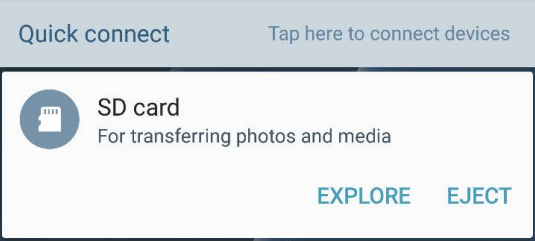
Many users are experiencing a recurring issue where the SD card notification keeps popping up on their phones, despite previous attempts to resolve it. While it remains an unsolved problem, some methods may still be worth trying. If you're facing this issue, you can try the suggested solutions to see if they can help resolve the problem.
How to Remove SD Card Notification on Android
The SD card notification issue affects various carriers and SD card brands with different capacities, and simply turning off notifications doesn't resolve the problem. On Android forums, several experimental methods have been proposed to fix this issue, and trying each of them may eventually resolve the problem on a Galaxy S7 phone.
Method 1: Reinsert the SD Card
Method 2: Block the Notification
Method 3: Create a New Album on the SD Card
Method 4: Factory Reset your Phone
If you're looking to get a new phone, you can sell your old Galaxy S7 (Edge) and use the money to buy a new one. This way, you'll have the latest technology and features without having to pay full price for a new device.
Bonus Tip: Format SD Card with Third-Party Tool
Method 1: Reinsert the SD Card
If your SD card isn't being recognized by your Galaxy S7 phone, try removing the SD card, waiting for 5 minutes or longer, and then reinserting it to see if it's still detected. This could resolve the issue due to a temporary connection problem.
Method 2: Block the Notification
To block all Android system notifications, press and hold the notification, then tap the "I" icon on the right and select "Block all notifications".
Method 3: Create a New Album on the SD Card
You're seeing the notification because you haven't started using the SD card. Try creating a new album on it, adding photos or videos, or transferring songs to the SD card. This should resolve the issue.
Method 4: Factory Reset your Phone
Users report that this issue occurs when they first start using their new Samsung phones. To resolve it, users can try factory-resetting their phone, which may resolve the issue if there's not too much data on the device. This should be done after making a backup to avoid losing important information.
Method 5: Format Your SD Card
To format your SD card, you can follow these steps: Insert the SD card into your computer or a card reader, and then open the File Explorer. Right-click on the SD card and select "Format" from the context menu. Choose the file system and allocation unit size, and then click "Start" to begin the formatting process.
Step 1: Back up your sd card: Plug your phone into your computer and copy off the contents of the SD card.
Step 2: On the phone, navigate to "Settings" -> "Memory" -> "SD Card".
Step 3: In the submenu, choose "FORMAT".
Step 4: When the format is complete, all your data on the microSD card will be erased. Plug the Galaxy S7 back into the computer, copy all contents back to the microSD card, and in most cases, the random SD card notification will no longer appear.
Method 6: Swap Your Galaxy S7 (Edge) with a New One
Some users tried to fix the issue by factory resetting their Galaxy S7, unmounting and remounting the SD card, and moving SD card contents to internal memory. However, these attempts only provided temporary relief, and the problem persisted. If none of these methods work, users may need to contact Samsung customer service to request a replacement under warranty. This could be a last resort, but it's worth trying if the issue cannot be resolved otherwise.
Bonus Tip: Format SD Card with Third-Party Tool
Users on Samsung Galaxy S7 may experience an issue where the "Format" button does not work when trying to format an SD card. In such cases, a more in-depth approach may be required.
To format your phone's SD card properly with the desired file system using Qiling, a free partition manager, first backup the SD card contents to your computer. Then, download and install Qiling Partition Master on your computer, making sure your phone is recognized by Windows. Once installed, follow the prompts to format the SD card.
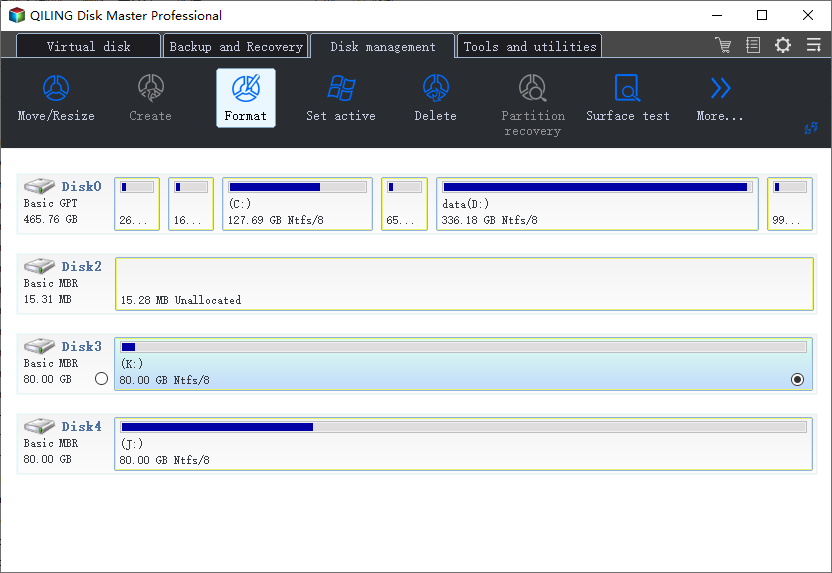
Step 1. Launch Qiling Partition Master, find your SD card and right-click the partition you want to format, then click "Format" in the "Disk management" page.
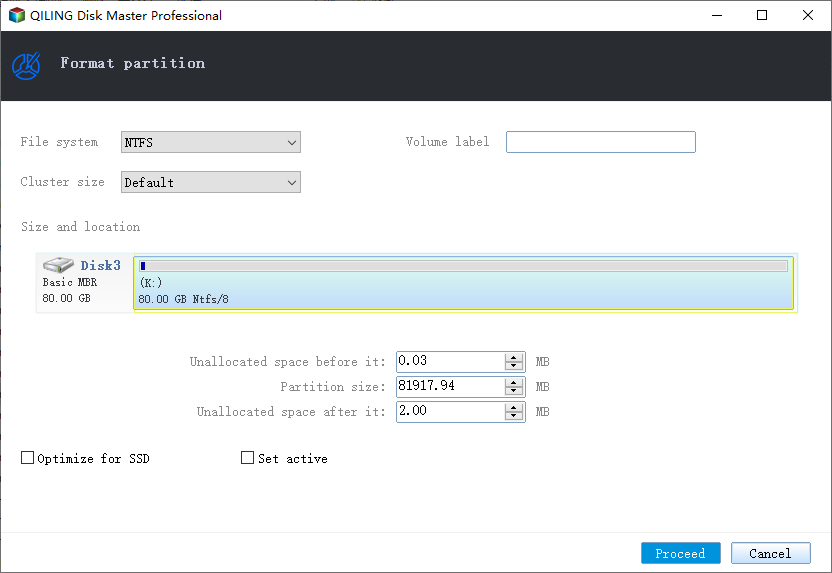
Step 2. In the next window, assign a new partition label, file system (NTFS/FAT32/FAT16), and cluster size to the selected partition, and then click "Proceed".
If you're experiencing issues with your phone's touchscreen, try booting it in safe mode. This can help you determine if the problem is with the operating system or a third-party app. To do this, press and hold the power button until the phone turns off, then press and hold the power button again until it turns back on.
Related Articles
- Extend C drive or system partition in Windows 10
- 7+ Fixes for Windows Was Unable to Complete the Format in 2022
- Windows Server 2003 Extend C Drive: Two Ways to Extend System Partition
- Backup Computer to USB Flash Drive in Windows 10/8/7
- How to dual boot Windows 11/10 with Windows 8 or 7?
- How to Add Space to C Drive to Increase C Drive Space
- Best Free Server Backup Software to Ensure Your Data's Safety
Are you looking for one free Server backup software? Qiling Disk Master Server can back up system, file, disk and partition to an image file for ensuring the safety of data excellently in Windows Server 2003, 2008, 2012, 2016, etc.
Products
Articles & Tutorials
- Data Recovery
- Data Backup
- File Recovery
- File Backup
- System Backup and Restore
- Disk and Partition Clone
- Technical articles
- Mobile articles
- Disk Master Help
- Windows Data Recovery Tutorials
- Windows Secure Delete Tutorials
- Windows Partition Management Tutorials
- Windows File Backup and Restore Tutorials
- Windows System Backup and Restore Tutorials
- Windows Disk Backup and Restore Tutorials
- Windows Clone Tutorials