Backup Computer to USB Flash Drive in Windows 10/8/7
Question: How Do I Backup My Entire Computer to a Flash Drive
As a computer user, you may face frustrating situations such as system crashes, hard drive corruption, unknown viruses or ransomware attacks, or software bugs that delete important files.
To backup your entire computer to a flash drive, you can use the built-in Windows feature called "Windows Backup" or a third-party software like Qiling Backup. This will allow you to create a complete image of your system, including all installed programs, settings, and data. Alternatively, you can also use a cloud backup service like Google Drive, OneDrive, or Dropbox to backup your files and data.
This tutorial will guide you through the process of backing up Windows 7 and Windows 10 computers to a USB drive. We will cover two methods: one for Windows 7 and another for Windows 10, both of which allow you to backup your computer to a flash drive.
What's the Most Effective Way to Backup Computer to USB
To back up your entire computer to a flash drive, use Qiling Disk Master backup and restore software, which is the easiest and most efficient method. A comparison chart is available to help you understand the benefits.
| Comparison | Qiling Disk Master | Backup and Restore (Windows 7) |
|---|---|---|
| File backup | Back up individual file or folder | Doesn't support |
| Backup method | Full, incremental, differential backup | Only full backup |
| Backup storage |
|
Local disk or USB drive |
| Schedule backup | Automatic scheduled backup upon time or event | Doesn't support |
| Restore method | local restore and universal restore | local restore |
| Image compression | Compress backup images at different levels to save disk space | Doesn't support |
How to Backup Computer to a Flash Drive with Qiling Disk Master
Qiling Disk Master is a Windows backup and recovery software that allows users to back up their entire computer to a flash drive in a few clicks. It offers various backup options, including file backup, system backup, and disk/partition backup, catering to different user needs. The software enables instant and flexible restoration of backed-up data.
You can schedule a computer backup to a USB flash drive on a daily, weekly, monthly, or event-based schedule.
To back up Windows 7 and Windows 10 to USB without effort, follow these steps:
1. Download Qiling Windows Backup and Recovery Software
Qiling Disk Master is fully compatible with Windows 10, 8, 7, and other previous Windows versions.
2. Make Sure USB Flash Drive with Enough Storage Space
To determine the size of flash drive you need, calculate the total amount of data you want to back up, including files, programs, and the operating system. A general rule of thumb is to add up the sizes of all the files and programs on your computer, then add 10-20% to account for any unexpected data.
256GB or 512GB is a good size for a USB flash drive to store a computer backup. This amount of storage space provides enough room to save a significant amount of data, including system files, programs, and user data. It's a good idea to have a USB drive with this capacity to ensure that you have a reliable backup of your computer's important files.
3. Tutorial: Backup Computer to USB Flash Drive Step-by-Step
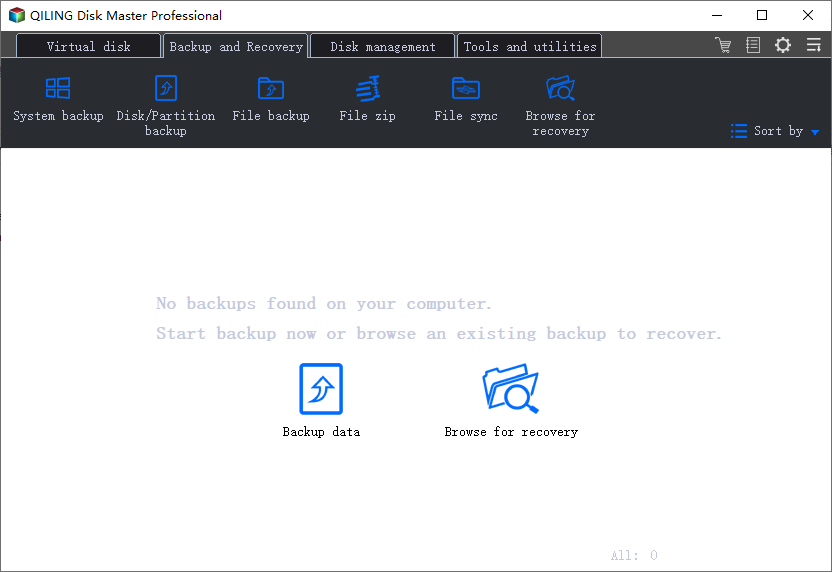
Step 1. Connect the USB flash drive to PC, launch Qiling Windows computer backup software and click "Disk/Partition" to start the backup.
Step 2. Choose the source disk you want to backup and select the USB flash drive as the destination disk where you want to save the backup image.
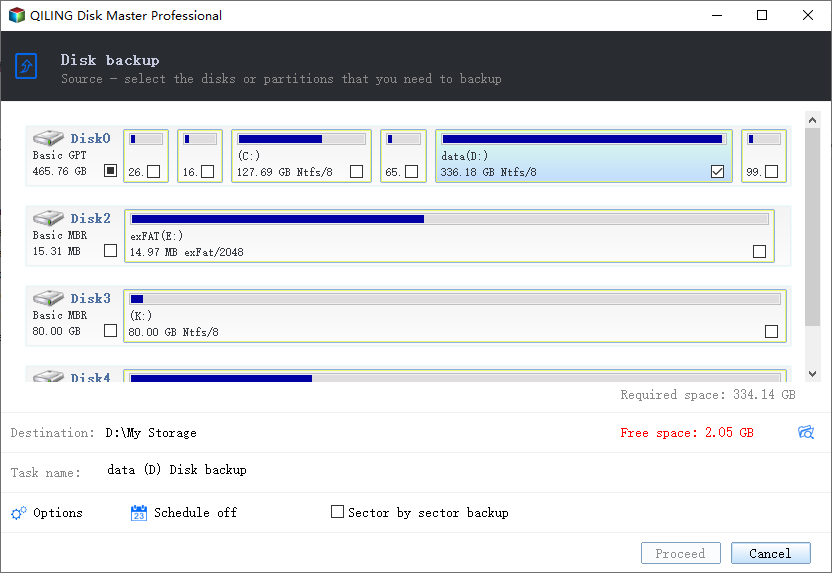
Step 3. Click "Proceed" to save all the changes and backup computer to USB flash drive.
Note: If you don't want to back up the entire computer hard drive, you can choose the 'File Backup' mode to back up only important files.
How to Backup Windows 10/7 to USB?
To create a system image and prevent OS disasters, refer to the guide on how to backup the Windows system to a USB flash drive using Qiling Disk Master. This will help you create a system image and ensure that your OS is protected in case of any issues.
How to Backup Computer to USB Using Backup and Restore (Windows 7)
You can use the Backup and Restore (Windows 7) tool on Windows 10, Windows 8, and Windows 7 to create a system image, which can include additional drives, and use it to restore your computer if your hard drive or computer stops working.
You can't restore individual items from a Windows Backup, and you can't restore a Windows Backup to a different computer.
Step 1. Type Backup and Restore in the search box and click to go to "Backup and Restore (Windows 7)".
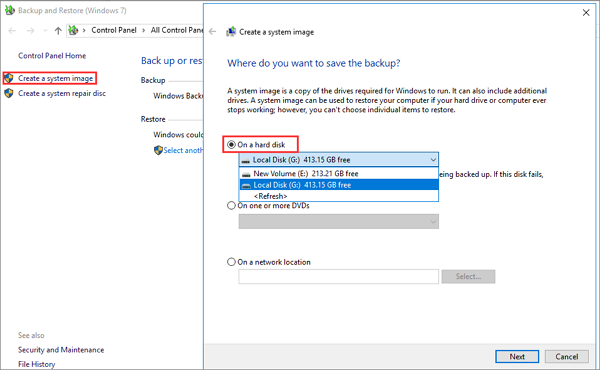
Step 2. Click "Create a system image" at the left panel.
Step 3. To back up Windows to a USB drive, select the USB drive from the drop-down menu under the "On a hard disk" section and click "Next".
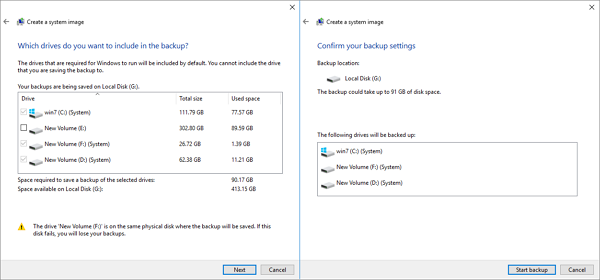
Step 4. Select the drives you want to include in the backup. Click "Next" and confirm the backup settings.
Step 5. Click "Start backup" to back up Windows 7 or Windows 10 to USB.
To Sum Up
To backup a computer to a USB drive, you can use either Qiling Disk Master or Windows' built-in Backup and Restore tool, but Qiling is highly recommended for its advanced features.
Qiling Backup offers a range of features, including comprehensive PC/laptop file backup, system backup, disk or partition backup solutions, system clone option to migrate OS to new SSD or HDD, full/incremental/differential backup method, image reserve strategy, and universal restore. Download Qiling Backup to take advantage of these features now.
How to Backup Computer to USB Flash Drive FAQs
To backup your computer to a USB flash drive on Windows 7 and Windows 10, you can use the built-in Backup and Restore tool. This tool allows you to create a system image backup, which includes all of your system files, settings, and applications, as well as a file backup of your personal files. To do this, go to Control Panel > System and Security > Backup and Restore (Windows 7) or Control Panel > System and Security > Backup (Windows 10), and follow the prompts to select the drive you want to use for the backup and the type of backup you want to create.
How do I backup my entire computer to a flash drive?
To back up your entire laptop to a PC onto a flash drive, you can use Qiling Disk Master. This program allows you to clone an entire disk to a USB drive with just a few clicks, and also enables you to restore the image on the same or a different computer.
You can use the system clone function to copy your system drive to an SSD/HDD or clone your HDD to an SSD without reinstalling Windows, except for data backup.
Can I use a USB flash drive to backup my computer?
Where to back up the computer? USB flash drive is recommended
Backing up your computer can be a daunting task, especially when it comes to deciding where to store your data.
You can technically back up the computer and save the image files on a PC hard drive, an SSD, a regular external hard drive, or a USB flash drive. However, the best choice depends on the specific needs and requirements of the user. For example, a PC hard drive may be a good option for storing large amounts of data, while an SSD may be a better choice for storing frequently accessed files.
Backing up your entire Windows computer to an external hard drive or USB flash drive is recommended because it allows you to create a complete copy of your system, including all installed applications, settings, and files. This can be useful in case your computer experiences a major failure, such as a hard drive crash or a virus infection, as you can simply restore your system from the backup to get back up and running quickly and easily. This process is often referred to as a "system image" or "disk image" backup, and it's a more comprehensive approach than just backing up individual files or folders.
1. It enables you to restore your system, data, installed programs, or settings to the backup state, even if your PC can't boot after an unexpected disaster.
2. USB manufacturers have made significant advancements, resulting in extremely light and compact USB devices with massive storage capacities and stable performance. This makes USB flash drives an attractive alternative to external hard drives, offering a convenient and portable storage solution.
How many GB do I need to backup my computer?
To determine the size of the flash drive needed to back up your computer, you should consider the size of the files you need to back up. Microsoft recommends a hard drive with at least 200GB of space, but the actual size needed will depend on the amount of data you want to back up.
How big of a flash drive do I need to backup Windows 10?
You can use a USB drive to create a Windows 10 system's recovery drive, which serves as a backup of the operating system. In the event of a severe problem like an OS crash or hardware failure, you can use the recovery drive to restore Windows 10 without having to reinstall.
To clean backup Windows 10 using the "Create a recovery drive" option, you'll need a USB drive with at least 16 GB of storage. However, this process will only back up the operating system and not personal files or applications that weren't pre-installed on your PC.
To back up your entire computer to a flash drive, you can use Qiling Disk Master software, which allows you to easily backup Windows and personal files/applications with just a few clicks.
Related Articles
- Hard Disk Drive Imaging Software: Qiling Backup to Protect Your Data
- Hard Disk Backup in Windows 10/8/7 [Beginners' Guide]
- How to Clone Windows 10 Operating System
- Download Best SSD to SSD Cloning Software
- Auto Backup VMware with Best VMware Backup Software
- How to Copy or Clone Windows XP OS to HDD/SSD
- The Best Alternate for Paragon Migrate OS to SSD 4.0 - Qiling Backup
This article will introduce a safe and powerful alternative to Paragon Migrate OS to SSD 4.0. For anyone who thinks the Paragon software is too expensive that wants to find a cracked version, read this article to see how Qiling Backup can help you in the system migrate.
Products
Articles & Tutorials
- Data Recovery
- Data Backup
- File Recovery
- File Backup
- System Backup and Restore
- Disk and Partition Clone
- Technical articles
- Mobile articles
- Disk Master Help
- Windows Data Recovery Tutorials
- Windows Secure Delete Tutorials
- Windows Partition Management Tutorials
- Windows File Backup and Restore Tutorials
- Windows System Backup and Restore Tutorials
- Windows Disk Backup and Restore Tutorials
- Windows Clone Tutorials