Should You Encrypt Backups? Here's the Answer
What is Encryption and Why do People Use It
Encryption is the process of transforming information into an unreadable format using a secret code or key, allowing sensitive data to be transmitted over insecure networks without risking exposure, and is widely used for both commercial and military purposes.
The use of encryption has become more prevalent due to increased concern for online security. This provides a high level of security for sensitive information, making it essential for protecting data from unauthorized access.
The Benefits of Encrypting Backups
Backing up data is a crucial routine that helps ensure important files can be recovered in case of a hardware failure or data loss incident.
Encrypting backups provides an additional layer of security, safeguarding data from unauthorized access, in addition to backing it up.
There are several benefits to encrypting backups:
- Encrypted backups are secure because they can only be accessed with the correct key or password, preventing unauthorized access to sensitive data.
- Encrypted backups are more resistant to tampering and corruption, making it more likely to recover data in the event of a loss incident.
- Encrypted backups can be stored in a secure location, such as an external hard drive, to protect them from physical threats.
How to Encrypt Your Backups
Choosing a backup encryption method is crucial, and the most important factor is to select a method that is easy to use while providing strong encryption. This will ensure that your backups are secure and protected from unauthorized access.
To securely store your backup files, you can use a dedicated encryption program like AxCrypt or Veracrypt, which allows you to encrypt your files with a password or key file and often offers features like automatic updates and cloud support.
Some backup software, like Qiling Backup, have an additional feature to encrypt backup files with a password, providing an extra layer of security.
Also Read:
Users with Qiling Backup can also create a security zone to store backups, providing an additional layer of protection against ransomware attacks, in addition to password-protecting backup files.
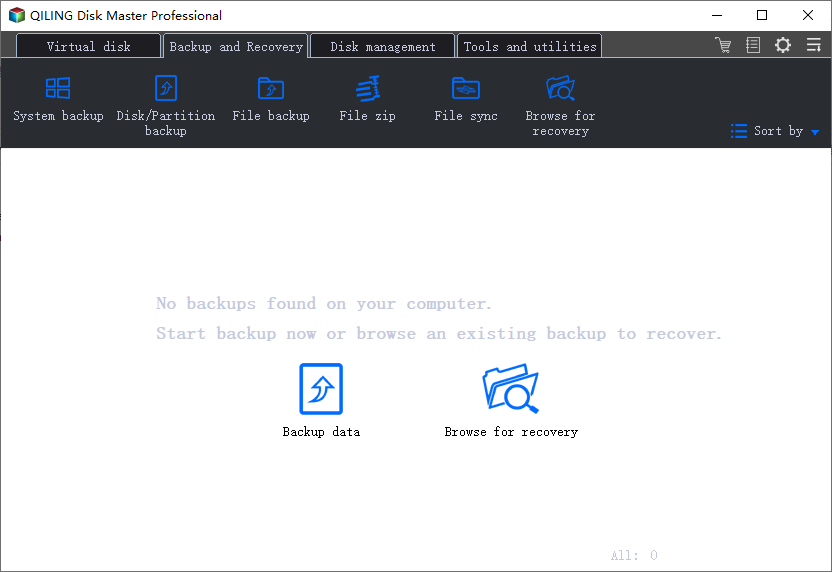
Step 1. Launch Qiling Backup and choose "System Backup" on the Backup and recovery page.
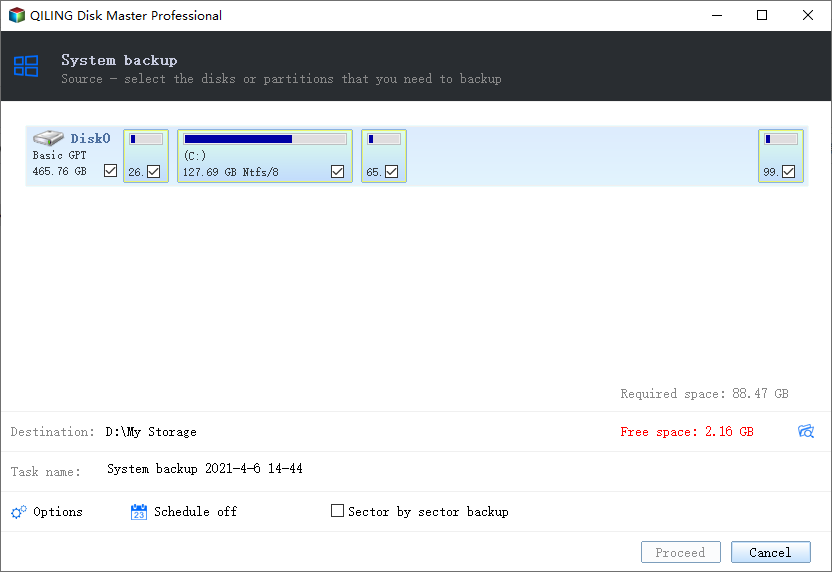
Step 2. The system partition will be automatically selected, so you only need to choose the location for the installation.
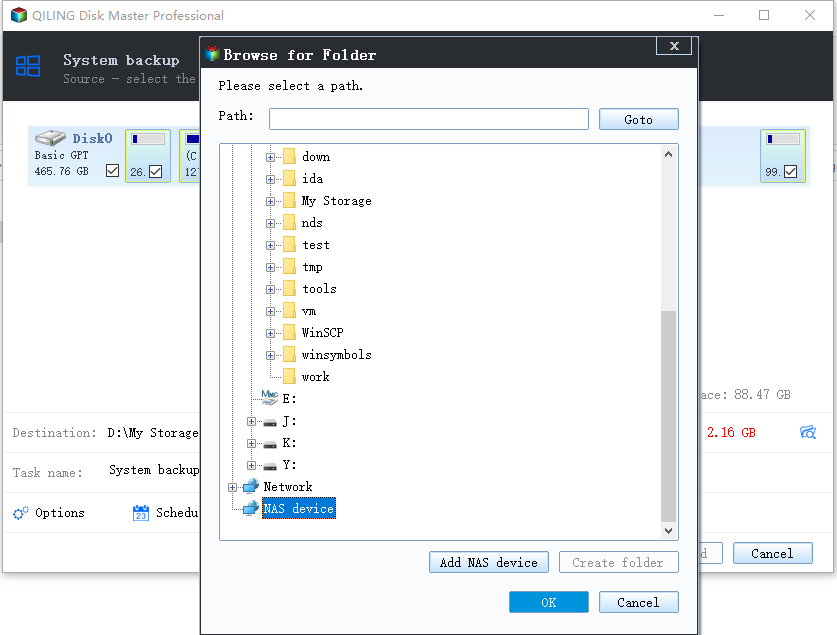
Step 3. You can save backup files to your local drive, cloud storage, or NAS, and even connect an external hard drive to store system backup files.
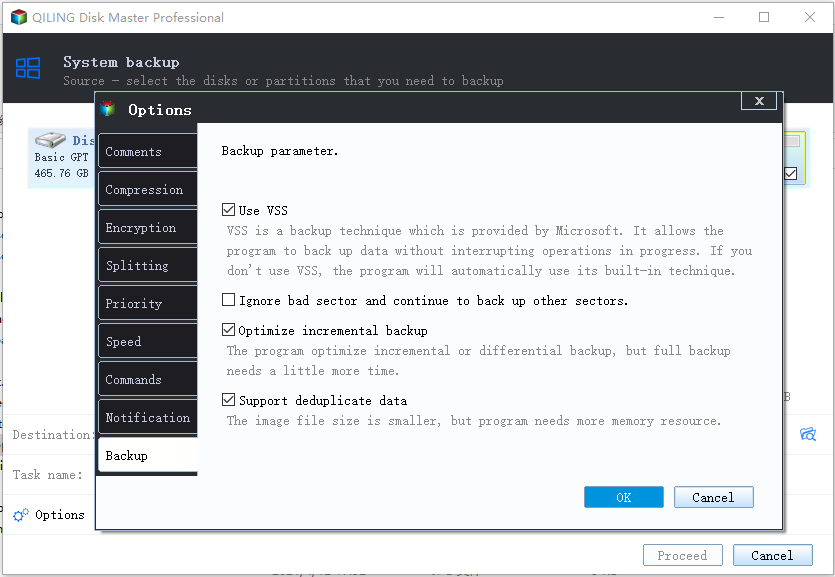
Step 4.You can customize the settings in "Options" at the left bottom. After that, click "Proceed" and the process will begin.
After completing the backup process, you can view the backup status, restore, access, or remove the backup by right-clicking on the backup task on the left.
Things you Should Consider before Encrypting Backups
Here are the factors to consider before encrypting your backups:
- Your level of technical expertise.
If you're not familiar with encryption, it might be best to start with a simpler solution like a backup software, which is often easier to use than built-in OS encryption tools. This can be a good way to get started with data protection without feeling overwhelmed by complex encryption options.
- The types of data that need to be protected.
When selecting a backup encryption solution, you'll need to choose one that meets your specific security needs, as different options offer varying levels of protection.
- The location and accessibility of your backups.
If you're storing backups offsite or in a shared environment, consider using a secure encryption method like strong passwords or key files to protect them.
New System, New Protection: Windows 11 Security Features
With the official release of Windows 11, Microsoft has taken a bold step to elevate the requirements of updating from Windows 10 to 11, now requiring essential security hardware. This move has sparked curiosity about the new security features of Windows 11, which we will explore in this article.
The Risks of not Encrypting Backups
Failing to encrypt backups leaves sensitive data vulnerable to unauthorized access in the event of a data loss incident. This can result in sensitive information being compromised and potentially used for malicious purposes.
Encrypting backups can make them appear more secure, but in reality, they may be more attractive to hackers who are looking for encrypted data to target. This can increase the risk of a security breach.
Encrypting your backups is crucial to protect your data from unauthorized access or theft. By using encryption tools, you can ensure that your backups are both secure and accessible when needed. This is because the risks of not encrypting your backups, such as losing sensitive information, outweigh the benefits. Therefore, it is essential that all computer users take steps to protect their data by using encryption tools.
Wrap Up
Encrypting your backups is a crucial step in safeguarding your data from security threats. With various options available, select a method that suits your needs and technical expertise. Before encrypting, consider the types of data to be protected and the backup location to ensure comprehensive security. By taking these precautions, you can effectively safeguard your data.
Related Articles
- VeraCrypt vs Qiling Safe Disk: Which Encryption Tool Is Better?
Choose the right encryption tool before you encrypt your backup files against ransomware. - How to Hide Files with Encryption on Windows
Hide and encrypt your original files so even the backups are not the only copy that stays private. - Can Ransomware Encrypt an Already-Encrypted Drive?
Understand how an unmounted encrypted container protects your backups from ransomware. - How to Back Up Windows 10 to USB on Your Own [3 Ways]
- (Fixed)Windows Server Backup Keep Only One Copy
Windows Server Backup delete old backups seems to be the most obvious cause of Windows Server Backup keep only one copy, but is this really the case? Get all the answer in this article. - Windows Server Backup Retention Policy-Can It be Specified
You will learn the Windows Server backup retention policy precisely and how to delete old backups using Wbadmin and professional server backup software.
Products
Articles & Tutorials
- Data Recovery
- Data Backup
- File Recovery
- File Backup
- System Backup and Restore
- Disk and Partition Clone
- Technical articles
- Mobile articles
- Disk Master Help
- Windows Data Recovery Tutorials
- Windows Secure Delete Tutorials
- Windows Partition Management Tutorials
- Windows File Backup and Restore Tutorials
- Windows System Backup and Restore Tutorials
- Windows Disk Backup and Restore Tutorials
- Windows Clone Tutorials