Three SQL Server Backup Types
Full backup
A full backup includes all database data and enough log data to allow for recovery, serving as the base for differential and transaction log backups.
Differential backup
A differential backup is based on the latest full backup of the data and contains only the data that has changed since the differential base, making it smaller and faster to create than a full backup.
Using differential backups can help save space and speed up the process of making frequent backups, reducing the risk of data loss. When restoring data, the full backup is restored first, followed by the most recent differential backup. This approach allows for efficient and effective backup and restore processes.
To ensure the security of your backup files, it's recommended to create multiple bases of differential backups at various times, rather than relying solely on one base. This approach helps guarantee the integrity and recoverability of your data in case of a disaster or system failure.
Transaction Log Backups
The transaction log is a record of all database transactions since the last backup, allowing for recovery to a specific point in time or the point of failure.
Transaction log backups are only valuable under the full or bulk-logged recovery models. Each log backup captures the active portion of the transaction log at the time of backup, including all unbacked log records. An uninterrupted sequence of log backups forms an unbroken log chain, which is essential for restoring the database to any point in time under the full or bulk-logged recovery models.
Just like differential backups, transaction log backups are based on a full backup. Before creating the first log backup, a full backup (like a database backup) must be created. Log backups require less disk space than full backups, making them suitable for more frequent creation than database backups.
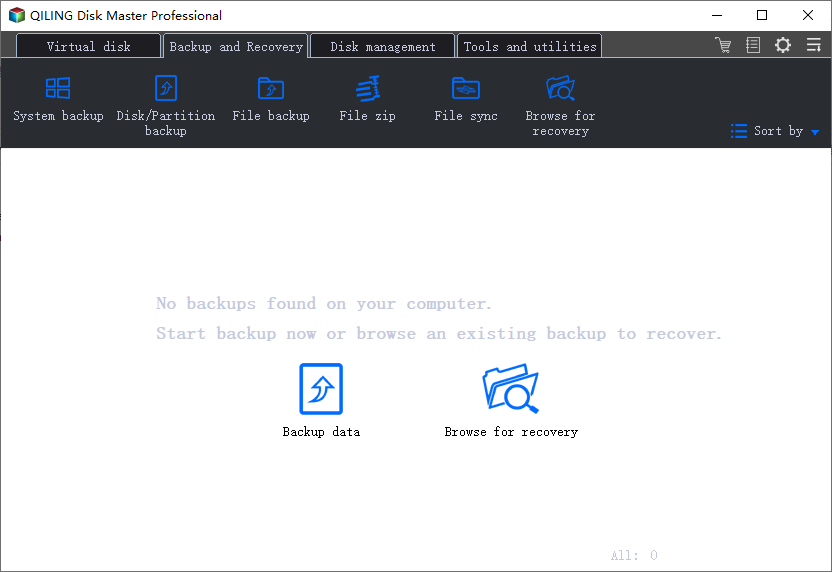
You can download free SQL backup and recovery software and use it to back up SQL Server with various SQL backup types. For more detailed information and solutions on SQL backup and recovery, you can refer to the Qiling Backup Server.
Related Articles
- Ghost Windows 7 Using Hard Drive Ghost Software
- Free Download Qiling Backup Full Crack + Serial/Keygen
- Is It Possible to Backup RAID in a Safe and Easy Way
- Hard Disk Drive Imaging Software: Qiling Backup to Protect Your Data
- How to Clone RAID Disk Safely and Easily
- 7 Best Free Imaging Software for Windows 10/8/7
- How to Create A System Image Backup in Windows 10?
Making a complete system restore point is the best way to protect yourself from Windows 10 crashes. Please read this article for detail.
Products
Articles & Tutorials
- Data Recovery
- Data Backup
- File Recovery
- File Backup
- System Backup and Restore
- Disk and Partition Clone
- Technical articles
- Mobile articles
- Disk Master Help
- Windows Data Recovery Tutorials
- Windows Secure Delete Tutorials
- Windows Partition Management Tutorials
- Windows File Backup and Restore Tutorials
- Windows System Backup and Restore Tutorials
- Windows Disk Backup and Restore Tutorials
- Windows Clone Tutorials