COVID-19 Safely and Effectively Work from Home Backup and Recovery Plan
For working from home, a reliable backup method is crucial. Consider a combination of local backups (using an external hard drive or NAS) and cloud backups (using services like Backblaze or Google Drive). This way, you'll have a copy of your files on-site for quick recovery and a cloud backup for off-site protection. You can also explore automated backup software like Qiling to simplify the process.
As the global COVID-19 pandemic unfolds, factories are shut down, restaurants are closed, and classes are suspended, leaving companies with no choice but to adapt. The most reliable way to maintain business continuity is to adopt a work-from-home setup, allowing employees to study, work, and even play from the comfort of their own homes. This arrangement ensures that essential operations can continue uninterrupted, even as the world outside grinds to a halt.
A Portable OS Is One of The Remote Work Must Haves
As many employees start working remotely for the first time, they need to prepare a home office setup to stay productive. This includes essentials like a computer or separate mobile, a copy of business-critical data, a collaboration app, Office suite, and communication system. To work effectively and efficiently from home, both employees and employers need to consider strategies and tips, which are widely recommended.
- Use original company toolbox, including OS
- Build a working computer that runs smooth and fast
- Install a web conferencing app like Zoom to receive meeting calls. This will allow you to join virtual meetings from anywhere, at any time, and collaborate with others remotely.
- Please ensure that all working materials are kept intact and prepared for a potential move to the company office. This includes making sure everything is in good condition and ready to be relocated.
With Qiling Backup, you can easily transfer the original company operating system and installed software to your home computer without having to reinstall Windows from scratch, which can be a challenging task.
Guide: How to Create A Portable Windows 10/8/7
To create a portable Windows 10/8/7 operating system, you can put Windows on a USB flash drive, allowing you to work with your familiar OS environment, applications, preferences, and password on any computer. This can be achieved by downloading Qiling Windows backup software and following the steps to create a portable copy of Windows, which can be booted from the USB drive. This portable OS is small and light, making it easy to take with you, and allows you to work seamlessly on any computer.
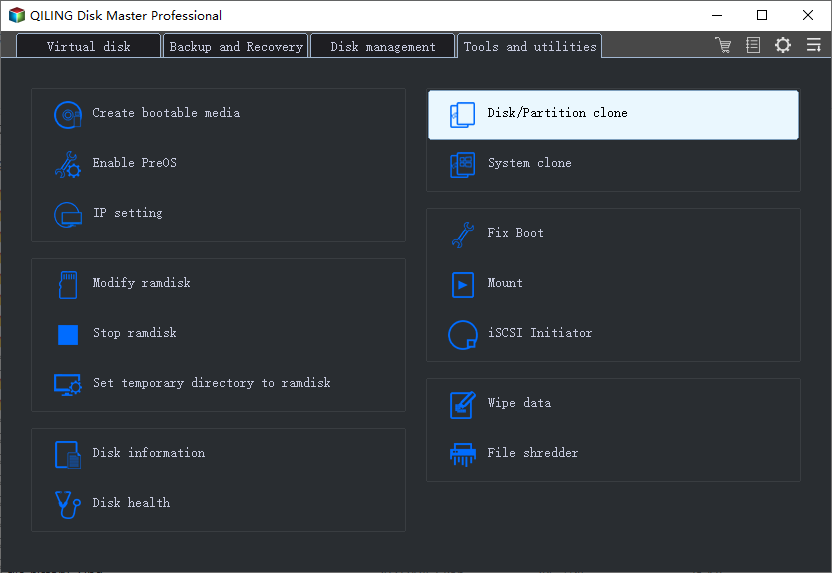
Step 1. Launch Qiling Backup. Click "System Clone" in the tools page.
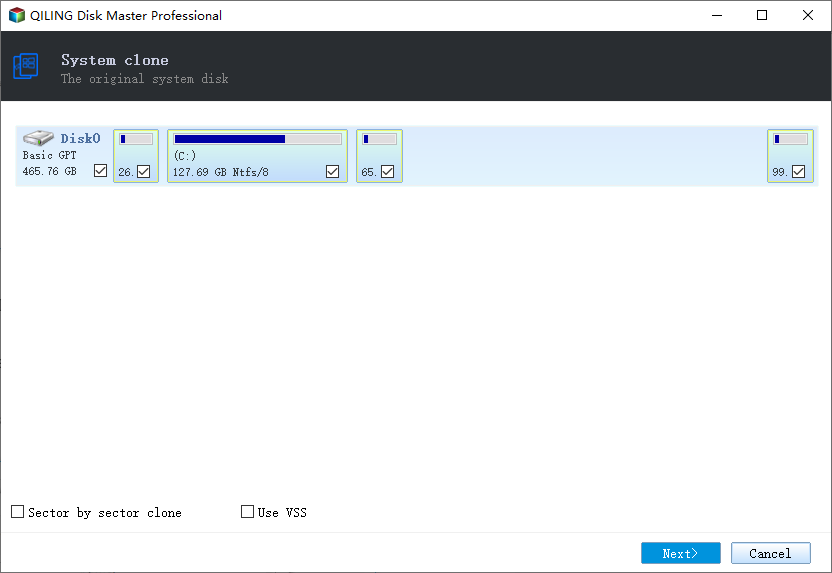
Step 2. On the "System clone" window, the software will choose the system partition and boot partition by default. Click "Next".
To clone all sectors from the source disk to the destination disk, including system data, check the "Sector by sector clone" option. This will ensure a complete and accurate copy of the entire disk.
Step 3. Just Choose the USB drive as the destination disk.
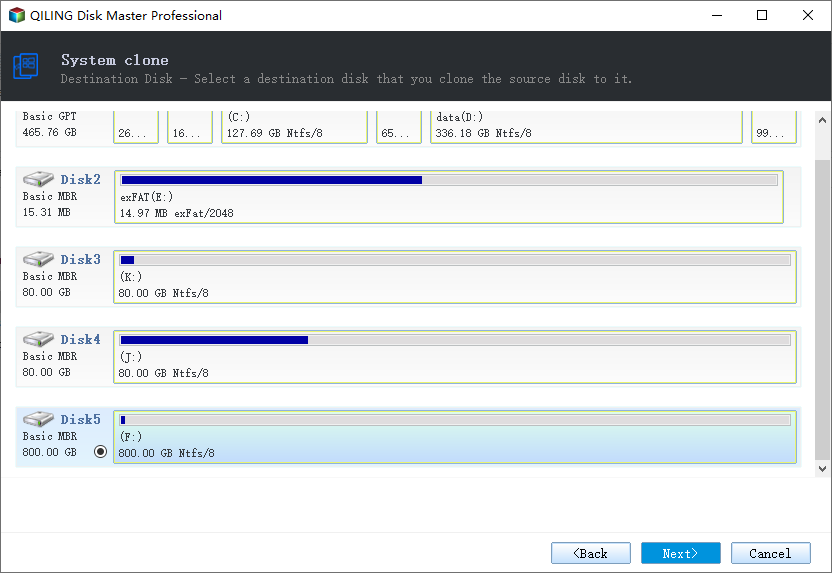
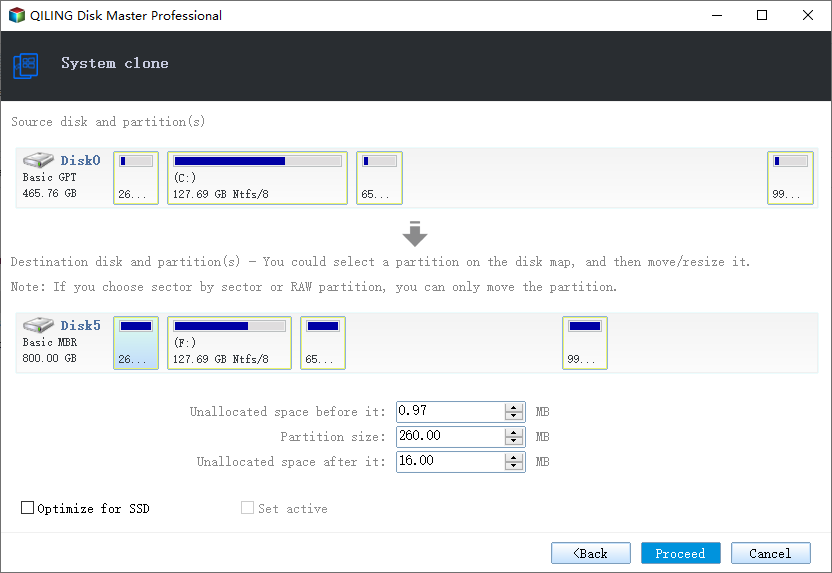
Step 4. The software will start immediately cloning the default partitions of your desktop/laptop to the USB drive after previewing the disk layout and confirming the settings of the source and destination disk, and clicking "Proceed".
The Tick Optimize for SSD feature optimizes the performance of a new solid-state drive (SSD) by adjusting the tick settings to better suit the drive's capabilities. This can help improve the overall speed and responsiveness of the system.
Step 5. To boot the cloned system from the USB drive on other Windows devices, simply connect the drive to the device, wait for the computer to configure its system settings, and you'll arrive at a desktop screen identical to the cloned system.
To access the cloned system, enter the username and password of the cloned system, which you should have noted down during the cloning process. This information will allow you to successfully log in to the cloned system.
Data Backup Is The Other Remote Work Must Haves
Setting up a computer with the original OS and applications can save time and improve work efficiency by avoiding the need to reinstall and get accustomed to a new configuration. Additionally, it's essential to protect business data, emails, documents, and other sensitive information by taking measures to transfer and secure them on the company's computer. This includes confidential data, client information, and large files that would take time to transfer.
As a work-from-home employee, you can utilize Qiling Backup to establish an automatic backup schedule, allowing it to intelligently back up your computer data without any manual intervention.
Benefits of Creating Backups with Qiling Backup
- Various backup options are available, including disk/partition backup, file backup, system backup, and email backup.
- The system has a built-in default backup plan that automatically runs every 30 minutes, ensuring that data is regularly and frequently saved to prevent loss in case of unexpected events or system crashes.
- You can customize a backup schedule to suit your needs, choosing from options such as a one-time backup, daily, weekly, monthly, or even upon a specific event.
- Efficient backup plans: full backup, differential backup, and incremental backup.
- To ensure your data is safe, consider implementing remote backup plans by saving your backup copy to cloud services such as OneDrive, Google Drive, or Dropbox.
- Image-The strategy involves creating a backup of as many files as desired, but it takes up less disk space than a traditional backup image would, making it a more efficient option.
- To enable backup encryption, use confidential passwords to secure the backup files you created, ensuring they remain protected and private.
Guide: How to Create An Incremental Backup
The last incremental backup plan offers the fastest backup speed and uses the least disk space, making it a good choice for small SSDs or HDDs. To use this plan, you'll first need to create a full backup, then start the incremental backup plan, which only backs up files that have changed. This approach is suitable for home computers with limited storage.
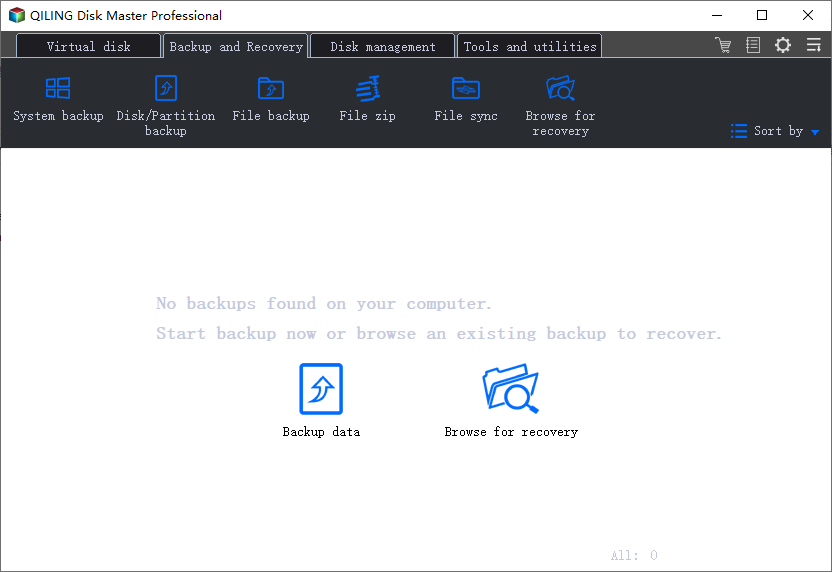
Step 1. Open Qiling Backup and select "File backup".
As your digital life grows, so does the importance of protecting your valuable data, including documents, photos, music, and videos. To ensure your memories and important files are safe, it's a good habit to regularly back them up.
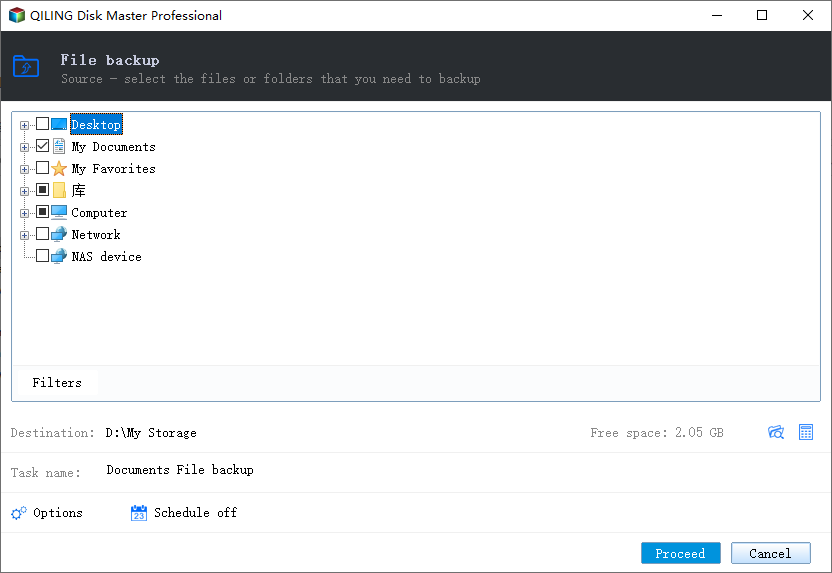
Step 2. Select the files that you want to back up.
If you just want to back up one or some specific file types from one folder, you can use the option at the top right corner to exclude other files.
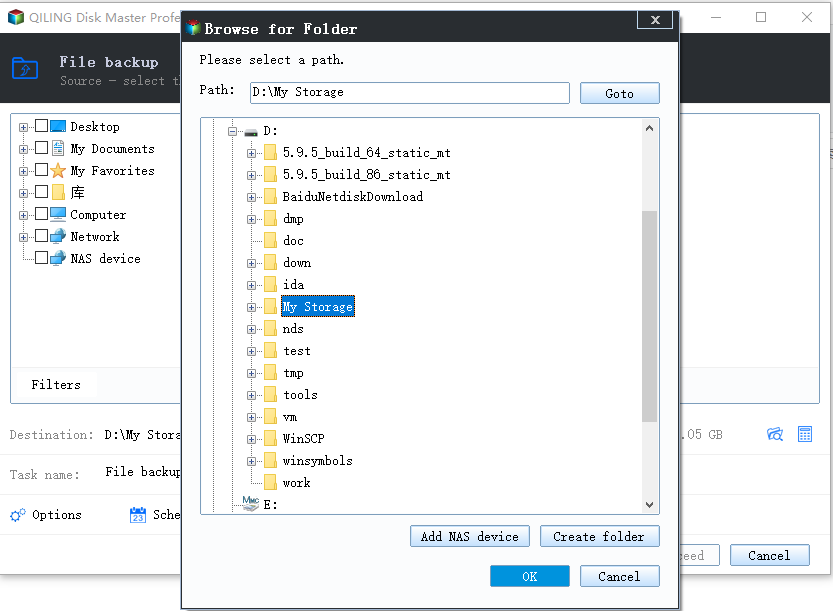
Step 3. Select a destination to save your backup file.
If you don't store the backup in a separate location, you risk losing it due to hardware failure or other issues. Consider storing it on an external drive, cloud storage, or another computer. This way, you'll have a safe copy of your data.
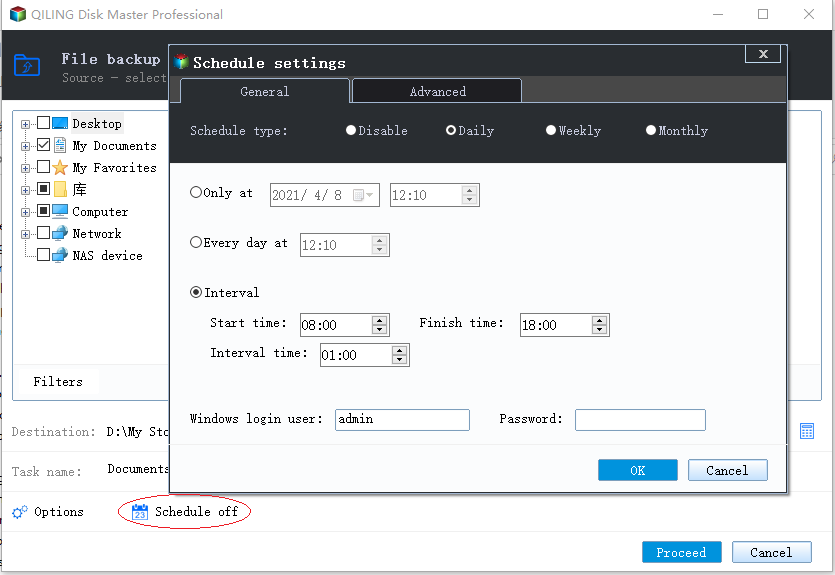
Step 4. Click "Schedule" to create an automatic incremental backup.
To schedule a weekly backup, select the "Weekly" option and choose the day of the week, such as Sunday, and set the backup method to Incremental.
Our software will initially perform a full backup, and then every Sunday, it will only back up files that have changed since the last backup.
Notice:
Since it's your first time, the backup process will likely take longer as it needs to image all your selected files. Just take a little break and wait patiently.
If you have enough space, you can also choose to take a full and incremental backup at the same time, which can save space compared to taking separate full and incremental backups. However, this option requires a significant amount of disk space.
Step 5. Click "Save" or click "Proceed" to execute the full back up.
Once completed, the system will automatically execute an incremental backup on a specific day, ensuring that your data is up-to-date and secure.
When you return to the company, you can quickly recover all your data by using Qiling Backup's one-click "Recovery" feature, which takes only a minute to restore everything, eliminating the need to copy files from home and transfer them to the office computer.
How to Upgrade Hard Drive Easily at Home
Your laptop may be old, but it's probably still able to support your work smoothly at home. If you don't have extra money to buy a new computer, you could consider checking your computer hard drive to see if it needs to be replaced or cleaned out. This could potentially solve the problem and save you from having to buy a new computer.
The work-Many employees are struggling with an outdated laptop that's slowing them down, but they can try some computer optimization tips to breathe new life into it. With a little effort, they might even be able to build a brand new computer themselves.
- Reinstall operating system
- Clear up junk files and useless extremely large files.
- Resize a partition, particularly to increase the system C drive.
Cleaning up and rearranging disk space on your computer can help speed up your computer, although it's not a guarantee. Alternatively, you can consider investing in a new hard drive and cloning your old one, including the operating system, programs, and settings, to the new one, which may improve performance.
Besides the rich-Qiling Backup offers a highlighted disk cloning feature that allows you to easily replace an old, small, or failed hard drive by cloning the OS to a new one, such as transferring OS from HDD to SSD. This feature enables you to set up an identical new hard drive as the original one and instantly put it into use.
Guide: How to Clone Hard Drive With Qiling Backup
- If the original hard disk contains the system partition, select the option to shut down the computer when the operation is completed, and the software will automatically shut down the computer once the cloning is finished.
- To resolve the issue, remove either the source disk or destination disk from the computer, allowing it to boot normally when the source disk contains the boot partition.
- To boot from the destination disk, change the boot order in your BIOS to prioritize the disk drive you want to boot from. This will allow your system to load the operating system from the new disk instead of the original one.
- If the computer fails to boot from the destination disk after cloning, it's recommended to clone the source disk to another disk with the same HDD interface.
- If you clone a hidden partition, the cloned partition will be unhidden.
- The large hard drive can be cloned to a small hard drive as long as the small hard drive's capacity is equal to or larger than the used space of the original hard drive.
Step 1. Launch Qiling Backup and click "Clone".
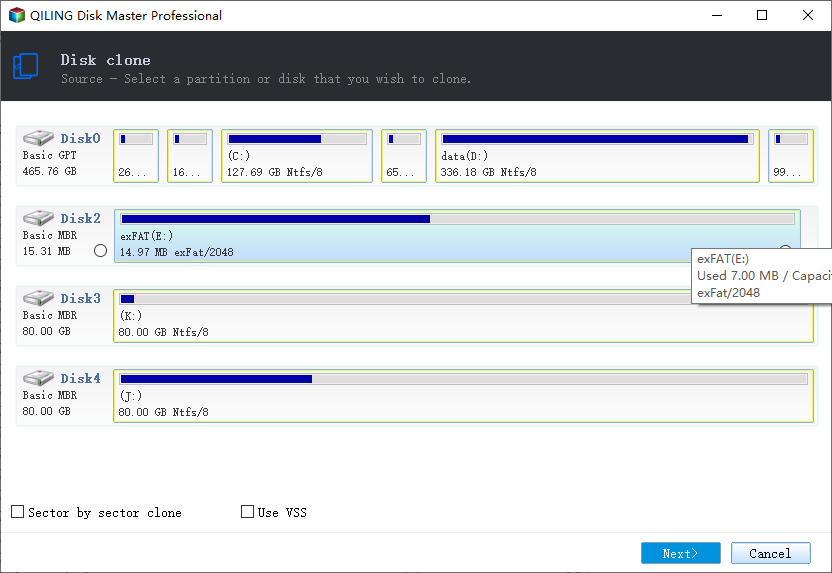
Step 2. Select a source disk/partition you want to clone. Click "Next".
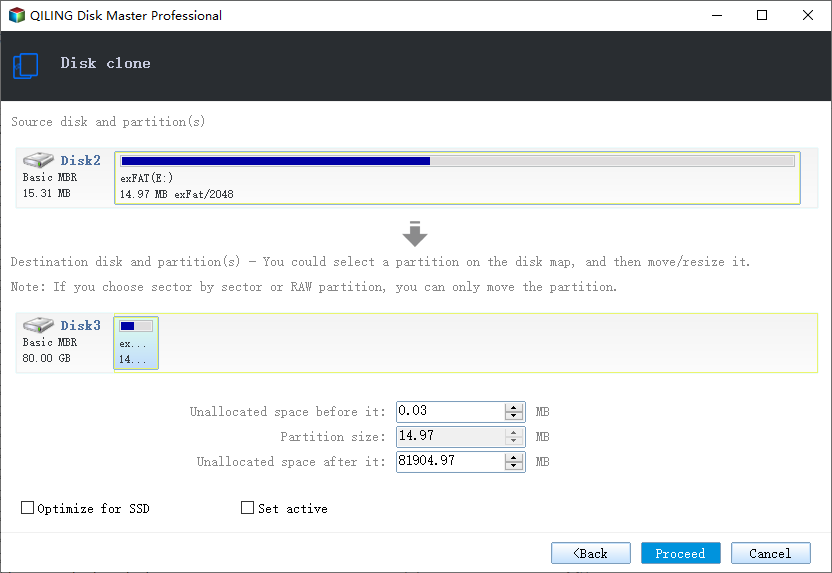
Step 3. Select a destination disk or partition, then click "Next" and choose the appropriate advanced option (Optimize for SSD or Sector by sector clone) if necessary.
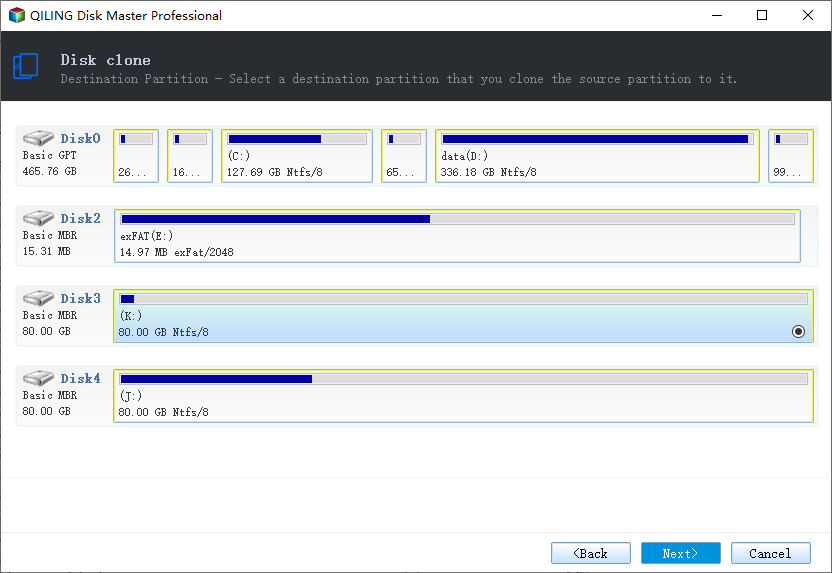
Step 4. Preview the disk layout and then click "Proceed" to execute the disk/partition cloning with Qiling Backup.
It's Time to Implement The Backup and Recovery Plan for Working from Home
Let's stay positive and united in fighting the COVID-19 outbreak by safely staying at home and productively working from home.
Implementing a data protection and disaster recovery plan will ensure a smooth transition from working in the office to working from home, ensuring the company's survival even in a rough year.
Related Articles
- Back Up Windows 7 Computer to External Hard Drive
- How to Backup Your Computer - Cloud Storage or Backup Software?
- Windows 10/8/7 System Restore Points Not Working
- [Solved] This Application Was Unable to Start Correctly (Error Code: 0xc000007b)
- ISO to USB: How to Burn ISO to USB in Windows 10
- Norton vs McAfee: Ultimate Comparison to Decide Which to Use
If you are looking to find out what's better between Norton 360 and McAfee Total Protection, check it in our review. Take a look at out comprehensive review to find out who comes out as a winner in the Norton vs McAfee battle.
Products
Articles & Tutorials
- Data Recovery
- Data Backup
- File Recovery
- File Backup
- System Backup and Restore
- Disk and Partition Clone
- Technical articles
- Mobile articles
- Disk Master Help
- Windows Data Recovery Tutorials
- Windows Secure Delete Tutorials
- Windows Partition Management Tutorials
- Windows File Backup and Restore Tutorials
- Windows System Backup and Restore Tutorials
- Windows Disk Backup and Restore Tutorials
- Windows Clone Tutorials