Full Guide to Perform Windows Server Backup Bare Metal Recovery [2022]
Windows Server Backup Bare Metal Recovery allows organizations to quickly restore their servers in the event of a hardware failure, ransomware attack, or hard drive damage, ensuring minimal downtime and uninterrupted business operations.
Creating a backup is crucial for any organization as it ensures that all files, settings, and information are safely stored and won't be lost in case of an accident or failure, making recovery and getting back up and running much easier.
Bare metal recovery is a process that allows you to restore your system to its original state, without any operating system or applications installed. This method is useful in case of a system failure or data loss, as it enables you to recover your system to its previous state.
What Is Windows Server Backup Bare Metal Recovery
Bare-metal recovery (BMR) is a technique that allows users to restore their servers to new or different hardware without requiring an operating system to be pre-installed. This is especially helpful for quickly restoring a server after a hardware failure, ransomware attack, or when migrating to other machines, making it an essential tool for disaster recovery and server maintenance.
To create a Windows server backup for bare metal recovery, start by creating a bare metal backup, which includes drivers, the OS, and other essential data. This will ensure that you have a complete and comprehensive backup of your server, allowing for a seamless recovery in the event of a disaster or system failure.
The Windows Server Backup already includes a feature called Bare Metal Recovery (BMR), which allows you to back up all files and data except those on a critical volume, enabling recovery of your server if it fails to boot properly.
The advantages of this are:
- It's faster than manual recovery since you don't need to install an OS or any software when recovering, making the process quicker.
- You could automate the server migration to the cloud, physical, or virtual environments.
- There is no room for error in this situation as limited human interaction is required.
We previously discussed bare metal backup and recovery on Windows 10. You can find that guide on our related articles page.
How to Create Bare-Metal Backups
Bare-metal restoration allows for quick and easy restoration of the entire hardware infrastructure, providing speed and convenience.
Creating a Windows Server backup daily or at least once every 2-3 weeks is also recommended.
To create a bare-metal backup of a Windows server, it's necessary to first create a backup of the server using a Windows server backup method, such as System Restore or Windows Server Backup, which will create a system image of the server. This system image can then be used to create a bare-metal backup, which is a complete backup of the server's hard drive.
Method 1. Backup Windows Server with Built-in Tool
To create a Windows server backup for bare metal recovery, you can follow these steps. First, you'll need to create a System State backup, which includes the operating system, settings, and configurations.
Install Windows Server Backup
Step 1. Open the "Server Manager" and select "Add roles and features." Simply select "Next" to proceed.
Step 2. Click "Next" in the "Installation Type" section.
Step 3. In the "Features" section, click "Next" to proceed.
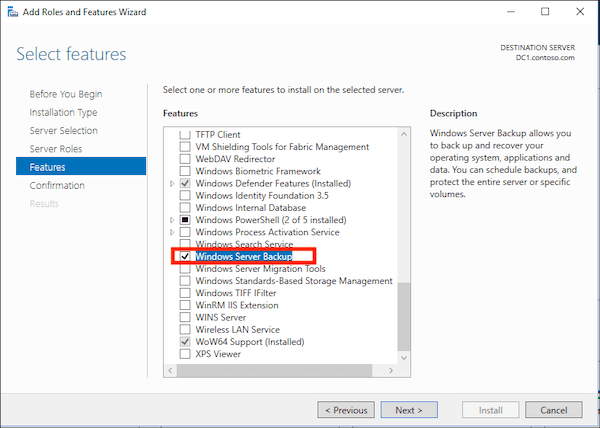
Step 4. Select "Windows Server Backup" and click "Next" in the "Features" section, and then click "Install" in the "Confirmation" section.
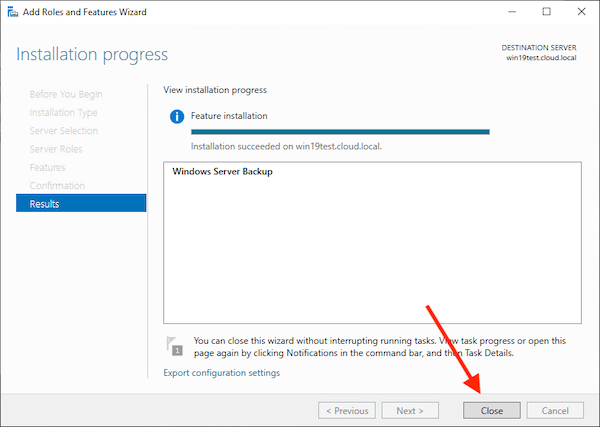
Step 5. Click "Close" after the installation is completed.
Create a Backup of Windows Server
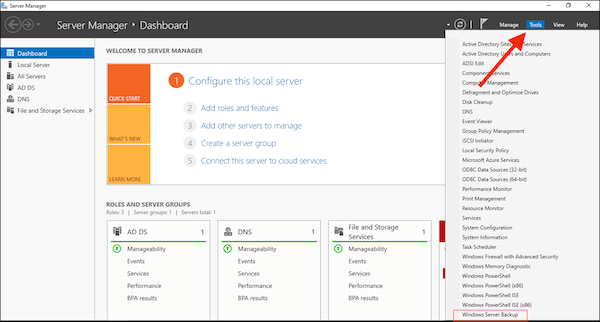
Step 1. Open "Server Manager" and select "Windows Server Backup" in "Tools".
Step 2. Enter the Backup operator credentials in the User Account Control dialog box, and click "OK".
Step 3. To create a local backup, select "Local Backup" from the available options and then proceed to click on "Backup Once" within the "Action" menu.
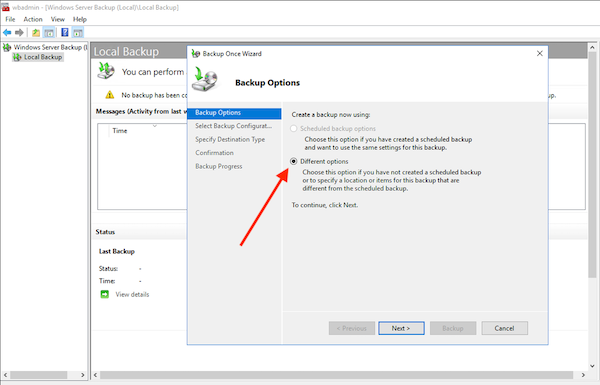
Step 4. In the "Backup options" section of the "Backup Once Wizard," select "Different options" and click "Next."
Step 5. In the "Select backup configuration" section, choose "Full server (recommended)" and then select "Next".
Step 6. In the "Specify destination type" section, choose either "Local drives" or "Remote shared folders" and click "Next."
Step 7. Choose the backup location in the "Select Backup Destination" section.
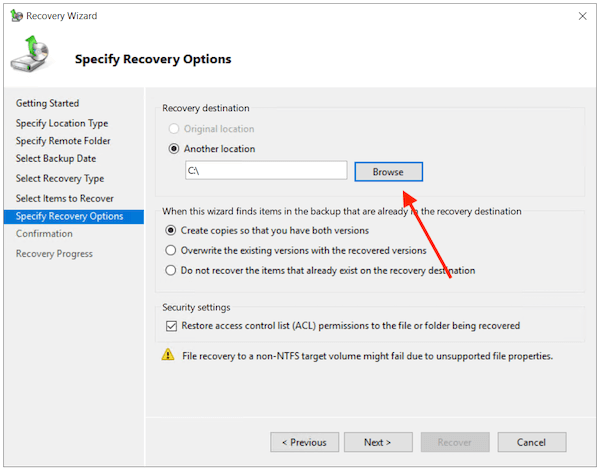
Step 8. Once the backup is completed, click "Close" on the confirmation screen.
Method 2. Backup Windows Server with Qiling
Users can easily back up their servers with Qiling Backup Enterprise by following a simple click-through process. This allows them to back up multiple SQL databases at once, restore images to different hardware, and clone entire hard drives as a backup, among other features.
Qiling Backup Enterprise is a comprehensive solution for enterprise tasks that offers a single platform for all needs, allowing users to manage and automate various tasks, streamline workflows, and enhance productivity.
Step 1. To set up a new backup in Open Qiling Backup Enterprise, click on “Backup and recovery” to initiate the process.
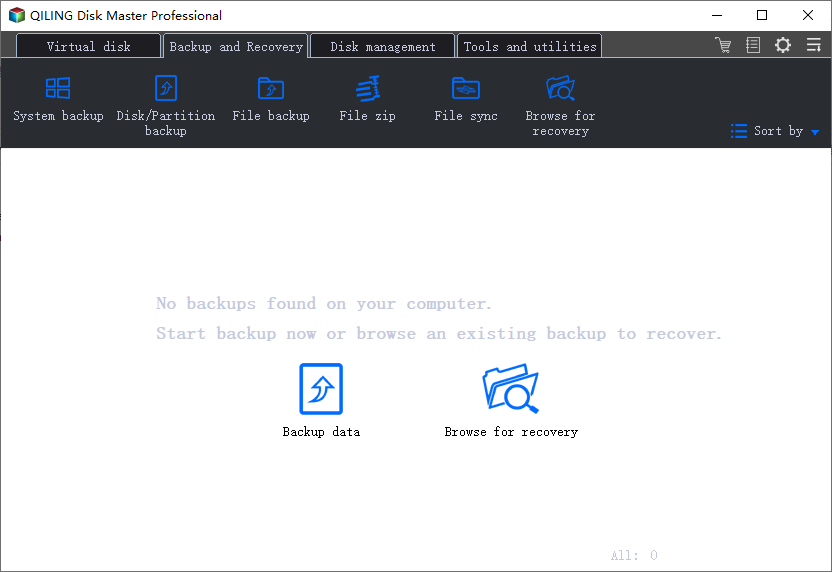
Step 2. To back up a disk or partition, choose the "Disk/partition backup" option, followed by the system to be backed up.
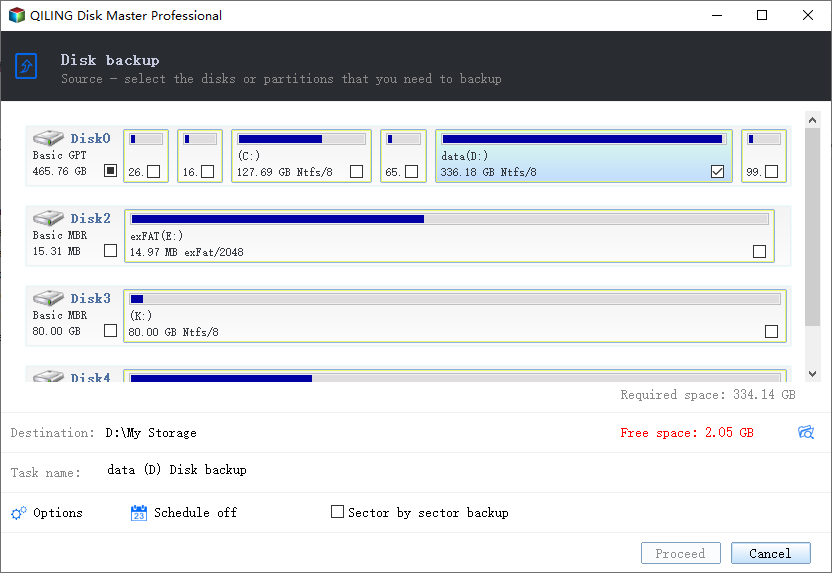
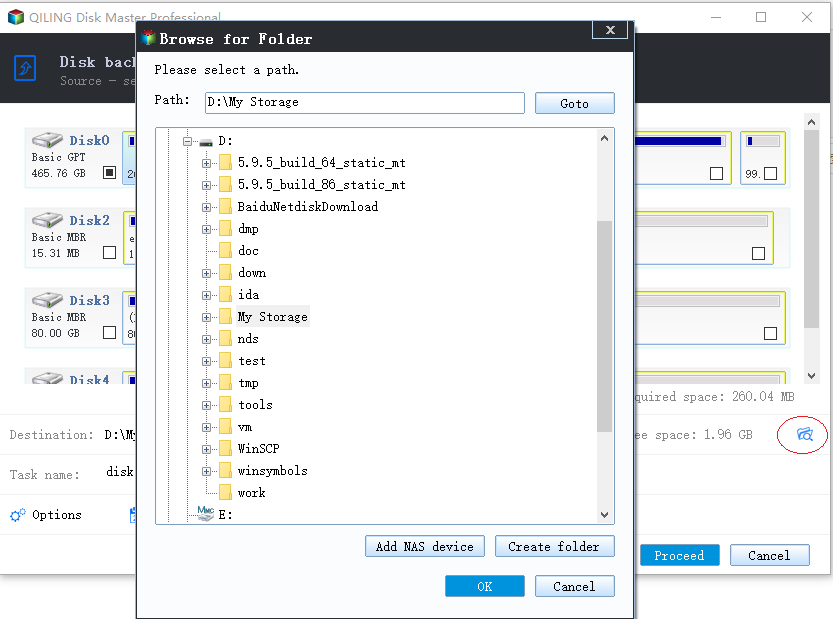
Step 3. To create a backup of your data, select the "Backup" option, then click "Browser" to choose the destination where you want to put the backup.
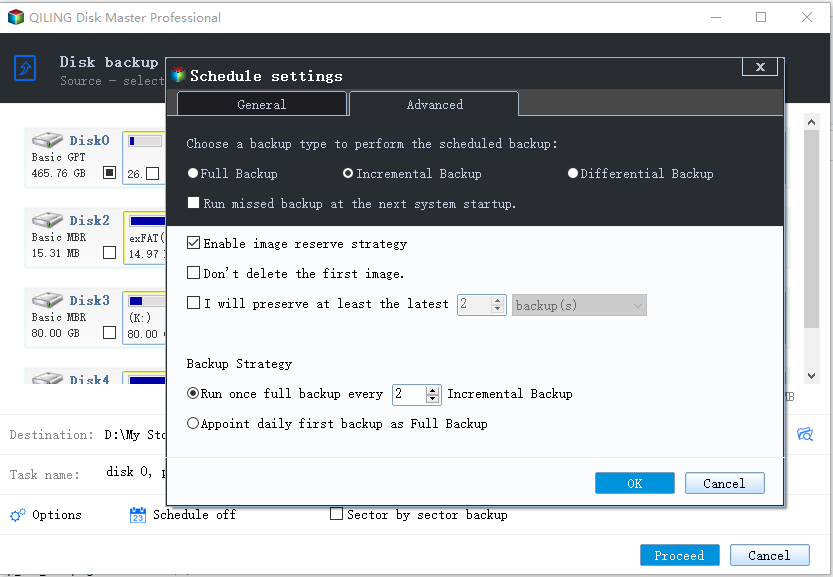
Step 4. You can customize your backup scheme by clicking "Schedule: Off". This allows you to adjust settings such as "Schedule", "Backup cleanup", and "Advanced Settings". To create a new schedule, click "New" under the "Schedule" catalog.
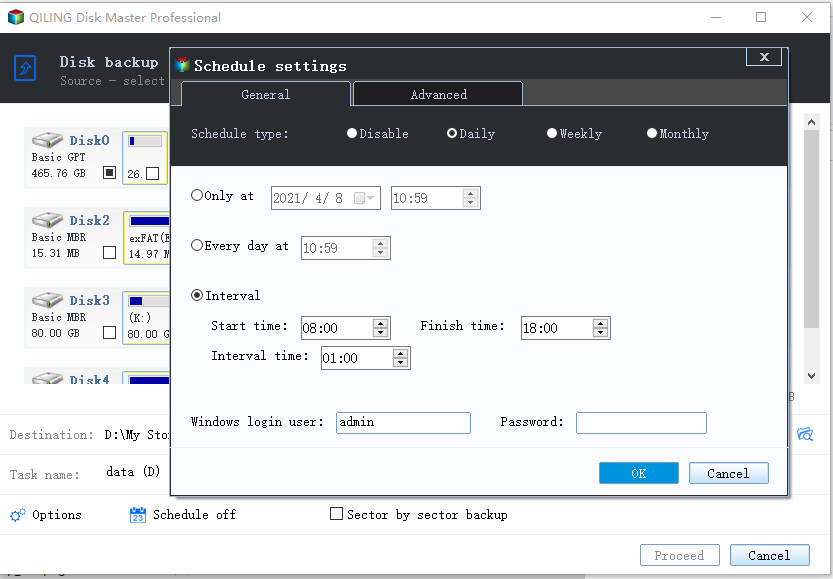
Then set the backup frequency based on your needs.
Step 5. Click "Backup options" on the bottom-left corner of the interface.
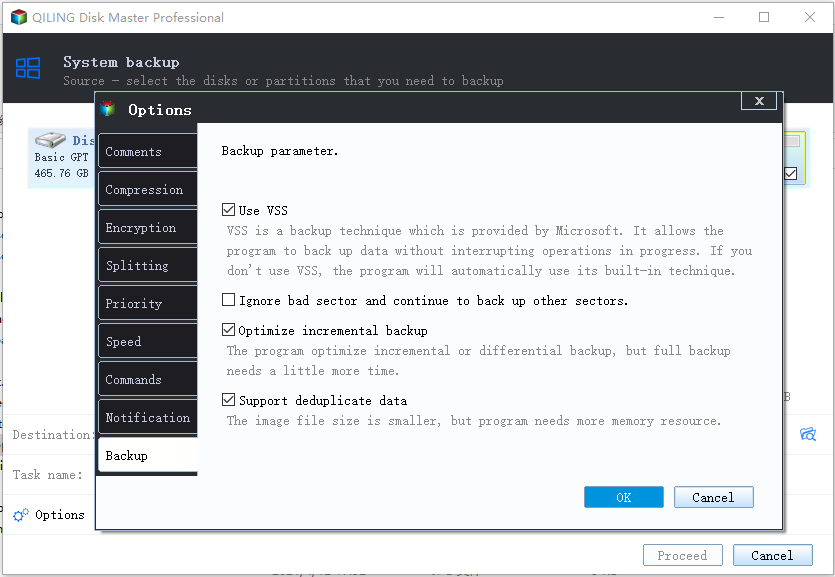
Here, you can customize various settings such as performance, encryption, and email notifications to suit your needs. Once you're done, click OK to return to the main interface.
Step 6. Once all settings are complete, click "Proceed" to initiate the system backup process.
Restoring a Windows Server with a Bare-Metal Backup
Now that we have created a backup of the drive, we can proceed with performing a Windows Server bare-metal recovery.
Here's how to perform a restore of your Windows server with bare metal recovery.
- Method 1. Restoring a Windows Server with Built-in Tool
- Method 2. Restoring a Windows Server with Qiling
Method 1. Restoring a Windows Server with Built-in Tool
To perform a Windows server backup for bare metal recovery, you'll need to create a backup of your server's operating system, applications, and data. This can be done using built-in tools like Windows Backup and System Restore, or third-party software such as Qiling.
Step 1. Insert the Windows Server installation disc into your new server.
Step 2. Select the language, time, and keyboard, and click "Next."
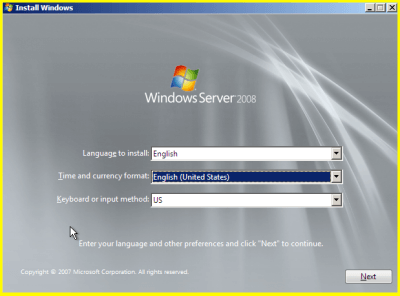
Step 3. Now, click "Repair your computer."
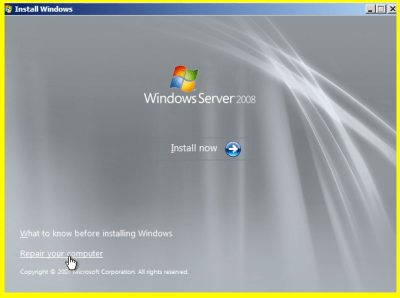
Step 4. Select an operating system to repair, and click "Next."
Step 5. Select "Windows Complete PC Restore."
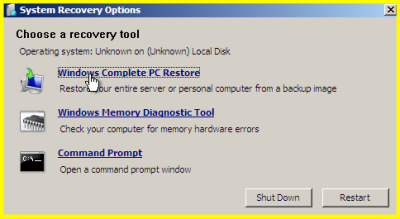
Step 6. Select the BMR backup image you want to restore and click "Next."
Step 7. To initiate the bare metal restore, click "Finish" once you have completed the necessary preparations. This process may take some time, depending on the size of the data being restored.
After completing the BMR process, you can boot your OS on the recovered machine. This process involves running a scripted set of commands to restore the system to a known good state, and it typically includes steps to remove any existing operating system, re-partition the disk, and install a new operating system.
Method 2. Restoring a Windows Server with Qiling
Qiling Server backup software is a trusted backup program used by major companies such as Microsoft, IBM, and NASA, with over 20,000 business customers, and has been backing up and recovering servers and PCs for over 18 years.
Unlike Windows' built-in backup tool, the Qiling Backup Enterprise solution simplifies the backup and recovery process by allowing users to back up or restore their PC or servers with just a few clicks.
Users can configure automatic backup schedules, both full and incremental, and save them locally or on the cloud.
Step 1. Launch Qiling Backup on your computer. Click on the "Recovery" button.
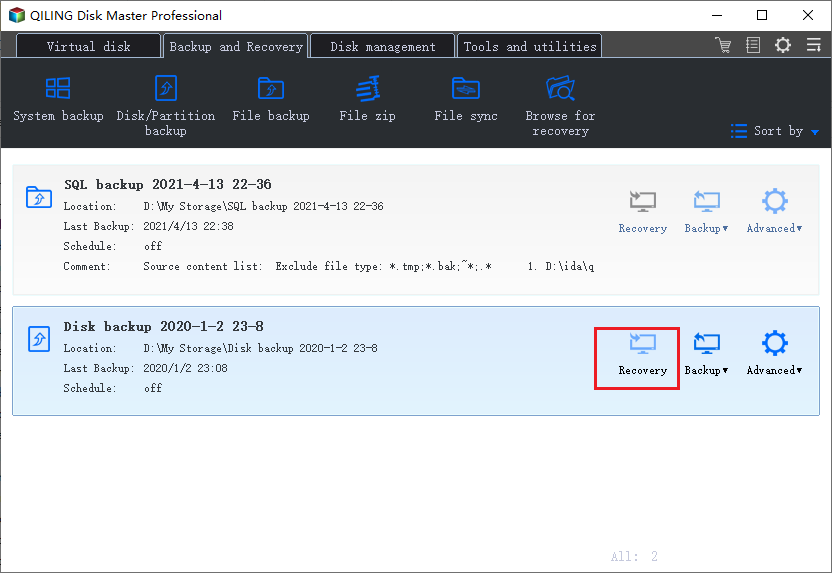
Step 2.Click the "Browse for recovery" button on the top bar.
Step 3. A recovery window will appear. Select the backup system you need to recover from and click "OK".
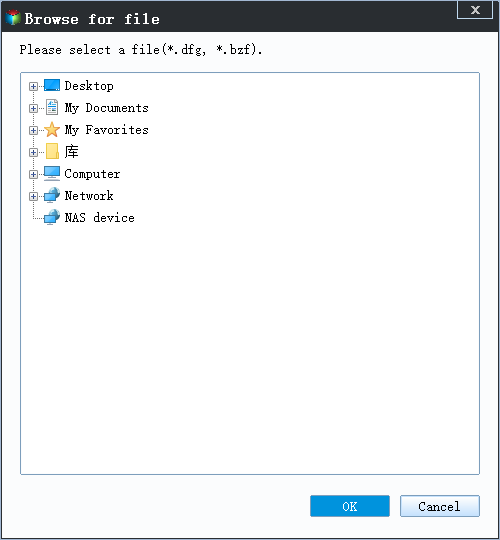
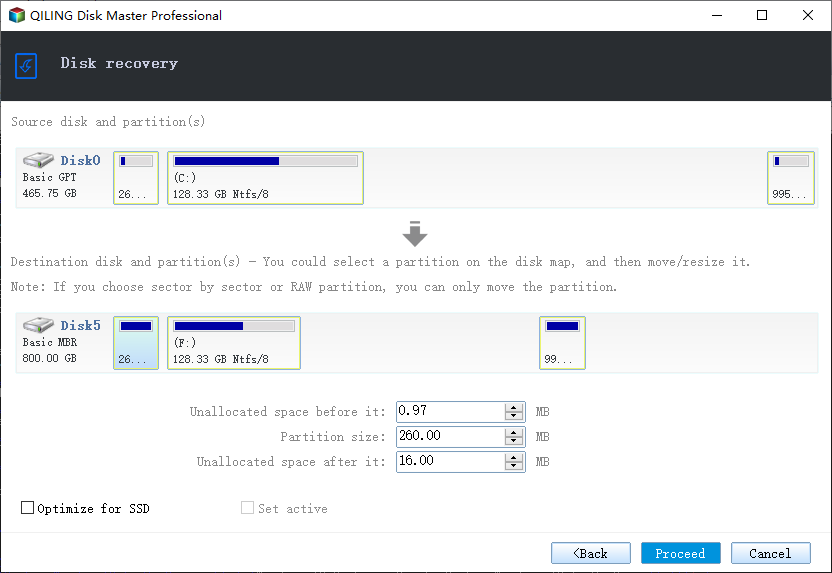
Step 4. Select a location to restore the backup to, then click Proceed to initiate the recovery process.
Final Verdict
The ability to restore a computer without an OS or programs installed is a powerful feature of bare metal recovery, allowing users to start from a clean slate and install a new operating system and programs on fresh hardware.
To make a bare metal backup, users will require a system image of the server, and it is recommended to back up their servers at least once every few weeks.
You can create a backup and perform a bare metal recovery using Windows built-in tools or the Qiling Backup Enterprise, a 3rd party tool that simplifies the process.
The Qiling Backup Enterprise offers a range of features beyond basic data backup and restoration, including cloud-based storage for seamless access to backups at any time.
Windows Server Backup Bare Metal Recovery FAQs
Bare metal recovery is a process of restoring a system to its original state, without any installed operating system or software. This is typically done in a controlled environment, such as a data center, where the hardware is not being used for any other purpose.
1. What type of backup is needed to perform a bare metal recovery?
A Windows server backup is needed.
2. How do I restore a Windows Server backup?
To restore a Windows Server backup, follow these steps: you can use the Windows Server Backup tool to select the backup you want to restore from, and then choose the recovery options, such as which computer or folder to restore. You can also use the Windows Server Backup console to browse and select the backup, and then choose the recovery options.
- Step 1. Go to "Windows Server Backup" and choose "Local Backup".
- Step 2. Open the Recovery Wizard by selecting "Recover..." in the Action section.
- Step 3. In "Getting Started," select the location from which you want to restore the data and click Next.
- Step 4. Select the date you want to restore the backup from under "Select Backup Date".
- Step 5. Select "Application" in the "Select Recovery Type" and click "Next."
- Step 6. Select "Exchange" in the "Applications" section of "Select Application"...
3. How does Windows Server backup bare metal recovery work?
If a user upgrades or replaces their hard drive, they can use the recovery media to perform a bare metal recovery, which involves removing existing partitions and recreating all partitions on the system disk.
Related Articles
- How to Automatically Clone A Hard Drive as A Backup for A PC
- Top 10 Best Exchange Backup Software for Exchange Server 2003 - 2019
- How to Backup and Restore Active Directory in Windows 2022/2019/2016?
- How to Auto Clone Hard Drive: The Solution to Free Your Hands
- How to Move Downloads Folder to Another Drive on Windows 10 or Windows 11
If you're running low on space in your C drive, you can move your Downloads folder to another drive in Windows 11/10. The steps to do this are outlined below. By relocating your Downloads folder, you can free up space on your C drive and make better use of storage on another drive. - How to Move Dropbox Folder in 2022 [Your Full Guide Is Here]
To move your Dropbox folder to a new location in 2022, follow these steps. First, open the Dropbox folder and locate the “Dropbox” folder inside, which contains all your files. Next, copy the contents of the Dropbox folder to the new location, and then delete the original Dropbox folder.
Products
Articles & Tutorials
- Data Recovery
- Data Backup
- File Recovery
- File Backup
- System Backup and Restore
- Disk and Partition Clone
- Technical articles
- Mobile articles
- Disk Master Help
- Windows Data Recovery Tutorials
- Windows Secure Delete Tutorials
- Windows Partition Management Tutorials
- Windows File Backup and Restore Tutorials
- Windows System Backup and Restore Tutorials
- Windows Disk Backup and Restore Tutorials
- Windows Clone Tutorials