Does a Disk Cache Help Video Conferencing?
When a call stutters, it is tempting to blame the drive. In practice a meeting application spends most of its time on the network and the graphics chip, and very little on disk reads.
This guide looks at what meeting software actually writes and reads, the narrow cases where a cache helps, and how to cut disk load so calls run smoothly regardless.
PAGE CONTENT
- What Meeting Software Does on Your Disk
- Where a Cache Actually Helps
- Where It Changes Nothing
- Reducing Disk Load During Calls
- Configure a Cache for Meeting Software
- FAQs About Caching and Video Conferencing
- Back Up Windows Before You Change Settings
What Meeting Software Does on Your Disk
- Live video and audio are not stored. Frames are encoded, sent, and discarded, so a call produces almost no disk traffic while it runs.
- The application itself is the disk load. The client binary, its libraries, and its caches are read at launch and kept in memory afterwards.
- Local recording is the exception. Saving a meeting writes a large continuous file, which is real disk activity.
- Chats, transcripts, and shared files are written, and those are small but regular writes throughout the meeting.
- Background effects use the GPU. Virtual backgrounds and noise suppression are processed in graphics or on the CPU, not on the drive.
Where a Cache Actually Helps
Yes, but around the meeting rather than during it:
- Launch time benefits. Opening the client reads the same files every time, and that is exactly the pattern a cache serves best.
- Switching between apps during a call benefits. If a busy call pushes memory pressure and the client gets paged out, a cache makes the re-read faster.
- Local recording benefits on the write side only indirectly. Deferred writes can smooth bursts, but the file still has to reach disk.
- Shared file access benefits. Downloading and reopening the same decks or documents in a meeting is repeat read traffic.
Where It Changes Nothing
- Call quality is a network and codec matter. Latency, jitter, and packet loss decide how a call feels, and no local cache touches any of them.
- Frame processing is a GPU job. A cache cannot render video, so background effects and screen sharing see no gain.
- Slow calls on a perfect SSD happen constantly. This is the general rule behind when caching does not help.
- Remote sessions follow the same logic. Screen data crosses the wire rather than the drive - see caching for remote desktop.
- More cache does not fix a bad connection. Check bandwidth, Wi-Fi signal, and VPN routing before touching storage.
Reducing Disk Load During Calls
- Close large background writes. A backup, a game download, or an update running during a call steals both disk and network bandwidth.
- Record locally only when you need to. Local recording writes a large file continuously, which competes with everything else on the drive.
- Keep enough memory free. If the client is paged out mid-call, the reload is where stuttering from storage can actually appear.
- Put recordings on a separate drive. Writing a meeting capture away from the system volume keeps the operating system responsive.
- Prefer a wired connection. Ethernet removes the largest single cause of call problems, and it costs less than any hardware upgrade.
Configure a Cache for Meeting Software
If meeting clients feel slow to start or sluggish after heavy multitasking, Qiling Fast Cache keeps their files in fast storage so launches stay quick under memory pressure.
Step 1. Install and open Qiling Fast Cache. On first run the task list is empty, which keeps the change easy to undo.
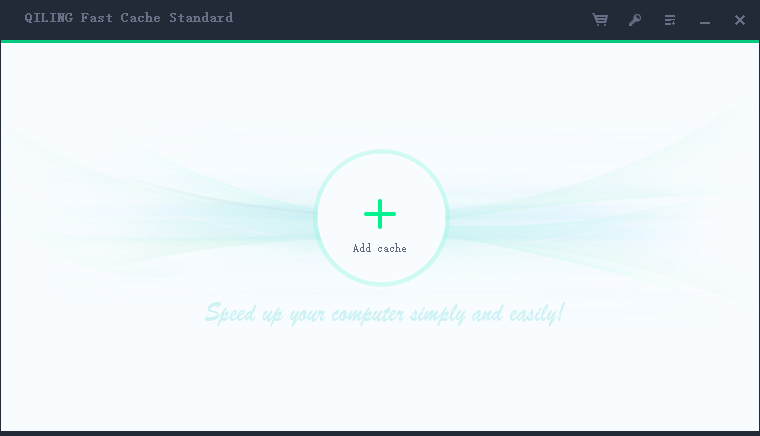
Step 2. Click the "+" button and select the drive where Windows and your meeting clients are installed.
Step 3. Choose the medium and size. Keep the cache modest on a laptop, where memory is shared with the call itself.
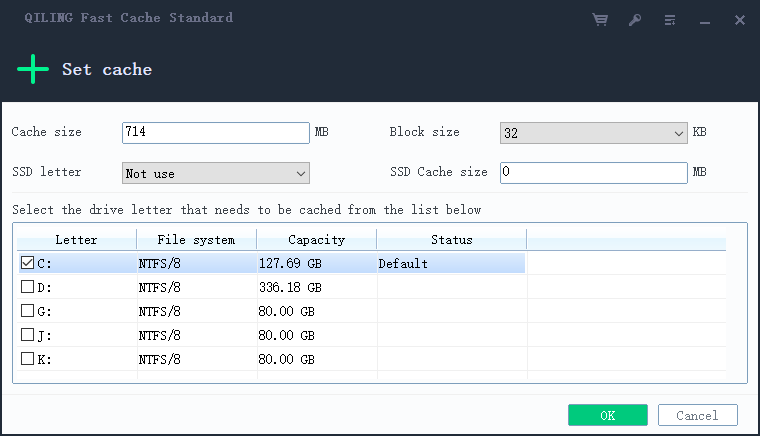
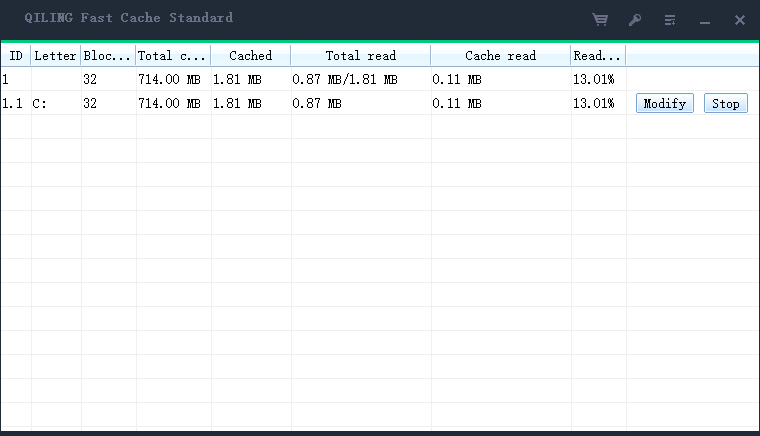
Step 4. Create the task, then time a client launch before and after. If call quality is the complaint, expect no change - that belongs to the network.
FAQs About Caching and Video Conferencing
Will a cache stop my calls from stuttering?
Almost never. Stuttering comes from the network, the codec, or the GPU, none of which a local file cache can improve.
Why does my meeting app start slowly?
It reads the same libraries and caches at every launch. That is a genuine read pattern, and a cache does shorten it.
Does local recording need a cache?
Not really. Recording is a long sequential write, and the destination drive's write speed sets the limit.
Do virtual backgrounds use the disk?
No. They are processed by the GPU or CPU in real time, so storage speed has no effect on them.
What should I check before adding a cache?
Bandwidth, packet loss, Wi-Fi signal, and whether a background backup or download is competing for the same resources.
Back Up Windows Before You Change Settings
Changing cache or power configuration is easy to reverse only if you have a recent image. Qiling Disk Master creates a full Windows backup you can restore from.
Part 1: Create a Full System Backup
Step 1. Install and open Qiling Disk Master. On the home screen, open "Backup and Recovery" and choose "System Backup". This option automatically includes Windows and the hidden boot partitions, so you do not have to select them one by one.
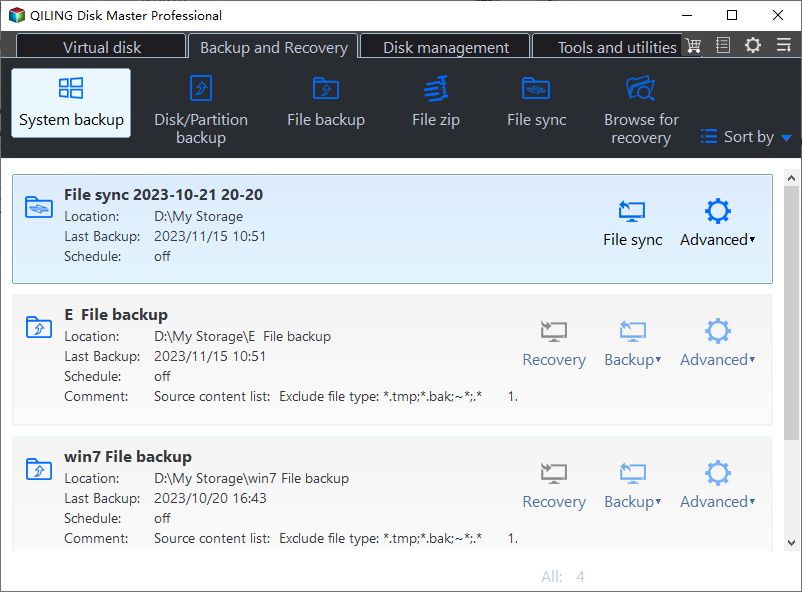
Step 2. Check the source. The disk where Windows is installed and its system partitions are already ticked for you. If you only need your personal documents, run a separate "File Backup" task instead.

Step 3. Click the destination box and choose where the image should be saved. Use an external HDD or SSD, a NAS, or any drive other than the one Windows is installed on, and make sure it has enough free space.
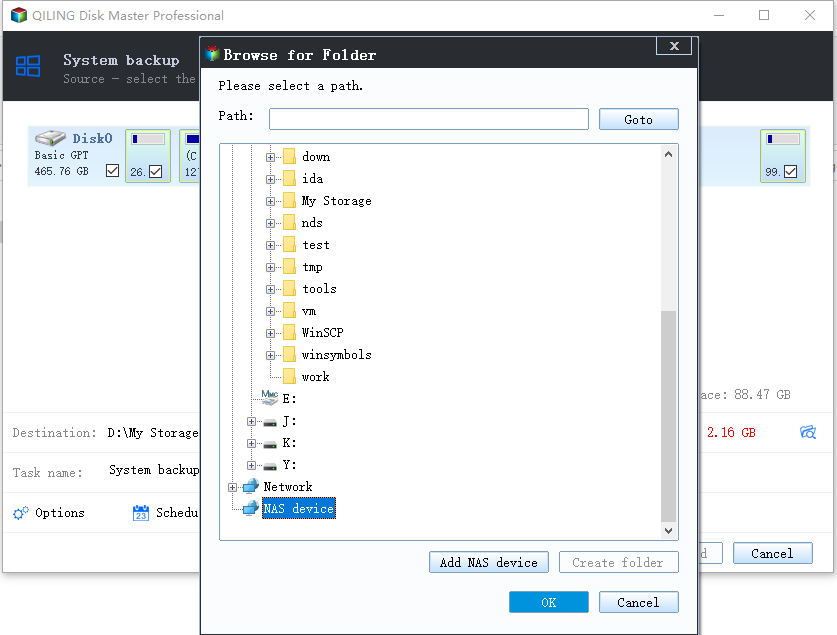
Step 4. Review the task summary and click "Proceed". Wait until the progress bar reaches 100%. Do not unplug the drive or turn off the PC while the backup is running.
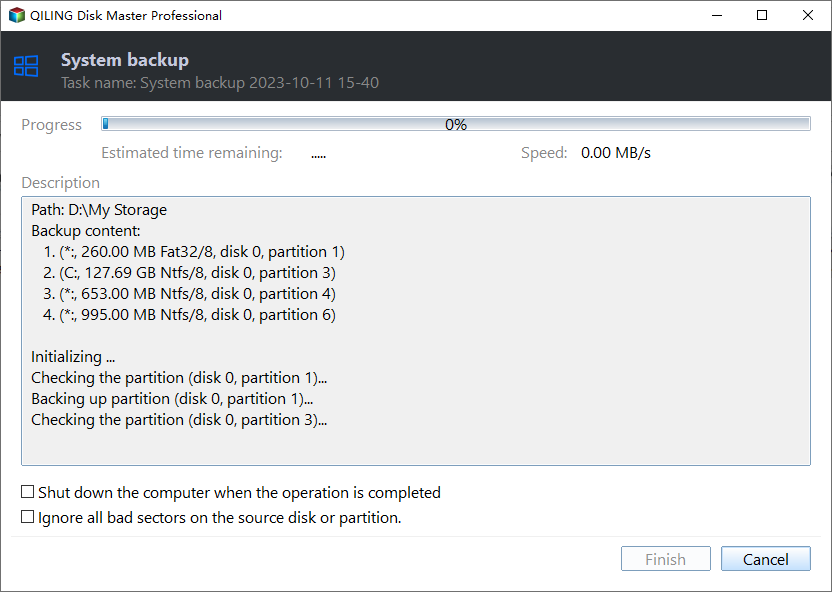
Part 2: Restore Windows from the Backup
Step 1. Open Qiling Disk Master again, go to "Backup and Recovery", and select the recovery option. Your backup images are listed, so pick the one you created before the changes began.
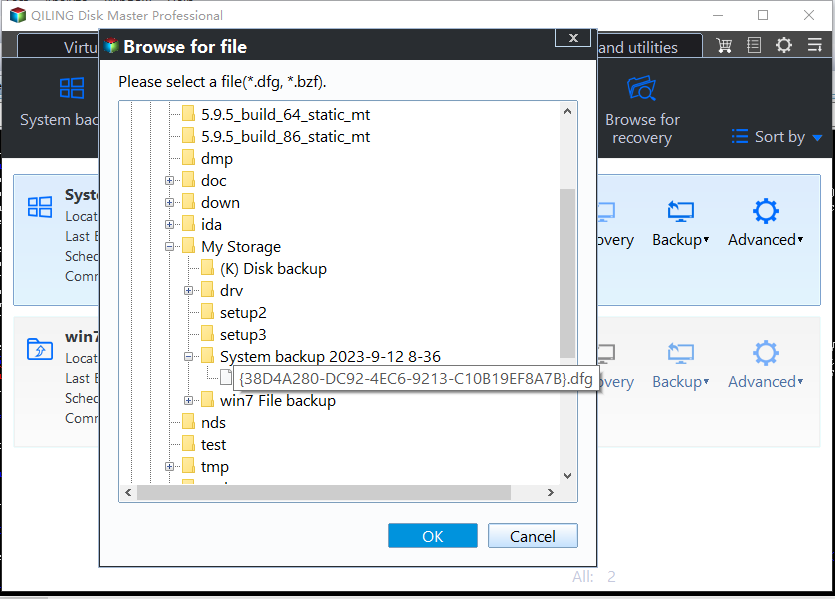
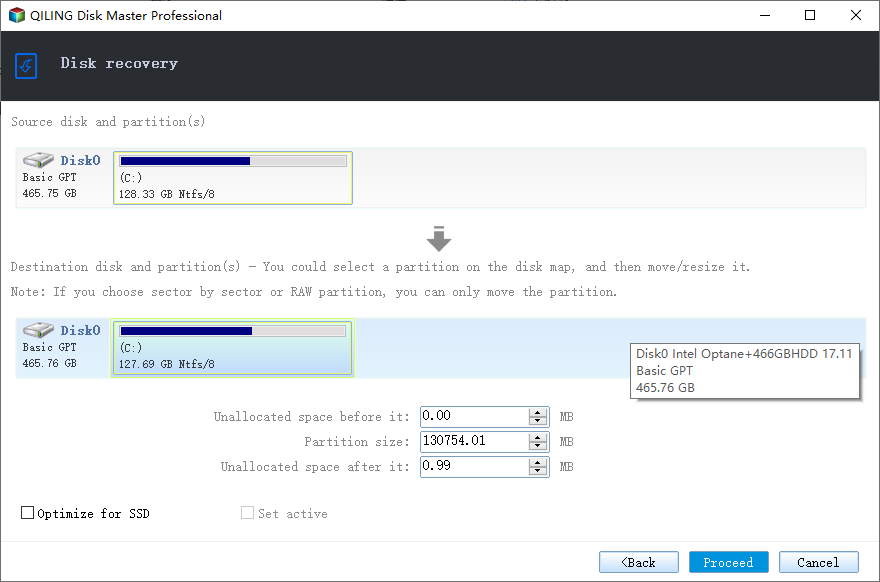
Step 2. Choose the target disk or partition. Normally you restore to the original system disk. If the drive was replaced, select the new disk instead, and the restore rebuilds Windows together with its boot partitions.
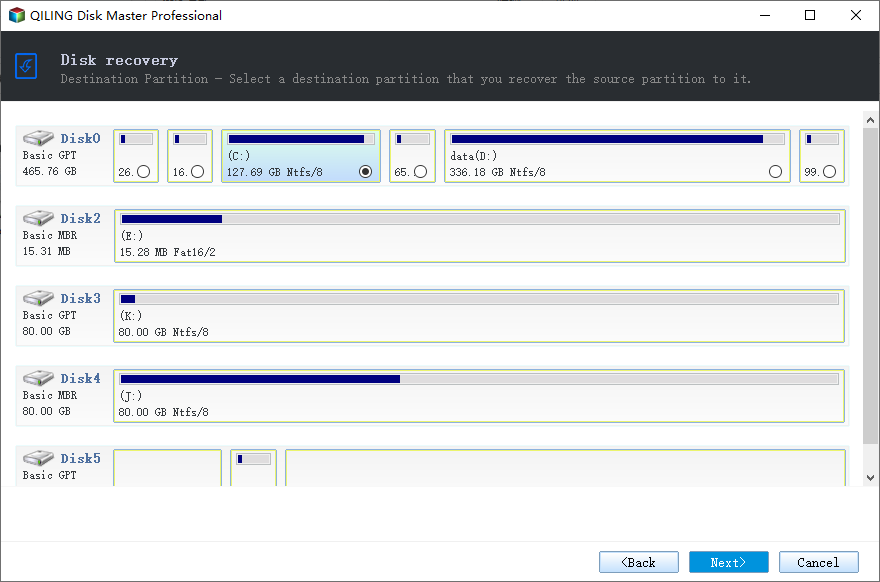
Step 3. Preview the restore plan, click "Proceed", and confirm the warning. The PC restarts to finish the job, and Windows comes back exactly as it was on the day the image was created, with your files and programs intact.
- Note
- Keep the backup image on a separate drive, and refresh it before changing storage cache settings.
Conclusion
Video conferencing is one of the clearest cases of a problem that has nothing to do with storage. Live audio and video are encoded, transmitted, and discarded; virtual backgrounds are rendered on the GPU; call quality is decided by latency, jitter, and packet loss. The disk enters the picture only around the meeting - launching the client, reopening shared documents, writing chat and transcripts, and saving a local recording - and some of those are genuine read or write workloads. So a cache can make meeting software feel quicker to start and less sluggish after heavy multitasking, but it will never fix a bad connection. Close large background writes, keep memory free, and wire the connection before you look at the drive.
Protect your PC with Qiling Backup—create a system image before your next round of settings changes.
For more Windows 11 performance guides, see Cache vs Buffer, How to Check Cache Hit Rate, Caching and Cloud Sync Clients, What Are L1 and L2 Cache?, and GPU Shader Cache Explained.
Related Articles
- Does a Disk Cache Help When Cloning a Disk?
Another job where the bottleneck sits outside the cache entirely. - Does a Disk Cache Help Data Recovery Scans?
- SSD SLC Cache vs Software Disk Cache: What's the Difference?
- Does a Disk Cache Work on iSCSI and Network Storage?
- Caching for Backup and Imaging Software Explained
Products
Articles & Tutorials
- Data Recovery
- Data Backup
- File Recovery
- File Backup
- System Backup and Restore
- Disk and Partition Clone
- Technical articles
- Mobile articles
- Disk Master Help
- Windows Data Recovery Tutorials
- Windows Secure Delete Tutorials
- Windows Partition Management Tutorials
- Windows File Backup and Restore Tutorials
- Windows System Backup and Restore Tutorials
- Windows Disk Backup and Restore Tutorials
- Windows Clone Tutorials