Windows 11 File Explorer Tabs: Open Folders in Tabs
File Explorer tabs bring the tabbed browsing idea to Windows file management. Instead of opening a separate window for each folder you need, you can open them as tabs inside one Explorer window and switch between them with a click or a keyboard shortcut. It keeps your taskbar clean and makes moving files between folders much faster.
The feature arrived in Windows 11 2022 Update and is now part of every current release. This guide shows how to open and close tabs, rearrange them, use the keyboard shortcuts, move files between tabs, and fix the tabs when they disappear.
PAGE CONTENT
- What File Explorer Tabs Do
- Open a New Tab
- Switch, Close, and Rearrange Tabs
- Move Files Between Tabs
- Useful Keyboard Shortcuts
- Fix Tabs Not Showing
- FAQs About File Explorer Tabs
- Back Up Windows Before You Change Settings
What File Explorer Tabs Do
Before tabs, comparing two folders meant opening two Explorer windows and juggling them on the taskbar. With tabs, both folders live in the same window, separated by a row of clickable labels at the top. You can open as many tabs as you like and switch between them instantly.
The key advantages are:
- Fewer windows — one Explorer window holds several folders, so the taskbar stays tidy
- Faster switching — click a tab or press Ctrl + Tab instead of finding another window
- Easier file moves — drag a file from one tab onto another to copy or move it between folders
- Tab context menu — right-click a tab to close it, close the others, or copy the folder path
Tabs work in every File Explorer window, including This PC, Quick Access, and network locations. Each tab remembers its own view settings, sort order, and scroll position.
Open a New Tab
There are several ways to open a new tab, and you can choose the one that suits the situation.
Method 1: The plus button
Step 1. Open File Explorer.
Step 2. Click the plus icon on the tab bar, to the right of the current tab. A new tab opens showing the same folder as the current one.
Method 2: Keyboard shortcut
Step 1. Press Ctrl + T. This is the same shortcut used in most browsers, so it is easy to remember.
Step 2. A new tab opens. Navigate to the folder you want.
Method 3: Open a folder in a new tab
Step 1. In the current folder, hold down Ctrl and click a subfolder. It opens in a new tab instead of replacing the current view.
Step 2. You can also middle-click a folder with the mouse wheel to open it in a new tab.
Method 4: Open a drive in a new tab
Step 1. Go to This PC.
Step 2. Hold Ctrl and click a drive, or middle-click it. The drive opens in a new tab.
- Note
- A new tab always starts in the same folder as the active tab. From there you can use the address bar, the navigation pane, or the back and forward buttons to go elsewhere.
Switch, Close, and Rearrange Tabs
Once you have several tabs open, managing them is straightforward.
To switch tabs:
Step 1. Click the tab you want to view.
Step 2. Or press Ctrl + Tab to move to the next tab, and Ctrl + Shift + Tab to move to the previous one.
To close a tab:
Step 1. Click the small X on the right edge of the tab. The X appears when you hover over the tab.
Step 2. Or press Ctrl + W to close the active tab.
Step 3. Or middle-click the tab with the mouse wheel.
To rearrange tabs:
Step 1. Click and hold a tab.
Step 2. Drag it left or right along the tab bar. A marker shows where it will land.
Step 3. Release the mouse. The tab drops into the new position.
Tab context menu:
Right-click any tab to see options including Close, Close other tabs, Close tabs to the right, and Copy address. Close other tabs is handy when you have finished with everything except one folder.
Move Files Between Tabs
Moving or copying files between two folders is where tabs really save time, because both folders are visible in the same window.
To copy a file:
Step 1. Open the source folder in one tab and the destination folder in another.
Step 2. Click and hold the file in the source tab.
Step 3. Drag it onto the destination tab. Wait a moment for that tab to become active.
Step 4. Drop the file in the destination folder. By default, dragging between drives copies the file; dragging within the same drive moves it. Hold Ctrl to force a copy, or Shift to force a move.
To move with cut and paste:
Step 1. In the source tab, select the file and press Ctrl + X to cut, or Ctrl + C to copy.
Step 2. Switch to the destination tab.
Step 3. Press Ctrl + V to paste.
You can also select multiple files at once before dragging or cutting, which is faster than moving them one by one.
Useful Keyboard Shortcuts
File Explorer tabs use the same shortcuts as most modern browsers, so they feel familiar immediately.
- Ctrl + T — open a new tab
- Ctrl + W — close the current tab
- Ctrl + Tab — switch to the next tab
- Ctrl + Shift + Tab — switch to the previous tab
- Ctrl + 1 to Ctrl + 8 — jump directly to the first through eighth tab
- Ctrl + 9 — jump to the last tab
These shortcuts work anywhere in File Explorer as long as the window is active. If you use a browser every day, your fingers already know most of them.
Fix Tabs Not Showing
If the tab bar does not appear, it is usually because Windows is out of date or the Explorer process needs a restart.
The tab bar is missing.
Step 1. Confirm you are on Windows 11 2022 Update or later. Go to Settings > System > About and check the version. Tabs are not available on Windows 10.
Step 2. Install the latest Windows updates. Tabs were added in a cumulative update, so an older build may not have them.
Step 3. Restart Windows Explorer. Open Task Manager, find Windows Explorer, right-click it, and choose Restart. The taskbar flashes and Explorer reloads with tabs restored.
New tabs do not open.
Step 1. Check that the plus button is present on the tab bar. If it is not, restart Explorer as above.
Step 2. Try the keyboard shortcut Ctrl + T. If it works but the button does not, the issue is visual and a restart should fix it.
Tabs open but crash or freeze.
Step 1. Close all Explorer windows and open a fresh one.
Step 2. Run a system file check. Open Command Prompt as administrator and type sfc /scannow, then press Enter. This repairs corrupted system files that can affect Explorer.
FAQs About File Explorer Tabs
How many tabs can I open?
There is no hard limit, but performance may slow down with a very large number. Most people keep fewer than a dozen open at once.
Can I save a set of tabs for later?
File Explorer does not have a built-in "save tabs" feature. You can pin frequently used folders to Quick Access instead, which gives you one-click access without keeping tabs open.
Do tabs work in all folders?
Yes, including This PC, network drives, and external storage. Each tab is an independent Explorer view with its own navigation history.
Can I drag a tab out into a separate window?
No. Unlike browser tabs, Explorer tabs cannot be torn off into a new window. To view two folders side by side, open a second Explorer window or use Snap Layouts.
Why is Ctrl + T not opening a new tab?
Make sure the File Explorer window is active. The shortcut only works inside Explorer; if another app is focused, Ctrl + T may do something different or nothing at all.
Back Up Windows Before You Change Settings
File Explorer tabs are a safe feature, but if you are also updating Windows, changing folder options, or repairing system files, a backup protects your data. Qiling Disk Master creates a full system image you can restore from if anything goes wrong.
Part 1: Create a Full System Backup
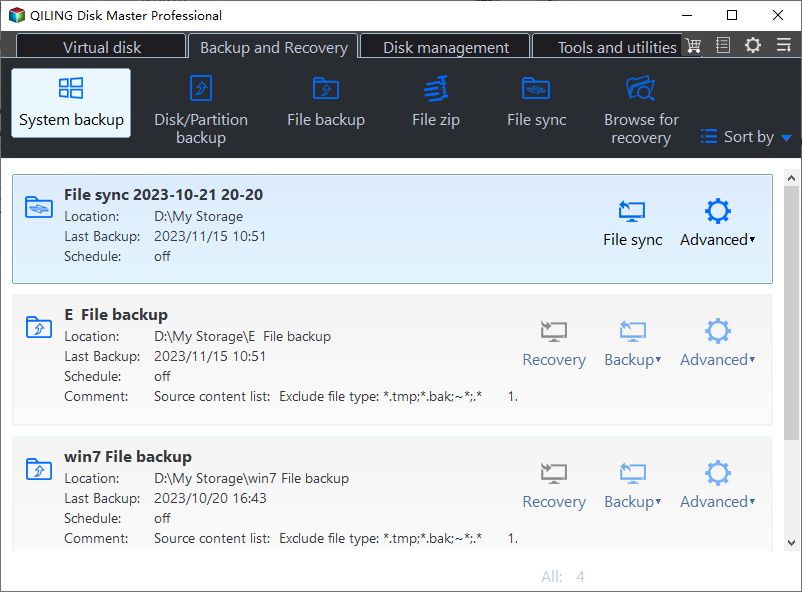
Step 1. Install and open Qiling Disk Master. On the home screen, open "Backup and Recovery" and choose "System Backup". This option automatically includes Windows and the hidden boot partitions, so you do not have to select them one by one.
Step 2. Check the source. The disk where Windows is installed and its system partitions are already ticked for you. If you only need your personal documents, run a separate "File Backup" task instead.

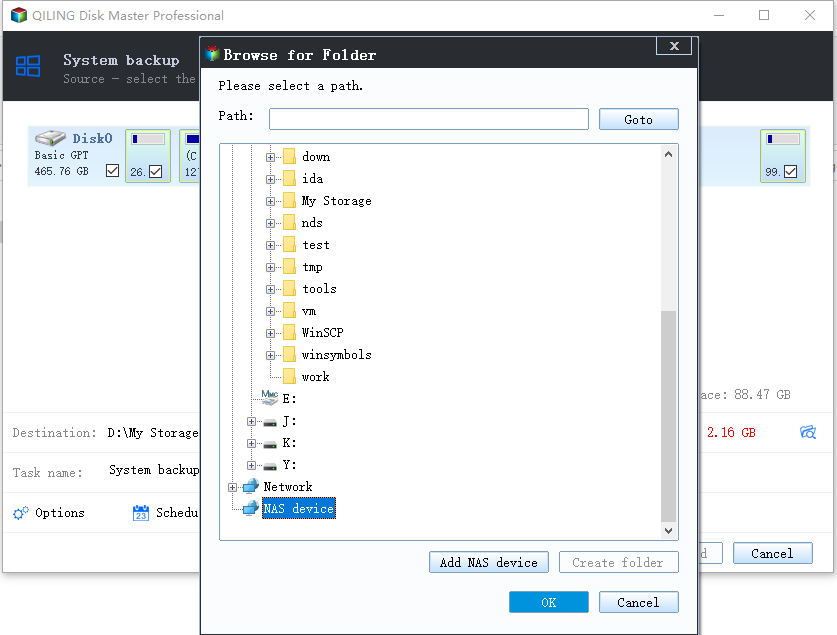
Step 3. Click the destination box and choose where the image should be saved. Use an external HDD or SSD, a NAS, or any drive other than the one Windows is installed on, and make sure it has enough free space.
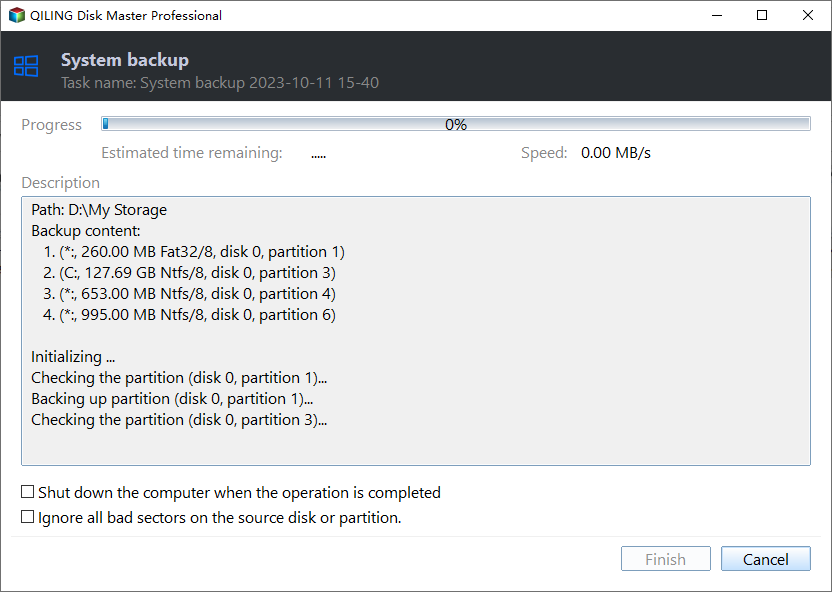
Step 4. Review the task summary and click "Proceed". Wait until the progress bar reaches 100%. Do not unplug the drive or turn off the PC while the backup is running.
Part 2: Restore Windows from the Backup
Step 1. Open Qiling Disk Master again, go to "Backup and Recovery", and select the recovery option. Your backup images are listed, so pick the one you created before the changes began.
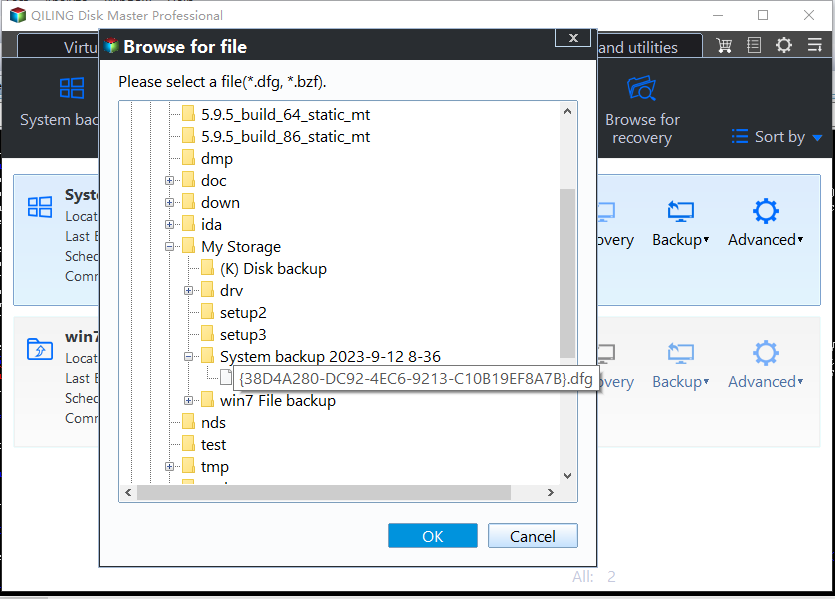
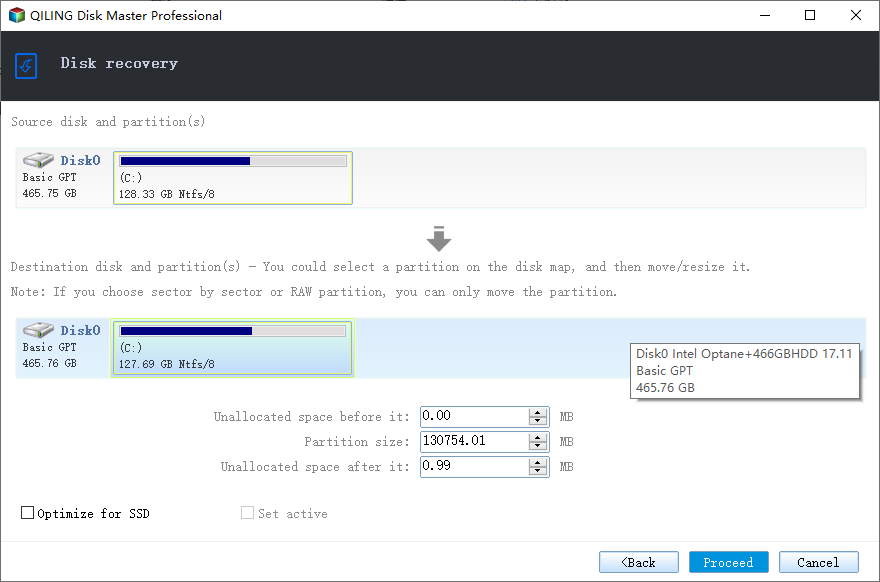
Step 2. Choose the target disk or partition. Normally you restore to the original system disk. If the drive was replaced, select the new disk instead, and the restore rebuilds Windows together with its boot partitions.
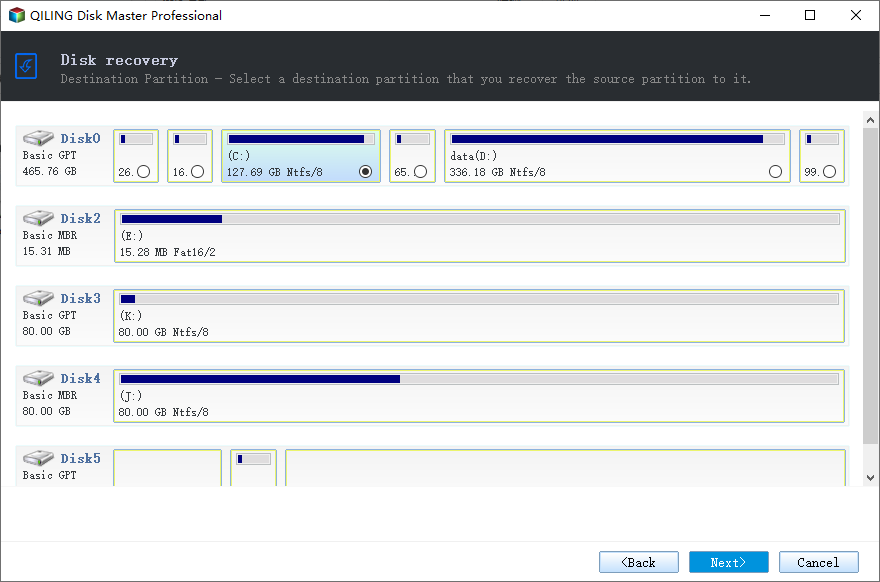
Step 3. Preview the restore plan, click "Proceed", and confirm the warning. The PC restarts to finish the job, and Windows comes back exactly as it was on the day the image was created, with your files and programs intact.
- Note
- Keep the backup image on a separate drive, and refresh it before installing Windows updates or repairing system files.
Conclusion
File Explorer tabs let you keep several folders open in a single window, which keeps the taskbar clean and makes moving files between folders much faster. Open a new tab with the plus button or Ctrl + T, switch tabs with Ctrl + Tab, and close them with Ctrl + W or a middle-click. Drag files from one tab onto another to copy or move them, and use the tab context menu to close other tabs in one go. If the tab bar disappears, update Windows and restart Windows Explorer from Task Manager.
Protect your PC with Qiling Backup—create a system image before your next round of settings changes.
For more file and window management tips, see Windows 11 Snap Layouts, Windows File Explorer Not Responding, Fix Windows 11 Taskbar Not Working, How to Split Your Screen on Windows, and Windows 11 God Mode.
Related Articles
- Windows 11 Snap Layouts: Arrange Windows with One Click
Use Snap Layouts to view two Explorer windows side by side when tabs are not enough. - Fix File Explorer Not Responding in Windows 11
If Explorer freezes or tabs stop responding, this guide helps you restart and repair it. - Fix Windows 11 Taskbar Not Working
- Windows 11 God Mode: How to Create the Master Control Panel
- Windows 11 Guide: Features, Upgrade Tips and What to Know
Products
Articles & Tutorials
- Data Recovery
- Data Backup
- File Recovery
- File Backup
- System Backup and Restore
- Disk and Partition Clone
- Technical articles
- Mobile articles
- Disk Master Help
- Windows Data Recovery Tutorials
- Windows Secure Delete Tutorials
- Windows Partition Management Tutorials
- Windows File Backup and Restore Tutorials
- Windows System Backup and Restore Tutorials
- Windows Disk Backup and Restore Tutorials
- Windows Clone Tutorials