Fix Windows 11 Printer Not Working (2026 Guide)
A printer is essential for printing documents, photos, and forms at home or in the office. When Windows 11 printer stops working—it won't connect, shows offline, or won't print—it can disrupt your work and daily tasks.
This guide covers 9 proven solutions to fix printer issues in Windows 11.
PAGE CONTENT
- Common Windows 11 Printer Problems
- Fix 1: Check Physical Connections
- Fix 2: Run the Printer Troubleshooter
- Fix 3: Set Printer as Default and Online
- Fix 4: Restart the Print Spooler Service
- Fix 5: Update or Reinstall Printer Drivers
- Fix 6: Remove and Re-add the Printer
- Fix 7: Check for Windows Updates
- Fix 8: Run SFC and DISM Scans
- Fix 9: Clear Print Spooler Queue
- FAQs About Windows 11 Printer Issues
- Back Up and Restore Windows with Qiling Disk Master
Common Windows 11 Printer Problems
Users report various printer issues in Windows 11:
- Printer won't connect to the PC (USB or Wi-Fi)
- Printer shows as "Offline" or "Not Connected"
- Print jobs get stuck in the queue and never print
- Printer not detected by Windows 11
- "Printer not responding" error message
- Printer prints blank pages or garbled text
- Network printer not found after Windows update
- Printer driver unavailable or incompatible
- Note
- Most printer issues are caused by loose connections, the Print Spooler service crashing, outdated drivers, or problematic Windows updates. The fixes below address all these causes.
Fix 1: Check Physical Connections
First, check the physical connections between your printer and PC.
For USB Printers
Step 1. Make sure the USB cable is securely connected to both the printer and the PC.
Step 2. Try a different USB port (preferably a USB 2.0 port instead of USB 3.0 if you're having issues).
Step 3. Try a different USB cable if available.
Step 4. Make sure the printer is powered on and has no error lights (paper jam, low ink, etc.).
For Network Printers (Wi-Fi or Ethernet)
Step 1. Make sure the printer is connected to the same Wi-Fi network as your PC.
2. Check the printer's network status on its control panel.
Step 3. Restart the printer and your router.
Step 4. Try pinging the printer's IP address from your PC to check connectivity.
Fix 2: Run the Printer Troubleshooter
Windows 11 has a built-in printer troubleshooter that can automatically detect and fix common printer issues.
Step 1. Press Win + I to open Settings.
Step 2. Go to "System" > "Troubleshoot" > "Other troubleshooters".
Step 3. Find "Printer" and click "Run".
Step 4. The troubleshooter will ask you to select your printer. Choose it and click "Next".
Step 5. Wait for the troubleshooter to scan for issues. It will try to fix them automatically.
Step 6. After it completes, check if the printer works.
Fix 3: Set Printer as Default and Online
If your printer shows as offline or isn't the default printer, Windows might be sending print jobs to the wrong device.
Step 1. Press Win + I to open Settings.
Step 2. Go to "Bluetooth & devices" > "Printers & scanners".
Step 3. Find your printer and click it.
Step 4. Click "Set as default" to make it the default printer.
Step 5. Click "Open print queue" and make sure the printer is not set to "Use Printer Offline". If it is, click "Printer" > uncheck "Use Printer Offline".
Step 6. Also click "Printer" > uncheck "Pause Printing" if it's checked.
Fix 4: Restart the Print Spooler Service
The Print Spooler service manages all print jobs. If it's crashed or stopped, your printer won't work.
Step 1. Press Win + R, type services.msc, and press Enter.
Step 2. Scroll down and find "Print Spooler".
Step 3. Right-click and select "Properties".
Step 4. Set "Startup type" to "Automatic".
Step 5. Under "Service status", if it shows "Stopped", click "Start". If it shows "Running", click "Stop" then "Start" to restart it.
Step 6. Click "OK" and test the printer.
Fix 5: Update or Reinstall Printer Drivers
Outdated or corrupted printer drivers are a common cause of printer issues. Updating or reinstalling them usually fixes the problem.
Update Printer Drivers
Step 1. Press Win + X and select "Device Manager".
Step 2. Expand "Printers" or "Print queues".
Step 3. Right-click your printer and select "Update driver".
Step 4. Choose "Search automatically for drivers" and follow the prompts.
Step 5. Alternatively, download the latest driver from the printer manufacturer's website (HP, Canon, Epson, Brother, etc.).
Reinstall Printer Drivers
Step 1. In Device Manager, expand "Printers" or "Print queues".
Step 2. Right-click your printer and select "Uninstall device".
Step 3. Click "Uninstall".
Step 4. Restart your PC. Windows will automatically reinstall the printer driver.
Step 5. If it doesn't, go to Settings > Bluetooth & devices > Printers & scanners > Add device to re-add the printer.
Fix 6: Remove and Re-add the Printer
If your printer is connected but won't print, try removing and re-adding it.
Step 1. Press Win + I > "Bluetooth & devices" > "Printers & scanners".
Step 2. Find your printer and click it.
Step 3. Click "Remove" > "Yes" to confirm.
Step 4. Restart your PC.
Step 5. Go back to "Printers & scanners" and click "Add device".
Step 6. Windows will search for available printers. Select your printer and follow the prompts to add it.
Step 7. For network printers, click "Add manually" if Windows doesn't find it, and enter the printer's IP address or hostname.
Fix 7: Check for Windows Updates
Microsoft regularly releases printer driver updates through Windows Update. Make sure your Windows 11 is up to date.
Step 1. Press Win + I to open Settings.
Step 2. Go to "Windows Update" > "Check for updates".
Step 3. Install any available updates, including optional driver updates.
Step 4. If a recent update caused the printer issue, uninstall it: go to "Update history" > "Uninstall updates" and remove the most recent update.
Fix 8: Run SFC and DISM Scans
Corrupted system files can cause printer issues. Run SFC and DISM to repair them.
Step 1. Press Win + X and select "Windows Terminal (Admin)".
Step 2. Run DISM:
DISM /Online /Cleanup-Image /RestoreHealth
Step 3. Run SFC:
sfc /scannow
Step 4. Wait for both scans to complete. If corrupted files are found and repaired, restart your PC.
Fix 9: Clear Print Spooler Queue
If print jobs are stuck in the queue and won't print, clearing the spooler queue can help.
Step 1. Press Win + R, type services.msc, and press Enter.
Step 2. Find "Print Spooler" and right-click > "Stop".
Step 3. Press Win + R, type %WINDIR%\system32\spool\PRINTERS, and press Enter.
Step 4. Delete all files in the folder (don't delete the folder itself).
Step 5. Go back to Services, right-click "Print Spooler" and select "Start".
6. Try printing again.
FAQs About Windows 11 Printer Issues
Why is my printer not working in Windows 11?
Common causes include loose connections, the Print Spooler service crashing, outdated drivers, or a problematic Windows update. Check physical connections first, then restart the Print Spooler service.
Why does my printer show as offline?
A printer can show as offline if it's not properly connected, if "Use Printer Offline" is checked in the print queue, or if the printer is turned off. Go to Settings > Bluetooth & devices > Printers & scanners, click your printer, open the print queue, and make sure "Use Printer Offline" is unchecked.
How do I fix print jobs stuck in the queue?
Restart the Print Spooler service: open services.msc, stop the "Print Spooler" service, delete all files in %WINDIR%\system32\spool\PRINTERS, then start the service again.
Why is my printer not detected by Windows 11?
Make sure the printer is connected via USB or Wi-Fi, turned on, and on the same network as your PC. Try a different USB port or cable. For network printers, try adding it manually by IP address.
How do I add a network printer in Windows 11?
Go to Settings > Bluetooth & devices > Printers & scanners > Add device. Windows will search for available printers. If it doesn't find yours, click "Add manually" and enter the printer's IP address or hostname.
Back Up and Restore Windows with Qiling Disk Master
Before you clear the print queue, reinstall the printer driver, or reset the Print Spooler, create a full system backup. Driver and service changes are the usual cure for a dead printer, and a system image lets you undo all of them in minutes if printing gets worse. Qiling Disk Master handles both the backup and the restore.
Part 1: Create a Full System Backup
Step 1. Install and open Qiling Disk Master. On the home screen, open "Backup and Recovery" and choose "System Backup". This option automatically includes Windows and the hidden boot partitions, so you do not have to select them one by one.
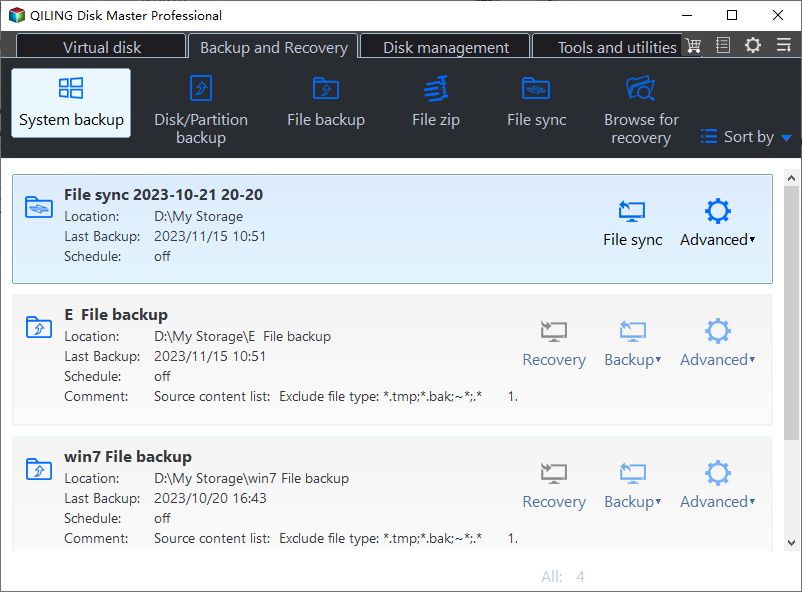
Step 2. Check the source. The disk where Windows is installed and its system partitions are already ticked for you. If you only need your personal documents, run a separate "File Backup" task instead.

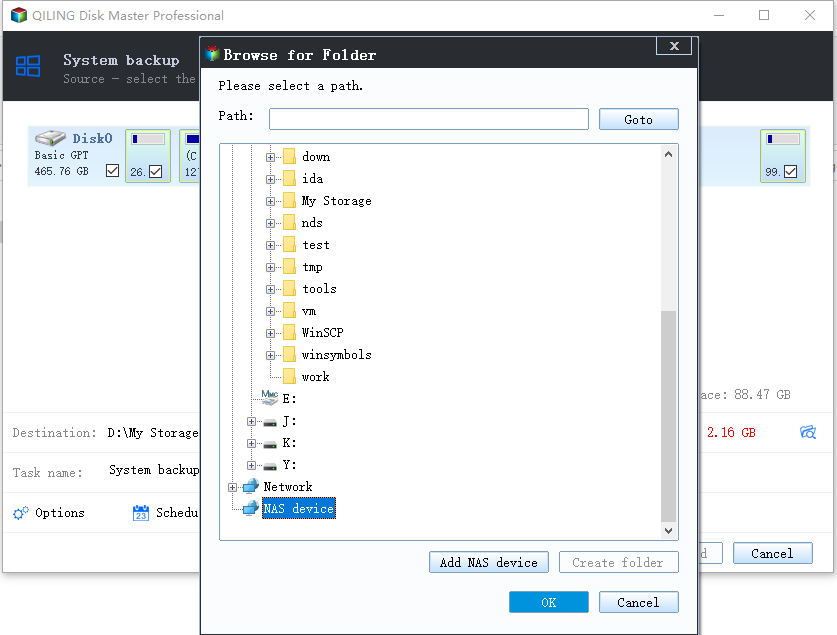
Step 3. Click the destination box and choose where the image should be saved. Use an external HDD or SSD, a NAS, or any drive other than the one you are about to repair, and make sure it has enough free space.
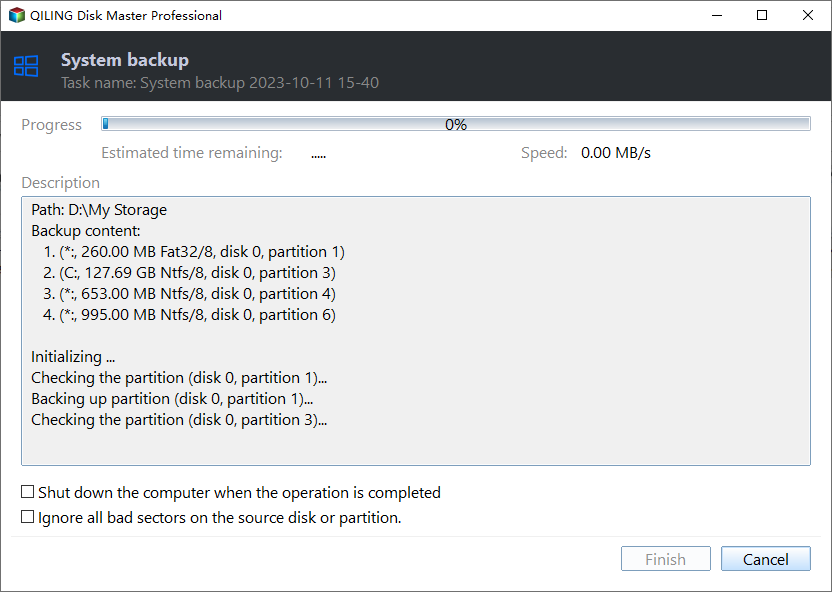
Step 4. Review the task summary and click "Proceed". Wait until the progress bar reaches 100%. Do not unplug the drive or turn off the PC while the backup is running.
Part 2: Restore Windows from the Backup
Step 1. Open Qiling Disk Master again, go to "Backup and Recovery", and select the recovery option. Your backup images are listed, so pick the one you created before the repair.
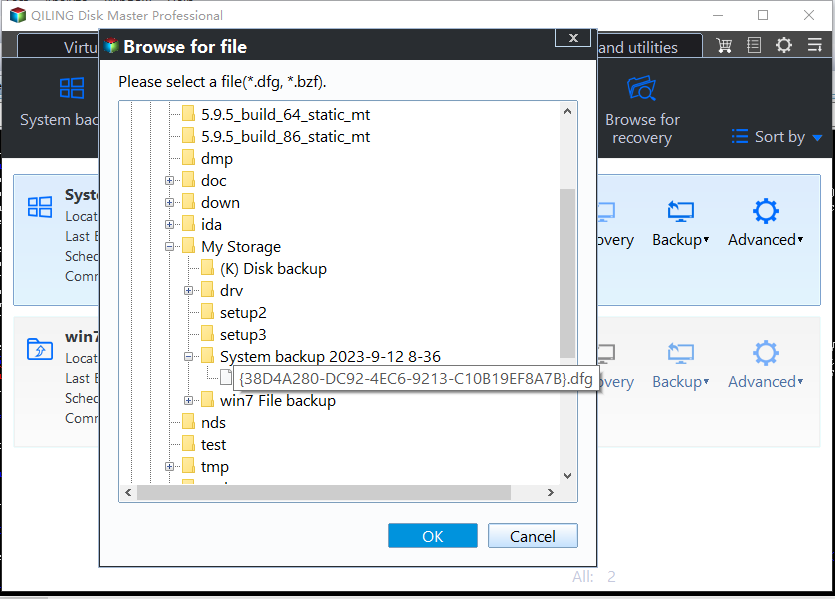
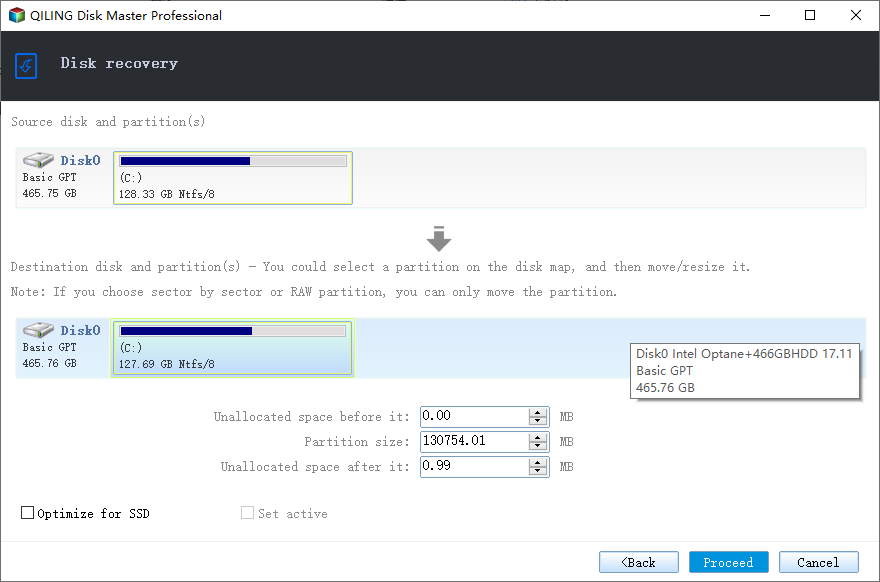
Step 2. Choose the target disk or partition. Normally you restore to the original system disk. If the drive was replaced, select the new disk instead, and the restore rebuilds Windows together with its boot partitions.
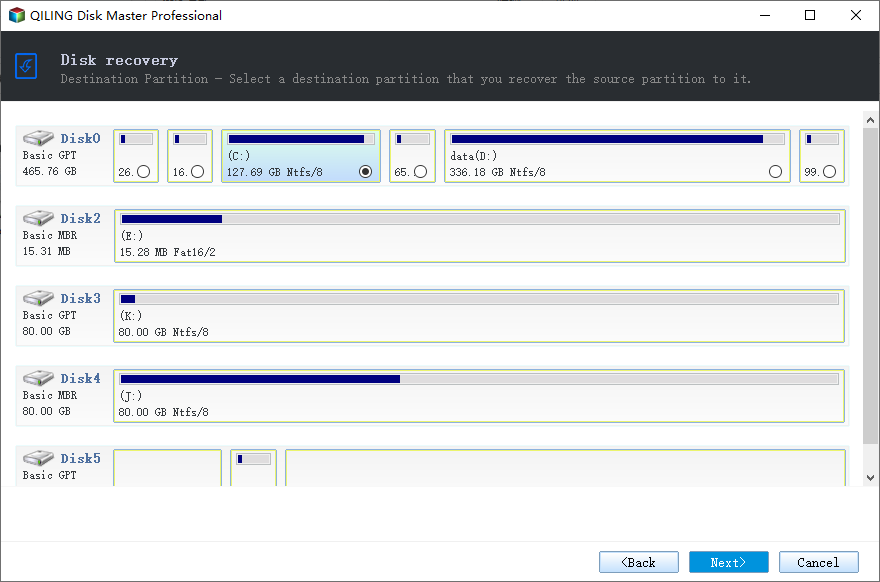
Step 3. Preview the restore plan, click "Proceed", and confirm the warning. The PC restarts to finish the job, and Windows comes back exactly as it was on the day the image was created.
- Note
- Keep the backup image on a separate drive, and refresh it before every major change, such as a Windows update, a driver upgrade, or a disk operation.
Conclusion
Windows 11 printer not working is usually fixable by checking physical connections, running the printer troubleshooter, or restarting the Print Spooler service. If the issue persists, update or reinstall the printer drivers, remove and re-add the printer, or clear the print spooler queue. For most users, one of these fixes will resolve the issue.
For more Windows 11 troubleshooting, see our guides on Bluetooth Not Working, Wi-Fi Not Working, and Windows 11 24H2 Problems.
Related Articles
- Fix Windows 11 Bluetooth Not Working (2026 Guide)
- Fix Windows 11 Wi-Fi Not Working (2026 Guide)
- Windows 11 24H2 Problems and How to Fix Them (2026 Guide)
- Windows 11 25H2 Problems and How to Fix Them (2026 Guide)
- How to Fix Windows 11 Slow Startup
If Windows 11 starts up slowly after a printer issue, learn how to speed up boot time with these proven solutions including disabling startup programs. - 3 Ways | How to Reinstall Windows 10 Without CD
Need to reinstall Windows after persistent printer issues? Learn 3 ways to reinstall Windows 10/11 without a CD using Reset, installation USB, or system image.
Products
Articles & Tutorials
- Data Recovery
- Data Backup
- File Recovery
- File Backup
- System Backup and Restore
- Disk and Partition Clone
- Technical articles
- Mobile articles
- Disk Master Help
- Windows Data Recovery Tutorials
- Windows Secure Delete Tutorials
- Windows Partition Management Tutorials
- Windows File Backup and Restore Tutorials
- Windows System Backup and Restore Tutorials
- Windows Disk Backup and Restore Tutorials
- Windows Clone Tutorials