Windows 11 25H2 Problems and How to Fix Them (2026 Guide)
Windows 11 25H2 is a major feature update released in 2026, bringing AI-powered search, improved Copilot integration, a new File Explorer, and performance enhancements. However, like any major Windows update, 25H2 has introduced several problems that affect users worldwide.
If you're experiencing issues after the 25H2 update, this guide covers the most common Windows 11 25H2 problems and provides step-by-step solutions to fix them.
PAGE CONTENT
- Common Windows 11 25H2 Problems
- Fix 1: BSOD After 25H2 Update
- Fix 2: Slow Performance and High Disk Usage
- Fix 3: Boot Failures and Infinite Loading
- Fix 4: Audio Not Working
- Fix 5: Wi-Fi and Network Connectivity Issues
- Fix 6: File Explorer Crashes or Freezes
- Fix 7: Printer and Peripheral Issues
- Fix 8: Roll Back to Previous Windows Version
- FAQs About Windows 11 25H2 Problems
- Back Up and Restore Windows with Qiling Disk Master
Common Windows 11 25H2 Problems
Based on user reports, the most frequently reported Windows 11 25H2 problems include:
- BSOD (Blue Screen of Death) errors, especially during startup
- Slow performance and high CPU/disk usage
- Boot failures or infinite loading loops
- Audio devices not detected or no sound
- Wi-Fi disconnects or network adapters not recognized
- File Explorer crashes or freezes
- Printers and USB peripherals not working
- Games and apps crashing unexpectedly
- Battery drain issues on laptops
Fix 1: BSOD After 25H2 Update
BSOD errors after a major update are usually caused by incompatible drivers. Common BSOD stop codes in 25H2 include DRIVER_IRQL_NOT_LESS_OR_EQUAL, SYSTEM_SERVICE_EXCEPTION, and WHEA_UNCORRECTABLE_ERROR.
Step 1. Update all device drivers: press Win + X > "Device Manager" > right-click each device > "Update driver".
Step 2. Run SFC and DISM scans to repair corrupted system files:
DISM /Online /Cleanup-Image /RestoreHealth
sfc /scannow
Step 3. If the BSOD persists, uninstall the 25H2 update (see Fix 8).
For specific BSOD fixes, see our detailed guides: DRIVER_POWER_STATE_FAILURE, KMODE_EXCEPTION_NOT_HANDLED, and BAD_POOL_CALLER.
Fix 2: Slow Performance and High Disk Usage
After a major update, Windows re-indexes files and runs background tasks, causing temporary slowdowns. But if slow performance persists for days, try these fixes:
Step 1. Open Task Manager (Ctrl + Shift + Esc) and check which processes use high CPU/disk. End unnecessary tasks.
Step 2. Disable unnecessary startup programs: Task Manager > "Startup" tab > right-click > "Disable".
Step 3. Run disk cleanup: press Win + R, type cleanmgr, and select your system drive to remove temporary files.
Step 4. Check for driver updates, especially storage and chipset drivers from your manufacturer's website.
Step 5. If you're using an HDD, consider upgrading to an SSD for a significant performance boost.
Fix 3: Boot Failures and Infinite Loading
If Windows 11 25H2 won't boot or gets stuck on the loading screen:
Step 1. Force restart: hold the power button for 10 seconds, then turn on again. After 2-3 failed boots, Windows enters Automatic Repair.
Step 2. In Automatic Repair, go to Troubleshoot > Advanced options > Startup Repair.
Step 3. If Startup Repair fails, open Command Prompt and run:
bootrec /fixmbr
bootrec /fixboot
bootrec /rebuildbcd
Step 4. If you use UEFI mode, rebuild the EFI bootloader with bcdboot.
For a complete guide, see Fix Windows 10/11 Won't Boot: 8 Proven Solutions.
Fix 4: Audio Not Working
Audio issues after 25H2 update are common. Try these solutions:
Step 1. Right-click the speaker icon in the taskbar > "Sound settings" > make sure the correct output device is selected.
Step 2. Press Win + X > "Device Manager" > "Sound, video and game controllers" > right-click your audio device > "Update driver" or "Uninstall device" (then restart to reinstall).
3. Run the Windows Audio Troubleshooter: Settings > System > Troubleshoot > Other troubleshooters > Playing Audio.
Step 4. Restart the Windows Audio service: press Win + R, type services.msc, find "Windows Audio", right-click > "Restart".
Fix 5: Wi-Fi and Network Connectivity Issues
If Wi-Fi disconnects or your network adapter isn't recognized:
Step 1. Press Win + X > "Device Manager" > "Network adapters" > right-click your Wi-Fi adapter > "Update driver" or "Roll Back Driver".
Step 2. Run the Network Troubleshooter: Settings > System > Troubleshoot > Other troubleshooters > Network and Internet.
Step 3. Reset network settings: Settings > Network & Internet > Advanced network settings > Network reset > "Reset now". Your PC will restart.
Step 4. Download the latest Wi-Fi driver from your laptop/manufacturer's website (Lenovo, Dell, HP, ASUS, etc.).
Fix 6: File Explorer Crashes or Freezes
The new File Explorer in 25H2 may crash or freeze due to corrupted cache or conflicting shell extensions.
Step 1. Clear File Explorer history: Settings > Privacy & security > File Explorer > Clear history.
Step 2. Restart Windows Explorer: Task Manager > find "Windows Explorer" > right-click > "Restart".
Step 3. Run SFC scan: sfc /scannow in Windows Terminal (Admin).
Step 4. Disable third-party shell extensions (like cloud storage sync apps) that may conflict with the new File Explorer.
Fix 7: Printer and Peripheral Issues
Printers and USB devices may stop working after 25H2 update:
Step 1. Remove and reconnect the printer: Settings > Bluetooth & devices > Printers & scanners > select the printer > "Remove" > then "Add device" to reinstall.
Step 2. Update printer drivers from the manufacturer's website (HP, Canon, Epson, Brother).
Step 3. For USB devices: Device Manager > "Universal Serial Bus controllers" > right-click each USB Root Hub > "Uninstall device" > restart PC to reinstall.
Step 4. Run the Printer Troubleshooter: Settings > System > Troubleshoot > Other troubleshooters > Printer.
Fix 8: Roll Back to Previous Windows Version
If none of the fixes work, you can roll back to the previous Windows version (24H2). This must be done within 10 days of the 25H2 update.
Step 1. Go to Settings > System > Recovery.
Step 2. Under "Recovery options", click "Go back" next to "Previous version of Windows".
Step 3. Follow the prompts to complete the rollback.
If 10 days have passed, use System Restore (if you created a restore point before the update) or reinstall Windows from a USB using your previous version.
- Important
- Before rolling back or reinstalling, back up your important files using Qiling Backup to prevent data loss.
FAQs About Windows 11 25H2 Problems
Is Windows 11 25H2 stable?
25H2 is generally stable, but some users experience issues due to driver incompatibilities. Most problems can be fixed by updating drivers or rolling back the update.
Should I install Windows 11 25H2?
Wait 1-2 months after release for Microsoft to patch initial bugs. Before updating, create a system backup with Qiling Backup so you can roll back if needed.
How do I fix BSOD after Windows 11 25H2 update?
Update all device drivers, run SFC and DISM scans, and if the BSOD persists, roll back to the previous Windows version. See Fix 1 and Fix 8 above.
Why is my PC slow after the 25H2 update?
Slow performance is usually temporary as Windows re-indexes files in the background. If it persists, disable unnecessary startup programs, run disk cleanup, and update storage drivers.
Can I uninstall Windows 11 25H2?
Yes, within 10 days of installation. Go to Settings > System > Recovery > "Go back". After 10 days, you need to use System Restore or reinstall Windows from a USB.
Back Up and Restore Windows with Qiling Disk Master
Before you install the 25H2 update, roll it back, or change drivers to work around its problems, create a full system backup. Feature updates and rollbacks change system files and drivers across the board, so a system image is the fastest way to return to a known-good state. Qiling Disk Master handles both the backup and the restore.
Part 1: Create a Full System Backup
Step 1. Install and open Qiling Disk Master. On the home screen, open "Backup and Recovery" and choose "System Backup". This option automatically includes Windows and the hidden boot partitions, so you do not have to select them one by one.
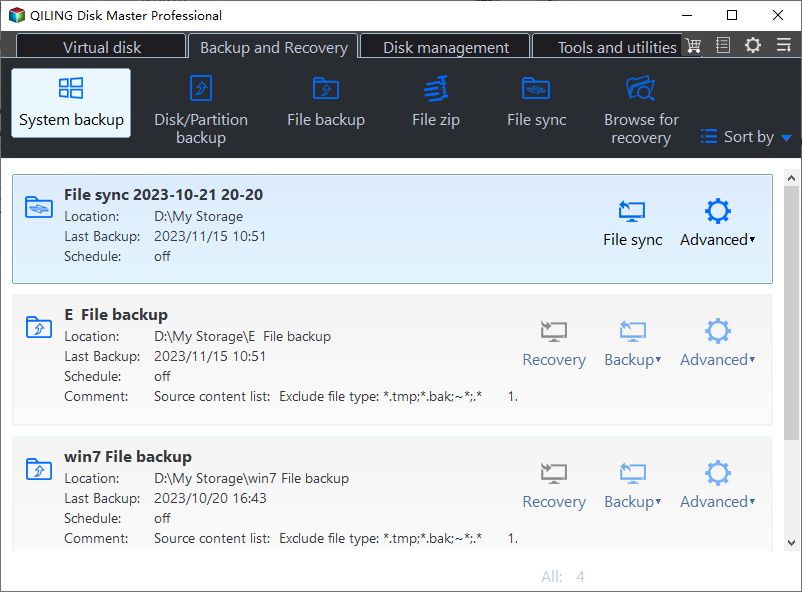
Step 2. Check the source. The disk where Windows is installed and its system partitions are already ticked for you. If you only need your personal documents, run a separate "File Backup" task instead.

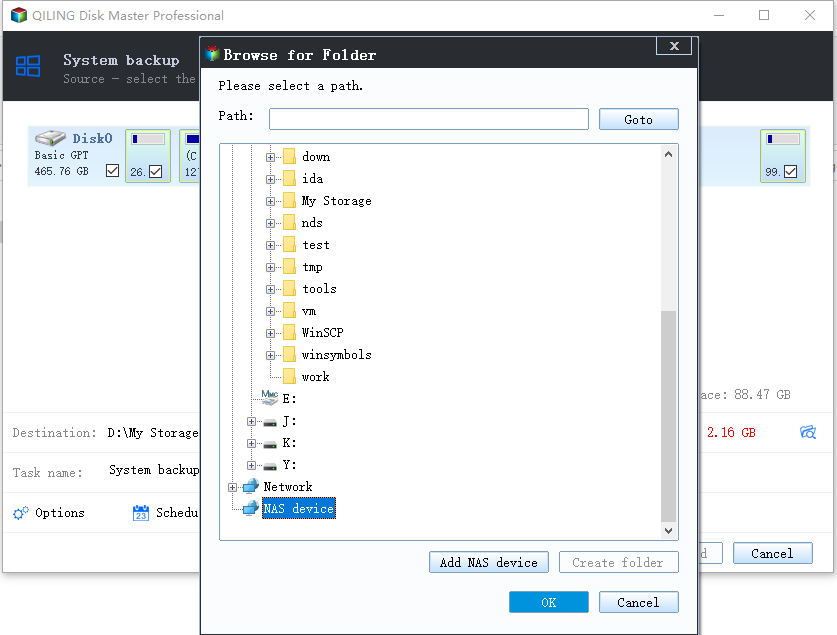
Step 3. Click the destination box and choose where the image should be saved. Use an external HDD or SSD, a NAS, or any drive other than the one you are about to repair, and make sure it has enough free space.
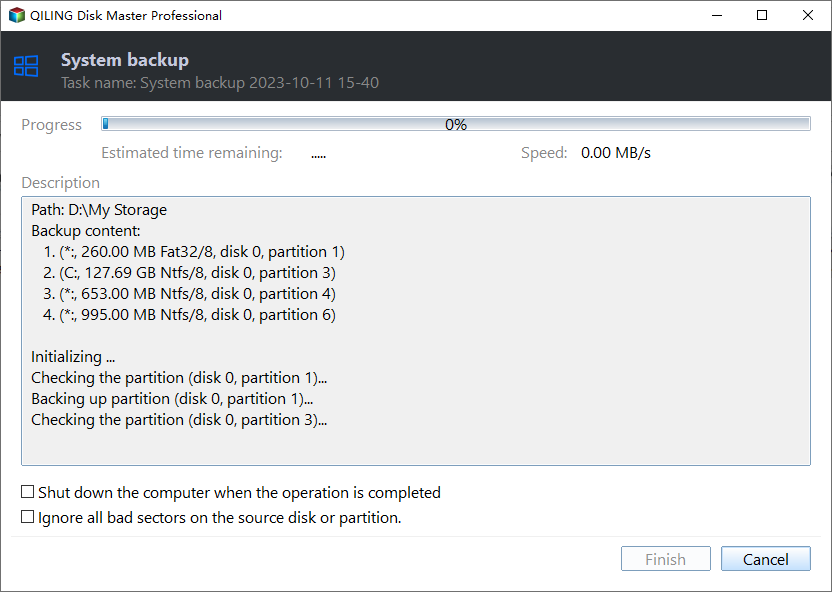
Step 4. Review the task summary and click "Proceed". Wait until the progress bar reaches 100%. Do not unplug the drive or turn off the PC while the backup is running.
Part 2: Restore Windows from the Backup
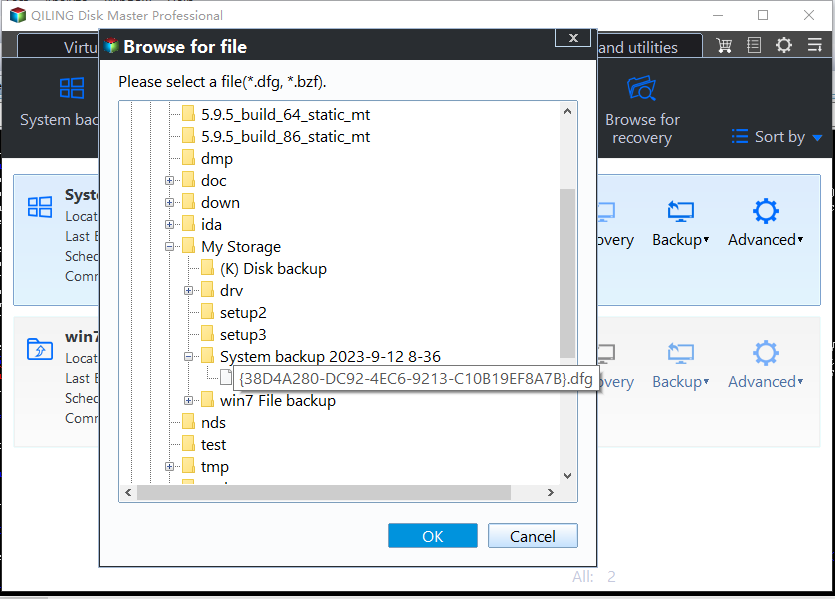
Step 1. Open Qiling Disk Master again, go to "Backup and Recovery", and select the recovery option. Your backup images are listed, so pick the one you created before the repair.
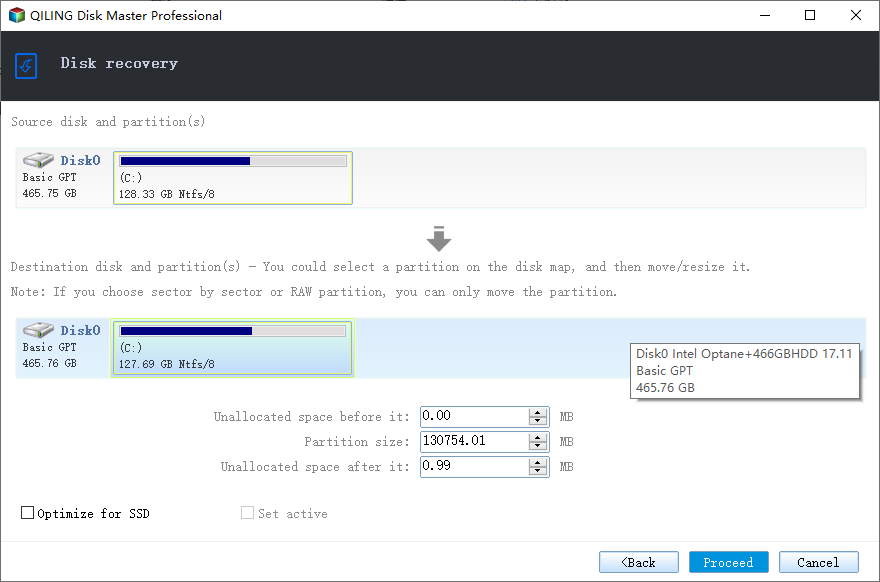
Step 2. Choose the target disk or partition. Normally you restore to the original system disk. If the drive was replaced, select the new disk instead, and the restore rebuilds Windows together with its boot partitions.
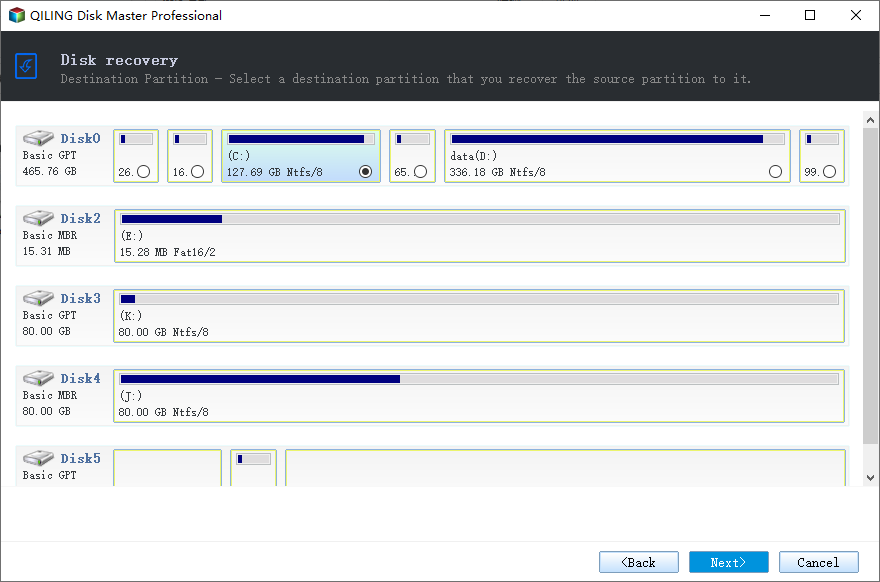
Step 3. Preview the restore plan, click "Proceed", and confirm the warning. The PC restarts to finish the job, and Windows comes back exactly as it was on the day the image was created.
- Note
- Keep the backup image on a separate drive, and refresh it before every major change, such as a Windows update, a driver upgrade, or a disk operation.
Conclusion
Windows 11 25H2 problems are common after any major update, but most can be fixed by updating drivers, running SFC/DISM scans, and using built-in troubleshooters. If a specific issue persists, rolling back to the previous version is a reliable fallback. Always create a system backup before major updates so you can restore quickly if something goes wrong.
Protect your PC with Qiling Backup—create a system image before your next Windows update.
Related Articles
- Fix Windows 10/11 Won't Boot: 8 Proven Solutions (2026)
- Fix DRIVER_POWER_STATE_FAILURE BSOD (0x0000009F)
- Fix BAD_POOL_CALLER BSOD (0x000000C2)
- Windows 11 Update Slows Down SSD Performance
- How to Fix Windows 11 Slow Startup
If Windows 11 starts up slowly after an update, learn how to speed up boot time with these proven solutions including disabling startup programs and updating drivers. - 3 Ways | How to Reinstall Windows 10 Without CD
Need to reinstall Windows after a failed 25H2 update? Learn 3 ways to reinstall Windows 10/11 without a CD using Reset, installation USB, or system image recovery. - Windows 11 24H2 End of Support: What to Do Next (2026)
- Windows 11 26H2: Release Date, Features and How to Get It
- Windows 11 26H1: What It Is and Who Can Install It
Products
Articles & Tutorials
- Data Recovery
- Data Backup
- File Recovery
- File Backup
- System Backup and Restore
- Disk and Partition Clone
- Technical articles
- Mobile articles
- Disk Master Help
- Windows Data Recovery Tutorials
- Windows Secure Delete Tutorials
- Windows Partition Management Tutorials
- Windows File Backup and Restore Tutorials
- Windows System Backup and Restore Tutorials
- Windows Disk Backup and Restore Tutorials
- Windows Clone Tutorials