Fix BAD_POOL_CALLER BSOD (0x000000C2) in Windows 10/11
The BAD_POOL_CALLER error (stop code 0x000000C2) is a Blue Screen of Death (BSOD) that occurs when a process makes an invalid memory pool request. It usually happens when a driver or application tries to access an invalid memory address, free memory that was already freed, or allocate memory in an improper way.
This BSOD is commonly caused by faulty drivers, corrupted system files, or hardware issues. In this guide, we explain the causes and walk you through 8 proven solutions to fix BAD_POOL_CALLER and prevent future crashes.
PAGE CONTENT
- What Causes BAD_POOL_CALLER (0x000000C2)?
- Solution 1: Update or Roll Back Device Drivers
- Solution 2: Run Windows Memory Diagnostic
- Solution 3: Run SFC and DISM Scans
- Solution 4: Check Disk Errors with CHKDSK
- Solution 5: Disable Fast Startup
- Solution 6: Perform a Clean Boot
- Solution 7: Uninstall Recent Software and Updates
- Solution 8: System Restore or Reset Windows
- FAQs About BAD_POOL_CALLER
- Back Up and Restore Windows with Qiling Disk Master
What Causes BAD_POOL_CALLER (0x000000C2)?
The BAD_POOL_CALLER error indicates that a process made an invalid request to the Windows memory pool manager. Common causes include:
- Outdated, corrupted, or incompatible device drivers (especially network, graphics, and audio drivers)
- Faulty RAM (memory modules)
- Corrupted system files or Windows registry
- Hard drive errors or bad sectors
- Conflicting antivirus software or third-party programs
- Recent Windows updates that introduced driver incompatibilities
- Malware infections that corrupted system files
- Note
- The BSOD screen may show a driver file name (e.g., a .sys file) next to the stop code. Note this down—it identifies the specific driver causing the crash.
Solution 1: Update or Roll Back Device Drivers
Faulty drivers are the most common cause of BAD_POOL_CALLER. Update your drivers, especially network, graphics, and audio drivers.
Step 1. Press Win + X and select "Device Manager".
Step 2. Expand categories and look for devices with a yellow warning icon.
Step 3. Right-click each device and select "Update driver" > "Search automatically for drivers".
Step 4. If the BSOD started after a recent driver update, right-click the device, select "Properties" > "Driver" tab > "Roll Back Driver".
Step 5. For the best results, download the latest drivers directly from the manufacturer's website (NVIDIA, AMD, Intel, Realtek, etc.) and install them manually.
Solution 2: Run Windows Memory Diagnostic
Faulty RAM is a common hardware cause of BAD_POOL_CALLER. Test your memory with the built-in Windows Memory Diagnostic tool.
Step 1. Press Win + R, type mdsched.exe, and press Enter.
Step 2. Click "Restart now and check for problems (recommended)".
Step 3. Your PC will restart and run the memory test. When it finishes, check the results in the notification or Event Viewer.
If errors are found, try reseating your RAM modules (remove and reinsert them). If that doesn't help, test each module individually to identify the faulty one and replace it.
Solution 3: Run SFC and DISM Scans
Corrupted system files can trigger BAD_POOL_CALLER. Use SFC and DISM to repair them.
Step 1. Press Win + X and select "Windows Terminal (Admin)".
Step 2. Run DISM to repair the Windows image:
DISM /Online /Cleanup-Image /RestoreHealth
Step 3. Run SFC to repair system files:
sfc /scannow
Step 4. Wait for both scans to complete. If corrupted files are found and repaired, restart your PC.
Solution 4: Check Disk Errors with CHKDSK
Hard drive errors or bad sectors can cause this BSOD. Run CHKDSK to scan and repair your drive.
Step 1. Open Windows Terminal (Admin).
Step 2. Run the CHKDSK command on your system drive:
chkdsk C: /f /r
Step 3. If the drive is in use, type Y to schedule the scan on the next restart. Restart your PC.
Step 4. CHKDSK will run before Windows starts. Let it complete.
Solution 5: Disable Fast Startup
Fast Startup can cause driver conflicts and BSOD errors. Disabling it often fixes BAD_POOL_CALLER.
Step 1. Open Control Panel > Power Options.
Step 2. Click "Choose what the power buttons do".
Step 3. Click "Change settings that are currently unavailable".
Step 4. Uncheck "Turn on fast startup (recommended)".
Step 5. Click "Save changes" and restart your PC.
Solution 6: Perform a Clean Boot
A clean boot helps identify if a third-party program is causing the BSOD.
Step 1. Press Win + R, type msconfig, and press Enter.
Step 2. Go to the "Services" tab, check "Hide all Microsoft services", then click "Disable all".
Step 3. Go to the "Startup" tab, click "Open Task Manager", and disable all startup items.
Step 4. Restart your PC. If the BSOD no longer occurs, enable services and startup items one by one to find the culprit.
Solution 7: Uninstall Recent Software and Updates
If the BSOD started after installing new software or a Windows update, uninstall it.
Uninstall Recent Software
Step 1. Go to Settings > Apps > Installed apps.
Step 2. Sort by "Date installed" to find recently added programs.
Step 3. Select the program and click "Uninstall".
Uninstall Recent Windows Updates
Step 1. Go to Settings > Windows Update > Update history > Uninstall updates.
Step 2. Find the most recent update and click "Uninstall".
Solution 8: System Restore or Reset Windows
If none of the above solutions work, try System Restore or reset Windows.
- System Restore: Go to Control Panel > Recovery > Open System Restore. Choose a restore point before the BSOD started.
- Reset Windows: Go to Settings > System > Recovery > Reset PC. Choose "Keep my files" to preserve personal data.
Before resetting, back up your important data using Qiling Backup to avoid data loss.
FAQs About BAD_POOL_CALLER
What is BAD_POOL_CALLER?
BAD_POOL_CALLER (stop code 0x000000C2) is a BSOD error that occurs when a process makes an invalid request to the Windows memory pool manager. It's usually caused by faulty drivers, corrupted system files, or hardware issues.
Can outdated drivers cause BAD_POOL_CALLER?
Yes. Outdated, corrupted, or incompatible drivers are the most common cause. Updating or rolling back your network, graphics, and audio drivers usually resolves the issue.
How do I find which driver is causing the BSOD?
Check the BSOD screen for a file name (usually a .sys file). You can also use Event Viewer (Win + X > Event Viewer > Windows Logs > System) to find error logs that identify the problematic driver.
Is BAD_POOL_CALLER caused by hardware failure?
It can be. Faulty RAM is a common hardware cause. Run Windows Memory Diagnostic to test your RAM. If errors are found, reseat or replace the memory modules.
Can antivirus software cause BAD_POOL_CALLER?
Yes. Some third-party antivirus programs can conflict with Windows and cause this BSOD. Try temporarily disabling or uninstalling your antivirus to see if the error stops.
Back Up and Restore Windows with Qiling Disk Master
Before you roll back a driver, run memory diagnostics, or repair system files to stop BAD_POOL_CALLER, create a full system backup. This stop code usually points to a faulty driver or failing RAM, and a system image lets you undo every change in minutes if the blue screen returns. Qiling Disk Master handles both the backup and the restore.
Part 1: Create a Full System Backup
Step 1. Install and open Qiling Disk Master. On the home screen, open "Backup and Recovery" and choose "System Backup". This option automatically includes Windows and the hidden boot partitions, so you do not have to select them one by one.
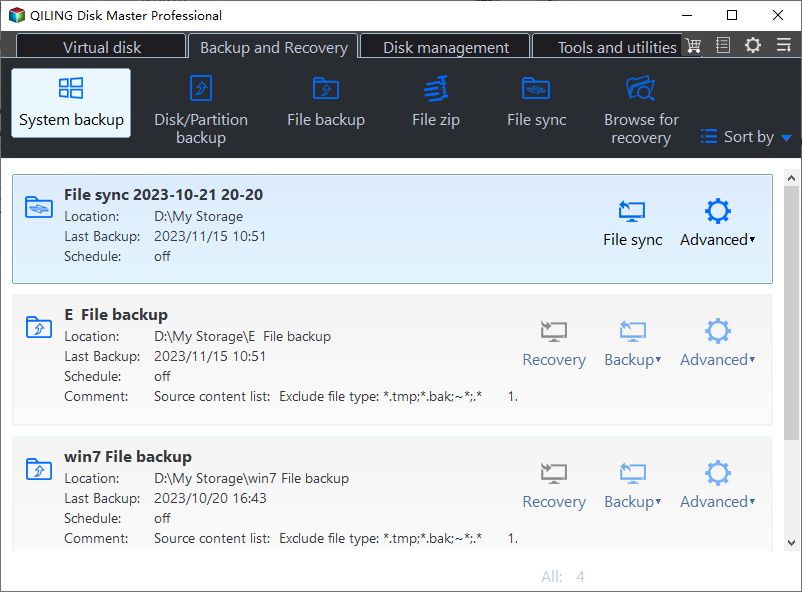
Step 2. Check the source. The disk where Windows is installed and its system partitions are already ticked for you. If you only need your personal documents, run a separate "File Backup" task instead.

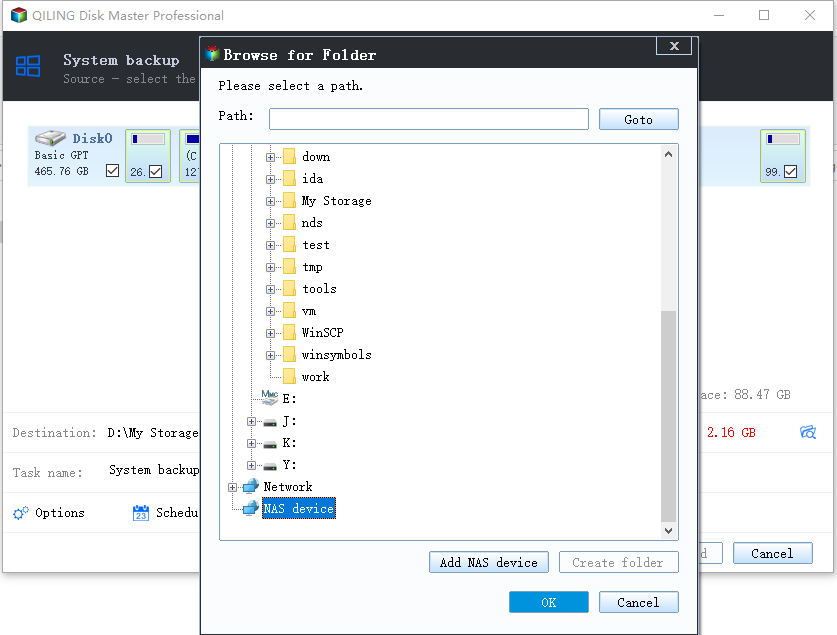
Step 3. Click the destination box and choose where the image should be saved. Use an external HDD or SSD, a NAS, or any drive other than the one you are about to repair, and make sure it has enough free space.
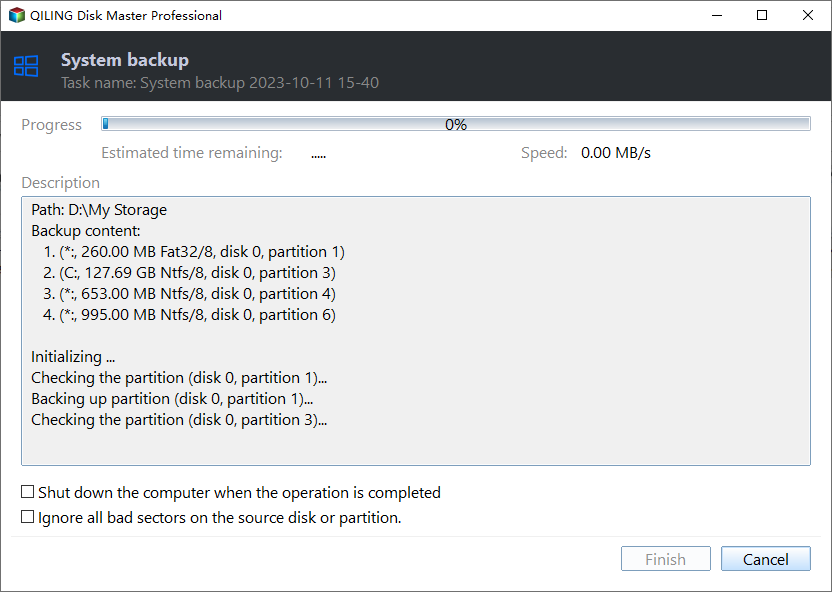
Step 4. Review the task summary and click "Proceed". Wait until the progress bar reaches 100%. Do not unplug the drive or turn off the PC while the backup is running.
Part 2: Restore Windows from the Backup
Step 1. Open Qiling Disk Master again, go to "Backup and Recovery", and select the recovery option. Your backup images are listed, so pick the one you created before the repair.
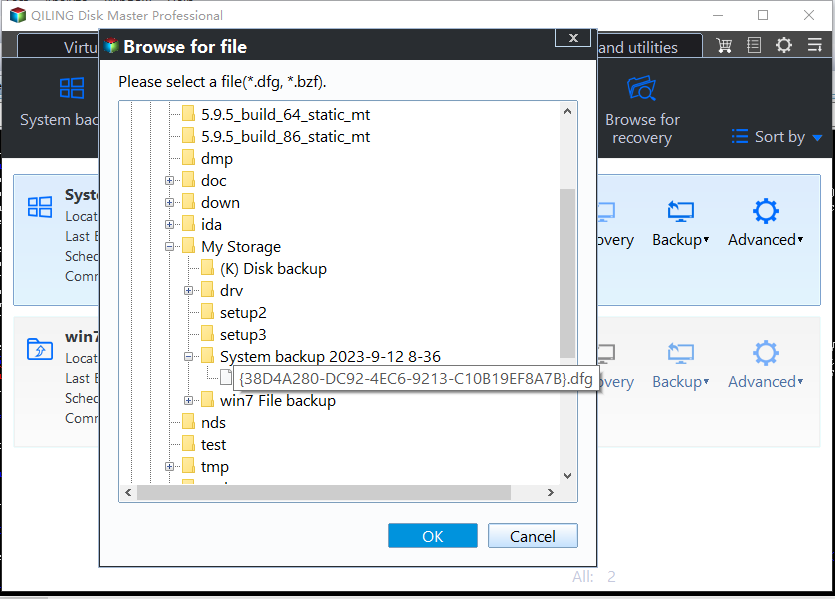
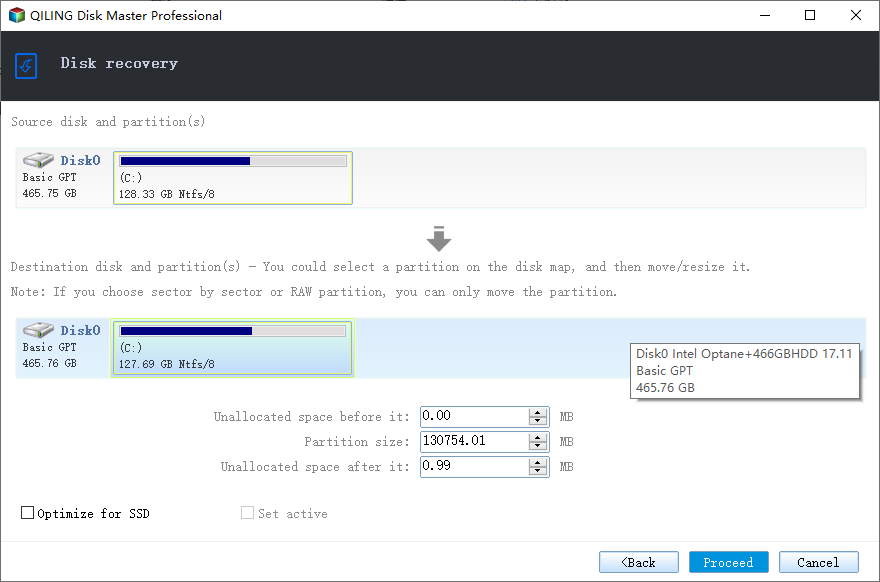
Step 2. Choose the target disk or partition. Normally you restore to the original system disk. If the drive was replaced, select the new disk instead, and the restore rebuilds Windows together with its boot partitions.
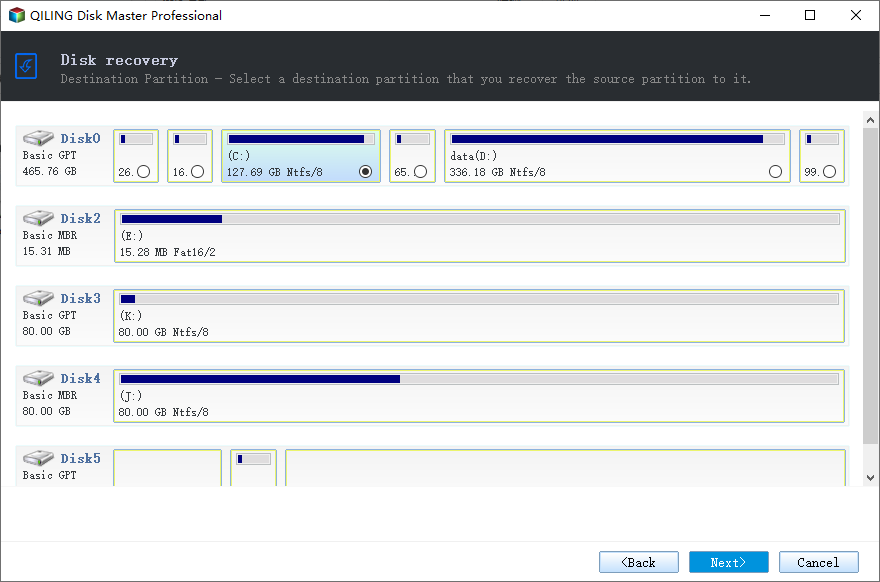
Step 3. Preview the restore plan, click "Proceed", and confirm the warning. The PC restarts to finish the job, and Windows comes back exactly as it was on the day the image was created.
- Note
- Keep the backup image on a separate drive, and refresh it before every major change, such as a Windows update, a driver upgrade, or a disk operation.
Conclusion
The BAD_POOL_CALLER (0x000000C2) BSOD is usually caused by driver issues, corrupted system files, or faulty RAM. Start by updating your device drivers and running SFC/DISM scans. If the error persists, test your RAM with Windows Memory Diagnostic, check your hard drive with CHKDSK, and disable Fast Startup. In most cases, one of these solutions will resolve the error.
If you need to back up your data before trying advanced fixes, consider using Qiling Backup to protect your important files.
Related Articles
- Fix DRIVER_POWER_STATE_FAILURE BSOD (0x0000009F)
- Fix KMODE_EXCEPTION_NOT_HANDLED BSOD (0x0000001E)
- Fix VIDEO_TDR_FAILURE BSOD (0x00000116)
- Fix IRQL_NOT_LESS_OR_EQUAL BSOD Error in Windows 11
- Fix Stop Code MEMORY_MANAGEMENT BSOD in Windows 10/11
MEMORY_MANAGEMENT BSOD usually indicates memory problems. Learn how to diagnose and fix this error with Windows Memory Diagnostic and other solutions. - Fix Windows 10 100% Disk Usage in Task Manager
Is your disk usage stuck at 100% in Task Manager? Learn 10 proven solutions to fix high disk usage and speed up your Windows 10 PC. - Fix UNEXPECTED_KERNEL_MODE_TRAP 0x0000007F in Windows 11
- Fix DRIVER_VERIFIER_DETECTED_VIOLATION (0xC4) in Windows 11
- Fix PFN_LIST_CORRUPT BSOD (0x0000004E) in Windows 11
- Fix BAD_POOL_HEADER BSOD (0x00000019) in Windows 11
- Fix MULTIPLE_IRP_COMPLETE_REQUESTS 0x44 in Windows 11
Products
Articles & Tutorials
- Data Recovery
- Data Backup
- File Recovery
- File Backup
- System Backup and Restore
- Disk and Partition Clone
- Technical articles
- Mobile articles
- Disk Master Help
- Windows Data Recovery Tutorials
- Windows Secure Delete Tutorials
- Windows Partition Management Tutorials
- Windows File Backup and Restore Tutorials
- Windows System Backup and Restore Tutorials
- Windows Disk Backup and Restore Tutorials
- Windows Clone Tutorials