How to Fix IRQL_NOT_LESS_OR_EQUAL Blue Screen on Windows 11
| Workable Solutions | Step-by-step Troubleshooting |
|---|---|
| #1. Use SFC and DISM Command | Step 1: Right-click on your taskbar's Start Menu. Then, choose Windows Terminal (Admin) from the drop-down menu...Full steps |
| #2. Launch Windows Memory Diagnostic | Step 1: Start by going to the Search Menu, searching for Windows Memory Diagnostics, and then selecting it...Full steps |
| #3. Update Driver by Device Manager | Step 1: Open Device Manager by searching for it in the Search Menu; Step 2: Find the component category ...Full steps |
| #4. Run Qiling Partition Master to Scan Disk Error | Step 1. Open Qiling Partition Master on your computer. Then, locate the disk, and right-click the partition...Full steps |
Introduction
Blue screen of death issues, such as IRQL_NOT_LESS_OR_EQUAL error, can cause a computer to suddenly shut down or get stuck in an infinite restart cycle, resulting in lost work, especially during critical projects.
If you're experiencing the IRQL_NOT_LESS_OR_EQUAL error on Windows 11, it's likely due to a driver issue or a hardware problem. To resolve the issue, try updating your drivers, checking for BIOS updates, or running a System File Checker to replace corrupted system files. If the problem persists, consider running a memory test to identify any hardware issues. Additionally, you can try disabling any recently installed drivers or software to see if they're causing the problem.
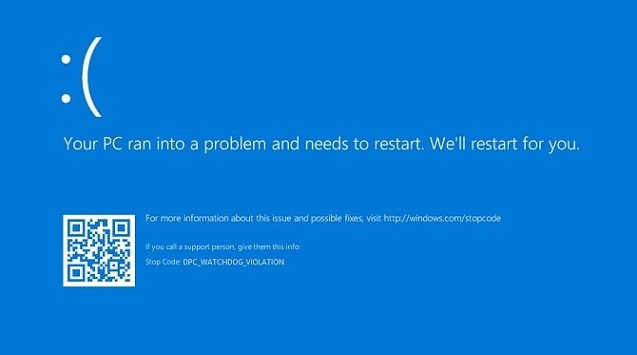
What is IRQL_NOT_LESS_OR_EQUAL Error?
The IRQL_NOT_LESS_OR_EQUAL error is usually caused by a memory problem. IRQL stands for Interruption ReQuest Line, which is a Windows component that notifies occurrences that need immediate attention. When a device driver requests access to a memory location without the required approval or access privileges, IRQL occurs, resulting in the error.
The error indicates that the driver tried to access an address that was either outside or larger than the boundary value of the memory allocation for the process.
What Causes IRQL_NOT_LESS_OR_EQUAL Error?
The IRQL_NOT_LESS_OR_EQUAL error in Windows 11 may occur due to various reasons, including kernel-mode program errors, faulty drivers, or corrupted system files, which can cause the system to crash or freeze, requiring a restart to resolve the issue.
- Another cause of the problem might be incomplete application installation.
- Incompatible device drivers can cause this issue, where the system's drivers are inconsistent with the device's drivers. This inconsistency can lead to the system not being able to properly interact with the device, resulting in the issue.
- The error can occur due to corrupted system files.
- The issue is most likely to occur if your computer has any damaged system files.
- This problem may also be caused by faulty or unsuitable hardware, such as using broken or incompatible hardware with your PC.
How to Fix IRQL_NOT_LESS_OR_EQUAL Blue Screen Error?
The IRQL_NOT_LESS_OR_EQUAL BSOD error is a common issue in Windows 11 that can cause your PC to restart in an infinite loop. Fortunately, this error can be fixed by trying a few methods, which include follow the steps below.
#1. Use SFC and DISM Command
To resolve system issues, execute the DISM application to fix virtual machine problems, then use the SFC command to repair installed Windows files.
To fix the BOSD error on your PC, you can run the DISM tool by following these steps: Open Command Prompt as an administrator, type `DISM /Online /Cleanup-Image /RestoreHealth`, and press Enter. This command will scan and fix any corrupted system files, including the ones that might be causing the BOSD error.
Step 1: To open Windows Terminal as an administrator from the taskbar's Start Menu, right-click on it, select Windows Terminal (Admin) from the dropdown menu, and click Yes to confirm.
Step 2: To access the Command Prompt, navigate to the tab bar and select the chevron (downarrow arrow) symbol. From the dropdown menu, click on the "Command Prompt" option.
Step 3: To restore your system image, open Command Prompt as Administrator, type `DISM /Online Cleanup-Image /RestoreHealth` and press Enter.
Note: To restore your bootable backup, you need to be connected to the internet, and the process may take a few minutes to complete, depending on your computer and internet speed.
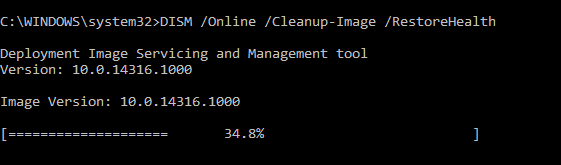
After DISM is finished, it's time to run the SFC scan to address the current issues.
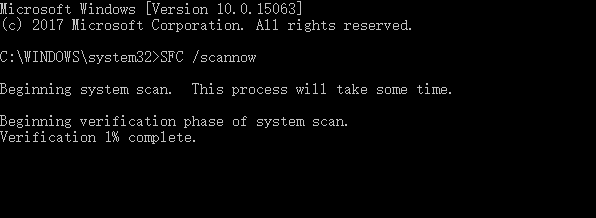
Step 4: To run the SFC command on your computer, open Command Prompt, type SFC /scannow, and press Enter. This will scan and fix corrupted system files.
Note: The SFC scan may take a few minutes to complete. After the scan, restart your computer to check if the issue persists.
#2. Launch Windows Memory Diagnostic
To troubleshoot the BSOD error, it's a good idea to run tests on the integrated memory to rule out any potential issues with the memory space, as this is a common cause of the error.
To run the Windows Memory Diagnostics for solving the BSOD issue, simply go to Start, type "memory" in the search bar, and click on "Windows Memory Diagnostic" from the search results. This will initiate a memory test that can help identify and fix any memory-related issues causing the BSOD.
Step 1: To run the Windows Memory Diagnostics, start by searching for "Windows Memory Diagnostics" in the Search Menu, and then select it from the search results list. Next, select the "Open" button to begin using the tool.
Step 2: To resolve the issue, click on the Restart now and check for the problems button to restart your computer and perform diagnostics. This will allow the system to check for any potential problems and provide a solution.
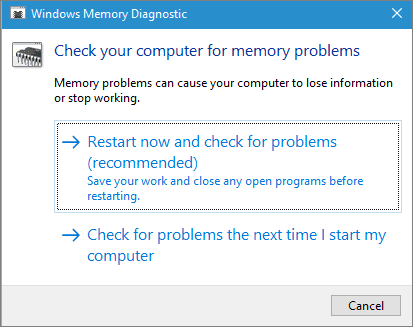
Step 3: To check the memory, the computer will restart and provide a detailed report if any issues are found with the memory after the restart.
#3. Update Driver by Device Manager
If you've recently updated your drivers or haven't done so in a while, the issue on your PC might be caused by this. To fix it, try rolling back to the earlier version of the driver you recently upgraded, which should solve the problem. If your drivers are already outdated, you'll need to update each one personally.
Step 1: To access the Device Manager, search for it in the Search Menu and open it.
Step 2: To update the driver for a component category, you would first find the category you recently updated the driver for, and then double-click it to expand the section. After that, you would double-click the specific item to bring up its properties.
Step 3: To roll back the most recent update, go to the properties box and select the "Driver" option, then choose the "Roll Back Driver" option. If you want to update the driver, click the "Update Driver" button.
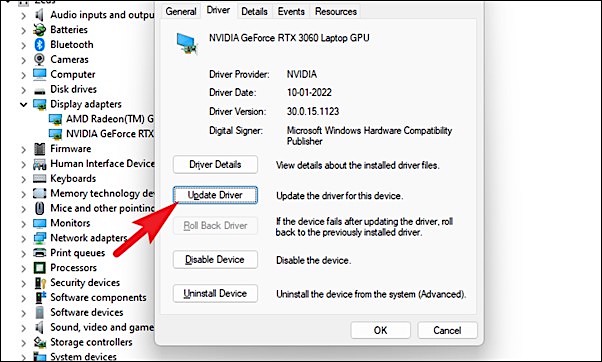
Step 4: To let Windows search for drivers on its networks, click the Search automatically for drivers button.
Note: If you already have the most recent driver installed on your PC, choose to Browse my computer for drivers to navigate the file using File Explorer.
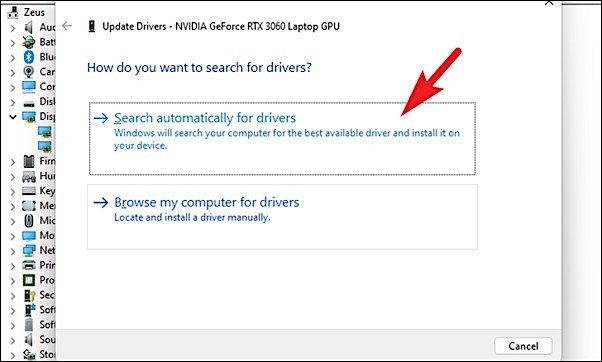
To update your PC's drivers, you can use the built-in Windows Update feature. This will automatically check for and install any available driver updates.
#4. Run Qiling Partition Master to Scan Disk Error
If the IRQL_NOT_LESS_OR_EQUAL error persists after attempting the suggested solutions, it's possible that there's an issue with your hard disk or one of its partitions, which could be related to memory.
To fix the issues with your hard drive that are preventing you from resolving the BSOD issue, you can use a third-party tool like Qiling Partition Master, which is a secure and reliable option.
Qiling Partition Master is a partition manager tool that scans and fixes issues with HDD, SSD, SD cards, and HDD partitions on your PC, providing a hard disk health check and automatically solving errors to fix issues like IRQL_NOT_LESS_OR_EQUAL.
Step 1. Open Qiling Partition Master on your computer, locate the disk, click the partition you want to check, and then choose "Surface test" to run a surface test.
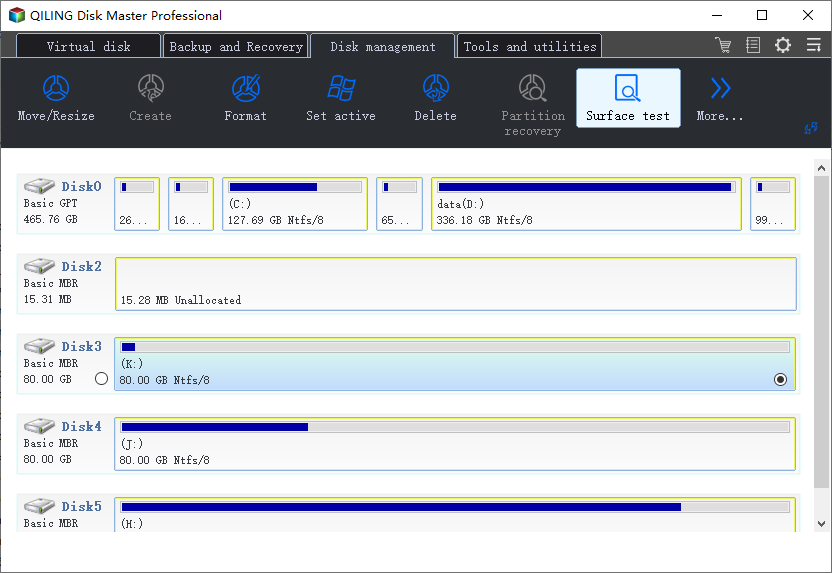
Step 2. In the Check File System window, selected and click "Proceed".
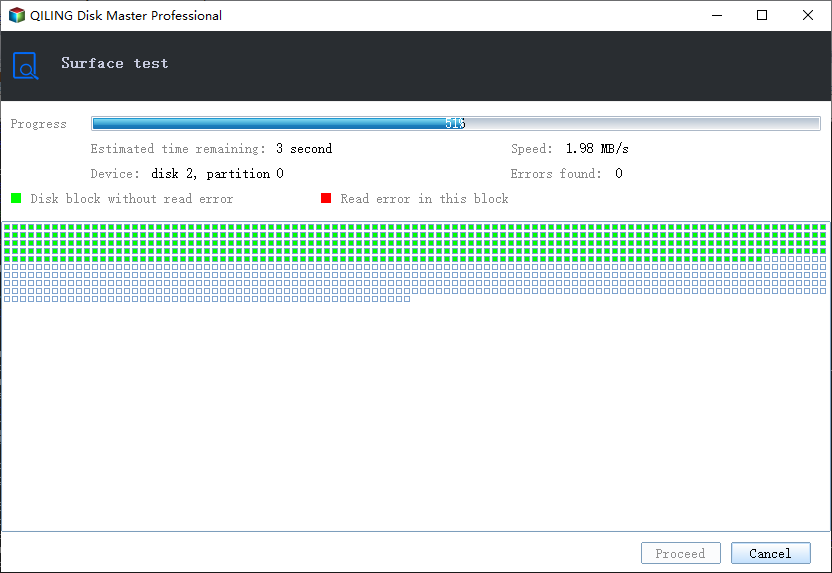
Step 3. The software will start scanning your partition file system on your disk.
You can check and enhance your hard drive's health and status using the System File Check function, and also adjust the size of partitions easily with Qiling Partition Master, which helps you with partition management.
Qiling Partition Master is a comprehensive partition management tool that offers a range of features to help users manage their hard drive partitions. With its user-friendly interface, users can easily resize, move, merge, split, and delete partitions, as well as create new ones.
- To modify the partition size, you can either swipe it left and right or input the precise size you desire.
- To revive a storage device, the process of formatting or erasing a partition is used, making it usable again.
- To address low disc space concerns, it's recommended to consolidate tiny partitions into a larger partition. This process involves merging smaller partitions into a single, larger one, effectively freeing up space and reducing the number of partitions, making it easier to manage and maintain your system.
- This software is the best data wipe tool, capable of completely erasing all data on a hard drive.
To resolve the BSOD error on your PC, download Qiling Partition Master for its fast and user-friendly interface.
Conclusion
The IRQL_NOT_LESS_OR_EQUAL Blue Screen error is a common issue among Windows 11 users, but it's easy to fix. If you encounter this error, you can use the methods discussed in this article to resolve the issue on your PC.
We recommend using Qiling Partition Master to resolve the issue, as it is a secure and reliable tool that guarantees no data loss. Additionally, this tool allows you to adjust partition sizes and wipe your disk, providing a comprehensive solution to the problem.
Related Articles
- How to Extend System Partition in Windows 11/10
- 2022 Write Protected SD Card Format Software: Erase/Format Write Proteced SD/USB/Pen Drive
- How to Troubleshoot Critical Process Died Error in Windows 10/8/7 (10 Solutions)
- Diskpart Has Encountered an Error Access Is Denied | How to Fix
- Windows 11 Boot Repair [Step by Step Guide with Pictures]
Windows 11 boot issues are a common problem for users who have recently updated their systems. If you're experiencing this issue, - this guide can help. We'll provide multiple practical solutions to help you apply Windows 11 boot repair and get your system up and running smoothly again. - How to Fix Windows 11 Update Stuck at 100% | Full Guide🚩
If you're experiencing a stuck update at 100% when upgrading to Windows 11, - this guide can help. We'll provide efficient and quick solutions to fix the Windows 11 stuck at 100% error, so you can get back to enjoying your updated operating system. - Fix UNEXPECTED_KERNEL_MODE_TRAP 0x0000007F in Windows 11
- Fix DRIVER_VERIFIER_DETECTED_VIOLATION (0xC4) in Windows 11
- Fix ATTEMPTED_EXECUTE_OF_NOEXECUTE_MEMORY 0xFC in Windows 11
- Fix PFN_LIST_CORRUPT BSOD (0x0000004E) in Windows 11
Products
Articles & Tutorials
- Data Recovery
- Data Backup
- File Recovery
- File Backup
- System Backup and Restore
- Disk and Partition Clone
- Technical articles
- Mobile articles
- Disk Master Help
- Windows Data Recovery Tutorials
- Windows Secure Delete Tutorials
- Windows Partition Management Tutorials
- Windows File Backup and Restore Tutorials
- Windows System Backup and Restore Tutorials
- Windows Disk Backup and Restore Tutorials
- Windows Clone Tutorials