Fix VIDEO_TDR_FAILURE BSOD (0x00000116) in Windows 10/11
The VIDEO_TDR_FAILURE error (stop code 0x00000116) is a graphics-related Blue Screen of Death (BSOD) that occurs when Windows detects that the graphics driver has stopped responding. TDR stands for Timeout Detection and Recovery—a Windows feature that resets the graphics driver when it hangs. When TDR fails to recover, you get this BSOD.
This error is common among gamers, video editors, and anyone using a dedicated graphics card. In this guide, we explain the causes and walk you through 8 proven solutions to fix VIDEO_TDR_FAILURE and get your display working again.
PAGE CONTENT
- What Causes VIDEO_TDR_FAILURE (0x00000116)?
- Solution 1: Update or Reinstall Graphics Drivers
- Solution 2: Roll Back Graphics Drivers
- Solution 3: Increase TDR Timeout in Registry
- Solution 4: Check GPU Temperature and Cooling
- Solution 5: Disable or Lower GPU Overclocking
- Solution 6: Run SFC and DISM Scans
- Solution 7: Update Windows and BIOS
- Solution 8: Check GPU Hardware
- FAQs About VIDEO_TDR_FAILURE
- Back Up and Restore Windows with Qiling Disk Master
What Causes VIDEO_TDR_FAILURE (0x00000116)?
The VIDEO_TDR_FAILURE error happens when Windows's Timeout Detection and Recovery (TDR) feature cannot reset a hung graphics driver within the default 2-second timeout. Common causes include:
- Outdated, corrupted, or incompatible graphics drivers (NVIDIA, AMD, Intel)
- Graphics card overheating due to dust, poor airflow, or failing fans
- Overclocked GPU that is unstable
- Insufficient power supply (PSU) for the graphics card
- Corrupted system files
- A failing or faulty graphics card
- Outdated Windows or BIOS
- Note
- The BSOD screen often shows a driver name like nvlddmkm.sys (NVIDIA), atikmpag.sys (AMD), or igdkmd64.sys (Intel). This identifies which graphics driver is causing the crash.
Solution 1: Update or Reinstall Graphics Drivers
Graphics driver issues are the most common cause of VIDEO_TDR_FAILURE. Update or do a clean install of your graphics driver.
Step 1. Press Win + X and select "Device Manager".
Step 2. Expand "Display adapters", right-click your graphics card, and select "Uninstall device".
Step 3. Check "Delete the driver software for this device" (if available) and click "Uninstall".
Step 4. Download the latest driver from the manufacturer's website:
- NVIDIA: nvidia.com/Download
- AMD: amd.com/support
- Intel: intel.com/download-center
Step 5. Install the driver using the "Clean Install" option (for NVIDIA) or "Factory Reset" (for AMD). Restart your PC.
Solution 2: Roll Back Graphics Drivers
If the BSOD started after a recent driver update, the new driver may be incompatible. Roll back to the previous version.
Step 1. Open Device Manager and expand "Display adapters".
Step 2. Right-click your graphics card and select "Properties".
Step 3. Go to the "Driver" tab and click "Roll Back Driver".
Step 4. Select a reason and click "Yes". Restart your PC.
Solution 3: Increase TDR Timeout in Registry
By default, Windows waits 2 seconds for the graphics driver to respond before triggering TDR. Increasing this timeout gives the driver more time and can prevent the BSOD.
Step 1. Press Win + R, type regedit, and press Enter.
Step 2. Navigate to: HKEY_LOCAL_MACHINE\SYSTEM\CurrentControlSet\Control\GraphicsDrivers
Step 3. Right-click in the right pane, select "New" > "DWORD (32-bit) Value". Name it TdrDelay.
Step 4. Double-click TdrDelay, set "Value data" to 8 (seconds), and click "OK".
Step 5. Restart your PC for the change to take effect.
Solution 4: Check GPU Temperature and Cooling
Overheating is a common cause of VIDEO_TDR_FAILURE. If your GPU gets too hot, it can stop responding. Check the temperature and improve cooling.
- Use software like MSI Afterburner or HWMonitor to monitor GPU temperature. Idle temperatures should be below 50°C, and under load below 85°C.
- Clean dust from the GPU fans and heatsink using compressed air.
- Ensure your case has good airflow (front intake, rear exhaust fans).
- Reapply thermal paste if the GPU is several years old.
- Make sure the GPU fans are spinning and not stuck.
Solution 5: Disable or Lower GPU Overclocking
If you have overclocked your GPU, the extra speed may be causing instability. Reset the GPU to stock clock speeds.
- If using overclocking software like MSI Afterburner, click "Reset" to restore default settings.
- If using factory overclocking software (e.g., ASUS GPU Tweak, EVGA Precision), revert to stock.
- Test your GPU at stock speeds. If the BSOD stops, apply a more conservative overclock.
Solution 6: Run SFC and DISM Scans
Corrupted system files can also trigger VIDEO_TDR_FAILURE. Use SFC and DISM to repair them.
Step 1. Press Win + X and select "Windows Terminal (Admin)".
Step 2. Run DISM:
DISM /Online /Cleanup-Image /RestoreHealth
Step 3. Run SFC:
sfc /scannow
Step 4. Wait for both scans to complete. Restart your PC if corrupted files were repaired.
Solution 7: Update Windows and BIOS
Outdated Windows or BIOS can cause compatibility issues with graphics hardware. Install the latest updates.
- Windows Update: Go to Settings > Windows Update > Check for updates. Install all available updates.
- BIOS Update: Visit your motherboard manufacturer's website and check for a BIOS update. Follow the manufacturer's instructions carefully.
Solution 8: Check GPU Hardware
If software fixes do not work, the problem may be a faulty or underpowered graphics card.
- Reseat the GPU: Power off, remove the graphics card, and reinsert it firmly into the PCIe slot.
- Check power cables: Ensure all PCIe power cables are securely connected to the GPU. If using a single cable for multiple connectors, try using separate cables.
- Check PSU wattage: Verify your power supply has enough wattage for your graphics card. A weak PSU can cause GPU failures under load.
- Test in another PC: If possible, test the GPU in another computer to see if the BSOD follows the card.
- Replace the GPU: If the card is faulty, you may need to replace it.
FAQs About VIDEO_TDR_FAILURE
What is VIDEO_TDR_FAILURE?
VIDEO_TDR_FAILURE (stop code 0x00000116) is a BSOD error that occurs when Windows's Timeout Detection and Recovery (TDR) feature fails to reset a hung graphics driver. It is most often caused by graphics driver issues or GPU overheating.
Can updating graphics drivers fix VIDEO_TDR_FAILURE?
Yes. Outdated or corrupted graphics drivers are the most common cause. A clean install of the latest driver from NVIDIA, AMD, or Intel usually resolves the issue.
What does TdrDelay do?
TdrDelay is a Windows registry setting that controls how long Windows waits (in seconds) for the graphics driver to respond before triggering TDR. Increasing it from the default 2 seconds to 8 seconds gives the driver more time to recover, often preventing the BSOD.
Can overheating cause VIDEO_TDR_FAILURE?
Yes. If the GPU overheats, it can stop responding and trigger this BSOD. Monitor your GPU temperature, clean the fans, and improve case cooling.
Is VIDEO_TDR_FAILURE a hardware problem?
It can be. While software (drivers, settings) is the most common cause, a faulty GPU, insufficient power supply, or overheating can also trigger this error. If software fixes do not work, check your GPU hardware.
Back Up and Restore Windows with Qiling Disk Master
Before you reinstall the graphics driver, change TDR settings, or test the GPU, create a full system backup. VIDEO_TDR_FAILURE is usually a graphics driver or hardware problem, so a system image lets you roll back every driver change in minutes if the screen still freezes or crashes. Qiling Disk Master handles both the backup and the restore.
Part 1: Create a Full System Backup
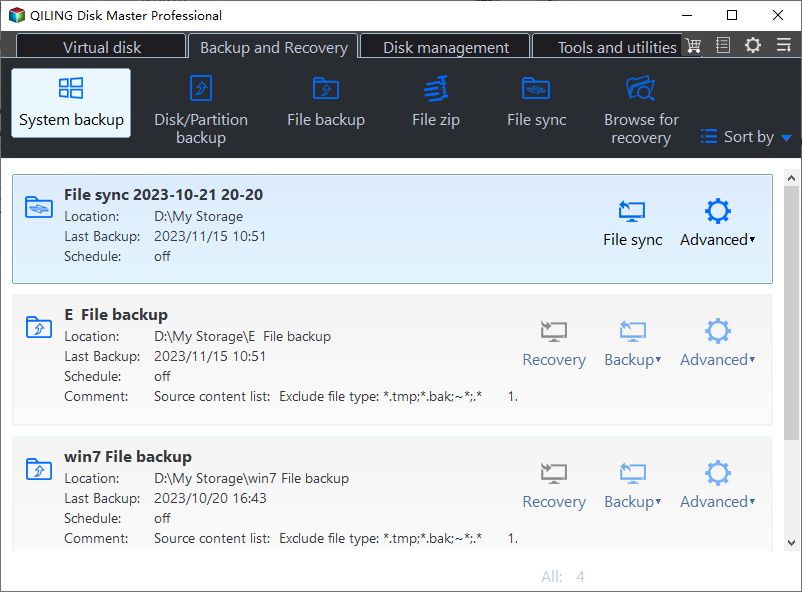
Step 1. Install and open Qiling Disk Master. On the home screen, open "Backup and Recovery" and choose "System Backup". This option automatically includes Windows and the hidden boot partitions, so you do not have to select them one by one.
Step 2. Check the source. The disk where Windows is installed and its system partitions are already ticked for you. If you only need your personal documents, run a separate "File Backup" task instead.

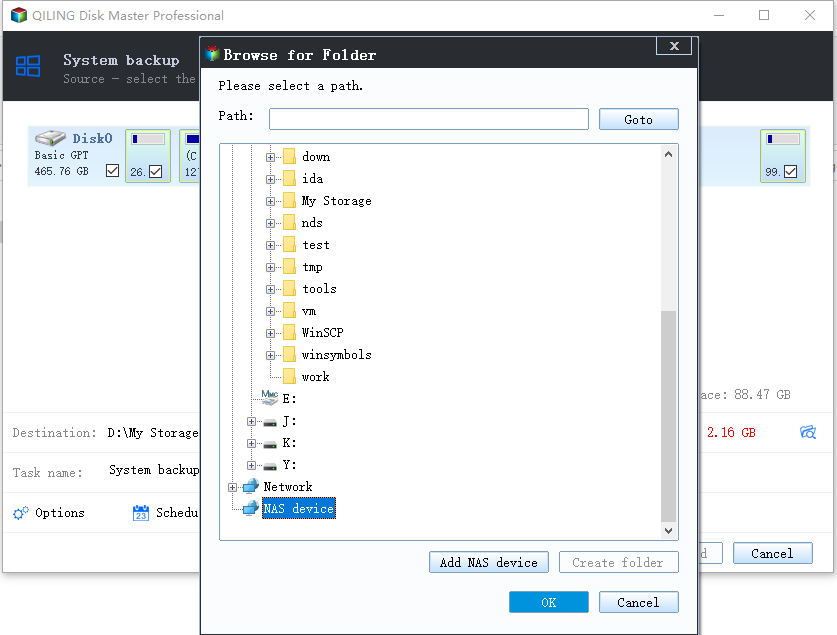
Step 3. Click the destination box and choose where the image should be saved. Use an external HDD or SSD, a NAS, or any drive other than the one you are about to repair, and make sure it has enough free space.
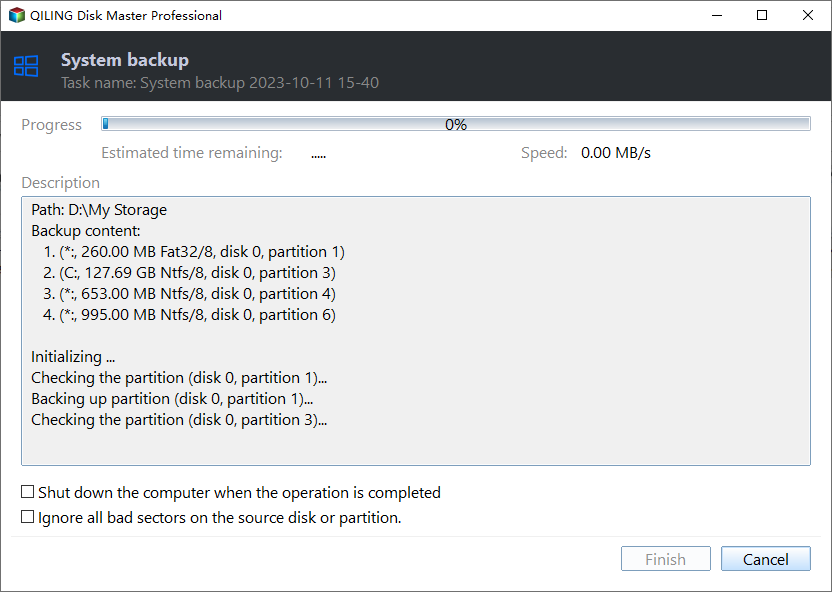
Step 4. Review the task summary and click "Proceed". Wait until the progress bar reaches 100%. Do not unplug the drive or turn off the PC while the backup is running.
Part 2: Restore Windows from the Backup
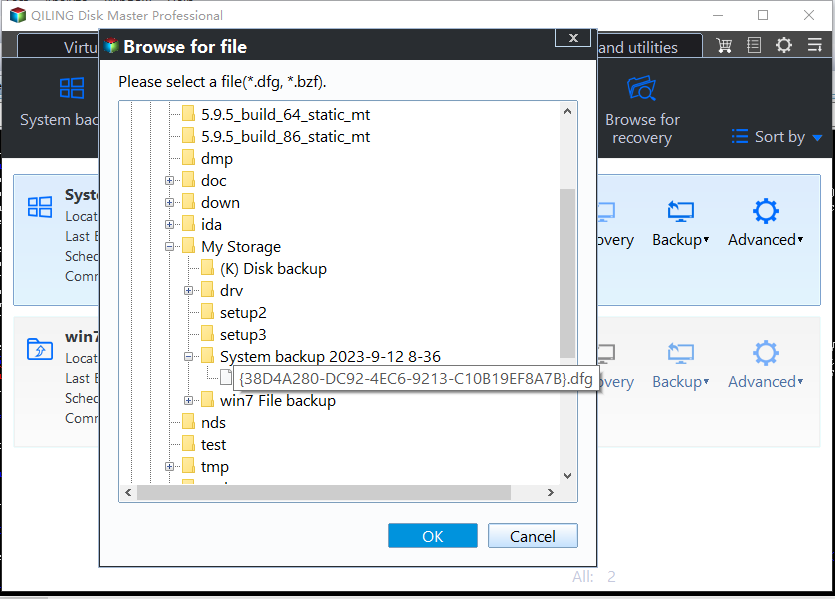
Step 1. Open Qiling Disk Master again, go to "Backup and Recovery", and select the recovery option. Your backup images are listed, so pick the one you created before the repair.
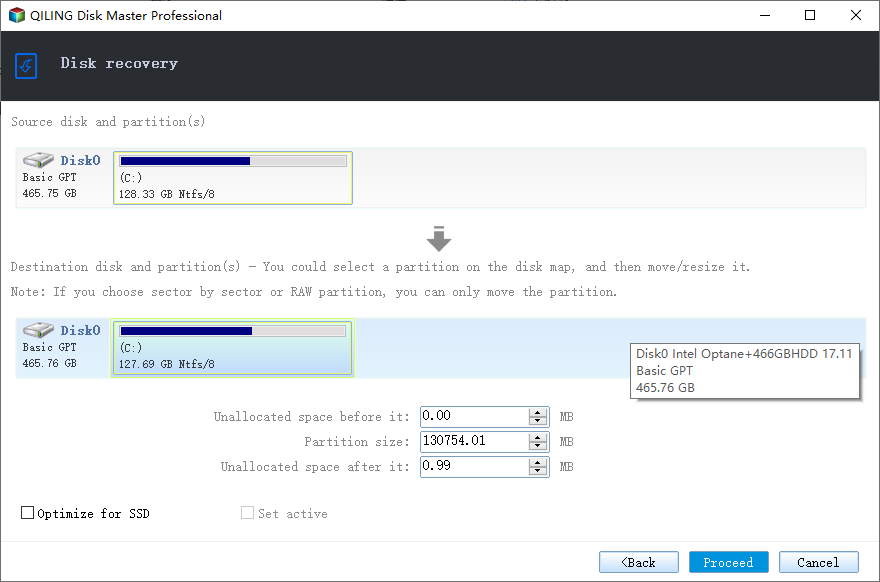
Step 2. Choose the target disk or partition. Normally you restore to the original system disk. If the drive was replaced, select the new disk instead, and the restore rebuilds Windows together with its boot partitions.
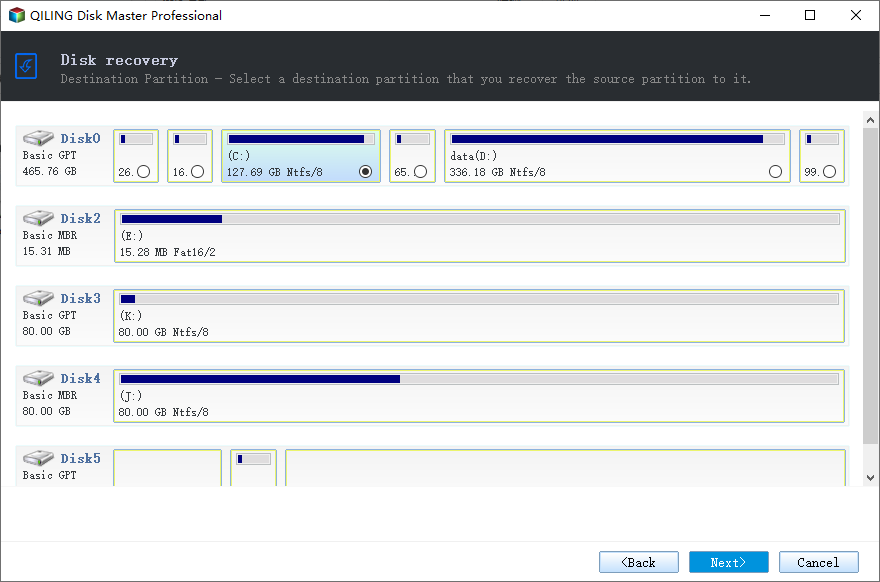
Step 3. Preview the restore plan, click "Proceed", and confirm the warning. The PC restarts to finish the job, and Windows comes back exactly as it was on the day the image was created.
- Note
- Keep the backup image on a separate drive, and refresh it before every major change, such as a Windows update, a driver upgrade, or a disk operation.
Conclusion
The VIDEO_TDR_FAILURE (0x00000116) BSOD is a graphics-related error usually caused by driver issues or GPU overheating. Start by doing a clean install of your graphics driver and checking your GPU temperature. If the error persists, increase the TDR timeout, disable GPU overclocking, and check your GPU hardware and power supply. In most cases, one of these solutions will fix the error.
Before making hardware changes, consider backing up your system with Qiling Backup to protect your data.
Related Articles
- Fix KMODE_EXCEPTION_NOT_HANDLED BSOD (0x0000001E)
- Fix DRIVER_POWER_STATE_FAILURE BSOD (0x0000009F)
- Fix IRQL_NOT_LESS_OR_EQUAL BSOD Error in Windows 11
- Fix WHEA_UNCORRECTABLE_ERROR BSOD in Windows 10
- Fix Windows 10 100% Disk Usage in Task Manager
Is your disk usage stuck at 100% in Task Manager? Learn 10 proven solutions to fix high disk usage and speed up your Windows 10 PC. - How to Clone a Failing Hard Drive in Windows 10 Without Data Loss
Learn how to clone a failing or dying hard drive to a new HDD or SSD, rescue your data, and avoid permanent data loss with sector-by-sector cloning. - LiveKernelEvent 141 in Windows 11: Causes and Fixes (2026)
- Fix CLOCK_WATCHDOG_TIMEOUT BSOD (0x00000101) in Windows 11
- Fix VIDEO_SCHEDULER_INTERNAL_ERROR 0x119 in Windows 11
- Fix THREAD_STUCK_IN_DEVICE_DRIVER (0xEA) in Windows 11
Products
Articles & Tutorials
- Data Recovery
- Data Backup
- File Recovery
- File Backup
- System Backup and Restore
- Disk and Partition Clone
- Technical articles
- Mobile articles
- Disk Master Help
- Windows Data Recovery Tutorials
- Windows Secure Delete Tutorials
- Windows Partition Management Tutorials
- Windows File Backup and Restore Tutorials
- Windows System Backup and Restore Tutorials
- Windows Disk Backup and Restore Tutorials
- Windows Clone Tutorials