Fix THREAD_STUCK_IN_DEVICE_DRIVER (0xEA) in Windows 11
THREAD_STUCK_IN_DEVICE_DRIVER, or stop code 0x000000EA, means that a driver took on a job and never finished it. Windows runs a watchdog that enforces time limits on driver operations, and when the limit expires with the thread still inside the driver, the watchdog stops the machine.
That makes this stop code different from most others. Nothing was corrupted and no data was written to the wrong place. A component simply never answered, and the watchdog refused to wait any longer. This guide explains what the parameters point at and how to find the component that stalled.
PAGE CONTENT
- What 0xEA Means
- Read the Parameters to Find the Stalled Driver
- Fix 1: Address the Graphics Driver First
- Fix 2: Rule Out a Hardware Fault
- Fix 3: Check the Device in Your Trigger
- Fix 4: Power Management and Chipset
- Fix 5: Repair Windows and Verify Stability
- FAQs About THREAD_STUCK_IN_DEVICE_DRIVER
- Back Up and Restore Windows with Qiling Disk Master
What 0xEA Means
Some operations cannot be allowed to run forever. Handing work to a graphics card, waiting for a disk to report that it is idle, or finishing a power state change all have to complete within a reasonable time, or the whole system appears frozen. To enforce that, Windows uses a deferred watchdog: it starts a timer when such an operation begins and declares a violation if the timer expires before the driver returns.
This stop code is that declaration. Microsoft describes the condition as a thread in a device driver spinning endlessly, most likely waiting for hardware to become idle, and adds two important observations. The fault usually indicates either a problem with the hardware itself or a driver that programs the hardware incorrectly, and by far the most common single cause is a bad video card or display driver.
It is worth separating this from corruption stop codes. Here, your files are not being damaged and the kernel is not confused. A driver is stuck in a loop, the hardware may be unresponsive, and the watchdog has given up. That is why the repair focuses on the component that failed to respond rather than on memory or file integrity.
Read the Parameters to Find the Stalled Driver
The parameters are unusually helpful for this stop code, because one of them points at a driver name:
- Parameter 1 — a pointer to the stuck thread object, which is the thread that never returned
- Parameter 2 — a pointer to the deferred watchdog object, the timer that expired
- Parameter 3 — a pointer to the name of the offending driver, which is the closest thing to a named culprit you will get
- Parameter 4 — in a kernel debugger, the number of times this break-in has occurred; on the blue screen it reads as 1
In a debugger, the standard approach is to point the debugger at the stuck thread using the first parameter, then print the stack trace to see exactly where the thread stopped. In practice, bridging the two pieces of evidence is what matters most: read the driver name, then compare it against what you were doing when the screen went blue.
- Note
- The driver named here can still be a victim. A driver that waits for a piece of hardware which never answers will be the one holding the stuck thread, even though the true fault lies with the device. Treat the name as a strong lead, not as a verdict.
Fix 1: Address the Graphics Driver First
Step 1. Because the graphics stack is the most common cause, start there. Download the current driver for your exact model from the graphics vendor, or from the laptop maker if you are on a notebook, where only the validated build is supported.
Step 2. If updating changes nothing, do a clean install. Remove the existing driver with a display driver uninstaller while in Safe Mode, restart, and then install the vendor package on the clean system. This removes leftover filter components that a normal update leaves behind.
Step 3. If the crashes began right after a driver update, roll back to the previous version in Device Manager. A regression is the most common reason for a sudden change in behaviour.
Step 4. Remove any graphics overclock, undervolt, or custom fan curve and return the card to its default settings. An unstable engine is exactly the kind of component that fails to answer the watchdog in time.
Fix 2: Rule Out a Hardware Fault
Step 1. Watch the graphics temperature under the workload that crashes. A card that overheats will stall rather than shut down cleanly, which is what produces this stop code.
Step 2. Look for visual artefacts before the crash, such as flickering, coloured lines, or a sudden black flash. Artefacts followed by a hang point strongly at the card itself.
Step 3. Confirm that the power supply is adequate. If the card needs two power connectors, run separate cables rather than a single daisy-chained cable, because a voltage dip under load looks exactly like a failing component.
Step 4. Reseat the card, clear the dust from the cooler, and check that it sits fully in its slot. If the machine uses a riser cable, test without it.
Step 5. If the machine has integrated graphics, run on them for a few days. If the stop code disappears with the discrete card removed from the picture, the card or its power delivery is implicated.
Fix 3: Check the Device in Your Trigger
Step 1. Write down the exact action that precedes the crash. Not every 0xEA comes from the graphics card; a thread can stall waiting on any device, and the trigger is the fastest way to identify which one.
Step 2. Update the driver and firmware of that device. Storage controllers, docking stations, capture cards, external enclosures, wireless adapters, and audio interfaces all run driver code that can spin while waiting for hardware.
Step 3. Update the chipset drivers from the PC or motherboard maker, since the platform driver sits underneath the device driver and both take part in the stall.
Step 4. Disconnect devices you do not need and test. Some stalls come from a faulty external device or a marginal cable rather than from software, and removing hardware one piece at a time is the quickest way to find it.
Fix 4: Power Management and Chipset
Step 1. Review the power plan. Aggressive link state power management lets a device enter a low-power state and then fail to wake, leaving a driver waiting on hardware that will not answer.
Step 2. Switch the power plan to a balanced or high performance setting as a test, and disable PCI Express link state power management in the advanced power settings.
Step 3. Disable the "allow the computer to turn off this device to save power" option for the device in question, under its entry in Device Manager, and retest.
Step 4. Update the system firmware. Firmware controls how devices are initialised and how power states are entered and left, and an older release can contain defects that a later version corrects.
Fix 5: Repair Windows and Verify Stability
Step 1. Open Command Prompt as administrator and repair the component store, then the protected system files:
DISM /Online /Cleanup-Image /RestoreHealth
sfc /scannow
Step 2. Install all pending Windows updates, including the optional driver updates offered under the advanced options.
Step 3. Check the health of the system drive. A drive that stops responding to commands can leave a thread stuck in the storage driver, so read the SMART attributes and look at the reallocated sector count and the remaining life value.
Step 4. Reproduce the original workload for several days. Because this stop code depends on a component failing to answer, a single clean session proves very little and stability over time is the real confirmation.
FAQs About THREAD_STUCK_IN_DEVICE_DRIVER
Is this stop code dangerous for my files?
No. Nothing is being written to the wrong place. A driver simply never returned, and Windows stopped the machine because the watchdog expired. Your data is not at risk from the stop code itself.
Does it mean my graphics card is failing?
Not necessarily. Microsoft notes that the fault is usually either a hardware problem or a driver that programs the hardware incorrectly, and that a bad video card or display driver is the most common cause. A clean driver install resolves a large share of cases.
Why does it happen only in games or other heavy applications?
Because those are the moments the affected engine is under load. The underlying weakness exists all the time, but it only causes a stall when the component is pushed hard enough to miss the watchdog deadline.
What is the watchdog mentioned in the error?
It is a Windows mechanism that places a time limit on certain driver operations, such as waiting for hardware to become idle. When the limit expires, it reports the violation rather than leaving the system frozen forever.
The error names a driver I have never heard of. Is that the problem?
Treat it as a strong lead rather than a verdict. The named driver is often the one waiting on hardware, while the real fault lies with the device it is waiting for.
Will resetting Windows fix it?
Only if the cause was a corrupted system component. A reset reinstalls the same drivers and does nothing about overheating, an unstable overclock, or a failing device.
Back Up and Restore Windows with Qiling Disk Master
Fixing a stalled device means Safe Mode sessions, driver removals, and hardware changes, and any of those can leave a machine that will not start. Create a full system backup before you begin. Qiling Disk Master handles both the backup and the restore.
Part 1: Create a Full System Backup
Step 1. Install and open Qiling Disk Master. On the home screen, open "Backup and Recovery" and choose "System Backup". This option automatically includes Windows and the hidden boot partitions, so you do not have to select them one by one.
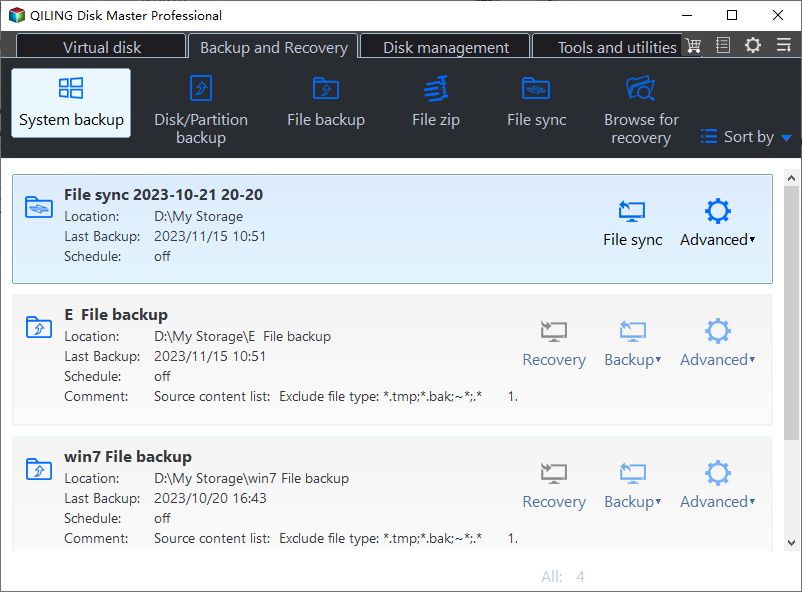
Step 2. Check the source. The disk where Windows is installed and its system partitions are already ticked for you. If you only need your personal documents, run a separate "File Backup" task instead.

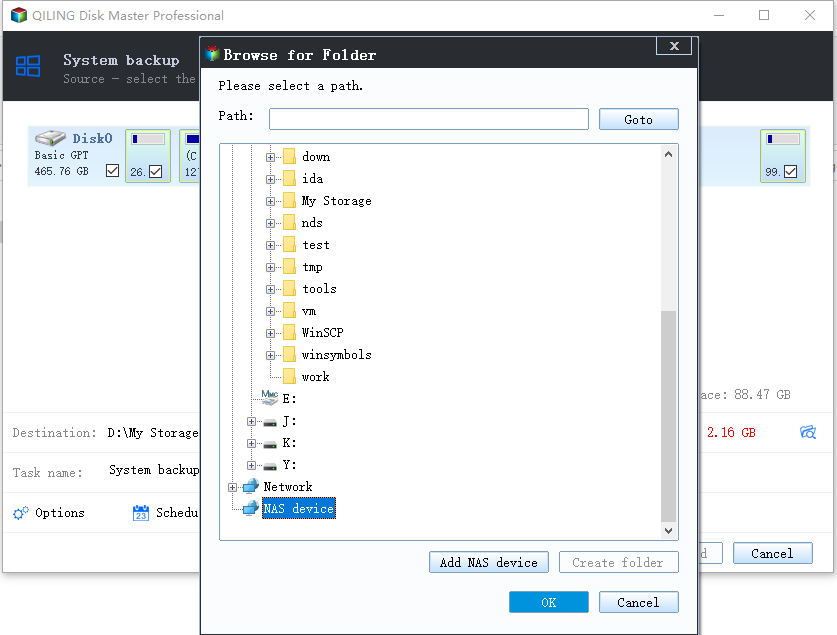
Step 3. Click the destination box and choose where the image should be saved. Use an external HDD or SSD, a NAS, or any drive other than the one Windows is installed on, and make sure it has enough free space.
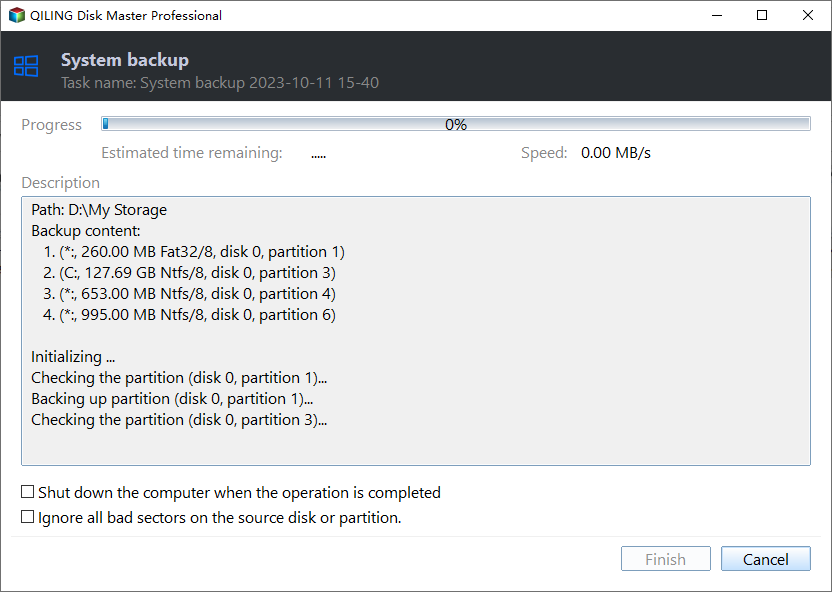
Step 4. Review the task summary and click "Proceed". Wait until the progress bar reaches 100%. Do not unplug the drive or turn off the PC while the backup is running.
Part 2: Restore Windows from the Backup
Step 1. Open Qiling Disk Master again, go to "Backup and Recovery", and select the recovery option. Your backup images are listed, so pick the one you created before the changes began.
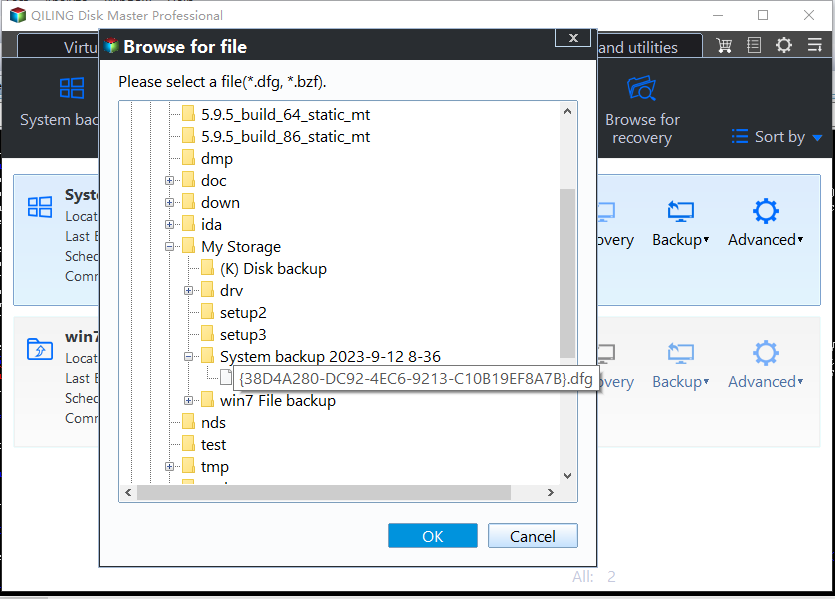
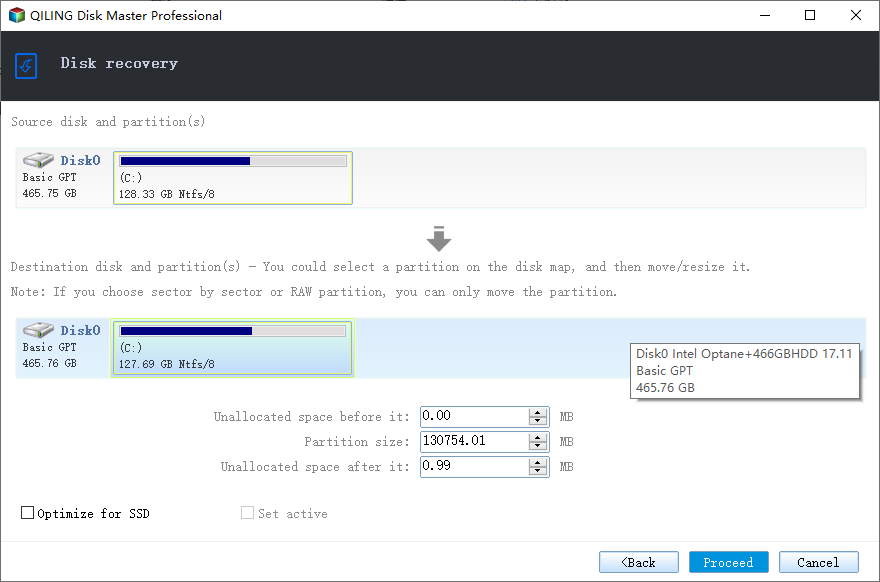
Step 2. Choose the target disk or partition. Normally you restore to the original system disk. If the drive was replaced, select the new disk instead, and the restore rebuilds Windows together with its boot partitions.
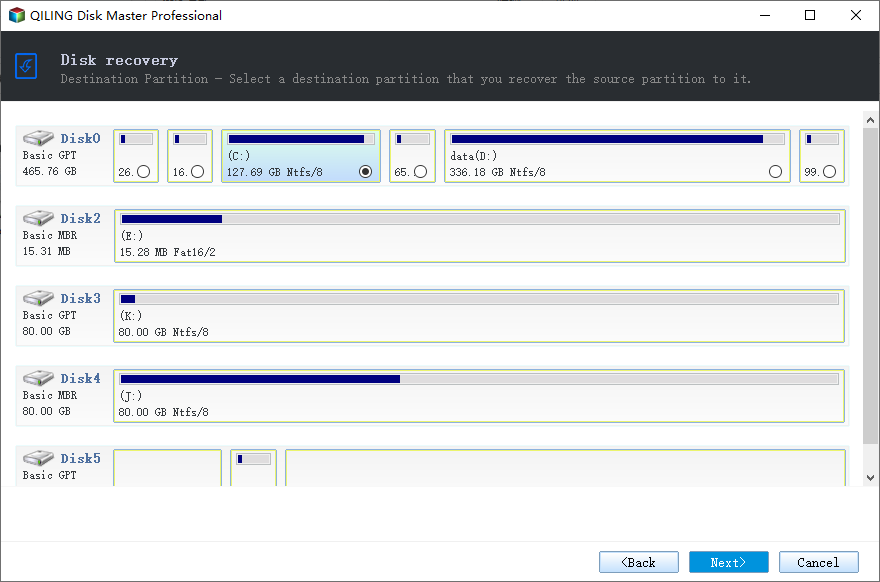
Step 3. Preview the restore plan, click "Proceed", and confirm the warning. The PC restarts to finish the job, and Windows comes back exactly as it was on the day the image was created, with your files and programs intact.
- Note
- Keep the backup image on a separate drive, and refresh it before every risky step, such as removing the graphics driver, flashing firmware, or changing hardware.
Conclusion
THREAD_STUCK_IN_DEVICE_DRIVER means a driver never returned and the Windows watchdog stopped waiting. Unlike corruption stop codes, nothing was damaged; a component simply failed to answer. Parameter 3 points at the offending driver name, and Microsoft notes that a bad video card or display driver is the most common single cause, so start with a clean graphics driver install and remove any overclock. If the graphics stack is not the answer, look at the device in your trigger, update the chipset and firmware, and review power management settings that could leave hardware unable to wake. Confirm the fix by reproducing the original workload over several days.
Protect your PC with Qiling Backup—create a system image before your next troubleshooting step.
Related Articles
- Fix VIDEO_TDR_FAILURE BSOD in Windows 11
The other stop code a display driver produces when it stops responding. Read both before you decide the card is at fault. - Fix VIDEO_SCHEDULER_INTERNAL_ERROR 0x119 in Windows 11
The graphics stack has three distinct failure modes. This one covers the driver reporting impossible data instead of stalling. - Screen Freezes but the PC Keeps Running: Causes and Fixes
- Computer Keeps Crashing When Playing Games: How to Fix It
Load-dependent stalls show up in games first. This guide walks through power, cooling, and driver causes in order. - Windows 11 Keeps Crashing? 8 Proven Fixes
Products
Articles & Tutorials
- Data Recovery
- Data Backup
- File Recovery
- File Backup
- System Backup and Restore
- Disk and Partition Clone
- Technical articles
- Mobile articles
- Disk Master Help
- Windows Data Recovery Tutorials
- Windows Secure Delete Tutorials
- Windows Partition Management Tutorials
- Windows File Backup and Restore Tutorials
- Windows System Backup and Restore Tutorials
- Windows Disk Backup and Restore Tutorials
- Windows Clone Tutorials