Fix DRIVER_POWER_STATE_FAILURE BSOD (0x0000009F) in Windows 10/11
The DRIVER_POWER_STATE_FAILURE error (stop code 0x0000009F) is one of the most common Blue Screen of Death (BSOD) errors in Windows 10 and Windows 11. It usually occurs when a device driver enters an inconsistent power state during sleep, hibernation, or shutdown. Your PC suddenly crashes and restarts, often losing unsaved work.
Fortunately, this BSOD is usually fixable. In this guide, we explain what causes DRIVER_POWER_STATE_FAILURE and walk you through 8 proven solutions to resolve it, from updating drivers to adjusting power settings and diagnosing hardware issues.
PAGE CONTENT
- What Causes DRIVER_POWER_STATE_FAILURE (0x0000009F)?
- Solution 1: Update or Roll Back Device Drivers
- Solution 2: Adjust Power Management Settings
- Solution 3: Run SFC and DISM Scans
- Solution 4: Run the Blue Screen Troubleshooter
- Solution 5: Check for Windows Updates
- Solution 6: Disable Fast Startup
- Solution 7: Check Hardware (RAM, HDD/SSD)
- Solution 8: Restore or Reset Windows
- FAQs About DRIVER_POWER_STATE_FAILURE
- Back Up and Restore Windows with Qiling Disk Master
What Causes DRIVER_POWER_STATE_FAILURE (0x0000009F)?
The DRIVER_POWER_STATE_FAILURE error happens when a driver does not respond correctly to a power state transition request (such as entering or exiting sleep mode). Common causes include:
- Outdated, corrupted, or incompatible device drivers (especially network, graphics, and chipset drivers)
- Incorrect power management settings for a device
- Windows Fast Startup conflicts
- Corrupted system files
- Faulty hardware (RAM, hard drive, or peripheral devices)
- Recent Windows updates that introduced driver incompatibilities
- Note
- If the BSOD occurs frequently, write down the stop code and any driver name shown on the error screen. This information helps identify the problematic driver.
Solution 1: Update or Roll Back Device Drivers
Driver issues are the most common cause of DRIVER_POWER_STATE_FAILURE. Update your drivers, especially for the network adapter, graphics card, and chipset.
Step 1. Press Win + X and select "Device Manager".
Step 2. Expand categories like "Network adapters", "Display adapters", and "System devices".
Step 3. Right-click each device and select "Update driver". Choose "Search automatically for drivers".
Step 4. If updating does not fix the issue, right-click the device and select "Properties" > "Driver" tab > "Roll Back Driver" (available if a previous version is installed).
Step 5. For the best results, download the latest drivers directly from the manufacturer's website (NVIDIA, AMD, Intel, Realtek, etc.) and install them manually.
Solution 2: Adjust Power Management Settings
Disabling power saving for network adapters and other devices can prevent the driver from entering an inconsistent power state.
Step 1. Open Device Manager and expand "Network adapters".
Step 2. Right-click your network adapter and select "Properties".
Step 3. Go to the "Power Management" tab.
Step 4. Uncheck "Allow the computer to turn off this device to save power". Click "OK".
Step 5. Repeat this for other devices that have a Power Management tab, such as USB controllers and Bluetooth adapters.
Solution 3: Run SFC and DISM Scans
Corrupted system files can trigger BSOD errors. Use the System File Checker (SFC) and DISM tools to repair them.
Step 1. Press Win + X and select "Windows Terminal (Admin)" or "Command Prompt (Admin)".
Step 2. Run the DISM tool to repair the Windows image:
DISM /Online /Cleanup-Image /RestoreHealth
Step 3. After DISM completes, run the SFC scan:
sfc /scannow
Step 4. Wait for the scan to finish. If corrupted files are found and repaired, restart your PC.
Solution 4: Run the Blue Screen Troubleshooter
Windows includes a built-in troubleshooter that can detect and fix common BSOD causes.
Step 1. Go to Settings > System > Troubleshoot > Other troubleshooters.
Step 2. Find "Blue Screen" and click "Run".
Step 3. Follow the on-screen instructions. The troubleshooter will scan for driver issues, memory problems, and other common BSOD causes.
Solution 5: Check for Windows Updates
Microsoft regularly releases updates that fix driver compatibility and stability issues. Installing the latest updates may resolve the DRIVER_POWER_STATE_FAILURE error.
Step 1. Go to Settings > Windows Update.
Step 2. Click "Check for updates".
Step 3. Install any available updates, including optional driver updates.
Step 4. Restart your PC after the updates are installed.
Solution 6: Disable Fast Startup
Fast Startup is a Windows feature that combines shutdown and hibernation to speed up boot time. However, it can cause driver power state issues. Disabling it often fixes BSOD errors that occur during shutdown or startup.
Step 1. Open Control Panel > Power Options.
Step 2. Click "Choose what the power buttons do" on the left.
Step 3. Click "Change settings that are currently unavailable".
Step 4. Uncheck "Turn on fast startup (recommended)".
Step 5. Click "Save changes".
Solution 7: Check Hardware (RAM, HDD/SSD)
If software fixes do not work, the issue may be hardware-related. Faulty RAM or a failing hard drive can cause BSOD errors.
Check RAM with Windows Memory Diagnostic
Step 1. Press Win + R, type mdsched.exe, and press Enter.
Step 2. Click "Restart now and check for problems".
Step 3. Windows will restart and run a memory test. When it finishes, check the results for memory errors.
Check Hard Drive Health
Step 1. Open File Explorer, right-click your system drive (C:), and select "Properties".
Step 2. Go to the "Tools" tab and click "Check" under "Error checking".
Step 3. If errors are found, Windows will attempt to repair them. For a failing drive, back up your data immediately and replace the drive.
For a comprehensive disk health check, you can also use the CHKDSK command:
chkdsk C: /f /r
Solution 8: Restore or Reset Windows
If none of the above solutions work, the DRIVER_POWER_STATE_FAILURE error may be caused by a deep system corruption. You can try:
- System Restore: Restore Windows to a previous point before the BSOD started. Go to Control Panel > Recovery > Open System Restore.
- Reset Windows: Go to Settings > System > Recovery > Reset PC. Choose "Keep my files" to preserve personal data while reinstalling Windows.
Before resetting, make sure to back up your important data to avoid data loss.
FAQs About DRIVER_POWER_STATE_FAILURE
What is DRIVER_POWER_STATE_FAILURE?
DRIVER_POWER_STATE_FAILURE (stop code 0x0000009F) is a BSOD error that occurs when a device driver fails to respond correctly to a power state change, such as entering or exiting sleep mode.
Can outdated drivers cause DRIVER_POWER_STATE_FAILURE?
Yes. Outdated, corrupted, or incompatible drivers are the most common cause of this error, especially network, graphics, and chipset drivers. Updating or rolling back drivers usually fixes the issue.
Does disabling Fast Startup help fix this BSOD?
Yes. Fast Startup can interfere with driver power state transitions. Disabling it is a common and effective fix for DRIVER_POWER_STATE_FAILURE errors that occur during shutdown or startup.
How do I find which driver is causing the BSOD?
Check the BSOD error screen for a driver name (e.g., a .sys file). You can also use Windows Event Viewer (Win + X > Event Viewer > Windows Logs > System) to find error logs that mention the problematic driver.
Is DRIVER_POWER_STATE_FAILURE caused by hardware failure?
It can be. While software (drivers, settings, system files) is the most common cause, faulty RAM, a failing hard drive, or a malfunctioning peripheral can also trigger this error. Run hardware diagnostics if software fixes do not work.
Back Up and Restore Windows with Qiling Disk Master
Before you update drivers, change power settings, or roll back a device driver to stop DRIVER_POWER_STATE_FAILURE, create a full system backup. Sleep and hibernation failures almost always trace back to device drivers, so a system image lets you undo every change in minutes if the blue screen returns. Qiling Disk Master handles both the backup and the restore.
Part 1: Create a Full System Backup
Step 1. Install and open Qiling Disk Master. On the home screen, open "Backup and Recovery" and choose "System Backup". This option automatically includes Windows and the hidden boot partitions, so you do not have to select them one by one.
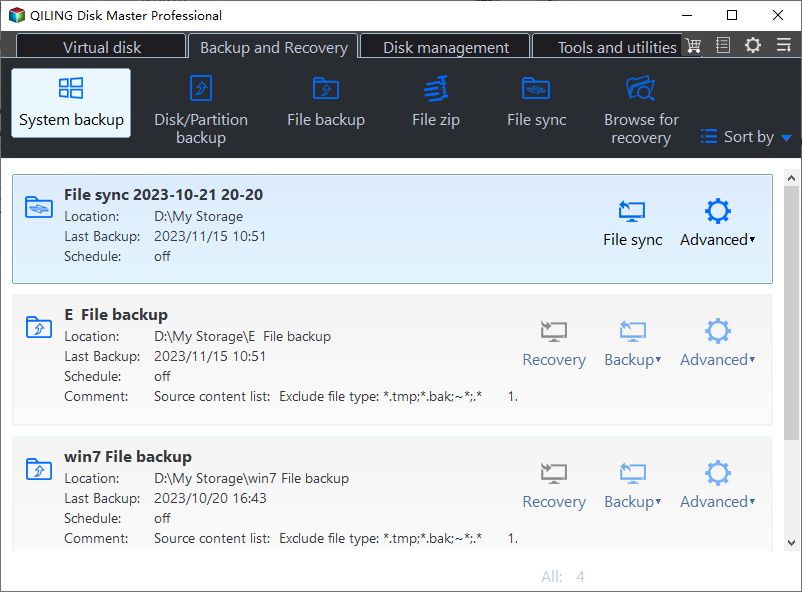
Step 2. Check the source. The disk where Windows is installed and its system partitions are already ticked for you. If you only need your personal documents, run a separate "File Backup" task instead.

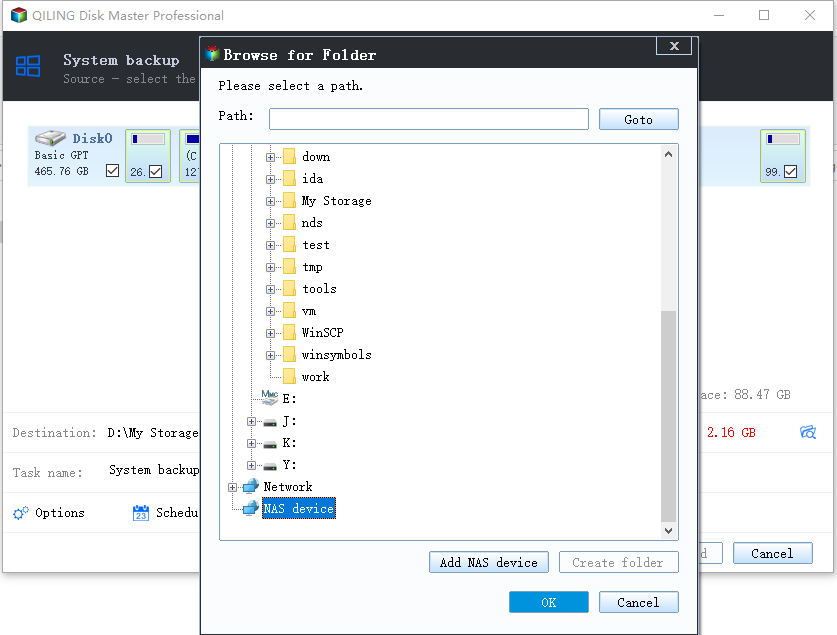
Step 3. Click the destination box and choose where the image should be saved. Use an external HDD or SSD, a NAS, or any drive other than the one you are about to repair, and make sure it has enough free space.
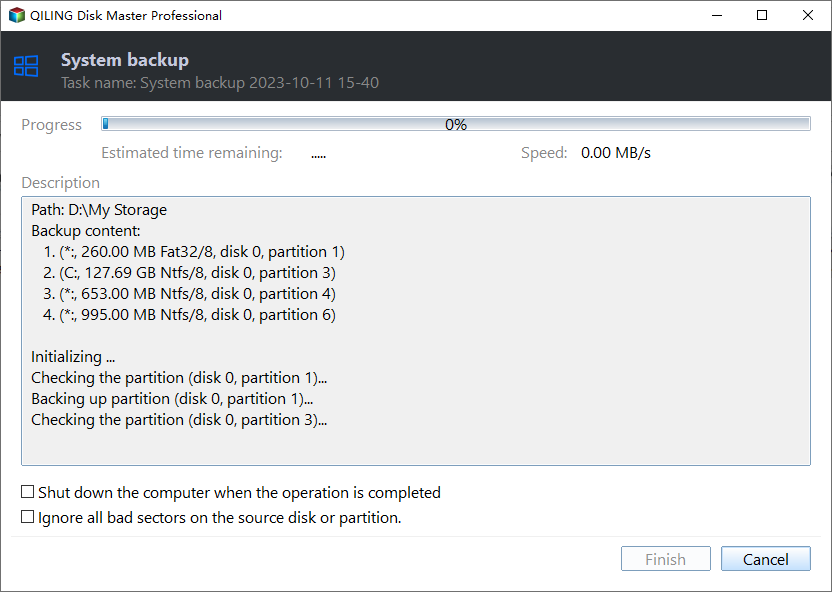
Step 4. Review the task summary and click "Proceed". Wait until the progress bar reaches 100%. Do not unplug the drive or turn off the PC while the backup is running.
Part 2: Restore Windows from the Backup
Step 1. Open Qiling Disk Master again, go to "Backup and Recovery", and select the recovery option. Your backup images are listed, so pick the one you created before the repair.
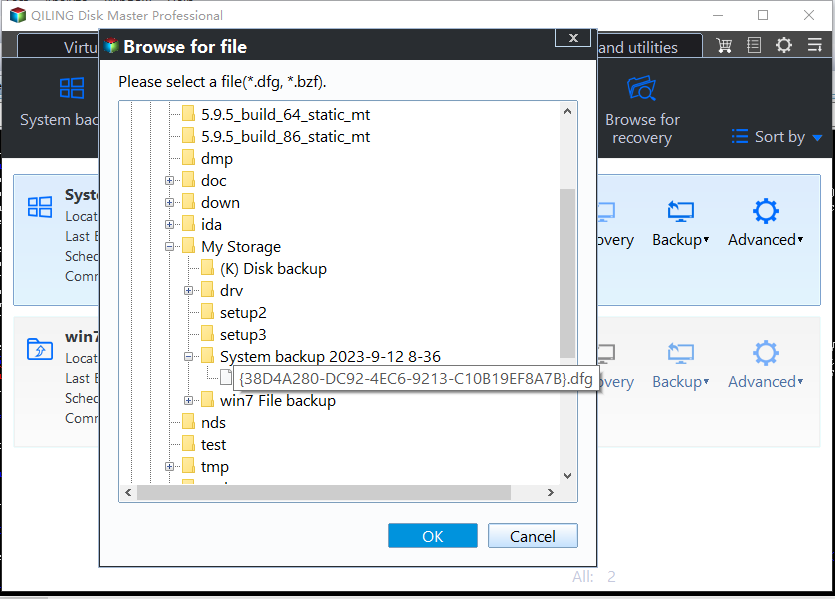
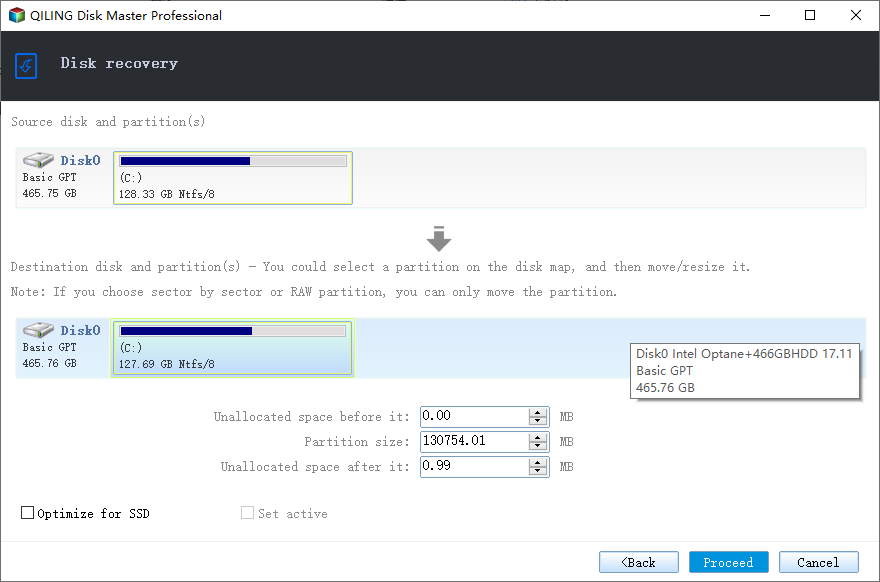
Step 2. Choose the target disk or partition. Normally you restore to the original system disk. If the drive was replaced, select the new disk instead, and the restore rebuilds Windows together with its boot partitions.
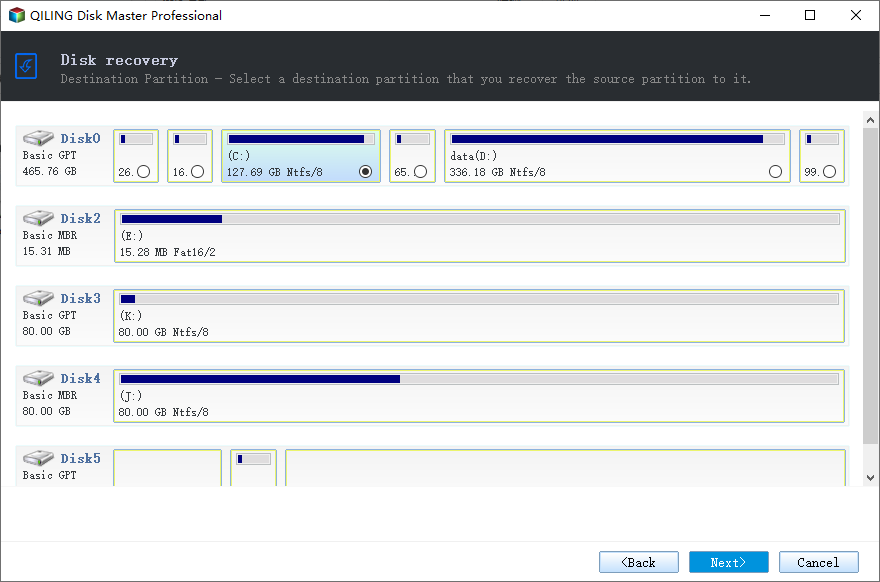
Step 3. Preview the restore plan, click "Proceed", and confirm the warning. The PC restarts to finish the job, and Windows comes back exactly as it was on the day the image was created.
- Note
- Keep the backup image on a separate drive, and refresh it before every major change, such as a Windows update, a driver upgrade, or a disk operation.
Conclusion
The DRIVER_POWER_STATE_FAILURE (0x0000009F) BSOD is usually caused by driver or power management issues. Start by updating your device drivers and disabling power saving for network and USB devices. If that does not work, run SFC/DISM scans, disable Fast Startup, and check your hardware. In most cases, one of these solutions will resolve the error and get your PC running smoothly again.
If you need to back up your data before trying advanced fixes like resetting Windows, consider using Qiling Backup to protect your important files.
Related Articles
- Fix IRQL_NOT_LESS_OR_EQUAL BSOD Error in Windows 11
- Fix Stop Code MEMORY_MANAGEMENT BSOD in Windows 10/11
- Fix PAGE_FAULT_IN_NONPAGED_AREA BSOD Error
- Fix DPC_WATCHDOG_VIOLATION BSOD in Windows 10
- Fix Windows 10 100% Disk Usage in Task Manager
Is your disk usage stuck at 100% in Task Manager? Learn 10 proven solutions to fix high disk usage and speed up your Windows 10 PC. - How to Clone a Failing Hard Drive in Windows 10 Without Data Loss
Learn how to clone a failing or dying hard drive to a new HDD or SSD, rescue your data, and avoid permanent data loss with sector-by-sector cloning. - Kernel-Power Event 41 in Windows 11: How to Find the Cause
- Fix MULTIPLE_IRP_COMPLETE_REQUESTS 0x44 in Windows 11
Products
Articles & Tutorials
- Data Recovery
- Data Backup
- File Recovery
- File Backup
- System Backup and Restore
- Disk and Partition Clone
- Technical articles
- Mobile articles
- Disk Master Help
- Windows Data Recovery Tutorials
- Windows Secure Delete Tutorials
- Windows Partition Management Tutorials
- Windows File Backup and Restore Tutorials
- Windows System Backup and Restore Tutorials
- Windows Disk Backup and Restore Tutorials
- Windows Clone Tutorials