Windows 11 26H2: Release Date, Features and How to Get It
Windows 11 26H2 is the next feature update for Windows 11, and it will not arrive the way older updates did. Instead of a multi-gigabyte reinstall, Windows 11 26H2 is delivered as an enablement package that simply switches on features already sitting dormant in your system.
This guide explains what 26H2 is, when it lands, how it differs from 26H1, and how to install it with almost no downtime.
PAGE CONTENT
- What Is Windows 11 26H2
- Windows 11 26H2 Release Date
- What Actually Changes in 26H2
- 26H1 vs 26H2: Do Not Confuse Them
- How to Get Windows 11 26H2
- Prepare Your PC Before Installing 26H2
- How to Roll Back If 26H2 Causes Problems
- FAQs About Windows 11 26H2
- Back Up and Restore Windows with Qiling Disk Master
What Is Windows 11 26H2
Windows 11 26H2 is the second-half 2026 feature update. Like 25H2 before it, it is built on the same underlying source code and servicing branch as 24H2 and 25H2, which is why Microsoft can ship it as a small enablement package rather than a full operating system replacement.
An enablement package works like a switch. The code it activates has already been delivered to your PC through ordinary monthly cumulative updates and has been sitting inactive. Installing 26H2 flips those features on and updates the version number, without replacing the core system files.
That design has three practical consequences:
- The download is small compared with a classic feature update
- Installation is fast, and restarts take minutes rather than an hour
- Drivers, apps, and personal files are untouched, so compatibility risk is much lower
Windows 11 26H2 Release Date
Microsoft has confirmed that Windows 11 26H2 will reach general availability later in 2026, following the same second-half rhythm as previous releases. It is not available to the general public at the time of writing.
Once it ships, organizations will be able to move devices running Windows 11 25H2 or 24H2 to 26H2 with minimal downtime, which is the main reason the enablement package model exists. Consumer devices that are not managed by an IT department generally receive the update through a staged rollout, delivered automatically when Microsoft considers the device ready.
- Note
- Release timing can shift. Instead of watching for a fixed date, open Settings > Windows Update and use "Check for updates". When your device is eligible, the 26H2 option appears there on its own.
What Actually Changes in 26H2
Because 26H2 shares its servicing branch with 24H2 and 25H2, most of its functionality has already been delivered to your PC through monthly updates. The enablement package activates that dormant code and raises the version number.
For everyday users this means two things:
- You should not expect a dramatic visual overhaul, because the component pieces arrived gradually throughout 2026
- You may notice features turning on shortly after the update, when the package activates code that was previously present but inactive
For IT teams, the bigger change is operational. Moving from 25H2 or 24H2 to 26H2 takes far less planning than a traditional feature update, because the underlying system files are already in place and only need to be switched on.
If you want the full list of what is new, treat Microsoft's official release notes for 26H2 as the authoritative source and read them before installing rather than after.
26H1 vs 26H2: Do Not Confuse Them
These two names sound almost identical, but they are completely different releases and this causes real confusion.
Windows 11 26H1 is a hardware-optimized release created with device and silicon partners. It is available only as a preinstalled experience on selected new devices, it is not offered through Windows Update, and it is not intended as a feature update for existing PCs.
Windows 11 26H2 is the mainstream feature update for existing Windows 11 devices, delivered through the enablement package described above.
So if you own an existing PC, 26H2 is the release that concerns you. If you are shopping for a new device that ships with 26H1, that is simply the factory configuration of that hardware, and you should not try to install 26H1 on an older machine to "match" it.
How to Get Windows 11 26H2
When 26H2 becomes available for your device, installation is straightforward.
Step 1. Create a full system backup first. The update itself is low risk, but any change to system files deserves a restore point you can rely on.
Step 2. Open Settings > Windows Update and click "Check for updates".
Step 3. If your device is ready, an option to download and install Windows 11, version 26H2 appears. Select it.
Step 4. Choose a restart time, or postpone the restart until you are free. Active hours can also keep Windows from restarting while you work.
Step 5. Wait for the restart to complete, then press Win + R, type winver, and confirm the version now reads 26H2.
Step 6. If the option does not appear, use the Installation Assistant or the Media Creation Tool from Microsoft once the release is published there, and let Windows Update install the latest cumulative update first so the dormant code is present.
- Important
- Do not force the update on a PC that is already unstable. Fix boot errors, failing drives, and full system partitions first. An enablement package is small, but it still requires a working system to activate correctly.
Prepare Your PC Before Installing 26H2
Step 1. Run a full system backup so you can return to your current version instantly if anything misbehaves.
Step 2. Check free space on the Windows drive. Even a small package needs room to stage files, and a nearly full C drive is the most common reason an update fails.
Step 3. Install all pending cumulative updates. Because 26H2 activates code delivered by those updates, skipping them can leave the enablement package without the files it expects.
Step 4. Update chipset, storage, and graphics drivers, and note that older RGB lighting utilities have caused instability after recent Windows updates.
Step 5. Write down your BitLocker recovery key if encryption is enabled, and keep the laptop plugged in during installation.
Step 6. Disconnect unusual peripherals such as capture cards, docking stations with custom drivers, and legacy printers until the update is finished.
How to Roll Back If 26H2 Causes Problems
If the update misbehaves, you have more than one route back.
Step 1. Go to Settings > System > Recovery and click "Go back" next to "Previous version of Windows". This option is time limited, so use it early.
Step 2. If the "Go back" option has expired, restore the system image you created before the update. This returns Windows, its drivers, and your files to the exact state of the backup.
Step 3. If the PC will not boot at all, boot from your Windows installation media, choose Troubleshoot > Advanced options, and use Startup Repair or the restore tools there.
Step 4. For boot failures that survive repairs, rebuild the boot configuration with bootrec commands from the recovery Command Prompt.
FAQs About Windows 11 26H2
Is Windows 11 26H2 available now?
Not to the general public at the time of writing. Microsoft has confirmed that 26H2 ships later in 2026 and is delivered through Windows Update once your device is considered ready.
Why is the 26H2 download so small?
Because 26H2 is an enablement package. The feature code was already delivered through monthly cumulative updates, so the package only has to activate it and update the version number.
Will 26H2 delete my programs or files?
No. An enablement package activates dormant features rather than replacing system files, so applications, settings, and documents are normally preserved. A backup is still recommended.
Should I install 26H1 on my existing PC?
No. Windows 11 26H1 is a hardware-optimized release available only as a preinstalled experience on selected new devices. It is not offered through Windows Update and is not meant for existing machines.
Do I need to install 25H2 before 26H2?
Not necessarily, because 26H2 shares the same servicing branch as 25H2 and 24H2. Microsoft has confirmed that devices on either 25H2 or 24H2 can move to 26H2. Installing all cumulative updates first is what matters.
What if I am still on Windows 11 24H2?
Check your support status first. Home and Pro editions of 24H2 reach end of support on October 13, 2026, so moving forward to 25H2 or 26H2 is the recommended step.
Back Up and Restore Windows with Qiling Disk Master
Before you install the 26H2 enablement package, roll back a failed update, or rebuild the boot configuration, create a full system backup. Even a small version change rewrites core system files, and a system image is the fastest way back to a known-good state. Qiling Disk Master handles both the backup and the restore.
Part 1: Create a Full System Backup
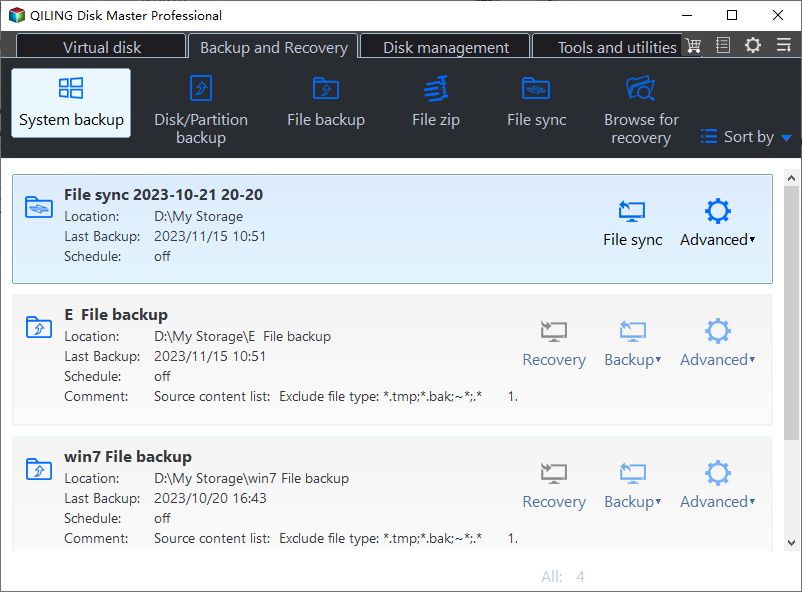
Step 1. Install and open Qiling Disk Master. On the home screen, open "Backup and Recovery" and choose "System Backup". This option automatically includes Windows and the hidden boot partitions, so you do not have to select them one by one.
Step 2. Check the source. The disk where Windows is installed and its system partitions are already ticked for you. If you only need your personal documents, run a separate "File Backup" task instead.

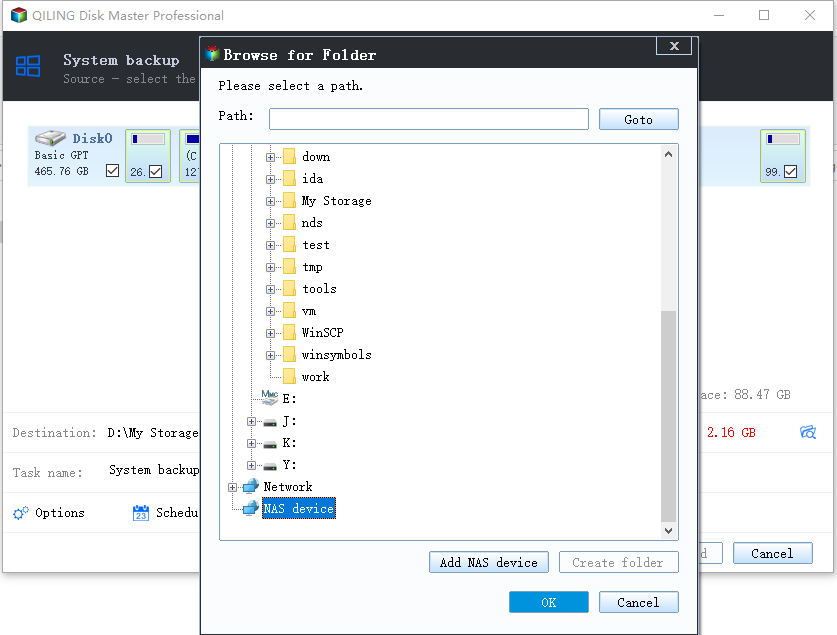
Step 3. Click the destination box and choose where the image should be saved. Use an external HDD or SSD, a NAS, or any drive other than the one Windows is installed on, and make sure it has enough free space.
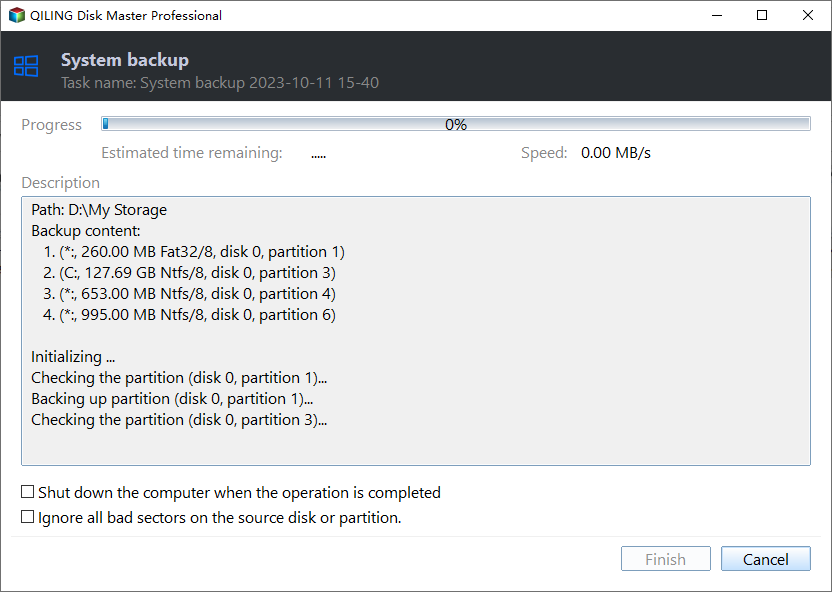
Step 4. Review the task summary and click "Proceed". Wait until the progress bar reaches 100%. Do not unplug the drive or turn off the PC while the backup is running.
Part 2: Restore Windows from the Backup
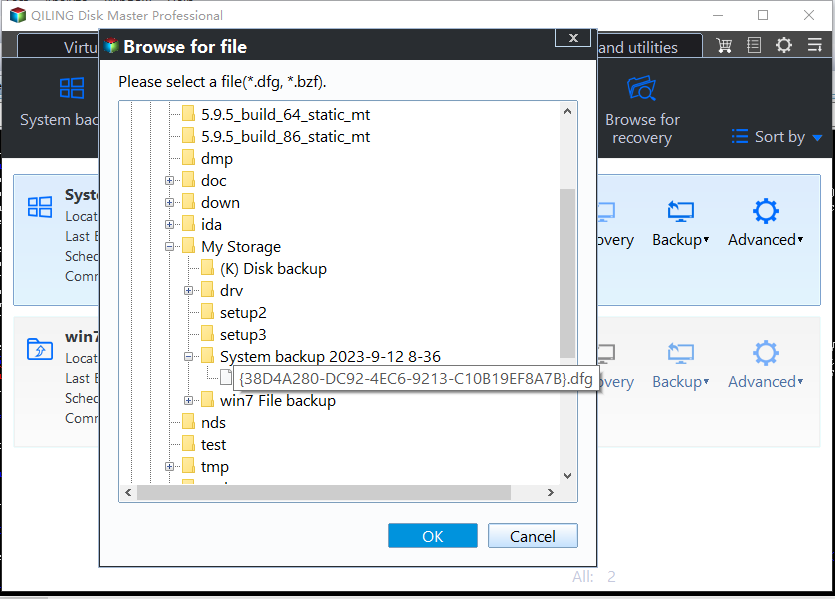
Step 1. Open Qiling Disk Master again, go to "Backup and Recovery", and select the recovery option. Your backup images are listed, so pick the one you created before the update.
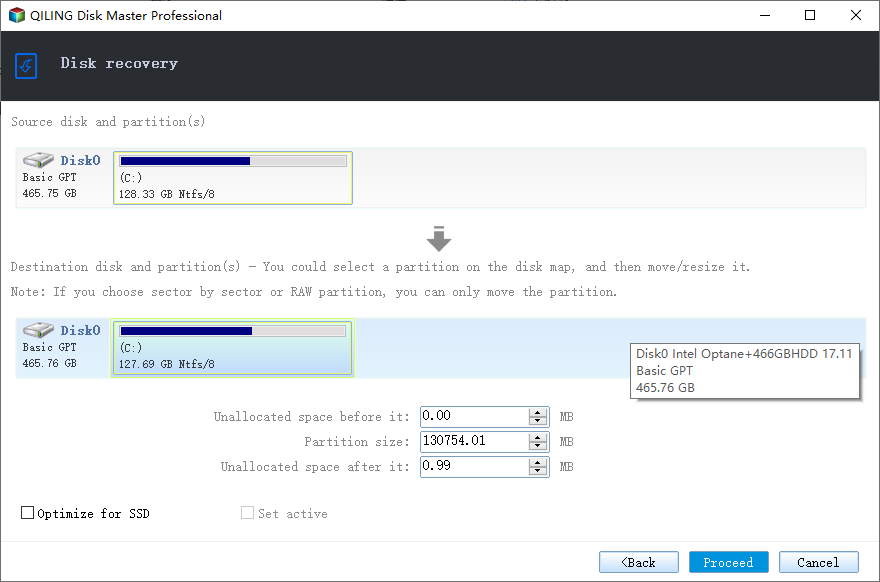
Step 2. Choose the target disk or partition. Normally you restore to the original system disk. If the drive was replaced, select the new disk instead, and the restore rebuilds Windows together with its boot partitions.
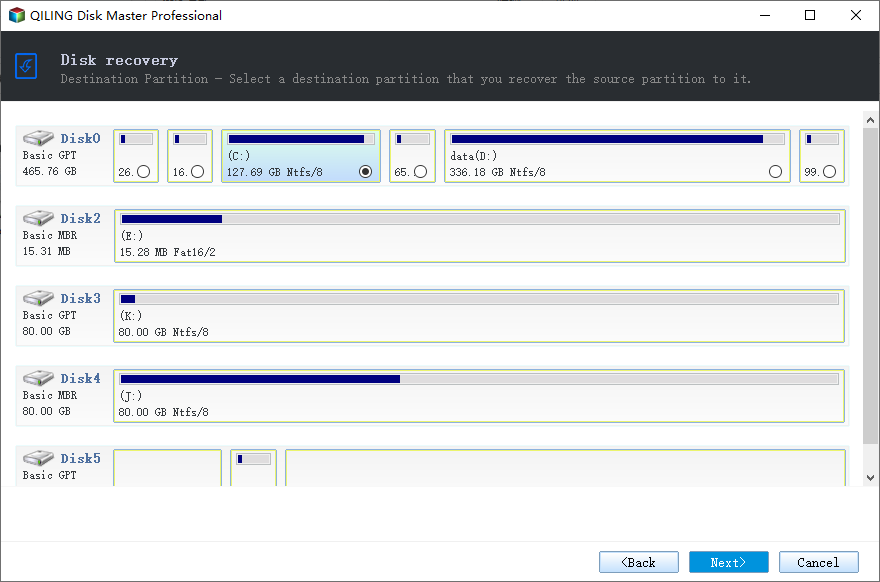
Step 3. Preview the restore plan, click "Proceed", and confirm the warning. The PC restarts to finish the job, and Windows comes back exactly as it was on the day the image was created, with your files and programs intact.
- Note
- Keep the backup image on a separate drive, and refresh it before every major change, such as a Windows feature update, a driver upgrade, or a disk operation.
Conclusion
Windows 11 26H2 is the second-half 2026 feature update, shipped as an enablement package on top of the same servicing branch as 25H2 and 24H2. Because the feature code is already on your PC, installation is small and quick, which also makes it one of the safest feature updates in years. Install all pending cumulative updates, free up space on the Windows drive, and create a system image before you start.
Protect your PC with Qiling Backup—create a system image before your next Windows update.
Related Articles
- Windows 11 24H2 End of Support: What to Do Next (2026)
- Windows 11 25H2 Problems and How to Fix Them (2026 Guide)
- Windows 11 24H2 Problems and How to Fix Them
- Fix Windows 10/11 Won't Boot: 8 Proven Solutions
If a feature update leaves your PC stuck before the login screen, follow these eight proven solutions to get Windows 11 booting again without reinstalling. - How to Clone HDD to SSD Without Reinstalling Windows
Moving to a faster SSD is the ideal moment to prepare for a new Windows update. Learn how to clone your existing system and keep every program and file.
Products
Articles & Tutorials
- Data Recovery
- Data Backup
- File Recovery
- File Backup
- System Backup and Restore
- Disk and Partition Clone
- Technical articles
- Mobile articles
- Disk Master Help
- Windows Data Recovery Tutorials
- Windows Secure Delete Tutorials
- Windows Partition Management Tutorials
- Windows File Backup and Restore Tutorials
- Windows System Backup and Restore Tutorials
- Windows Disk Backup and Restore Tutorials
- Windows Clone Tutorials