Fix Windows 11 Search Not Working (2026 Guide)
Windows Search is how you find files, apps, settings, and web results in Windows 11. When Windows 11 search stops working, it can be frustrating—typing in the search bar shows no results, the search box doesn't respond, or the search window closes immediately.
This guide covers 8 proven solutions to fix Windows 11 search issues.
PAGE CONTENT
- Common Windows 11 Search Problems
- Fix 1: Restart Windows Explorer and Search Process
- Fix 2: Re-register Search with PowerShell
- Fix 3: Clear Search Cache
- Fix 4: Restart Windows Search Service
- Fix 5: Run SFC and DISM Scans
- Fix 6: Check for Windows Updates
- Fix 7: Rebuild Search Index
- Fix 8: Create a New User Account
- FAQs About Windows 11 Search Issues
- Back Up and Restore Windows with Qiling Disk Master
Common Windows 11 Search Problems
Users report various search issues in Windows 11:
- Search bar doesn't respond when clicked
- Search opens but shows no results for any query
- Search shows a blank white or black screen
- Search closes immediately after opening
- Search is very slow to return results
- Search doesn't find installed apps
- Search doesn't find files that exist on the drive
- Search shows web results but no local results
- Note
- Most search issues are caused by the SearchHost process crashing, corrupted search index, or problematic Windows updates. The fixes below address all these causes.
Fix 1: Restart Windows Explorer and Search Process
Restarting Windows Explorer and the search process often fixes search issues.
Step 1. Press Ctrl + Shift + Esc to open Task Manager.
Step 2. Under "Processes", find "Windows Explorer". Right-click and select "Restart".
Step 3. Also find "Search" or "SearchHost" under Processes. Right-click and select "End task".
Step 4. The search process will restart automatically. If not, open Task Manager > "File" > "Run new task" > type SearchHost.exe > press Enter.
Step 5. Try searching again.
Fix 2: Re-register Search with PowerShell
If search still doesn't work, re-register the search app using PowerShell.
Step 1. Press Win + X and select "Windows Terminal (Admin)".
Step 2. Run the following command:
Get-AppxPackage Microsoft.Windows.Search | Foreach {Add-AppxPackage -DisableDevelopmentMode -Register "$($_.InstallLocation)\AppXManifest.xml"}
Step 3. Also re-register all built-in apps:
Get-AppxPackage -AllUsers | Foreach {Add-AppxPackage -DisableDevelopmentMode -Register "$($_.InstallLocation)\AppXManifest.xml"}
Step 4. Restart your PC and check if search works.
Fix 3: Clear Search Cache
Corrupted search cache can cause search to show no results or display blank.
Step 1. Press Win + R, type %localappdata%\Microsoft\Windows\Explorer, and press Enter.
Step 2. Select all files (Ctrl + A) and delete them. Windows will recreate them.
Step 3. Also clear the search history:
%localappdata%\Microsoft\Windows\Search
Step 4. Delete all files in the Search folder.
Step 5. Restart your PC. Search will rebuild the cache.
Fix 4: Restart Windows Search Service
The Windows Search service (WSearch) indexes files and powers search. If it's stopped, search won't work.
Step 1. Press Win + R, type services.msc, and press Enter.
Step 2. Scroll down and find "Windows Search".
Step 3. Right-click and select "Properties".
Step 4. Check "Startup type" is set to "Automatic".
Step 5. Under "Service status", if it shows "Stopped", click "Start". If it shows "Running", click "Stop" then "Start" to restart it.
Step 6. Click "OK" and try searching again.
Fix 5: Run SFC and DISM Scans
Corrupted system files can cause search to malfunction. Run SFC and DISM to repair them.
Step 1. Press Win + X and select "Windows Terminal (Admin)".
Step 2. Run DISM:
DISM /Online /Cleanup-Image /RestoreHealth
Step 3. Run SFC:
sfc /scannow
Step 4. Wait for both scans to complete. If corrupted files are found and repaired, restart your PC.
Fix 6: Check for Windows Updates
Microsoft regularly releases patches for known search issues. Make sure your Windows 11 is up to date.
Step 1. Press Win + I to open Settings.
Step 2. Go to "Windows Update" > "Check for updates".
Step 3. Install any available updates and restart your PC.
Step 4. If a recent update caused the search issue, uninstall it: go to "Update history" > "Uninstall updates" and remove the most recent update.
Fix 7: Rebuild Search Index
If search doesn't find files that exist on your drive, the search index may be corrupted. Rebuilding it can fix the issue.
Step 1. Press Win + R, type control, and press Enter to open Control Panel.
Step 2. Go to "Indexing Options" (change view to "Large icons" or "Small icons" if you don't see it).
Step 3. Click "Advanced".
Step 4. Under "Index Settings", click "Rebuild" under "Troubleshooting".
Step 5. Click "OK" to confirm. Windows will rebuild the search index. This can take from a few minutes to several hours depending on the number of files.
Step 6. After rebuilding is complete, try searching again.
Fix 8: Create a New User Account
If the search issue is specific to your user profile (corrupted profile), creating a new user account can confirm this.
Step 1. Press Win + I > "Accounts" > "Family and other users".
Step 2. Click "Add account" under "Other users".
Step 3. Follow the prompts to create a new user.
Step 4. Make the new user an administrator: click the account > "Change account type" > "Administrator".
Step 5. Log out and log into the new account. If search works, your old user profile is corrupted. Transfer your files to the new account.
FAQs About Windows 11 Search Issues
Why is my Windows 11 search not working?
Common causes include the SearchHost process crashing, corrupted search index, or problematic Windows updates. Try restarting Windows Explorer and the search process first, then run SFC and DISM scans.
How do I restart Windows search?
Open Task Manager (Ctrl + Shift + Esc), find "Search" or "SearchHost" under Processes, right-click, and select "End task". The process will restart automatically. You can also restart the "Windows Search" service from Services (services.msc).
Why does search show no results?
This is usually caused by a corrupted search index. Rebuild the index: Control Panel > Indexing Options > Advanced > Rebuild. This can take several hours depending on the number of files.
How do I rebuild the search index in Windows 11?
Open Control Panel (Win + R > control), go to "Indexing Options", click "Advanced", and click "Rebuild" under Troubleshooting. Windows will rebuild the index from scratch.
Can I disable web results in Windows 11 search?
Yes. Go to Settings > Privacy & security > Search permissions, and toggle off "Cloud content search". This will remove Bing/web results from search and only show local results.
Back Up and Restore Windows with Qiling Disk Master
Before you rebuild the search index, re-register Windows Search, or restart the SearchHost process, create a full system backup. Index and app-package repairs can affect other shell features, so a system image is the safest way back if search still fails afterwards. Qiling Disk Master handles both the backup and the restore.
Part 1: Create a Full System Backup
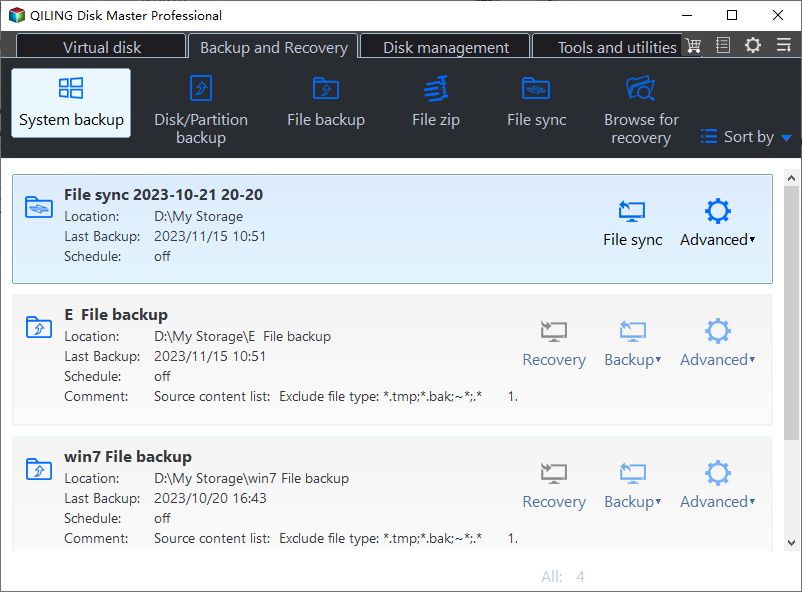
Step 1. Install and open Qiling Disk Master. On the home screen, open "Backup and Recovery" and choose "System Backup". This option automatically includes Windows and the hidden boot partitions, so you do not have to select them one by one.
Step 2. Check the source. The disk where Windows is installed and its system partitions are already ticked for you. If you only need your personal documents, run a separate "File Backup" task instead.

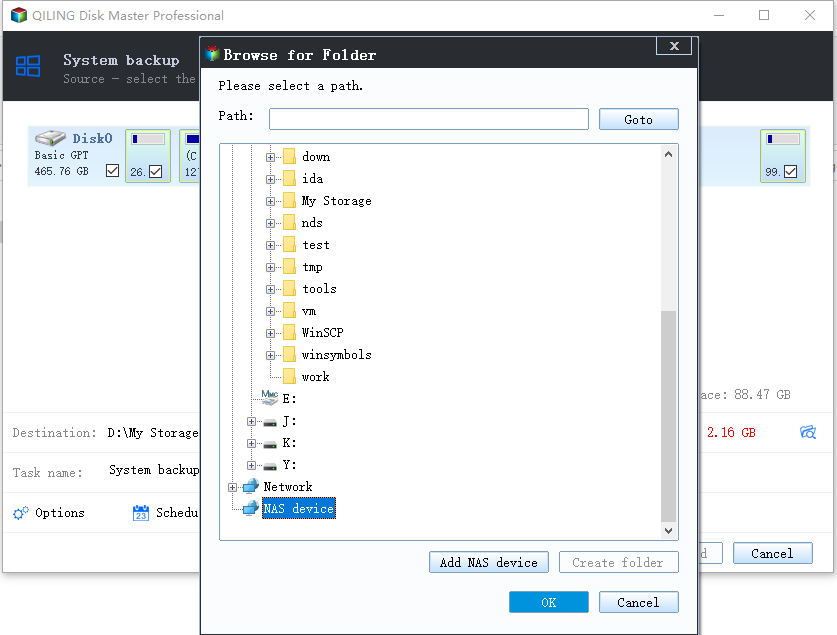
Step 3. Click the destination box and choose where the image should be saved. Use an external HDD or SSD, a NAS, or any drive other than the one you are about to repair, and make sure it has enough free space.
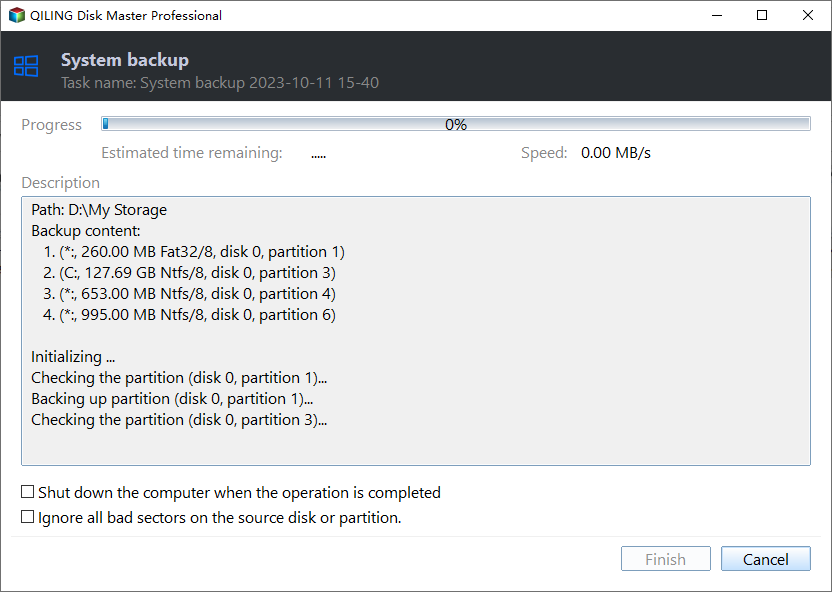
Step 4. Review the task summary and click "Proceed". Wait until the progress bar reaches 100%. Do not unplug the drive or turn off the PC while the backup is running.
Part 2: Restore Windows from the Backup
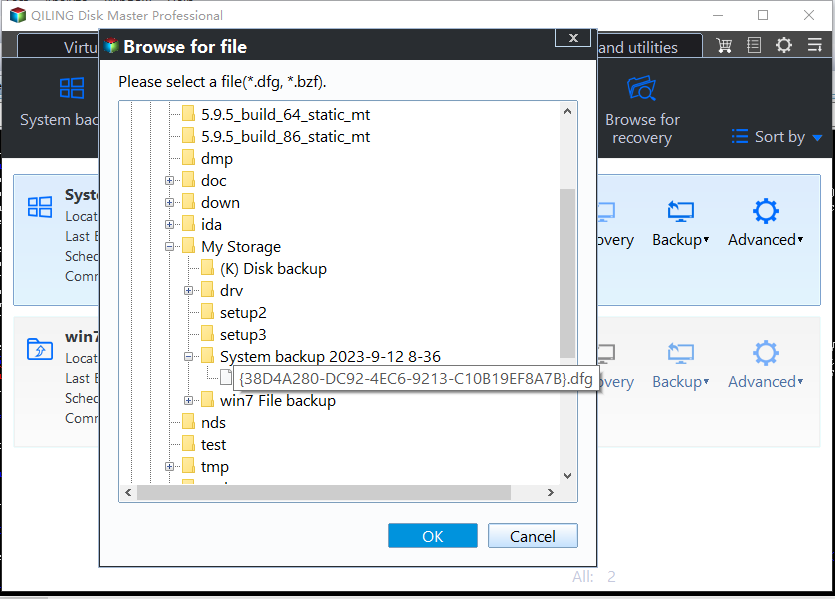
Step 1. Open Qiling Disk Master again, go to "Backup and Recovery", and select the recovery option. Your backup images are listed, so pick the one you created before the repair.
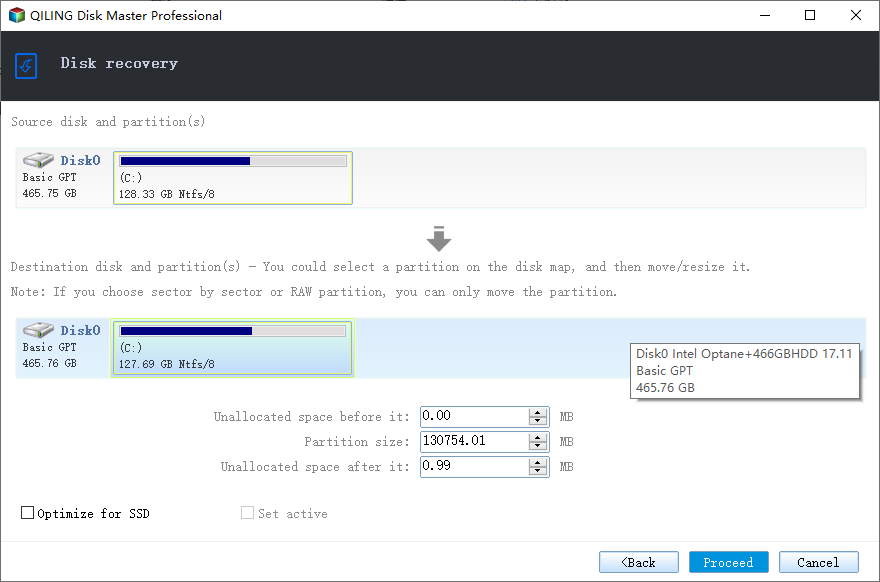
Step 2. Choose the target disk or partition. Normally you restore to the original system disk. If the drive was replaced, select the new disk instead, and the restore rebuilds Windows together with its boot partitions.
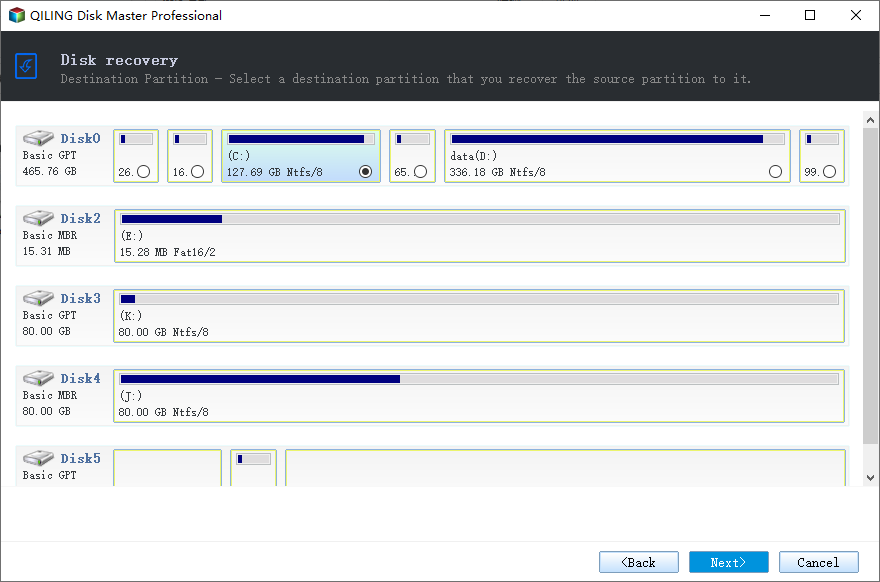
Step 3. Preview the restore plan, click "Proceed", and confirm the warning. The PC restarts to finish the job, and Windows comes back exactly as it was on the day the image was created.
- Note
- Keep the backup image on a separate drive, and refresh it before every major change, such as a Windows update, a driver upgrade, or a disk operation.
Conclusion
Windows 11 search not working is usually fixable by restarting Windows Explorer and the search process, clearing the search cache, or rebuilding the search index. If the issue persists, run SFC and DISM scans, check for Windows updates, or create a new user account. For most users, one of these fixes will resolve the issue.
For more Windows 11 troubleshooting, see our guides on Taskbar Not Working, Start Menu Not Working, and Widgets Not Working.
Related Articles
- Fix Windows 11 Taskbar Not Working (2026 Guide)
- Fix Windows 11 Start Menu Not Working (2026 Guide)
- Fix Windows 11 Widgets Not Working (2026 Guide)
- Windows 11 24H2 Problems and How to Fix Them (2026 Guide)
- How to Fix Windows 11 Slow Startup
If Windows 11 starts up slowly after a search issue, learn how to speed up boot time with these proven solutions including disabling startup programs. - 3 Ways | How to Reinstall Windows 10 Without CD
Need to reinstall Windows after persistent search issues? Learn 3 ways to reinstall Windows 10/11 without a CD using Reset, installation USB, or system image.
Products
Articles & Tutorials
- Data Recovery
- Data Backup
- File Recovery
- File Backup
- System Backup and Restore
- Disk and Partition Clone
- Technical articles
- Mobile articles
- Disk Master Help
- Windows Data Recovery Tutorials
- Windows Secure Delete Tutorials
- Windows Partition Management Tutorials
- Windows File Backup and Restore Tutorials
- Windows System Backup and Restore Tutorials
- Windows Disk Backup and Restore Tutorials
- Windows Clone Tutorials