Fix Windows 11 Widgets Not Working (2026 Guide)
Windows 11 Widgets provide quick access to news, weather, sports, stocks, and more from the taskbar. But sometimes Windows 11 widgets stop working—the button doesn't respond, the panel shows blank content, or widgets won't load at all. This is a common issue that can usually be fixed in a few minutes.
This guide covers 8 proven solutions to fix widget problems in Windows 11.
PAGE CONTENT
- Common Windows 11 Widget Problems
- Fix 1: Restart Windows Explorer
- Fix 2: Re-register Widgets with PowerShell
- Fix 3: Clear Widget Cache
- Fix 4: Check Region and Language Settings
- Fix 5: Toggle Widgets On/Off
- Fix 6: Run SFC and DISM Scans
- Fix 7: Check for Windows Updates
- Fix 8: Reset or Reinstall Widgets
- FAQs About Windows 11 Widgets
- Back Up and Restore Windows with Qiling Disk Master
Common Windows 11 Widget Problems
Users report various widget issues in Windows 11:
- Widgets button on taskbar doesn't respond when clicked
- Widget panel opens but shows blank or empty content
- Widgets take a long time to load
- Widgets show old or outdated information
- Weather widget not updating
- News feed not loading
- Widget panel crashes immediately after opening
- Widgets button is missing from the taskbar
- Note
- Most widget issues are caused by the Widgets process crashing, corrupted cache, incorrect region settings, or problematic Windows updates. The fixes below address all these causes.
Fix 1: Restart Windows Explorer
Windows Explorer manages the taskbar and widgets. Restarting it often fixes widget issues.
Step 1. Press Ctrl + Shift + Esc to open Task Manager.
Step 2. Under "Processes", find "Windows Explorer".
Step 3. Right-click it and select "Restart". The taskbar will briefly disappear and reappear.
Step 4. Try opening widgets again.
Fix 2: Re-register Widgets with PowerShell
If the widgets button doesn't respond, re-registering the widgets app can help.
Step 1. Press Win + X and select "Windows Terminal (Admin)".
Step 2. Run the following command:
Get-AppxPackage Microsoft.Windows.Client.WebExperience | Foreach {Add-AppxPackage -DisableDevelopmentMode -Register "$($_.InstallLocation)\AppXManifest.xml"}
Step 3. Also re-register the taskbar experience host:
Get-AppxPackage Microsoft.Windows.ShellExperienceHost | Foreach {Add-AppxPackage -DisableDevelopmentMode -Register "$($_.InstallLocation)\AppXManifest.xml"}
Step 4. Restart your PC and check if widgets work.
Fix 3: Clear Widget Cache
Corrupted widget cache can cause widgets to show blank content or fail to load.
Step 1. Close the widgets panel if it's open.
Step 2. Press Win + R, type %localappdata%\Microsoft\Windows, and press Enter.
Step 3. Look for folders named "Widgets" or "WebExperience" and delete them.
Step 4. Also clear the Microsoft Edge cache (widgets use Edge's web view):
%localappdata%\Microsoft\Edge\User Data\Default\Cache
Step 5. Delete all files in the Cache folder.
Step 6. Restart your PC. Widgets will rebuild the cache.
Fix 4: Check Region and Language Settings
Widgets are region-specific. If your region is set to a country where widgets are not supported, they won't work.
Step 1. Press Win + I to open Settings.
Step 2. Go to "Time & language" > "Language & region".
3. Under "Region", check that "Country or region" is set to a supported country (e.g., United States, United Kingdom, Canada, Australia, etc.).
Step 4. Also check "Regional format" matches your region.
Step 5. Under "Preferred languages", make sure English (United States) is at the top of the list. If not, add it and move it to the top.
Step 6. Restart your PC and try widgets again.
Fix 5: Toggle Widgets On/Off
Sometimes simply toggling the widgets setting off and on can fix the issue.
Step 1. Press Win + I to open Settings.
Step 2. Go to "Personalization" > "Taskbar".
Step 3. Under "Taskbar items", toggle "Widgets" off.
Step 4. Wait a few seconds, then toggle it back on.
Step 5. Try opening widgets again.
Fix 6: Run SFC and DISM Scans
Corrupted system files can cause widgets to malfunction. Run SFC and DISM to repair them.
Step 1. Press Win + X and select "Windows Terminal (Admin)".
Step 2. Run DISM:
DISM /Online /Cleanup-Image /RestoreHealth
Step 3. Run SFC:
sfc /scannow
Step 4. Wait for both scans to complete. If corrupted files are found and repaired, restart your PC.
Fix 7: Check for Windows Updates
Microsoft regularly releases patches for known widget issues. Make sure your Windows 11 is up to date.
Step 1. Press Win + I to open Settings.
Step 2. Go to "Windows Update" > "Check for updates".
Step 3. Install any available updates and restart your PC.
Step 4. If a recent update caused the widget issue, uninstall it: go to "Update history" > "Uninstall updates" and remove the most recent update.
Fix 8: Reset or Reinstall Widgets
If none of the above fixes work, try resetting or reinstalling the widgets app.
Reset Widgets App
Step 1. Press Win + I > "Apps" > "Installed apps".
Step 2. Search for "Widgets" or "Web Experience Pack".
Step 3. Click the three dots next to it > "Advanced options".
Step 4. Click "Reset" (this will clear all widget data and settings).
Step 5. Restart your PC and try widgets again.
Reinstall Widgets App
Step 1. Open Windows Terminal (Admin).
Step 2. Uninstall the widgets app:
Get-AppxPackage Microsoft.Windows.Client.WebExperience | Remove-AppxPackage
Step 3. Reinstall from Microsoft Store:
Get-AppxPackage Microsoft.Windows.Client.WebExperience -AllUsers | Foreach {Add-AppxPackage -DisableDevelopmentMode -Register "$($_.InstallLocation)\AppXManifest.xml"}
Step 4. Alternatively, download "Windows Web Experience Pack" from the Microsoft Store.
Step 5. Restart your PC.
FAQs About Windows 11 Widgets
Why are my Windows 11 widgets not working?
Common causes include the Widgets process crashing, corrupted cache, incorrect region/language settings, or problematic Windows updates. Try restarting Windows Explorer first, then check your region settings.
How do I enable widgets in Windows 11?
Go to Settings > Personalization > Taskbar, and toggle "Widgets" on. If the toggle is missing, your Windows 11 version may not support widgets, or your region is set to an unsupported country.
Why are my widgets showing blank content?
This is usually caused by corrupted cache or a problem with the Edge web view that widgets use. Clear the widget cache (Fix 3) and the Edge cache, then restart your PC.
Do Windows 11 widgets work in all countries?
No. Widgets are region-specific and may not be available in all countries. If your region is set to an unsupported country, widgets won't work. Change your region to a supported country (e.g., United States) in Settings > Time & language > Language & region.
Can I uninstall widgets in Windows 11?
Yes. Open Windows Terminal (Admin) and run Get-AppxPackage Microsoft.Windows.Client.WebExperience | Remove-AppxPackage. You can reinstall it from the Microsoft Store later if needed.
Back Up and Restore Windows with Qiling Disk Master
Before you re-register or reinstall the Widgets platform, change region settings, or reset the WebExperience package, create a full system backup. Package re-registration can disturb other Store apps, so a system image lets you roll everything back in minutes. Qiling Disk Master handles both the backup and the restore.
Part 1: Create a Full System Backup
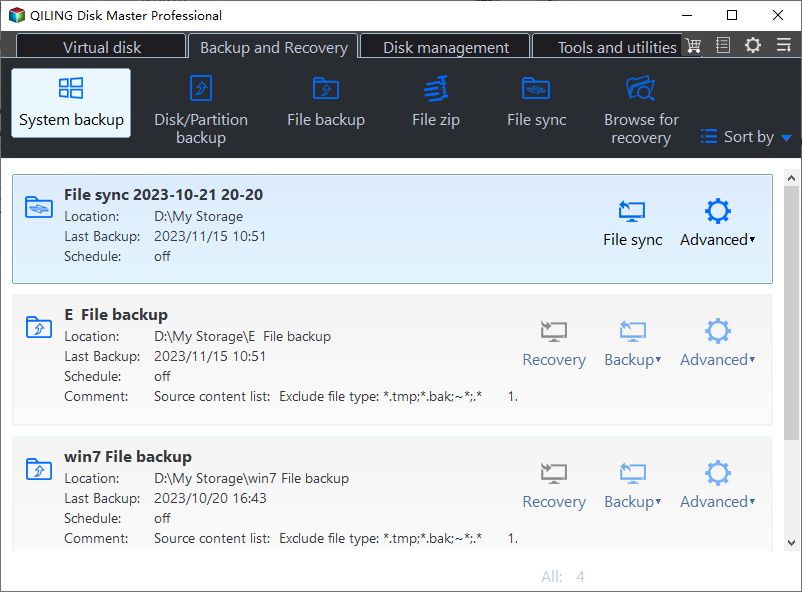
Step 1. Install and open Qiling Disk Master. On the home screen, open "Backup and Recovery" and choose "System Backup". This option automatically includes Windows and the hidden boot partitions, so you do not have to select them one by one.
Step 2. Check the source. The disk where Windows is installed and its system partitions are already ticked for you. If you only need your personal documents, run a separate "File Backup" task instead.

Step 3. Click the destination box and choose where the image should be saved. Use an external HDD or SSD, a NAS, or any drive other than the one you are about to repair, and make sure it has enough free space.
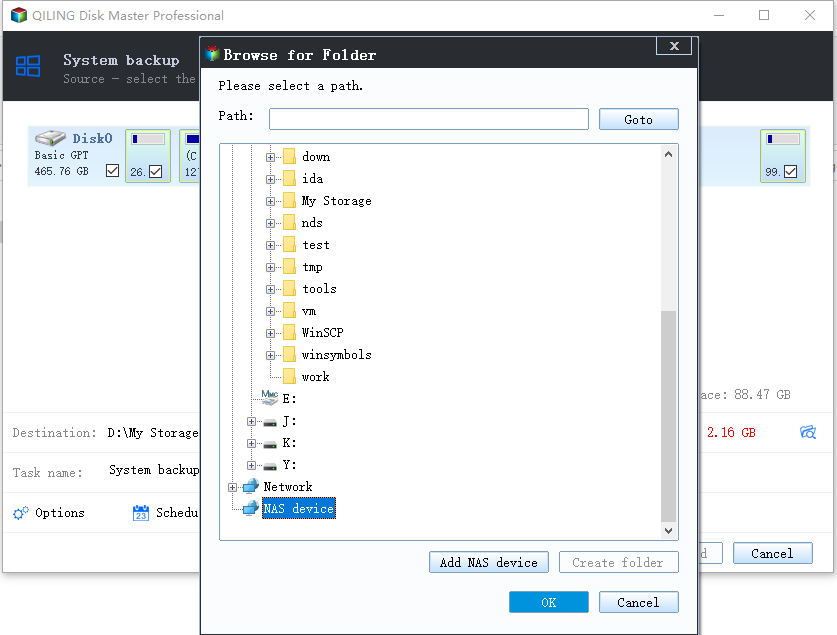
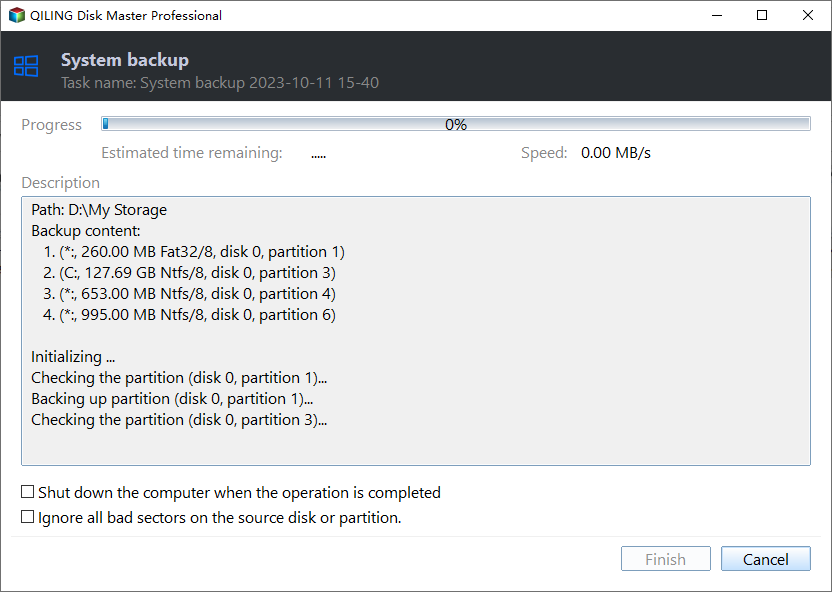
Step 4. Review the task summary and click "Proceed". Wait until the progress bar reaches 100%. Do not unplug the drive or turn off the PC while the backup is running.
Part 2: Restore Windows from the Backup
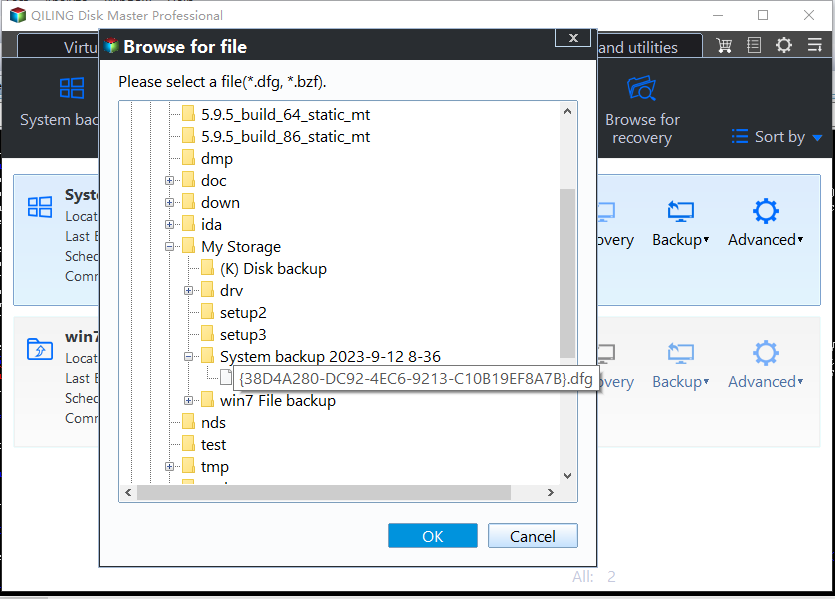
Step 1. Open Qiling Disk Master again, go to "Backup and Recovery", and select the recovery option. Your backup images are listed, so pick the one you created before the repair.
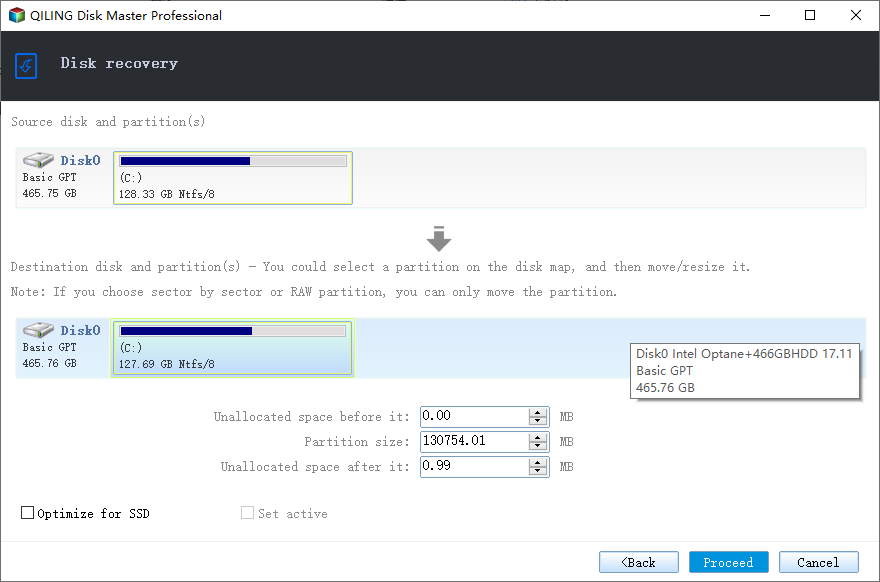
Step 2. Choose the target disk or partition. Normally you restore to the original system disk. If the drive was replaced, select the new disk instead, and the restore rebuilds Windows together with its boot partitions.
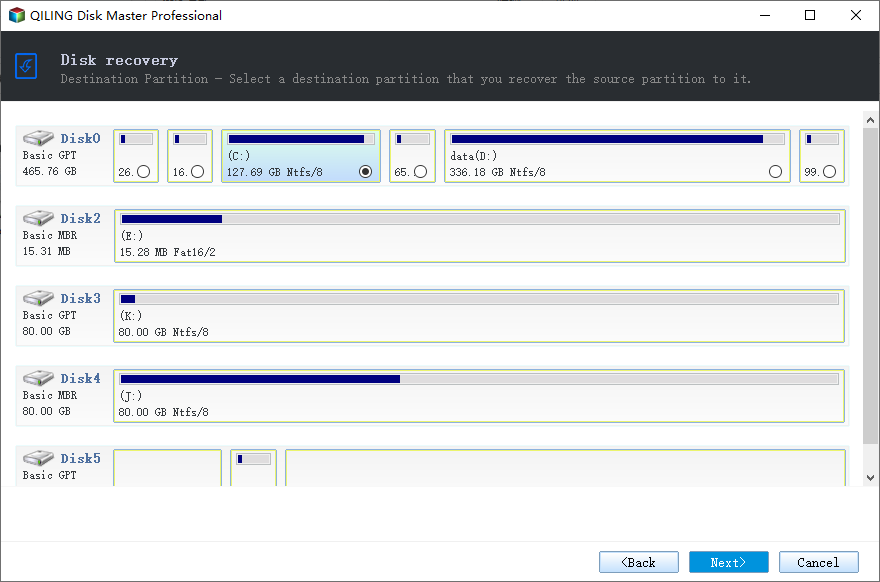
Step 3. Preview the restore plan, click "Proceed", and confirm the warning. The PC restarts to finish the job, and Windows comes back exactly as it was on the day the image was created.
- Note
- Keep the backup image on a separate drive, and refresh it before every major change, such as a Windows update, a driver upgrade, or a disk operation.
Conclusion
Windows 11 widgets not working is usually a quick fix. Start by restarting Windows Explorer, then check your region and language settings. If widgets show blank content, clear the widget and Edge cache. For persistent issues, re-register the widgets app with PowerShell or reset it from Settings. If nothing works, check for Windows updates or reset Windows 11.
For more Windows 11 troubleshooting, see our guides on Taskbar Not Working and Start Menu Not Working.
Related Articles
- Fix Windows 11 Taskbar Not Working (2026 Guide)
- Fix Windows 11 Start Menu Not Working (2026 Guide)
- Windows 11 24H2 Problems and How to Fix Them (2026 Guide)
- Windows 11 25H2 Problems and How to Fix Them (2026 Guide)
- How to Fix Windows 11 Slow Startup
If Windows 11 starts up slowly after a widget issue, learn how to speed up boot time with these proven solutions including disabling startup programs. - 3 Ways | How to Reinstall Windows 10 Without CD
Need to reinstall Windows after persistent widget issues? Learn 3 ways to reinstall Windows 10/11 without a CD using Reset, installation USB, or system image.
Products
Articles & Tutorials
- Data Recovery
- Data Backup
- File Recovery
- File Backup
- System Backup and Restore
- Disk and Partition Clone
- Technical articles
- Mobile articles
- Disk Master Help
- Windows Data Recovery Tutorials
- Windows Secure Delete Tutorials
- Windows Partition Management Tutorials
- Windows File Backup and Restore Tutorials
- Windows System Backup and Restore Tutorials
- Windows Disk Backup and Restore Tutorials
- Windows Clone Tutorials