How to Make PRAM Reset Mac? [Updated 2023]
Mac devices come equipped with various technologies that make them suitable for workplace productivity and smooth operation in controlled environments.
The PRAM (Parameter RAM) on Mac devices plays a crucial role, but its importance is often overlooked. This small component stores essential system settings and preferences, which can become outdated or corrupted over time. Resetting the PRAM, also known as the NVRAM, is a simple yet effective solution to resolve various issues, such as frozen screens, login problems, and system crashes. By resetting the PRAM, you can restore your Mac to its default settings, ensuring a smooth and efficient user experience. This process is relatively quick and easy, making it a vital step in maintaining your Mac's overall performance and stability.
PRAM, a crucial component in many computers, including Macs, stores information and configuration. Mac users often rely on PRAM, but when the need arises, resetting PRAM becomes necessary. This process allows users to refresh their system's settings and resolve various issues.
To understand the importance of resetting PRAM on your Mac, it's essential to know its role. PRAM, or Parameter RAM, is a small section of your Mac's memory that stores settings and preferences. Resetting PRAM can refresh your device by clearing these settings, which can resolve issues and improve performance.
What Is PRAM?
PRAM, or Parallel Random-The Access Machine and Parallel RAM is a shared memory design in Mac devices that allows parallel processing of tasks and operations, similar to a Random-access Machine or RAM, but with the ability to access and process data in parallel.
PRAM is a type of RAM that can read and write data in parallel, mimicking the key algorithmic performance of a RAM, and is designed to mimic the ability of RAMs, hence the name PRAM.
PRAM, or Parameter RAM, is a type of memory that is used in computers, particularly in Mac devices, to store settings and parameters. Despite being slower than modern RAM, PRAM was once considered a game-changer for computing, offering faster speeds than what was available on the market at the time. However, its speed is still much greater than what we see in modern devices, making it a reliable and efficient choice for certain applications.
A Mac device stores necessary details about your device in its short-term memory, ensuring that information such as configuration settings is properly stored to avoid any issues.
Advantages:
- Secures information like time & date
- Saves other bios/firmware information
- Secures key data within your computer
Disadvantages:
- It can slow down the computer if not updated regularly
- Requires to be reset every once in a while, to work properly
- Causes unexpected shutdowns when not cleaned/cleared
How to Make PRAM Reset Mac?
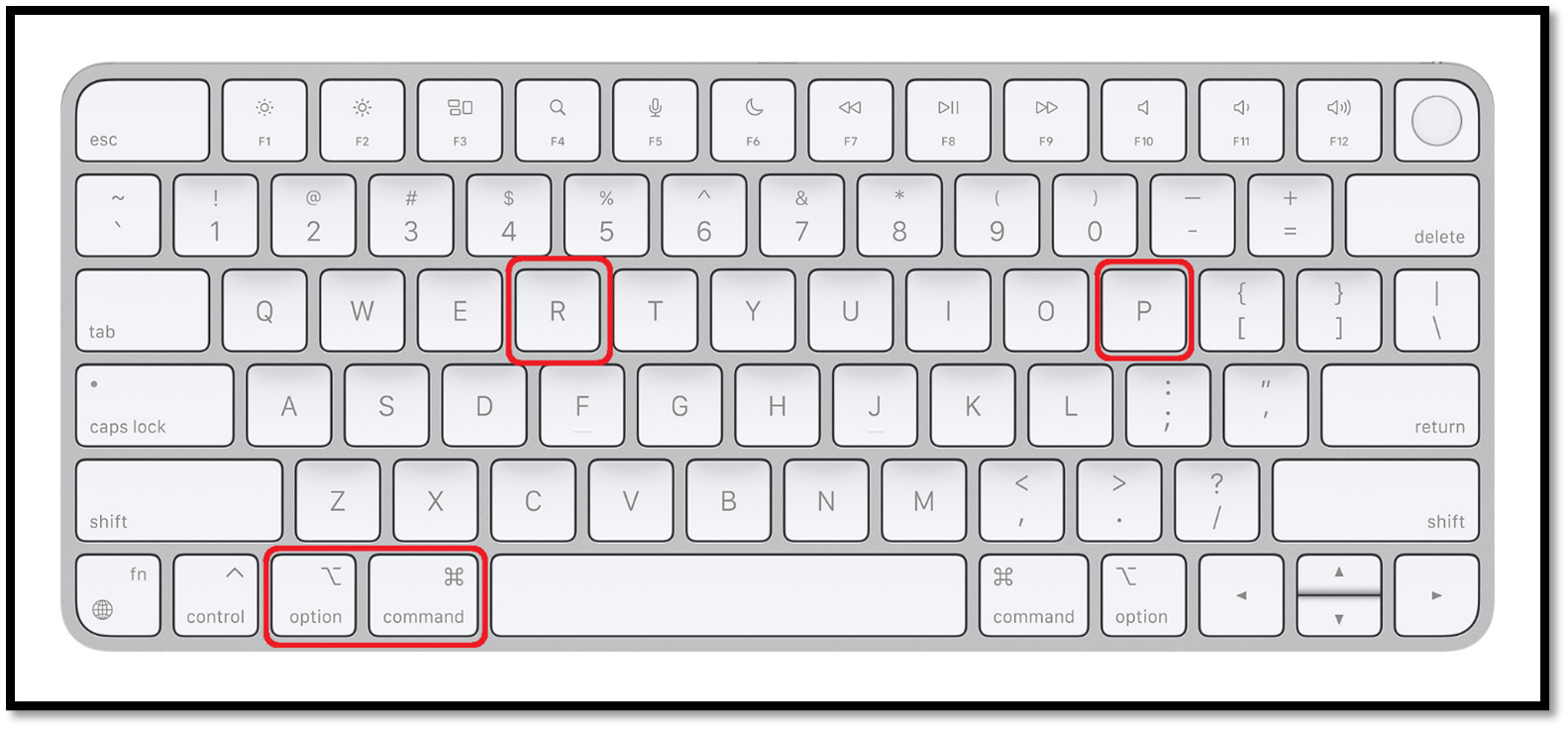
To reset the PRAM on a Mac using the startup command, you need to press the power button and immediately hold down the Command (⌘) + Option (⌥) + P + R keys. This will boot the Mac into a mode that allows you to reset the PRAM. Once the Mac starts to boot, you will see the startup screen. Release the keys when you see this screen. The PRAM will be reset, and you can then boot the Mac normally.
Step 1. Power off your Mac device
Step 2. Turn it back on and immediately press and hold the Command + Option + P + R buttons on your Mac to reset the System Management Controller (SMC) and Power Management Unit (PMU) simultaneously, which can resolve issues with your MacBook's power management system.
Step 3. Wait 10-20 seconds
Step 4. A Mac will restart multiple times during the process. The system will first check for any software updates and then install them.
Step 5. Done
After restarting, release the keys as it has triggered a PRAM reset on your Mac, and it will restart on your Mac's desktop with a cleared PRAM.
To remove the "Other" storage category on a Mac, you can use the Terminal method. Launch the Terminal on your Mac by searching for it, then follow these steps: type "sqlite3 ~/Library/Preferences/com.apple.
Step 1. To get started with the process, open Terminal on your computer and ensure that all other applications are closed. This will help prevent any conflicts or interruptions during the installation process.
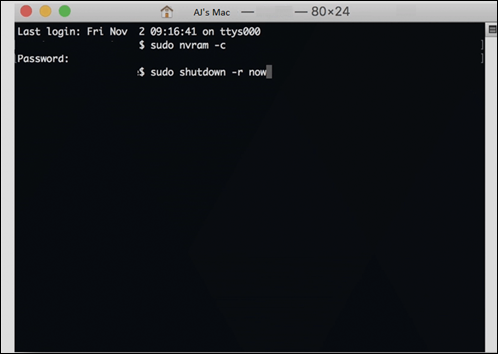
Step 2. Type "Sudo nvram -c" and press enter
Step 3. Enter your user password if asked
Step 4. Type "sudo shutdown -r now" and press enter
Step 5. Wait for your Mac to restart
Step 6. Done
This will restart your Mac and start it again with a clean and cleared PRAM.
Conclusion
Here are the main methods to help you clean your PRAM and ensure that your Mac works flawlessly: using the PRAM reset button or by holding down the Command, Option, P, and R keys at startup to clear PRAM. These methods can help you avoid any further issues with your Mac device and keep it up and running smoothly.
PRAM FAQs
If you have any further questions, then here are some frequently asked questions and their answers:
1. What do resetting PRAM and NVRAM do on Mac?
Resetting the PRAM or NVRAM on your Mac will restore it to its default/factory settings, clearing all configuration and settings stored in the PRAM. This process will help your Mac run smoothly again, resolving any errors that may have slowed it down.
2. How do I reset the PRAM on my MacBook Pro Touchbar?
To reset the MacBook Pro Touchbar PRAM, power up your Mac, press Command + Option + P + R, and hold them until it restarts. This will reset your MacBook Pro Touchbar PRAM.
3. What if the PRAM reset not working?
If the terminal method doesn't work, the startup command method will likely succeed. If that also fails, the issue may lie with hardware other than the PRAM.
Related Articles
- External Hard Drive Takes Forever to Load
- How to Backup Thunderbird Emails to External Hard Drive [Three Ways]
- Dash Cam Card Full Error: How to Fix 'Dash Cam Says SD Card Full'
- How to Turn Off Xbox Controller on PC
- What Is SSD TBW and How to Check TBW on SSD
If you're curious about the Total Bytes Written (TBW) of your Solid-State Drive (SSD), you'll find the answer here. To check the TBW of your SSD, you can follow a simple method to determine how many bytes have been written to it. - What Is 8K Resolution? [All You Should Know 2022]
8K resolution offers 7680x4320 pixels, four times higher than 4K. Learn how 8K compares to 1080p and 4K, and where 8K content makes sense today.
Products
Articles & Tutorials
- Data Recovery
- Data Backup
- File Recovery
- File Backup
- System Backup and Restore
- Disk and Partition Clone
- Technical articles
- Mobile articles
- Disk Master Help
- Windows Data Recovery Tutorials
- Windows Secure Delete Tutorials
- Windows Partition Management Tutorials
- Windows File Backup and Restore Tutorials
- Windows System Backup and Restore Tutorials
- Windows Disk Backup and Restore Tutorials
- Windows Clone Tutorials