Simple & Easy: Backup External Hard Drive to Cloud
PAGE CONTENTS:
- 1. Two ways of Backup: Local and cloud backup?
- 2. Why Need to Backup External Hard Drives to the Cloud?
- 3. 2 Ways to Backup External Hard Drive to Cloud
Securing valuable data is a top priority for individuals and businesses alike. Protecting your data not only safeguards you from hackers' prying eyes but also ensures the safety of your personal and business information. Whether you're running a business or simply want to keep your personal info secure, taking measures to safeguard your data is essential for peace of mind.
In today's digital era, data is a crucial resource that fuels growth and innovation in digital services. To ensure its integrity, it's essential to keep data secure, as various factors can damage digital storage and sources. Implementing a secure backup plan is vital to safeguard data, preventing potential losses.
If you're looking to back up your external hard drive to the cloud, this guide is for you. It will provide the best solutions for safely transferring your data to a secure online storage space.
Two ways of Backup: Local and cloud backup?
When it comes to backing up files, folders, or even external hard drives, the two main options are local and cloud backup services. These options allow users to safeguard their data by storing it in different locations, providing an added layer of protection against data loss due to hardware failure, theft, or other unforeseen events.
Local Backup
Local backup is an on-premises backup method that stores backups on a local drive, such as a disk, hard disk, CD, or tape, allowing you to reverse back to your system, applications, and data in case of a failure or loss.
Pros:
- Offer businesses more control over their data and backups.
- These portable options can be easily carried and stored wherever required, making them convenient and accessible.
- A portable external hard drive is the most convenient data backup option that doesn't require any internet connection to get access.
- To safeguard against potential data losses, it's essential to isolate your data center, keeping sensitive backups away from data thieves. This approach makes it easier for users to protect their valuable data.
Cons:
- A bit expensive.
- Vulnerable to natural disasters.
- The traditional approach to data storage requires more space and needs to be upgraded over time. This is due to the fact that data grows exponentially and traditional storage methods cannot keep up with this growth.
- You spend a lot of your valuable time using and figuring out how to use storage.
Cloud Backup vs. Cloud Storage: What's the Difference
Cloud backup and cloud storage are two distinct services that serve different purposes. cloud backup is designed to protect data from loss or corruption by automatically backing up files to a remote server, ensuring that data is safe in case of a hardware failure or other disaster. On the other hand, cloud storage is primarily used for storing and sharing files, allowing users to access and manage their files from anywhere, but without the automatic backup feature. In essence, cloud backup is a safety net for your data, while cloud storage is a convenient way to store and share files.
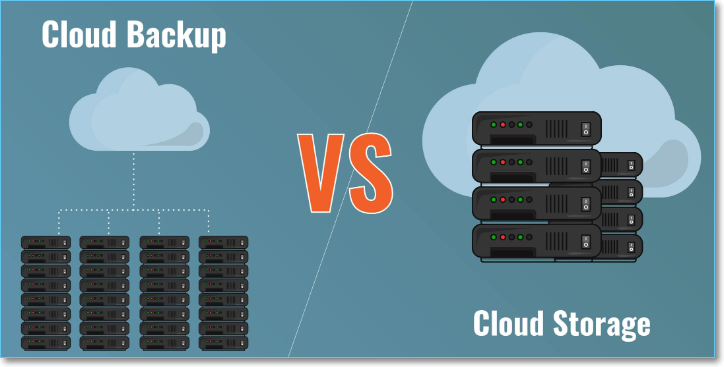
Cloud backup
Cloud backup is a backup service where data and applications are stored on a remote server, providing a convenient and secure way to keep files and data readily available in case of system failure, natural disaster, or power outage. This allows users to easily access their data from anywhere, making it a reliable option for securing important information.
Pros:
- Easily scalable.
- Require low entry costs.
- The simplest disaster recovery options one can rely on.
- Offer wide-ranging accessibilities to internet-connected devices.
- The system provides a wide range of features for keeping the data safe, including encryption, access control, and backup and recovery capabilities. This ensures that sensitive information is protected from unauthorized access and potential data loss.
- This system provides the convenience of managing the data efficiently as per your requirements and needs.
Cons:
- Serve to be time-consuming and costly sometimes.
- Have latency, and that further reduces the recovery time usually.
- Offer free storage for lower data storage options, but charge a fee for higher data storage options. This way, customers only pay for the storage they need, and can still enjoy the benefits of the service without breaking the bank.
- Cloud data is vulnerable to viruses, ransomware, and malware, posing a threat to its safety.
Why Need to Backup External Hard Drives to the Cloud?
It's highly recommended to back up external hard drives to the cloud because, even though they're supposed to be reliable, they can still fail and cause data loss, and cloud backup provides an additional layer of protection and peace of mind.
- Data protection involves safeguarding information from various threats, including malware infection, hardware failure, fire, theft, or accidental erasure.
- A portable SSD (solid-state drive) is a more convenient option for carrying your files. It's smaller, lighter, and more durable than an external hard drive, making it easier to take with you on the go.
- The external hard drive may be lost sometimes.
Backing up your data to an external hard drive and the cloud provides a secure and redundant back up system, ensuring that your files are safe in case of hardware failure, data loss, or other disasters. This setup allows you to access your data from anywhere, at any time, and also provides an added layer of protection against cyber threats and ransomware attacks. Furthermore, cloud backup services often offer automatic backups, versioning, and collaboration features, making it easier to manage and share your data.
- Add double protection to the data.
- Access data from anywhere.
- No worries about physical data disasters.
- Conveniently store and access the data anywhere, anytime.
- Automatically set up cloud backup.
2 Ways to Backup External Hard Drive to Cloud
Here are two methods to mix external hard drive backup and maintain cloud backup of the same: a manual method that consumes more time, and an automated version.
1. Manually
Backing up files can be done manually by copying them to a cloud directory, such as Google Drive, following these steps:
Step 1: Connect the external drive and prepare your data.
Step 2: To replicate the same set of folders on Google Drive, start by opening Google Drive on your browser. Create a new folder and name it the same as the first folder on the external drive.
Step 3: To restore your Google Drive backup, drag and drop the backup folder from your hard drive into the Google Drive folder, then wait for the upload process to complete.
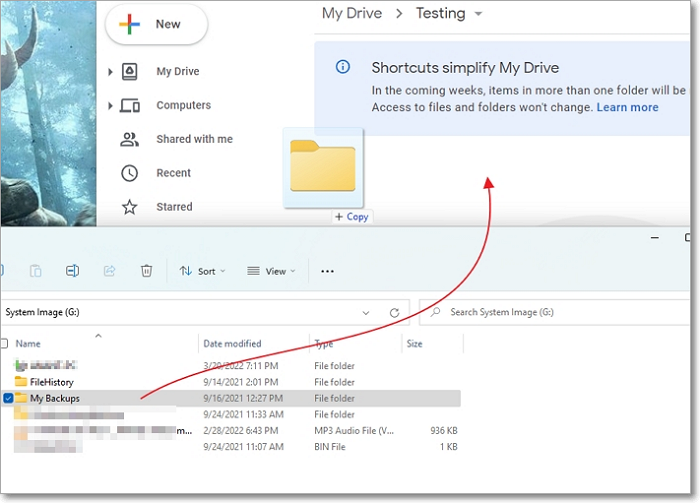
The traditional method of backing up data involves manually copying files from one location to another, such as from a computer to an external hard drive. This process can be time-consuming and prone to errors, as it requires manually selecting and copying each file, and then verifying that the copies are complete and accurate. Additionally, this method needs to be repeated daily to ensure that all data is backed up, which can be cumbersome and take up a significant amount of time.
2. An easier way - Qiling Backup
Qiling Backup is the ultimate solution for backing up external hard drives to the cloud, providing an excellent and powerful tool for restoring data perfectly. Its efficiency in backing up and restoring options, and restoring data to the actual location, makes it a top-notch choice for users.
Here are the top features, functions, and operations of the system in brief:
- It helps you in performing disk imaging.
- Offers 250GB of free cloud storage.
- Offer scheduled backup, differential and incremental backup.
- Offers one-click backup and instant recovery solutions with higher-end efficiency.
- Encrypt backups and data in your primary/physical storage.
To back up your external hard drive to the cloud using this efficient software, follow these steps:
Step 1. To start backup, click the File backup button to start.
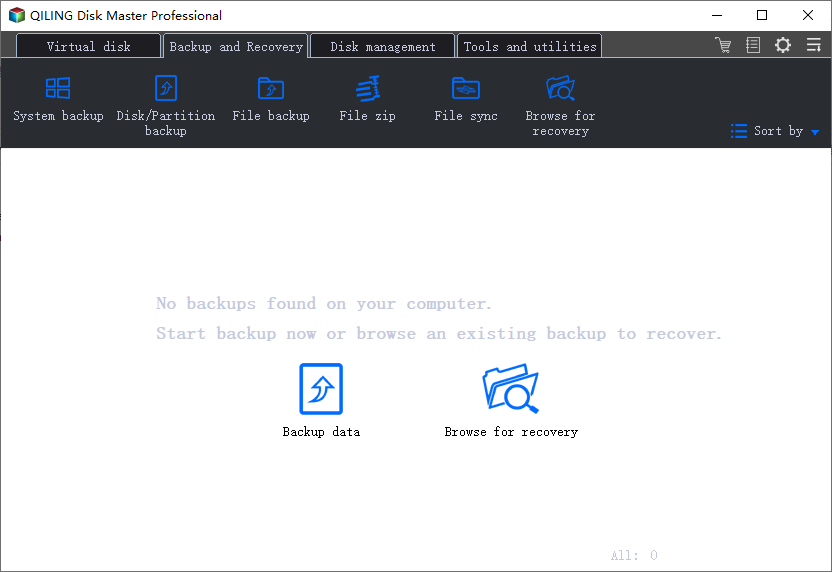
Step 2. The top tree view displays a list of local and network files, which can be expanded to select the files to be backed up.
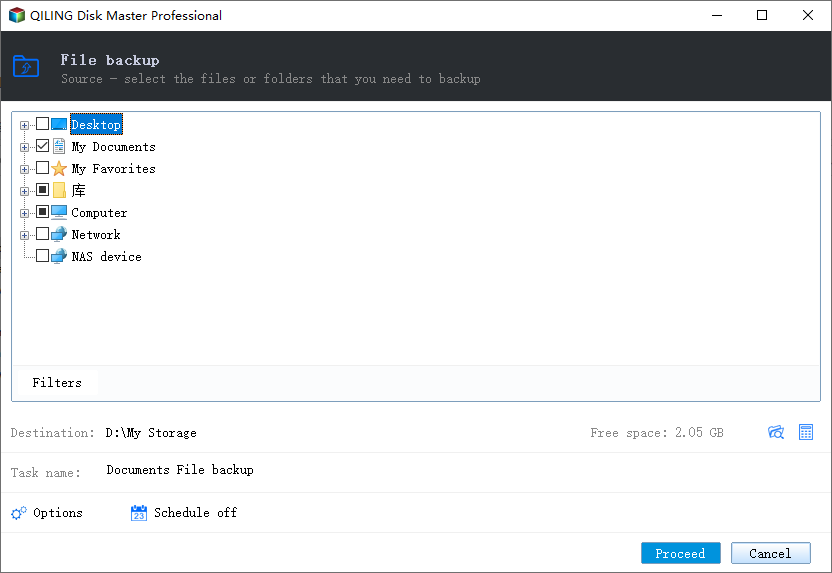
Step 3. Follow the on-screen instructions to select the desired location for the backup.
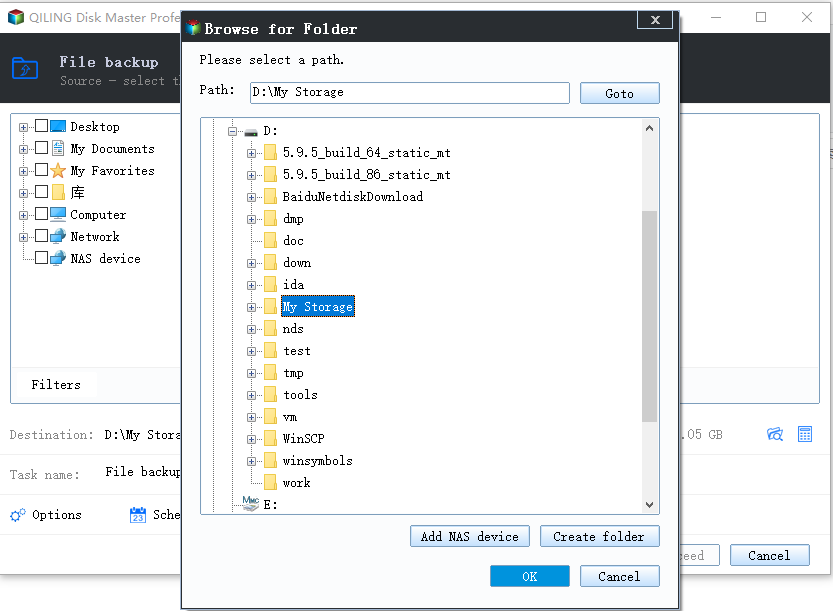
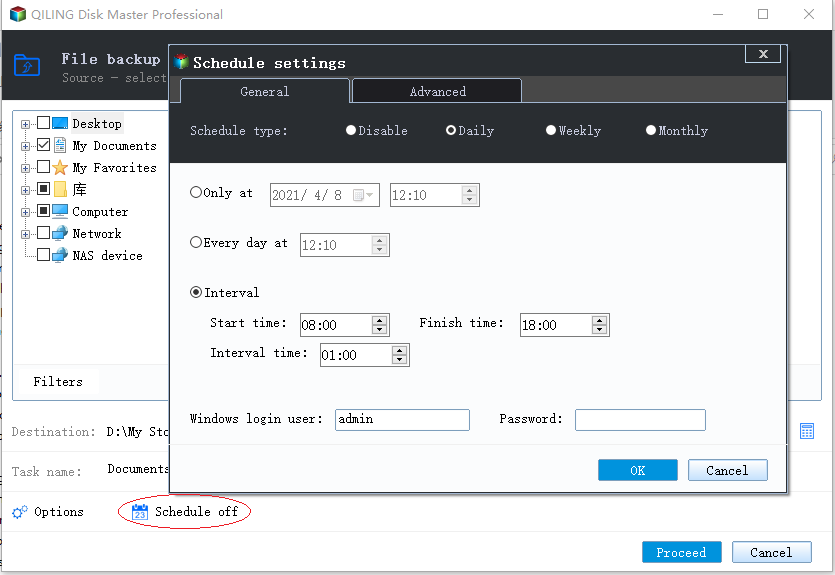
Step 4. In the Backup Options, clicking on Options allows you to encrypt the backup with a password, providing a range of customizable features to tailor the backup operation to your specific needs.
In the Backup Scheme section, you can specify the schedule for backing up your data and choose to start the backup at a specific event, such as a daily or weekly schedule, or at a specific time, like 2 AM. This allows you to customize the backup process to fit your needs.
Step 5. Backups can be stored on a local disk, in Qiling's cloud service, or on a network attached storage device (NAS).
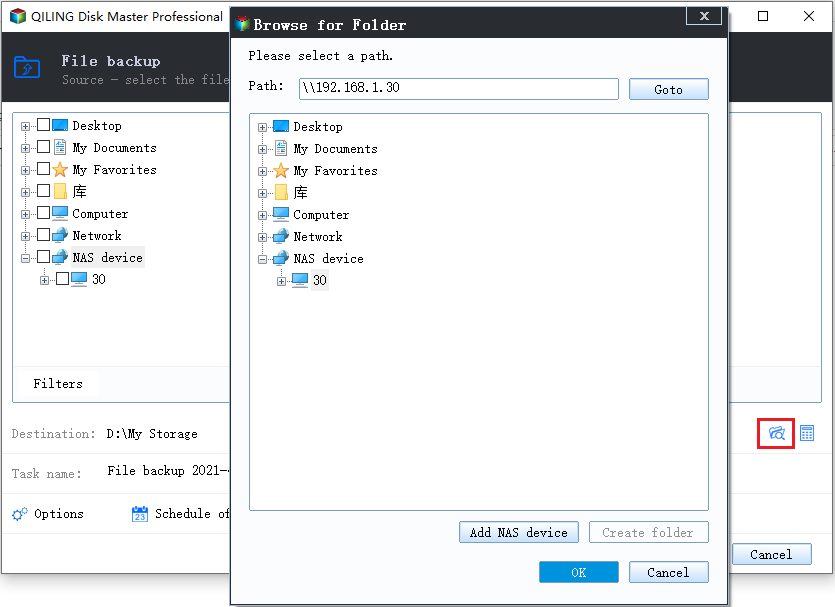
Step 6. Qiling Backup enables customers to securely store their data by backing it up to either a third-party cloud drive or Qiling's own cloud storage, providing a convenient and reliable solution for data protection.
To back up your data to a third-party cloud drive, select Local Drive, scroll down to add Cloud Device, and enter your account information.
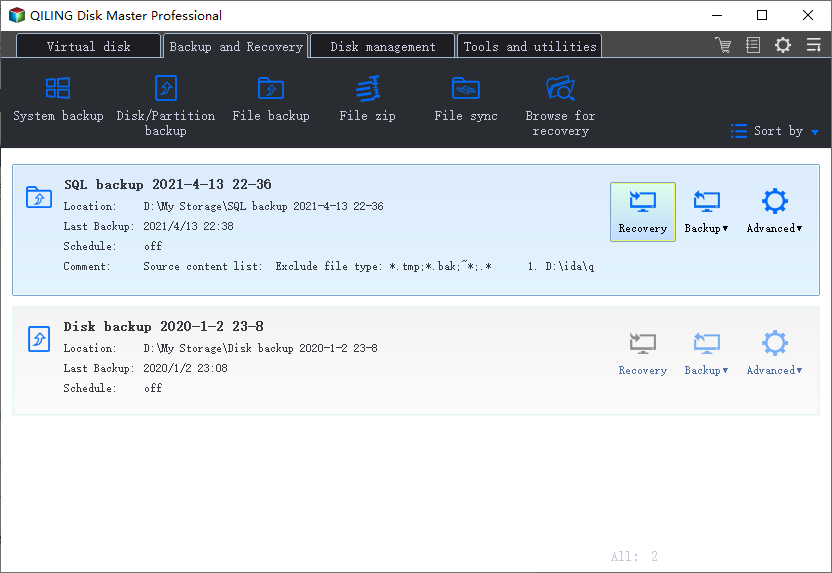
Step 7. To start a backup, select Proceed. After completing the backup process, it will be displayed as a card on the left-hand panel. For more detailed information about the backup job, click on it.
Conclusion
Backing up data to an external hard drive and then to the cloud using Qiling Backup software provides a double layer of protection, ensuring the security and integrity of your data. This is a highly recommended practice to safeguard against data loss.
Related Articles
- 5 Best Free Windows 11 Backup Software | Backup Data for Free
- Encrypt Backup Disk or Not | What Would Be the Best Choice
- Disk Clone vs. Entire Machine Backup: Every Detail You Want to Know
- Is Windows Defender Good Enough to Protect My PC? Check the Best Answer
- How to Share/Transfer Files from PC to PC on the Same Network
If you have two PCs on the same network that need to share files, there are several ways to do so wirelessly, including using a LAN file sharing software like Qiling Disk Master, Nearby Sharing, and accessing files through the cloud using Windows OneDrive service. - How to Transfer Files from PC to PC over WiFi [Easy & Fast]
This article demonstrates how to transfer files from PC to PC over WiFi. There are a couple of different ways you can go about transferring files between two PCs over WiFi.
Products
Articles & Tutorials
- Data Recovery
- Data Backup
- File Recovery
- File Backup
- System Backup and Restore
- Disk and Partition Clone
- Technical articles
- Mobile articles
- Disk Master Help
- Windows Data Recovery Tutorials
- Windows Secure Delete Tutorials
- Windows Partition Management Tutorials
- Windows File Backup and Restore Tutorials
- Windows System Backup and Restore Tutorials
- Windows Disk Backup and Restore Tutorials
- Windows Clone Tutorials