How to Enable and Use Nearby Sharing in Windows 11? Your Complete Guide
Applies to: Windows 11, Windows 10.
To share files on your Windows 11 computer with a nearby device, you can use the Nearby Sharing feature. This guide will walk you through the process of enabling and using Nearby Sharing to share files successfully with a nearby Windows computer.
Need a detailed guide? Let's get started.
| Workable Solutions | Step-by-step Troubleshooting |
|---|---|
| #1. Enable Nearby Sharing | Press "Windows + A" keys > Click Nearby Sharing...Full steps |
| #2. Use Nearby Sharing | Press "Windows + E" keys to open File Explorer...Full steps |
| Nearby Sharing Alternative | Download and open Qiling Disk Master on both of your computers, choose "PC to PC"...Full steps |
Nearby Sharing Overview: Features and Benefits
Nearby Sharing is a Windows feature that lets users share files with nearby devices via Bluetooth or WiFi, allowing them to share documents, photos, and more.
No, only computers that meet the spec requirements can enable Nearby Sharing for file sharing, not all Windows users.
- Running Windows 11 or Windows 10 (version 1083 or later).
- Both computers must support Bluetooth or WiFi connections.
- Notice:
- For old Windows editions or computers that don't support Bluetooth or WiFi, Nearby Sharing won't work, so a Nearby Sharing alternative tool like Qiling Disk Master is recommended for file transferring between computers.
Nearby Sharing allows users to share files, photos, and other content with nearby devices, eliminating the need for email or cloud storage. It provides a seamless and secure way to share content, with features such as automatic file transfer, no need for login credentials, and the ability to share files of any size. Additionally, Nearby Sharing enables users to share files with multiple devices at once, making it ideal for group projects or presentations.
Highlighted Features:
- Transfer photos, documents, videos, links.
- Transfer files between Windows 11, Windows 10 computers.
- Transfer files via Bluetooth or WiFi.
| Benefits | Limits |
|---|---|
|
|
Qiling Editors' Pick: If you need to share small files under MB size, Windows Nearby Sharing is a convenient tool to use. However, for larger files in GB size, a professional file transfer tool is a better option.
To use Nearby Sharing in Windows 11, follow these steps: First, make sure that Nearby Sharing is enabled on your device by going to Settings > System > Shared experiences, and toggle the switch to "On". Then, ensure that the device you want to share with also has Nearby Sharing enabled. Next, open the file or content you want to share, and click the "Share" button.
How to Enable and Use Nearby Sharing in Windows 11
To activate, set up, enable, or use Nearby Sharing on Windows 11, start by making sure it's enabled on your device. You can do this by going to Settings > System > Shared experiences, and toggling the switch to On. Once enabled, you can share files by opening File Explorer, selecting the files you want to share, right-clicking, and choosing "Share" > "Nearby sharing".
#1. Activate or Enable Nearby Sharing in Windows 11
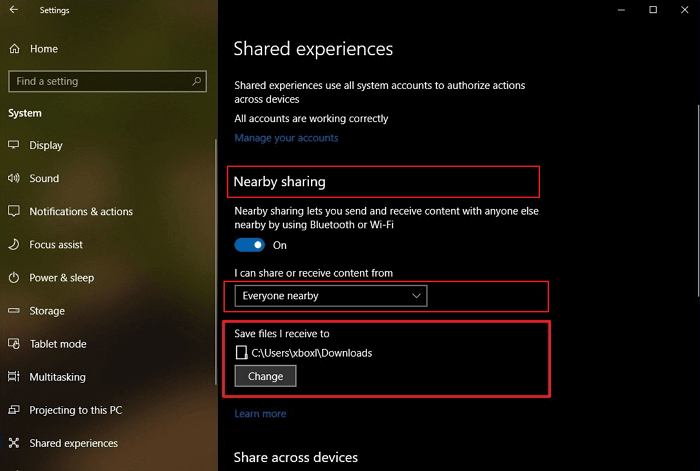
- Enable Nearby Sharing via Quick Settings: Press the "Windows + A" keys > Click Nearby Sharing.
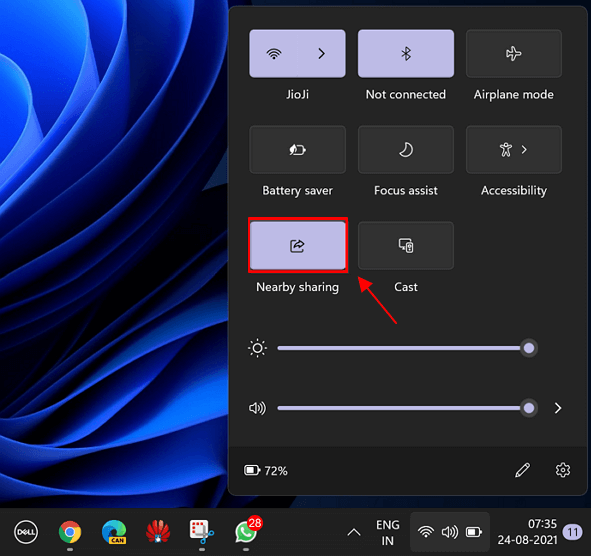
- Enable Nearby Sharing via Settings:
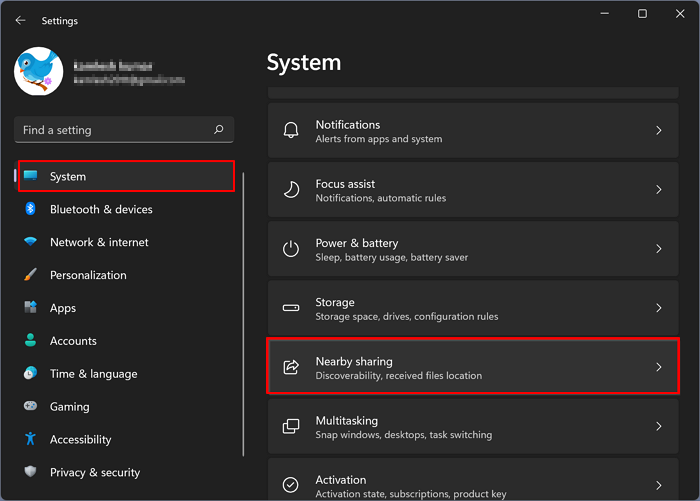
To turn on Nearby Sharing, click the Start icon, select Settings, then click on System, and finally click on Nearby sharing.
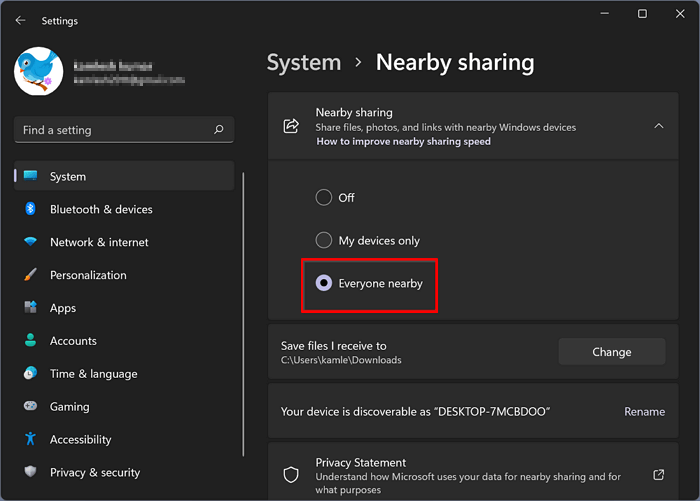
Next, tick Everyone nearby from the Nearby sharing permission panel.
#2. Use Nearby Sharing to Share Files Between Two Nearby Devices
To start sharing files between your computers via the Nearby sharing feature, first, ensure that both devices have the latest Windows 10 updates installed. Then, go to the Settings app, click on "Devices," and select "Bluetooth & devices." Next, toggle the switch to "On" for the "Nearby sharing" option.
- Press the "Windows + E" keys to open File Explorer.
- Right-To share a file, click on it and select "Show more options", then click on "Share".
- Select "Everyone nearby" from the pop-up window.
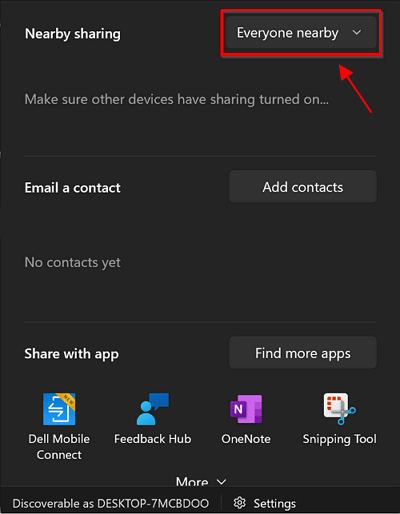
By following the guide above, you can successfully transfer files from your computer to another PC, making it easy to share files between devices.
Nearby Sharing Alternative Free Download
Due to the limitations of Nearby Sharing, you may not be able to instantly share apps, settings, or large files to another computer. In this scenario, using an alternative file transfer software is recommended.
Qiling Disk Master is a free file transfer software that stands out with its complete file transfer feature, making it an excellent tool for Windows users to share and transfer data, programs, and files between computers.
Qiling Disk Master can facilitate free file sharing in Windows by replacing Nearby Sharing, allowing users to easily share files between devices without the need for a separate sharing feature.
- Transfer files, documents, big data between computers.
- Transfer apps, programs, installed software to a new computer.
- Transfer personal settings account to a new computer.
- Wireless transfer via WiFi, image.
- Support all computers with or without Bluetooth or WiFi connection.
- Support file sharing in all Windows OS, Windows 11/10/8.1/8/7, etc.
To transfer files, data, and programs to a new computer, follow this guide: use the software to transfer your files, data, and even programs to a new computer by following the guide below for help.
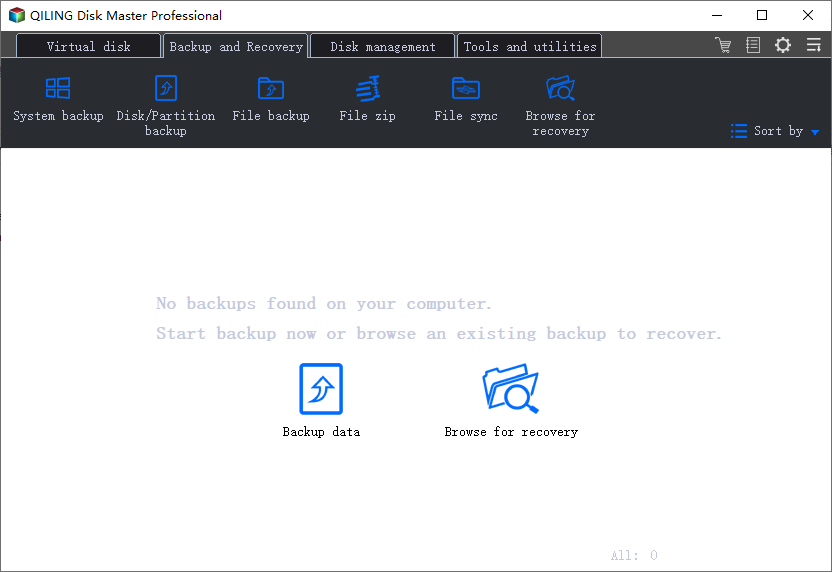
Step 1. Open Qiling Disk Master on both of your computers. Choose "File sync" to proceed.
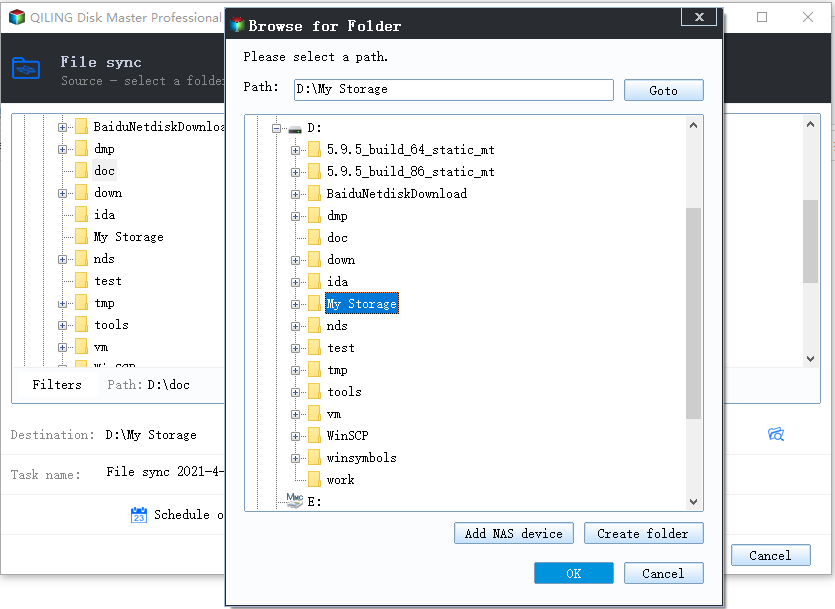
Step 2. To connect two PCs via the network, enter the password or verification code of the target PC, choose the right transfer direction, and click "Connect" to proceed.
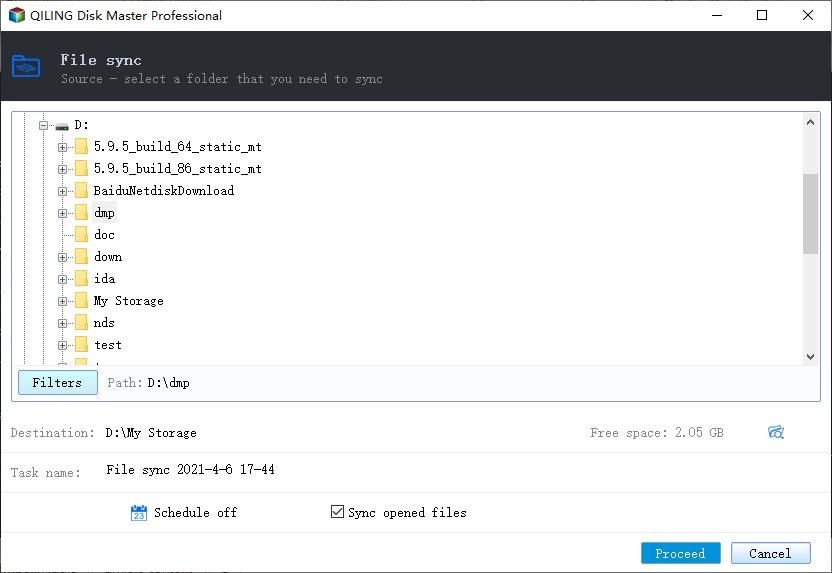
Step 3. To transfer files, select the "Files" option, choose the desired files to transfer, and optionally edit the storage path for the transferred data.
Step 4. To transfer files from PC to PC, click "Transfer" and wait patiently, as the transfer time is determined by the size of the file.
Qiling Disk Master offers features beyond file transferring between Windows computers, including backing up files, moving installed programs from the C drive to another drive, and finding product keys of installed programs.
Bonus Tip: What To Do When Nearby Sharing Is Not Working in Windows 11
When Nearby sharing is not working in Windows 11, it may be due to various reasons such as Bluetooth being turned off, the Nearby sharing toggle being disabled, or issues with the Bluetooth or Wi-Fi adapters. Additionally, problems with the Windows Update or the presence of malware can also prevent Nearby sharing from functioning properly.
- The computer is a desktop computer or doesn't support a Bluetooth connection. The computer is not a laptop or mobile device, so it may not have Bluetooth capabilities.
- The computer is a desktop computer or doesn't support a WiFi connection. The computer is a desktop computer or doesn't support a WiFi connection.
- The target file is too big for transferring via Nearby sharing.
- Bluetooth or WiFi connection is weak, or inconsistent.
If you're facing a situation where you need to make a decision but are unsure of the best course of action, consider the following steps. First, take a step back and assess the situation objectively. Identify the key factors and stakeholders involved.
Step 1. Check if your computer supports Bluetooth or WiFi connection.
Step 2. If yes, reconnect two computers to the WiFi or Bluetooth.
If Nearby Sharing isn't working, try restarting your device and then retry sharing files via Nearby Sharing again. If it's still not working, you can follow this guide for help.
How to Fix Windows Nearby Sharing Not Working
If Windows Nearby Sharing is not working, there are several reasons why, but you can fix the problem. To resolve the issue, you can follow these steps to troubleshoot and get the feature working again, allowing you to send files to nearby devices on Windows.
If not, move to the next step.
Step 3. If your computer doesn't support nearby sharing or you're experiencing issues with it, consider using Qiling file transfer software as an alternative solution.
Qiling Disk Master allows users to bypass the file transfer limits of Nearby Sharing on older Windows operating systems, enabling the transfer of multiple files with ease in just a few clicks.
Related Articles
- How to Move Foxit PhantomPDF to New Computer
- Windows Server Transfer | How to Transfer Applications from One Windows Server to Another
- How to Transfer Google Earth Pro to Another Computer?
- How to Move Games from C Drive to D Drive? All You Want Know is Here
- How to Turn on or off Bitlocker to Go in Windows 11
In Windows 11, you can easily enable Bitlocker to Go to protect your data and use it with a password or recovery key, and also turn it off if needed. - What Is Block Level Backup and How to Use It?
Block-level backup and file-level backup are two different approaches to backing up data. While file-level backup involves copying entire files, block-level backup involves copying only the changed blocks of data.
Products
Articles & Tutorials
- Data Recovery
- Data Backup
- File Recovery
- File Backup
- System Backup and Restore
- Disk and Partition Clone
- Technical articles
- Mobile articles
- Disk Master Help
- Windows Data Recovery Tutorials
- Windows Secure Delete Tutorials
- Windows Partition Management Tutorials
- Windows File Backup and Restore Tutorials
- Windows System Backup and Restore Tutorials
- Windows Disk Backup and Restore Tutorials
- Windows Clone Tutorials