How to Back Up Outlook Emails from Browser (OWA)
Outlook on the web is a personal information manager available to Office 365 and Exchange Online subscribers, allowing users to access their Exchange email account from a web browser and covering functions such as email client, contacts management, calendar tool, and task management. This post will outline the specific method for backing up Outlook emails from a browser.
How to Back Up Outlook Emails from Browser
Unlike Microsoft Outlook software, Outlook Web App does not have a built-in backup feature to back up the entire inbox or mailbox. However, you can create a copy and move all Outlook Web App mail data to a new file in PST format by installing desktop Outlook on your computer. This allows you to protect your data and create a backup of your Outlook on the web.
- Warning
- To back up desktop Outlook, you can download and install it first, but this method requires manual operation and sufficient storage space. Alternatively, you can use professional Outlook backup software for a more flexible and accessible backup solution. If you're interested in learning more about backing up desktop Outlook, you can skip to the next part about how to do it easily.
Step 1. To set up desktop Outlook, first download and install it on your computer. Once installed, sign in with your account and password using the Outlook Web App. This will allow you to access your email and other features from your desktop.
Step 2. Launch desktop Outlook, then click File on the top-left, select Open & Export, and choose Import/Export.
Step 3. To export all emails from Outlook Web App to a PST file, navigate to the Import and Export Wizard window, select 'Export to a file', and click 'Next'. Then, choose 'Outlook data file' and ensure the 'Subfolders' option is checked to include all emails and subfolders in the export.
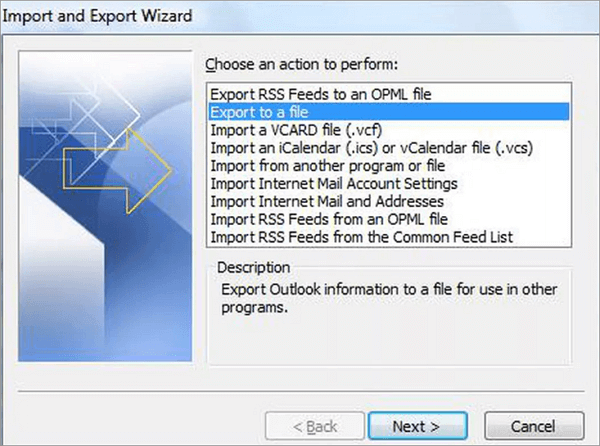
Step 4. Browse to choose a location where you want to save the PST file. Then click Finish to complete the process.
Desktop Outlook vs. Outlook Web App(OWA)
Microsoft's desktop Outlook and Outlook Web App are designed to manage personal emails, contacts, and calendars. The main difference between the two is that Outlook Web App is accessed through a browser, while desktop Outlook is a software application. Additionally, Outlook Web App is free to use, whereas desktop Outlook requires a paid subscription.
(Image source:https://www.makeuseof.com/)
The method for backing up Outlook Web App data requires downloading and using desktop Outlook, which has all the features of OWA. This is because the data backup process relies on the desktop application's ability to access and export data, which is not directly available in the web-based version. Using desktop Outlook offers more functionality and customization options, including additional icons and features in the Ribbon, compared to the web-based interface.
- Customize the menu
The desktop version of Outlook is highly customizable, allowing users to tailor their experience to their preferences. This customization can be achieved through the use of the VBA developer included with Microsoft Office, enabling users to set up Outlook in a way that suits their needs and work style.
- Calendar and task integration
With Outlook for Desktop, you can schedule meetings via email, create tasks, and streamline your work and personal life by automating tasks and making your workflow more efficient.
- Allows multiple email account:
You can use multiple email accounts, like Gmail and Yahoo, in one place with Desktop Outlook, by setting up a POP or IMAP account.
- AutoArchive settings
In desktop Outlook, a feature called AutoArchive allows you to automatically archive old emails, keeping your inbox organized and clutter-free with minimal effort.
We highly recommend using the desktop Outlook version, as it meets the needs of backup, customized menu, and multi-account log-in, making it a more comprehensive and user-friendly option compared to the web version.
Bonus: How to Back Up Desktop Outlook Emails Easily
To back up emails from desktop Outlook, you can use the Export and Import feature to save them to a PST file, but this method is not reliable as the backup file can get corrupted or lost easily and has limitations in terms of what it can back up.
The better way to back up Outlook emails is to use professional software, such as Qiling Backup, which allows for full, incremental, differential, and automatic backups with simple clicks, making it easier to manage and protect your email data.
Qiling Backup allows you to create bootable backups of your Outlook data, enabling easy restoration in case of issues. It also features a user-friendly wizard-based interface, making it accessible to novice users for backing up their Outlook data.
This is the step-by-step guide to back up Outlook with Qiling Backup:
- Tip
- To enable the "Open in Protected View" feature in Outlook 2010, 2013, 2016, and 2019, you need to follow these steps. First, open Outlook and go to the "File" tab.
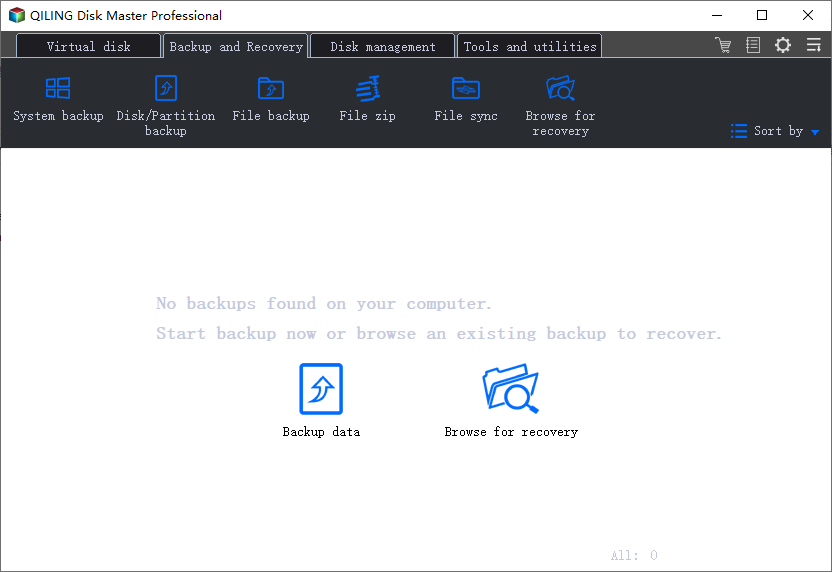
Step 1. Launch Qiling Backup on your computer, and click File Backup on the home screen.
Step 2. Select the mailbox addresses you want to make a backup of the mails, contacts or calendars in your Microsoft Outlook database folder.
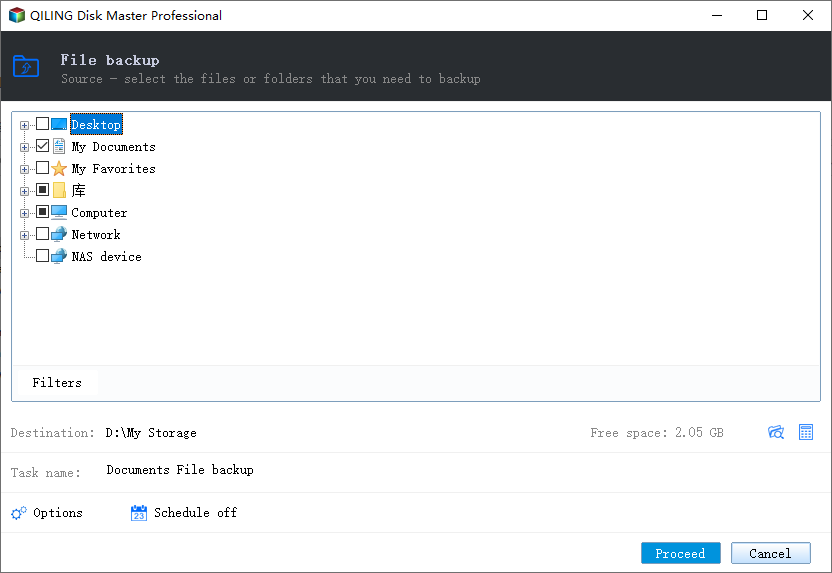
Step 3. To save the Outlook backup, select a location on your computer to store the backup file by clicking the illustrated area.
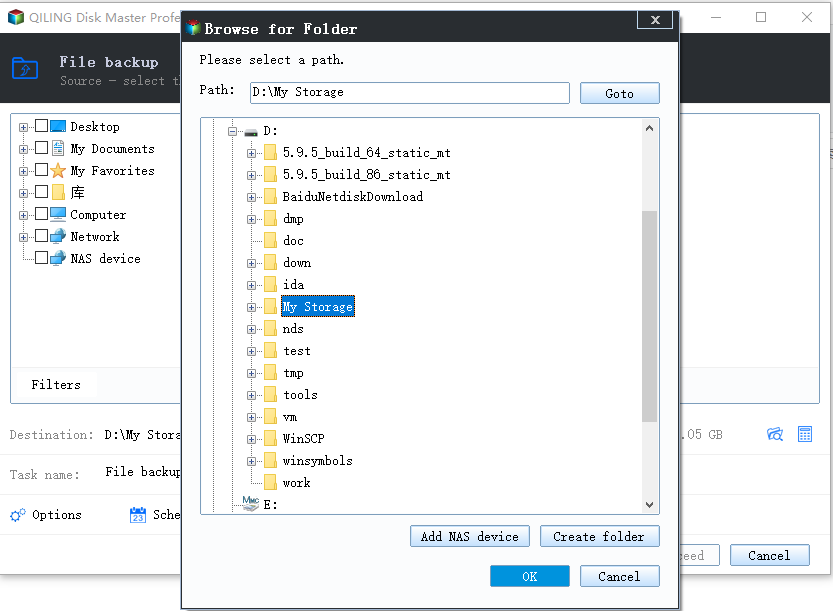
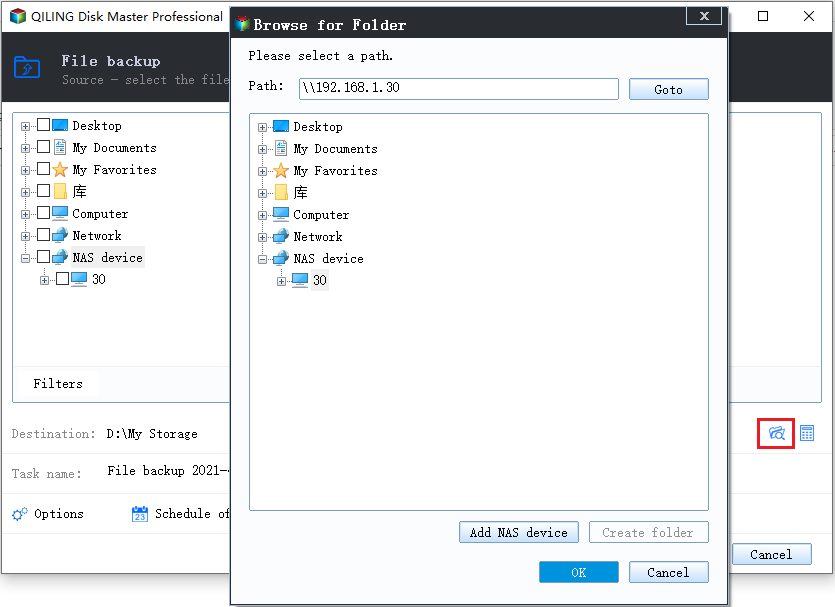
Step 4. You can store your backups on another local drive on your computer, an external hard drive, network, cloud, or NAS. We recommend using an external physical drive or cloud to preserve your backup files.
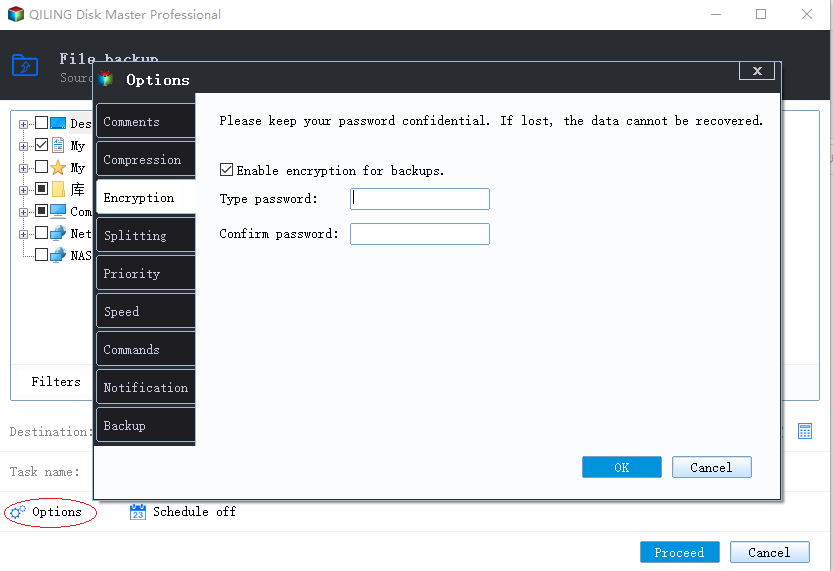
Step 5. The customization settings, such as setting an automatic backup schedule in daily, weekly, monthly, or upon an event, and making differential and incremental backups, are available in the Options button. Upon clicking "Proceed", the Outlook backup process will begin, and the completed backup task will display on the left side in a card style.
Related Articles:
FAQ about How to Back Up Outlook Emails from Browser
1. How do I export email from Outlook 365 Web?
To export Outlook data, open Outlook and click File in the top-left corner, then select Open and Export, followed by Import/Export. Choose Export to a File, tap Next, and select Personal Folder File (.pst), then Next again. Select the folder to export and click Next, followed by Browse to choose a save location, and finally click Export.
2. Can you download Outlook emails from browser?
To download an Outlook email from the browser, click the Import/Export option in Outlook Web Access, select the email you want to download, and choose a location to save it.
3.Is Outlook on the web the same as OWA?
Outlook Web App/Access and Outlook on the web are the same free web-based personal information manager, but with different names.
4. How do I save Outlook emails to hard drive without PST?
To export emails from Outlook, open Outlook and click File on the top-left corner, then select Open and Export and choose Import/Export, followed by Export to a file and click Next. In the subsequent windows, select Comma Separated Value (CSV) instead of Outlook Data File (.pst) and click Next.
Related Articles
- Execute Bootable Clones on Windows 11 Without Losing Data
- How Do I Back Up PC Automatically in Windows 11 [Get 3 Ways]
- WhatSizeExternalHardDriveDoINeedtoBackupMyLaptop | Quick Guide
- [Download] Windows 10 Recovery Tool for 32 Bit and 64 Bit
- Create Windows 10/11 Image Backup with Best Free Software
In this article you will get the best free Windows image backup software and learn how to create Windows 10 system image backup step by step. - How to Perform Acer Aspire Recovery in Windows 10, 8, 7
Would you like to restore Acer Aspire to factory settings? Normally you can do it with the built-in recovery management. But if it fails, here's an alternative.
Products
Articles & Tutorials
- Data Recovery
- Data Backup
- File Recovery
- File Backup
- System Backup and Restore
- Disk and Partition Clone
- Technical articles
- Mobile articles
- Disk Master Help
- Windows Data Recovery Tutorials
- Windows Secure Delete Tutorials
- Windows Partition Management Tutorials
- Windows File Backup and Restore Tutorials
- Windows System Backup and Restore Tutorials
- Windows Disk Backup and Restore Tutorials
- Windows Clone Tutorials