How to Play Windows PC Games on Linux
Linux is a series of open-Linux is an operating system kernel that was first released on September 17, 1991, by Linus Torvalds. It is the basis for many Unix-like operating systems, and is widely used among programmers. Some of the most popular Linux distributions include Debian, Fedora, and Ubuntu. These distributions are highly regarded for their stability, flexibility, and customizability, making Linux a popular choice among developers and power users.
- Multi-Linux is a multiuser system, allowing multiple users to access system resources like memory, RAM, and application programs simultaneously.
- Linux provides user security through authentication features like password protection and controlled access to specific files, as well as encryption of data to ensure confidentiality and integrity.
- Portable software can run on different hardware platforms without modification, allowing it to be installed on any type of hardware. This is a key feature of Linux, where the kernel and application programs can be installed on various hardware platforms.
- Linux is an open-source operating system where its source code is freely available, making it a community-driven development project. Multiple teams collaborate to enhance the system's capabilities, resulting in continuous evolution and improvement.
However, one con of Linux is its incompatibility with Windows-only programs, preventing users from playing Windows PC games on a Linux computer. Fortunately, there are many tools that enable users to play Windows PC games on other operating systems like Linux and macOS.
Play Windows Games on Linux - with Qiling OS2Go
Qiling OS2Go is a third-party tool that allows users to play Windows games and run Windows systems on Linux computers. It creates a portable USB drive with a Windows computer, making all data and programs, including PC games, accessible on the target computer. This means users can carry the USB drive anywhere and use it on any computer, without needing to install Windows on the target machine.
Now you can download Qiling OS2Go, and follow our guide to creating a portable Windows USB drive.
How to Create A Portable Windows USB Drive
Things You Need:
- A large capacity USB drive, capable of storing more data than the used space on your system drive.
- A bootable Windows computer.
- To ensure a smooth gaming experience, it's recommended that you install the game you want to play on the system drive of your Windows computer. This is typically the drive where Windows is installed, usually referred to as the "C:" drive.
Step 1. To use Qiling OS2Go, install it on your Windows computer, which will show you the used space on your system drive. Then, plug in a USB drive that is larger than the used space on your system drive. Next, choose the target USB drive and click Next to proceed.
Step 2. Be aware that Qiling OS2Go will delete all data on your drive, so ensure you have backed up important data before proceeding. Click the Continue button to continue with the operation.
Step 3. The default disk layout on the target drive will be the same as the resource drive, but you can also customize it according to your needs. If you're using a Solid State Drive as the Windows bootable drive, select the corresponding option and click Proceed.
Step 4. Qiling OS2Go will create a portable USB drive, which may take a while depending on the OS and network condition. Once the progress reaches 100%, the USB drive will be bootable.
Step 5. To access the BIOS and boot from a portable Windows USB, start your computer with the USB inserted, then press the required key (usually F2, DEL, or F10) to enter the BIOS settings. From there, select the option to boot from the USB disk.
Note: Ensure that the boot mode of the portable USB and the target computer match (either both UEFI or both Legacy) to avoid booting issues.
Now you can play Windows games on your Linux computer.
Play Steam Games on Linux Computer with Steam Play
Steam, one of the biggest game distribution platforms, doesn't ignore Linux users and has developed a fork of WINE called Steam Play, allowing Linux users to play games available on Windows only.
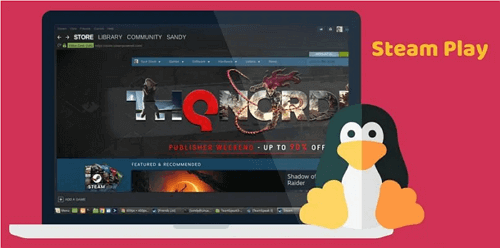
Step 1. Install Steam on your Linux computer and log in with your account.
Step 2. To access Steam settings, run the Steam client and click on the top left Steam menu, then select Settings.
Step 3. To enable Steam Play Beta, go to the Steam client, click on Steam in the top left corner, and select "Settings". On the left side, find the "Steam Play" option, click on it, and check the boxes corresponding to the game you want to run in Steam Play Beta.
- With Steam Play, you can play supported titles from the Steam library on your Linux machine, just like you would on Windows. This feature allows you to run whitelisted Windows-only games on your Linux system, without needing to dual-boot or use a virtual machine.
- Enable Steam Play for all titles, allowing users to play all Windows-only games on their Linux systems. This feature would provide a seamless gaming experience across platforms, making it easier for users to access and enjoy a wide range of games on their Linux devices.
Step 4. Save your changes, click "OK" to confirm.
To create a Windows 11 to Go USB drive, you'll need a 64-bit USB drive with at least 8GB of free space. First, download the Windows 11 ISO file from Microsoft's website.
Qiling OS2Go is now fully compatible with Windows 11, allowing users to easily create a bootable USB drive for the operating system, making the process simple and fast.
Sum Up
For those who want to play Windows-only games on Linux PCs, creating a portable USB drive with a Windows system and games installed is a cost-effective option. Qiling OS2Go is a helpful tool for this purpose. Alternatively, if you're only interested in playing Steam games on Linux, you can explore Steam Play.
Related Articles
- Windows To Go vs. Standard Installation: Which Option Is Better For You
- How to Create a Windows To Go USB Stick?
- What Is Bootable USB Drive? All You Should Know About Bootable USB Drive
- (Two Usefuls Ways) How to Create Windows 10 Installation USB Drive
- How to Downgrade Laptop from Windows 10 to Windows 8.1/7?
The details steps to downgrade laptop from Windows 10 to Windows 8.1 or 7 within or after 30 days. Freeware Qiling Disk Master allows you to go back to previous version of Windows at any time. - Enable System Restore in Windows 10 for Quick Recovery
To protect your computer from stop responding due to Windows updates, driver issues, or other errors, you can enable system restore in Windows.
Products
Articles & Tutorials
- Data Recovery
- Data Backup
- File Recovery
- File Backup
- System Backup and Restore
- Disk and Partition Clone
- Technical articles
- Mobile articles
- Disk Master Help
- Windows Data Recovery Tutorials
- Windows Secure Delete Tutorials
- Windows Partition Management Tutorials
- Windows File Backup and Restore Tutorials
- Windows System Backup and Restore Tutorials
- Windows Disk Backup and Restore Tutorials
- Windows Clone Tutorials