How to Transfer Files from PC to PC in Windows 10
If you're looking to transfer files from one Windows 10 PC to another, whether it's from an old computer to a new one or between two PCs, there are several easy methods you can use. You can use the built-in features of Windows 10, such as the File Explorer and the Settings app, to transfer files wirelessly. Alternatively, you can use cloud storage services like OneDrive or Google Drive to transfer files between PCs. You can also use a USB drive or external hard drive to transfer files, or use the Windows 10 feature called "Quick Actions" to transfer files with a few clicks.
When transferring data on a PC, using an external USB drive may not be the best choice due to its limited space and slow transmission speed, especially for mass or whole PC data migration. Fortunately, there are easier and faster ways to transfer files between Windows 10 computers, such as using a 1-click PC data transfer software and the Nearby sharing feature on a Windows computer.
How to Transfer Files from PC to PC Using WiFi on Windows 10
To transfer files from one PC to another over the internet, using WiFi is the most convenient method. Qiling Disk Master Free, a user-friendly PC data transfer software, enables you to move your data, applications, and account settings from one PC to another with just one click, compatible with Windows 10/8/7.
This free PC transfer program offers three easy transfer methods to cater to various needs, allowing users to efficiently transfer files between devices.
- PC to PC: This feature allows you to transfer files, apps, and accounts between two Windows devices connected via the same local area network (LAN) by specifying their IP addresses. It facilitates the migration of data and applications from an old PC to a new one within the same network.
- Image Transfer: This mode allows you to transfer files from one PC to another without the internet by creating images of files, folders, or software on the previous computer, which can then be transferred to the next one, effectively serving as a backup.
- App Migration: The App Migration tool allows you to copy installed software from one disk to another locally, freeing up space and resolving low disk space issues.
To transfer files between two PCs, download Qiling Disk Master Free and follow these steps. With this tool, you can easily transfer files between two PCs without any hassle.
Step 1. Open Qiling Disk Master on both of your computers. Choose "File sync" to proceed.
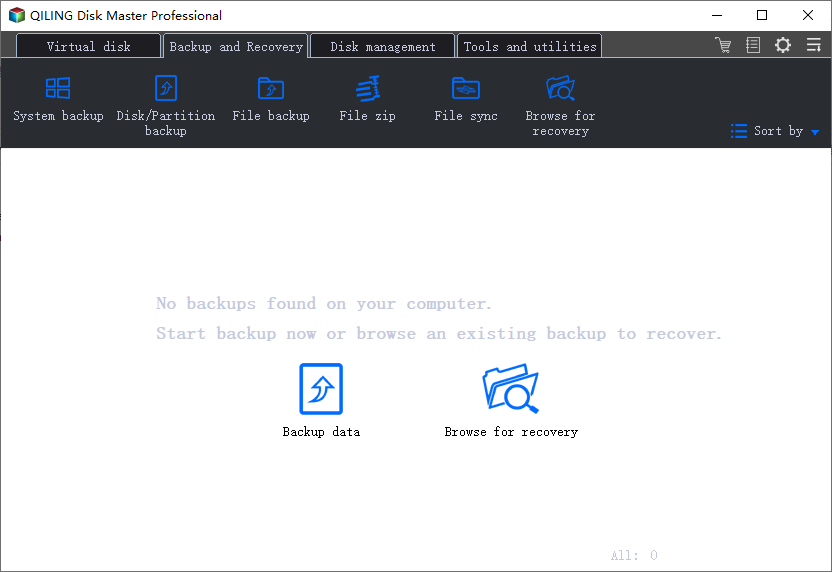
Step 2. Connect two PCs via the network by entering the password or verification code of the target PC. Ensure the correct transfer direction is chosen and click "Connect" to proceed.
The verification code is located on the top right corner of the main screen for "PC to PC" on the target computer.
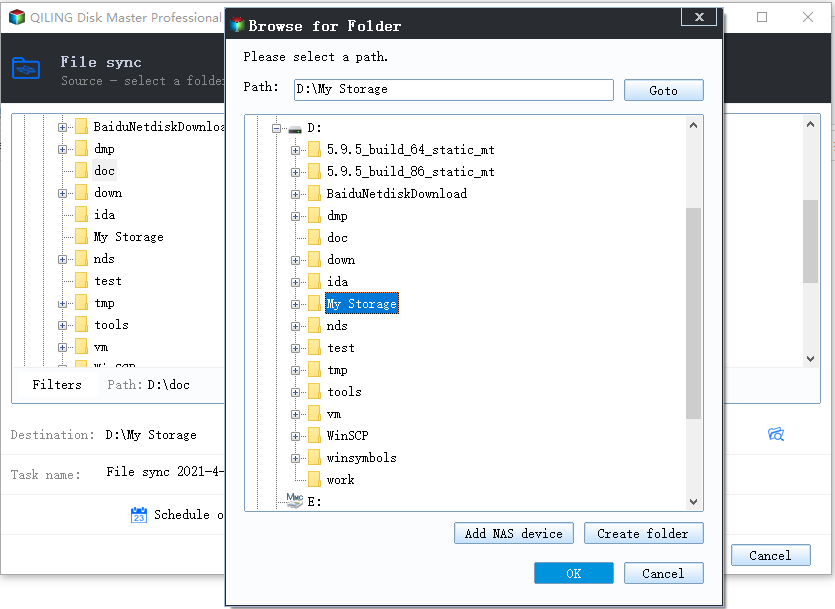
Step 3. To transfer files, select "Files" and choose the specific files you want to transfer. You can also customize the storage path for transferred data by clicking the Edit icon.
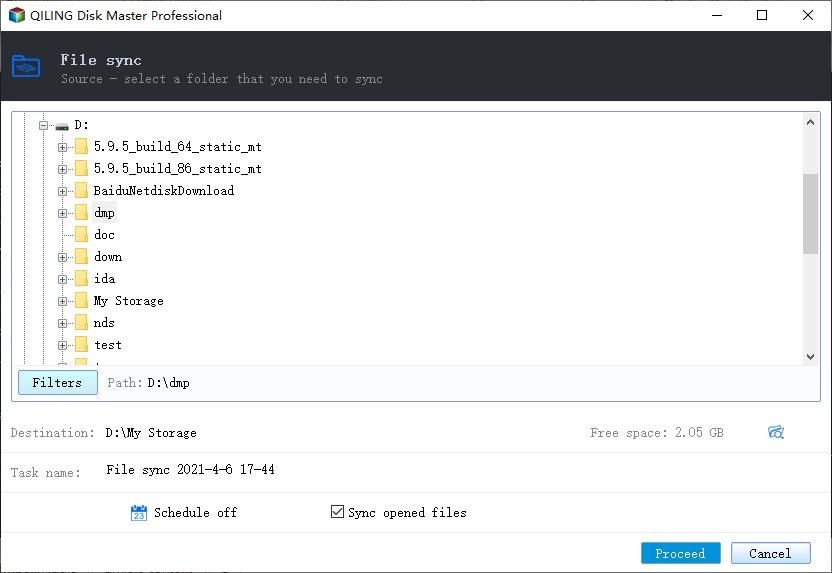
Step 4. The file transfer process from PC to PC can be initiated by clicking the "Proceed" button, which will begin the transfer of files based on their size, with larger files taking longer to transfer. During this time, it is recommended to wait patiently.
How to Transfer Files from PC to PC Using Nearby Sharing in Windows 10
The Windows 10 April 10, 2018 update (version 1803) includes a feature called "Nearby sharing" that enables the wireless transfer of files and links to nearby devices using Bluetooth and Wi-Fi.
How to Enable Nearby Sharing
The Nearby sharing feature on Windows 10 is enabled by default after the April 2018 Update, but can be manually turned on through the Settings app if it's not already enabled.
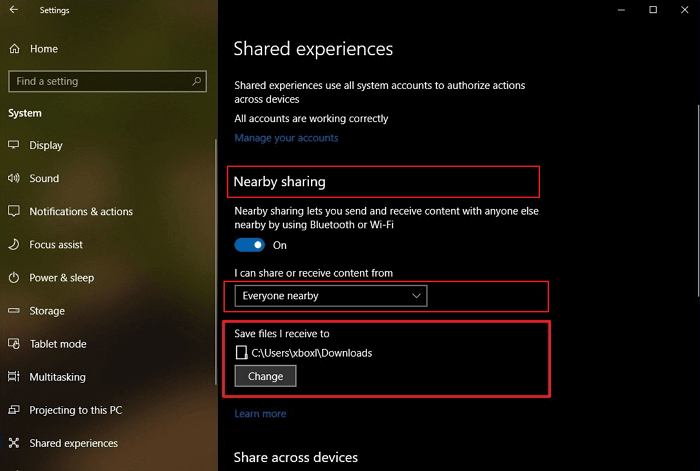
1. Open "Settings". Click on "System" > "Shared experiences".
2. To enable nearby sharing, turn on the toggle switch. You can then choose to share files with everyone nearby or just your devices. Additionally, you can click the "Change" button to specify where transfers are saved.
How to Transfer Files Using Nearby Sharing on Windows 10
1. Open File Explorer.
2. Right-click the file you want to share.
3. Click the "Share" option.
4. Select the device from the list.
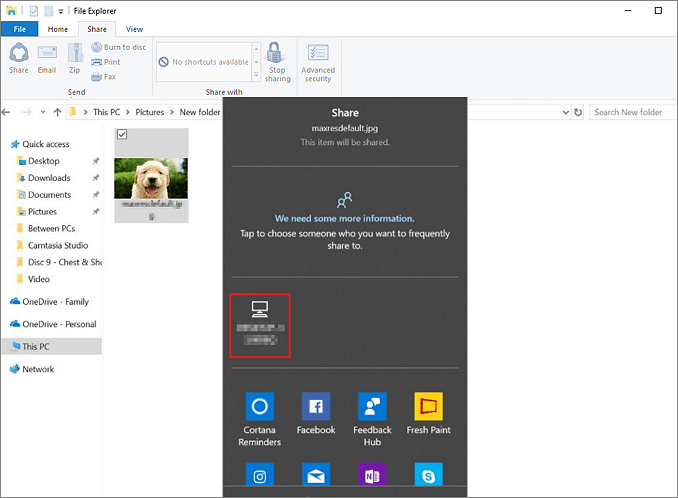
To successfully transfer data with Nearby sharing, both PCs must have Bluetooth and be within Bluetooth range, and both must be running at least the Windows 10 April 2018 Update. If either requirement is not met, consider using a Qiling PC to PC transfer application instead.
More FAQs About File Transfer in Windows 10
To transfer files from a laptop to another laptop in Windows 10, you can use various methods. One way is to use a USB drive, where you copy the files you want to transfer to the USB drive on the source laptop, then plug the USB drive into the destination laptop and copy the files from the USB drive to the destination laptop.
You can transfer files from one laptop to another with or without WiFi using one of the eight practical solutions we provide, which cater to different needs and preferences.
Yes, you can transfer files from one PC to another using a USB cable. This process is often referred to as a "file transfer" or "file sharing" between computers.
To connect two PCs and laptops via a USB cable for fast data transfer, you can use a USB-to-USB bridging cable or USB networking cable, which has a small electronic circuit that allows the two PCs to communicate with each other, enabling quick file transfer between the computers.
To transfer files from an old PC to a new PC in Windows 10, you can use the built-in feature called "Quick Start" or use a USB drive to transfer files manually. If you choose the Quick Start method, you'll need to set up your new PC, then connect the old PC to the new one using a network cable.
In Windows 10/8/7, you can transfer files from an old PC to a new one using various methods, including the built-in "Transfer files from an old PC" feature, using an external hard drive, a USB drive, or a network connection. You can also use cloud storage services like OneDrive, Google Drive, or Dropbox to transfer files. Additionally, you can use third-party software like Qiling Disk Master to transfer files and settings from the old PC to the new one. The best method for you will depend on the size of the files, the distance between the two PCs, and your personal preferences.
Related Articles
- Windows Easy Transfer for Windows XP, Windows 7, Windows 8, Windows 10, and Windows 11
- How to Move Tencent Games to Another Drive/PC
- Best Online File Transfer: OneDrive, Google Drive, Send Anywhere, We Transfer
- Move/Transfer Apps and Programs from PC to an External Hard Drive
- How to Back Up Windows 11 to Google Drive (OS and Files)
This tutorial shows you how to back up Windows 11 to Google Drive in two different ways. Whether you want to back up Windows 11 files or OS, here's a way to go. - What Is BSOD? How To Fix Blue Screen of Death on Windows 11
To fix the blue screen of death on Windows 11, follow our simple steps to troubleshoot and resolve this common issue quickly.
Products
Articles & Tutorials
- Data Recovery
- Data Backup
- File Recovery
- File Backup
- System Backup and Restore
- Disk and Partition Clone
- Technical articles
- Mobile articles
- Disk Master Help
- Windows Data Recovery Tutorials
- Windows Secure Delete Tutorials
- Windows Partition Management Tutorials
- Windows File Backup and Restore Tutorials
- Windows System Backup and Restore Tutorials
- Windows Disk Backup and Restore Tutorials
- Windows Clone Tutorials