Internet Explorer End of Life 2022, Here Is What to Do
Microsoft announced that Internet Explorer will expire on June 15, 2022, which means it will no longer be supported or updated. While you can still use the browser on your computer, it will become increasingly vulnerable to security risks and compatibility issues, making it difficult to access modern websites and online services. You can consider switching to a more modern browser like Microsoft Edge, Google Chrome, or Mozilla Firefox, which offer better security and compatibility features.

This page addresses top concerns for IE users, including what to do and how to handle the browser's end of life issue.
If you are one of them, follow and find out the answers here. Let's go.
In this article, you'll learn:
- Is IE (Internet Explorer) Dead Yet
- What Happens If Internet Explorer End of Life
- Can I Still Use IE after June 2022
- Is Internet Explorer Going to Be Removed
- What Do I Do When Internet Explorer End of Life
Is IE (Internet Explorer) Dead Yet
Internet Explorer will still be available for users to browse the internet until June 15, 2022, when Microsoft will stop supporting it worldwide.
Microsoft has confirmed that the Internet Explorer 11 desktop application will be retired and go out of support on June 15, 2022, affecting a range of users including those who rely on it for business and productivity tasks.
- Windows 10 (version 20H2 and later)
- Windows 8.1 Update
- Windows 7 with Service Pack 1 (SP1)
- Windows Server 2012 R2
- Windows Server 2008 R2 with Service Pack 1 (SP1)
When installing a new operating system on your computer, you might receive a notice from Microsoft reminding you to switch from Internet Explorer (IE) to Microsoft Edge or another internet browser.
What Happens If Internet Explorer End of Life
Some of you may wonder what happens if Internet Explorer reaches its end of life. Here are some possible results: the browser will no longer receive security updates, making it vulnerable to malware and other online threats; websites that are no longer compatible with Internet Explorer will become inaccessible; and users will be forced to switch to alternative browsers, such as Google Chrome, Mozilla Firefox, or Microsoft Edge. Additionally, some online services and applications may stop supporting Internet Explorer, and users may experience errors or crashes when trying to access these services.
- Microsoft will no longer support the IE (Internet Explorer) browser.
- No new updates or security patches will push to IE.
- Microsoft may push the last security update to Internet Explorer (IE) browser, marking the end of its life.
- Microsoft will remind business and IT departments to migrate their environment, systems, and websites to Edge or other browsers, as Internet Explorer will reach its end-of-life.
- The network environment will become increasingly complex, making it easier for IE users to fall victim to virus infections if they continue using this browser.
- Ads blocking function may become weak after the browser ends support.
Can I Still Use IE after June 2022
Some of you may have the same concerns here. And the answer here is yes.
Although Internet Explorer has reached its end of life, it will remain in use due to its widespread presence in corporate environments and the fact that it will continue to receive security updates as long as the underlying Windows operating system is still supported by Microsoft.
Microsoft has decided to focus on its Edge browser and will not add any new features to Internet Explorer (IE) browsers. This means that users of older Windows versions, such as Windows 7 and 8, will not receive any updates or new features for their IE browsers.
Is Internet Explorer Going to Be Removed
The Internet Explorer browser is still available for free download and installation on Microsoft's support page.
https://support.microsoft.com/en-us/windows/internet-explorer-downloads-d49e1f0d-571c-9a7b-d97e-be248806ca70#ID0EBBD=Windows_7
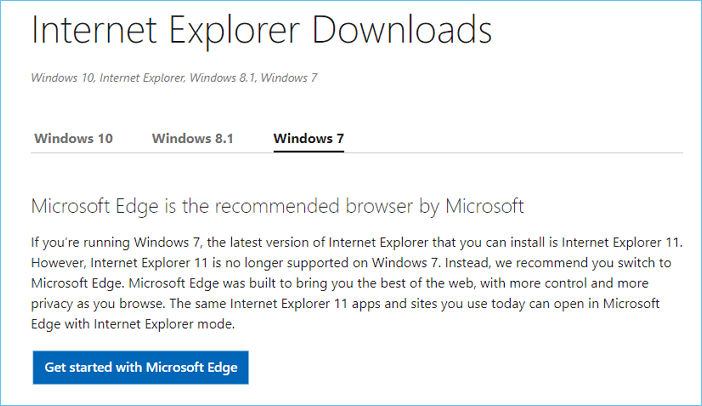
You can still visit this page and download the latest version of Internet Explorer to install on your PC, even if you want to use the latest version of this browser.
Microsoft will continue to support Internet Explorer for a certain period of time, but it will no longer receive security updates or new features. This means that while it may still be available on older Windows systems, it will eventually become outdated and potentially vulnerable to security risks. However, it will likely continue to function for a decade or more.
What Do I Do When Internet Explorer End of Life
Here, it comes to the most important question, what do you do or how will you do if the day comes and IE gets the end of its life on your PC or laptop, as Microsoft has announced that it will stop supporting Internet Explorer in August 2021. This means that any security updates or technical support for IE will no longer be available, and it's recommended to switch to a more modern and secure browser like Microsoft Edge, Google Chrome, Mozilla Firefox, or Safari. You can simply uninstall IE and install one of these browsers to continue browsing the internet safely and efficiently.
Experienced Windows users may know some tips to easily access their essential data like bookmarks, downloads, accounts, and passwords in Internet Explorer. Don't worry if you're not familiar with these tips - it's not a concern.
To see what you should save or export from the IE browser, follow this checklist one by one: Check if you have any open tabs or windows that you want to save, and if so, save them as HTML files. Check if you have any bookmarks or favorites that you want to save, and if so, export them to a file.
- Saved accounts and passwords in IE.
- Export bookmarks from IE and transfer them to other browsers.
- Backup downloads.
How do you export and transfer these essentials from the IE browser to other browsers? For example, transfer IE content to Edge, migrate Internet Explorer data to Chrome or switch IE essentials to Firefox.
Here we have two ways to help:
#1. Manually Export Internet Browser Essentials to Other Browsers
You can export bookmarks, accounts, and passwords, as well as downloaded items, from Internet Explorer and manually import them into a new browser.
#2. Use App and Data Migration Tool for Help
Qiling Disk Master can directly access your files, folders, apps, and browser content on your PC, allowing for easy migration to a new location on the same PC or transfer to a new PC.
You can directly apply this tool to migrate everything from PC to PC, including your IE browser data like the Downloads folder.
You can also try Qiling Key Finder, a reliable Windows product key finder tool, which can help you quickly view and find all your IE accounts and passwords within one click, in addition to assisting with finding your Windows product key.
You can export and save all the essential data to a local file as a backup or transfer them into a new browser without complex operations.
Internet Explorer Will End of Life, Your Digital Life Continues with New Browsers
Microsoft has ended Internet Explorer, but users can switch to the Edge browser, which can import Internet Explorer's accounts, passwords, bookmarks, and downloads, allowing a seamless transition.
To keep your personal and business data secure, take action as soon as possible by downloading and installing a favored internet browser on your PC, then switch or transfer your IE data into the new browser manually or using an automated tool like Qiling Disk Master.
Related Articles
- 2 Easy Ways to Transfer Dropbox to Google Drive
- Quick! How to Move Files from OneDrive to iCloud
- How Do I Transfer SketchBook to Another Device? [PC&iPad&Mobiles]
- Moving Server to Cloud, What To Consider and How to Do It [2022 Complete Guide]
- How Do I Create System Image for Windows Server 2008(R2)?
Creating system image backup in Windows Server 2008 (R2) is essential to protect your system and data on it. With it, you can easily recover them without downtime in the event of a disaster. - Create System Image Backup in Windows Server 2012 Easily (2 Ways)
You can choose to create a system image in Windows Server 2012 step by step with Windows Server Backup or Qiling Disk Master Server. It depends on the level of disaster recovery you need.
Products
Articles & Tutorials
- Data Recovery
- Data Backup
- File Recovery
- File Backup
- System Backup and Restore
- Disk and Partition Clone
- Technical articles
- Mobile articles
- Disk Master Help
- Windows Data Recovery Tutorials
- Windows Secure Delete Tutorials
- Windows Partition Management Tutorials
- Windows File Backup and Restore Tutorials
- Windows System Backup and Restore Tutorials
- Windows Disk Backup and Restore Tutorials
- Windows Clone Tutorials